Can You Wear Dentures After Implants?
The journey to restoring your smile is filled with important decisions. You may have lived with dentures for years, or you may be facing the prospect of tooth loss for the first time. The world of modern dentistry offers a powerful solution: combining dentures with dental implants. But this leads to a very common and important question: Can you wear dentures after getting implants?
The answer is not only yes, it is the very foundation of an entire field of treatment known as implant-supported dentures. However, the process is more nuanced than simply putting your old denture over a new implant. This guide will explain the different ways dentures and implants work together, what you can expect during the healing process, and how this combination can change your life.
The Short Answer: Yes, and It’s a Game Changer
The most important thing to understand is that dental implants and dentures are not an “either/or” choice. They are often partners in creating the best possible solution for people who have lost all of their teeth. In fact, one of the primary reasons people choose to get implants is to make their dentures more stable, comfortable, and functional.
A traditional denture rests on your gums. This can be a painful and unstable experience. The denture can slip, rock, and make eating and speaking a challenge. Dental implants solve this problem by providing a solid anchor in the jawbone.
The specific experience of wearing dentures after implants depends on the type of treatment you have chosen and the stage of your healing.
The Two Main Types of Dentures on Implants
To fully understand the process, you need to know the two main categories of implant-supported dentures.
1. Removable Dentures (Snap-On Dentures / Overdentures)
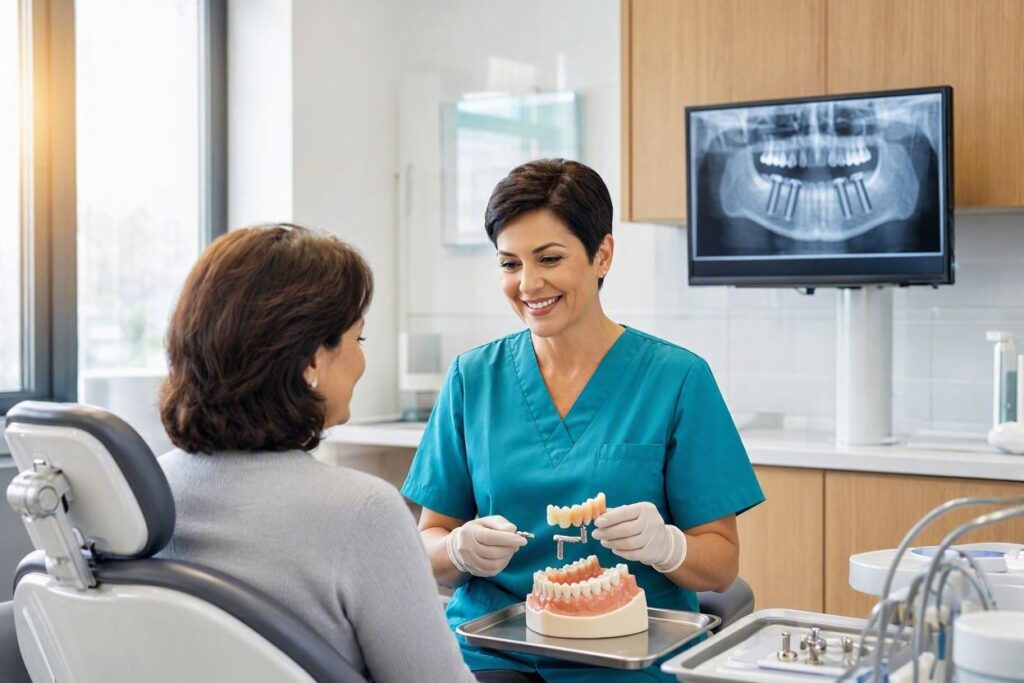
This is the more common and affordable option. The denture is designed to “snap” onto a set of implants. You can remove it yourself for cleaning and while you sleep, but when it is in your mouth, it is held firmly and securely in place.
- The Experience: You will feel a very satisfying “click” when you press the denture onto the implants. It will not shift or slide. You will have much greater confidence when eating, speaking, and laughing.
- The Healing Phase: After the implants are placed, they need time to fuse with the bone (osseointegration). During this time, your existing denture can be modified with a soft lining and worn over the healing implants. This is a crucial comfort measure.
2. Fixed Dentures (Permanent / Hybrid Dentures)
This is the most advanced and secure option. The denture is a full arch of teeth that is permanently screwed onto the implants. It can only be removed by a dentist.
- The Experience: This feels the most like having natural teeth again. You do not take it out. You brush and floss it like real teeth. There is no movement at all.
- The Healing Phase: In many cases, a temporary, fixed set of teeth is attached to the implants on the same day as the surgery. This is often called “Teeth in a Day.” You leave the office with a full, beautiful smile, even while your permanent denture is being made.
The Timeline: What to Wear During the Healing Process
The question of what you wear on your teeth immediately after implant surgery is a major concern for many patients. No one wants to be without teeth for months.
The good news is that you will almost never be without a set of teeth. Here is a typical timeline for a patient getting implant-supported dentures.
Phase 1: Immediately After Surgery
When you wake up from surgery, you will have some type of dental appliance in your mouth.
- For a Removable Denture: Your existing denture (or a new temporary one) will have been modified to fit gently over the surgical sites. It acts as a bandage, protecting the implants and reducing swelling. You will be instructed to wear it for the first 24-48 hours, only removing it for cleaning as directed.
- For a Fixed Denture: A temporary, fixed bridge is screwed onto the implants during the surgery. You will not be able to remove it.
Phase 2: The Healing Period (3-6 Months)
This is the time when the implants are fusing with your bone. This process, called osseointegration, is what makes the implants so strong.
- For a Removable Denture: You will be able to wear your denture during this time, but your dentist will advise you to be on a soft diet. The denture will need to be periodically adjusted and relined to ensure it is not putting too much pressure on the healing implants.
- For a Fixed Denture: You will wear your temporary fixed denture throughout this period. It will be slightly softer than the final one to be gentle on the implants.
Phase 3: The Final Restoration
Once the implants have fully integrated, the final step is to create your permanent denture.
- For a Removable Denture: Your dentist will take new impressions and have a final, custom-fit denture made with the special attachments that snap onto your implants.
- For a Fixed Denture: Your temporary bridge is removed, and the final, high-strength prosthesis (often made of zirconia) is screwed into place.
Why Combining Implants with Dentures is So Effective
The simple act of adding implants to a denture provides a cascade of benefits that address the fundamental flaws of traditional dentures.
- Stability: The number one complaint from denture wearers is movement. Implants eliminate this. Your denture will not slip, click, or fall out.
- Comfort: Because the denture is supported by implants, it no longer rubs painfully on your gums. This eliminates sore spots and the need for messy adhesives.
- Improved Chewing: With a stable denture, you can bite and chew with much more force. This allows you to eat a wider and healthier variety of foods, improving your nutrition.
- Bone Preservation: This is a massive benefit. When teeth are lost, the body resorbs the jawbone because it is no longer being stimulated. Implants provide that stimulation, halting bone loss. This helps maintain the shape of your face and prevents the “sunken-in” look that can occur with long-term denture use.
- Better Taste: A traditional upper denture covers the roof of your mouth to create suction. An implant-supported denture often does not need this, freeing your palate to taste your food.
The “Snap” vs. The “Permanent”: Which is Right for You?
The choice between a removable and a fixed denture on implants is a personal one.
Choose a Removable (Snap-On) Denture if:
- You are looking for a more affordable option.
- You find it easier to clean your teeth when they are out of your mouth.
- You are okay with the routine of taking it out at night.
Choose a Fixed (Permanent) Denture if:
- You want the closest possible feeling to having your natural teeth back.
- You want maximum stability and chewing power.
- You do not want to deal with the daily routine of removing and cleaning a denture.
- You are willing to invest in the most advanced option.
Important Note: Whichever option you choose, the long-term success of the implants depends on your commitment to oral hygiene. Even though the denture teeth cannot get cavities, the gums and bone around the implants can become infected. This condition, called peri-implantitis, is the leading cause of late-stage implant failure. You must clean around your implants meticulously, just as you would natural teeth.
Conclusion
The answer to the question “Can you wear dentures after implants?” is a resounding yes. In fact, wearing a denture supported by implants is the best way to overcome the common problems of traditional dentures. Whether you choose a removable snap-on system or a permanent fixed bridge, the implants provide the stability, comfort, and confidence you need.
The process does require a healing period, but you will be provided with a temporary solution to wear during this time. By understanding your options and working with a skilled dental team, you can achieve a smile that feels secure and lets you live your life to the fullest.
Frequently Asked Questions
Can I wear my old dentures after getting implants?
Yes, in many cases, your existing dentures can be modified with a soft liner to be worn over the healing implants. Once the implants have fully integrated, you will need a new denture that is custom-made to attach to the implants. Your old denture will not have the necessary attachments.
How many implants do I need for a snap-on denture?
For a lower denture, a minimum of two implants is often used, but four are preferred for better stability. For an upper denture, four implants are the standard recommendation because the bone in the upper jaw is typically softer.
Is it painful to wear dentures after implant surgery?
There is some soreness after surgery, but the denture actually acts as a protective bandage. Your dentist will prescribe pain medication and give you specific instructions. The discomfort is temporary and is part of the healing process.
Do I still need to use denture adhesive with implant-supported dentures?
No. The whole point of the implants is to provide retention. A snap-on denture clicks securely onto the implants, and a fixed denture is permanently screwed in. You will not need any adhesive, which is one of the biggest benefits of this treatment.
Additional Resource
For a comprehensive overview of implant-supported dentures, you can visit the American College of Prosthodontists’ patient education page: https://www.gotoapro.org/dental-implants/