Why Is There No Straw Dental Implant?
After any kind of oral surgery, including a tooth extraction or the placement of a dental implant, you will receive a list of post-operative instructions. These instructions are designed to protect the surgical site and promote proper healing. One of the most common, and often surprising, rules is: Do not use a straw.
For many patients, this seems like an odd and overly cautious restriction. What could possibly be so dangerous about sipping a smoothie or a glass of water through a straw? The answer lies in the delicate biology of healing and the physics of pressure.
This guide will explain the real, science-based reason why your dentist tells you to avoid straws after a dental implant, what the risk actually is, and for how long you need to follow this rule.
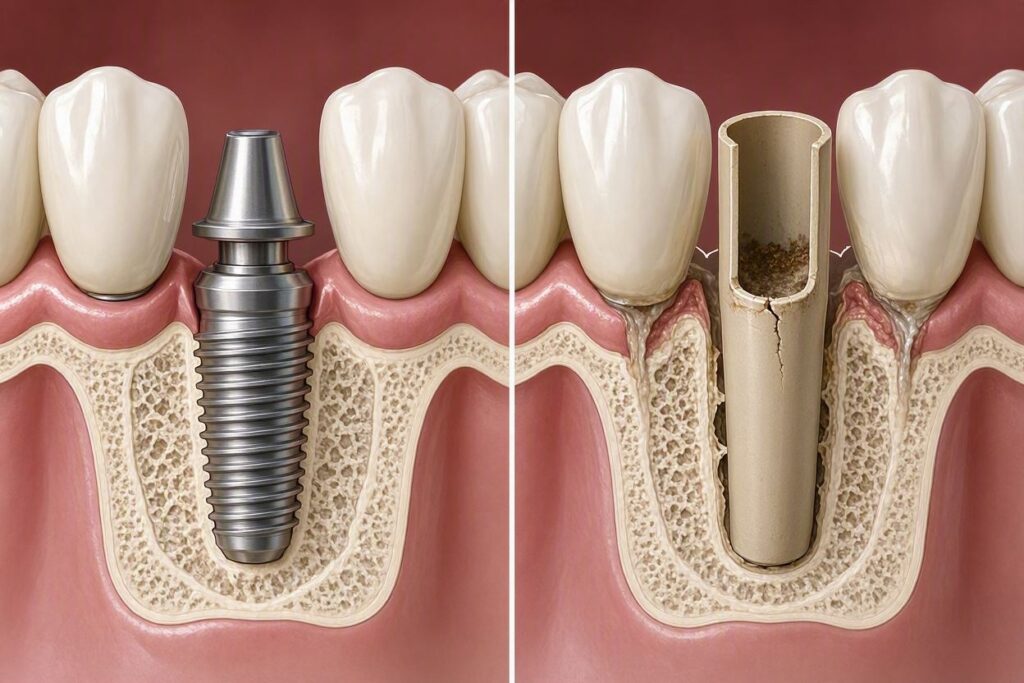
Understanding the Healing Process: The Critical First Days
To understand the “no straw” rule, you must first understand what is happening in your mouth after an implant is placed.
The surgery involves making an incision in your gum and drilling a precise hole into your jawbone to place the titanium implant. This is a controlled trauma. Your body immediately begins the healing process.
One of the first and most important steps in this process is the formation of a blood clot at the surgical site. This clot is not a scab like you might get on your skin. It is a complex, living structure. It plugs the wound, stops the bleeding, and, most importantly, acts as a protective scaffold. This scaffold is what allows new tissue, blood vessels, and bone cells to begin growing and repairing the area.
The success of the early stages of healing depends entirely on the stability and protection of this blood clot.
The Physics of the Straw: Understanding Negative Pressure
This is where the physics lesson comes in. When you drink from a straw, you are not just “sucking up” liquid. You are creating a pressure differential. By sucking, you reduce the air pressure in your mouth and in the straw. The higher atmospheric pressure on the surface of the liquid then pushes the liquid up the straw and into your mouth.
This process creates a vacuum, or what scientists call “negative pressure,” inside your mouth. This negative pressure has the potential to be very disruptive to a fresh surgical site. It can create a physical force that pulls on the surrounding tissues.
The Danger: Dislodging the Blood Clot and Causing “Dry Socket”
The risk is that the negative pressure from using a straw can dislodge the newly formed, fragile blood clot from the implant site. This is a well-known and significant risk after any tooth extraction, and it applies equally to implant surgery.
When the blood clot is lost prematurely, the underlying bone and nerve endings are exposed to the air, food, and bacteria in the mouth. This condition is known as Alveolar Osteitis, or more commonly, a “dry socket.”
The Consequences of a Dry Socket
A dry socket is extremely painful. The pain is often described as a deep, throbbing ache that can radiate up into your ear or temple. The pain can be more intense than the original surgical pain and is not easily managed with over-the-counter medication alone. A dry socket also significantly slows down the healing process and increases the risk of infection.
While a dry socket is more commonly associated with extractions (especially lower wisdom teeth), the same principle applies to an implant. The implant site needs its blood clot to heal properly. Dislodging it disrupts the critical early phase of osseointegration and can create significant discomfort.
Here is a summary of the risk:
| Action | Effect on the Mouth | Risk to the Surgical Site |
|---|---|---|
| Drinking from a Cup | Minimal change in intraoral pressure. | Low risk. The blood clot is not disturbed. |
| Drinking from a Straw | Creates negative pressure (a vacuum). | High risk. The suction can pull the blood clot out of the socket, causing a dry socket. |
| Spitting Forcefully | Creates pressure changes. | High risk. Similar to using a straw, it can dislodge the clot. |
| Smoking | Creates suction and introduces heat and chemicals. | Extremely High risk. The suction is harmful, and the chemicals impair healing. |
How Long Do You Need to Avoid Straws?
This is the practical question on everyone’s mind. The good news is that you do not have to give up straws forever. The risk of dislodging the blood clot is highest in the first few days after surgery.
Most dentists and oral surgeons will instruct you to avoid using a straw for at least 3 to 7 days after your dental implant surgery. This is the critical window for initial healing.
By the end of the first week, the blood clot is much more stable and has begun to be replaced by new granulation tissue (early healing tissue). The risk of a dry socket drops dramatically after this point. Some dentists may recommend waiting up to two weeks for more complex cases or if you had multiple implants placed. Always follow the specific instructions provided by your surgical team.
Other Activities That Create the Same Risk
The “no straw” rule is part of a broader set of instructions designed to protect the blood clot. You should also avoid other activities that create suction or pressure changes in the mouth during the first few days of healing. These include:
- Spitting: Do not spit forcefully after brushing your teeth or after rinsing. Instead, let the water and saliva fall out of your mouth gently over the sink.
- Smoking: As the table above shows, smoking is incredibly harmful for a multitude of reasons. The suction alone is a major risk for a dry socket.
- Slurping: Avoid slurping soups or other liquids.
- Blowing Your Nose Forcefully: For upper implants, the surgical site can be close to the sinus cavity. Forceful nose blowing can create pressure that disrupts healing.
The Safe Way to Stay Hydrated and Nourished
After your surgery, you will still need to eat and drink. The safest way to do this is to drink directly from a cup or glass. Take small, gentle sips. For the first day or two, stick to cool or lukewarm liquids. Avoid very hot liquids, as heat can also dissolve the blood clot.
For smoothies and shakes, the rule is simple: if you normally need a straw to drink it, pour it into a cup and drink it slowly, or eat it with a spoon. The temporary inconvenience is a small price to pay for a smooth, uncomplicated recovery.
Important Note: If you are concerned that you may have developed a dry socket, do not wait for the pain to become unbearable. Contact your dentist or oral surgeon immediately. They can clean the socket and place a medicated dressing that provides rapid pain relief and promotes healing.
Conclusion
The instruction to avoid using a straw after a dental implant is not an arbitrary rule. It is a critical measure based on sound physics and biology. The suction created by a straw can dislodge the protective blood clot from the surgical site, leading to a painful condition called a dry socket and potentially compromising the healing of the implant.
This risk is highest during the first 3 to 7 days after surgery. By following this simple rule, along with other precautions like avoiding spitting and smoking, you are actively protecting your investment and giving your new implant the best possible chance to heal properly and last a lifetime.
Frequently Asked Questions
Can I use a straw after 72 hours?
It is best to wait a bit longer. While 72 hours is a key milestone, the clot is often still fragile. Most dentists recommend waiting a full 5 to 7 days. You should follow the specific timeline given to you by your dentist, as it is based on the complexity of your individual case.
What should I do if I accidentally used a straw?
Do not panic. One small slip-up may not cause a problem. Be extra careful going forward and avoid straws completely. Monitor the area for signs of a dry socket, which include a significant increase in pain a few days after surgery. If you are concerned, call your dentist.
Can I drink carbonated drinks after an implant?
It is best to avoid carbonated beverages like soda and sparkling water for the first few days after surgery. The bubbles and acidity can be irritating to the surgical site. Stick to water, milk, and non-acidic juices.
Is it safe to use a straw after the implant has fully healed?
Yes. Once the implant has fully integrated with the bone (a process that takes 3-6 months) and your final crown is placed, there is no risk of a dry socket. You can safely use a straw anytime after the initial healing period.
Additional Resource
For more information on post-operative care after oral surgery, you can visit the Mayo Clinic’s patient care guide: https://www.mayoclinic.org/tests-procedures/dental-implant-surgery/about/pac-20384622