Cost of a Full Arch Fixed Dental Implant Bridge
Walking into a dental office with a loose denture or a mouth full of failing teeth feels overwhelming. You might struggle to chew a simple apple or feel self-conscious about smiling in family photos. You have heard about the “All-on-4” procedure or permanent implant bridges, and you know they can change your life. But then the big question hits you: “How much does a full arch fixed dental implant bridge cost?”
The answer frustrates many people at first. You cannot find a simple sticker price online because every mouth tells a different story. In 2026, the cost for a full arch fixed dental implant bridge generally ranges from $12,000 to $30,000 per arch for premium, final restorations in the United States. Some economy options might drop to $8,000, while top-tier, full-zirconia reconstructions with the most advanced diagnostics can push past $35,000 per arch.
This guide cuts through the marketing hype. We will explore the true cost of a full arch fixed dental implant bridge, break down where your money goes, compare materials, dissect hidden fees, and give you the tools to make a decision you can feel confident about. No fake promises. No “dental implants for $999” clickbait. Just the honest, realistic truth.
Understanding the Terminology: What Are We Really Buying?
Before we talk numbers, we must speak the same language. The dental industry sometimes confuses patients by using different terms for similar procedures. Let’s clarify exactly what we mean when we discuss a full arch fixed dental implant bridge cost.
The Basic Definition
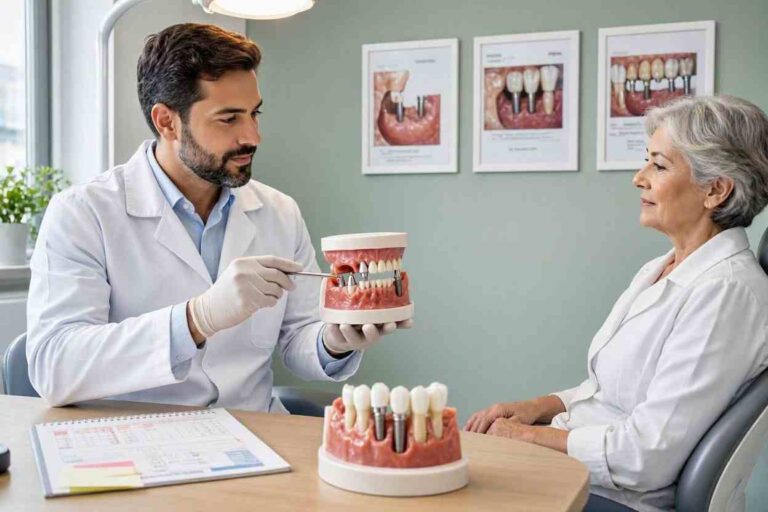
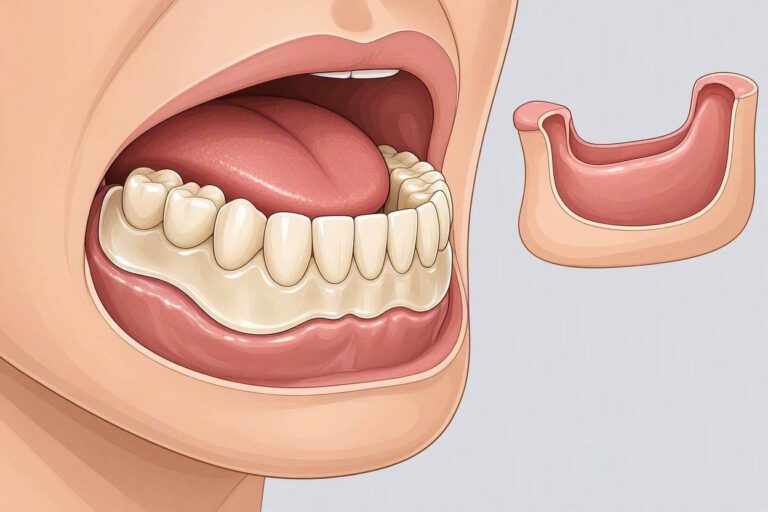
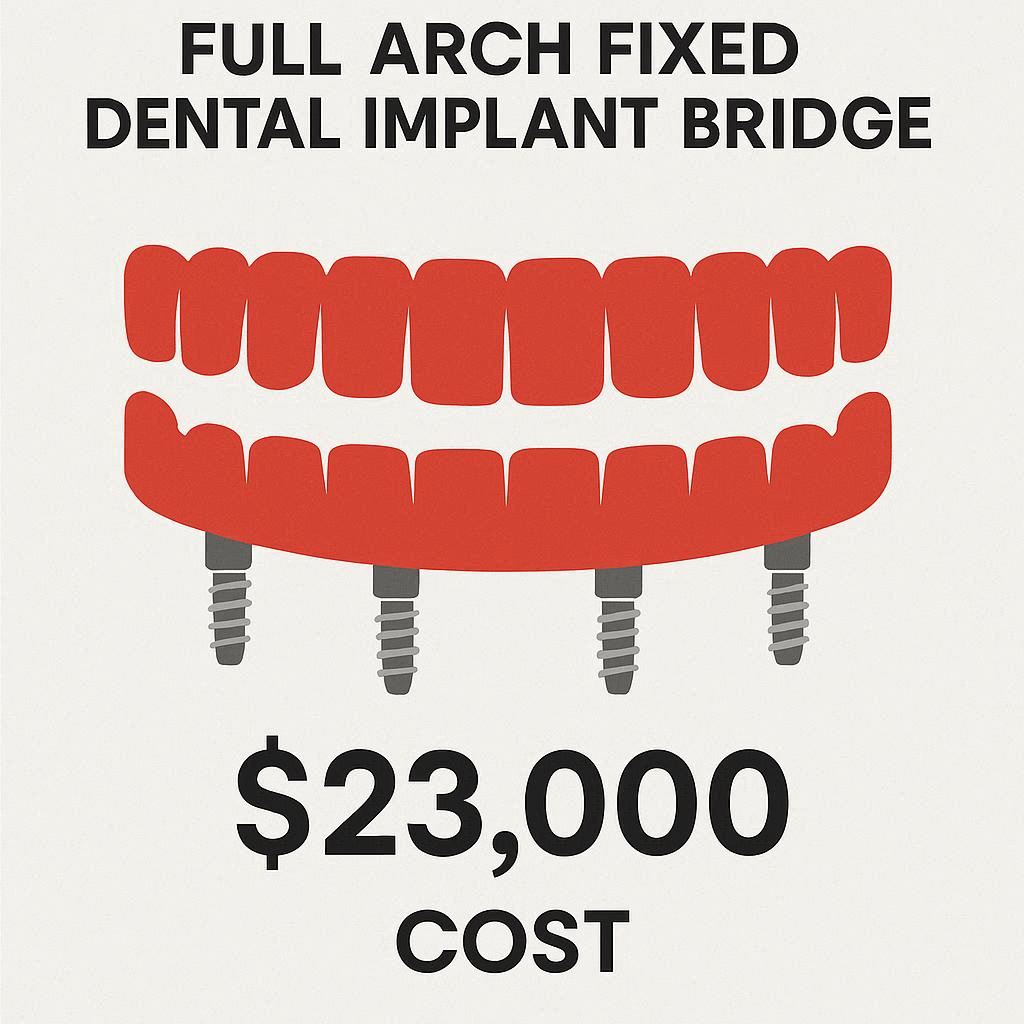
A full arch fixed dental implant bridge replaces all the teeth on your upper or lower jaw. Unlike a traditional denture that you remove at night and place in a cup, this prosthesis stays in your mouth permanently. Only a dentist can remove it. It attaches to multiple dental implants that act as artificial tooth roots. Typically, you need between four and eight implants to support one full arch of teeth.
The “All-on-4” vs. Full Arch Bridge Distinction
You will hear the term “All-on-4” frequently. This refers to a specific technique pioneered by Nobel Biocare where the dentist places four implants at strategic angles in the jaw. The back implants tilt to avoid the sinus cavity in the upper jaw or the nerve canal in the lower jaw. This technique often allows patients with moderate bone loss to avoid bone grafting.
A full arch fixed bridge can use four, five, six, or more implants. The “All-on-4” is a type of full arch fixed bridge, not a different procedure entirely. When patients search for full arch fixed dental implant bridge cost, they usually refer to this immediate-load, screw-retained solution.
“Patients often ask me why one quote is $15,000 and another is $30,000. The difference is rarely profit margin. It usually reflects the materials, the lab, the implant system, and the amount of time the dentist dedicates to the aesthetic result.” — A Prosthodontist in Private Practice, Texas
The Price Spectrum: A Realistic Breakdown
Let’s get specific. I have analyzed fee schedules from corporate chains, private practices, university settings, and high-end boutique clinics. Here is the realistic landscape of the full arch fixed dental implant bridge cost in 2026.
| Category | Price Range Per Arch | Typical Inclusions | Who Offers This? |
|---|---|---|---|
| Economy/Discount Centers | $8,000 – $12,000 | 4 implants, acrylic temporary bridge converted to final, basic teeth. Often excludes extractions, bone grafting, and sedation. | High-volume corporate chains, dental tourism destinations. |
| Mid-Range Private Practice | $15,000 – $22,000 | 4-6 implants, a separate premium temporary, and a final hybrid bridge (acrylic denture on a titanium bar or base). Includes extractions and basic bone contouring. | Most experienced general dentists, some prosthodontists in average cost-of-living areas. |
| Premium/Boutique Practice | $25,000 – $35,000+ | 6-8 implants, a milled PMMA temporary, a final monolithic zirconia bridge with individual tooth characterization. All diagnostics (CBCT, digital smile design), IV sedation, and extensive follow-up included. | Prosthodontists, high-end cosmetic implant centers in major metropolitan areas. |
Important Note: These figures represent fees per arch. If you need both upper and lower arches restored, you should not simply multiply the per-arch fee by two. Most practices offer a discounted rate for a second arch, often reducing the total full mouth cost by $3,000 to $7,000.
Why Can’t You Just Get One Price Online?
Dentists hesitate to publish a single number because no two cases are identical. The final full arch fixed dental implant bridge cost depends on a long list of variables that only a CT scan and physical examination can reveal. A patient with strong bone and no active infection will pay significantly less than a patient who needs multiple extractions, bone grafts, and infection management.
The Anatomy of the Price: Where Does the Money Go?
You are not buying a product off a shelf. You are paying for a complex surgical and restorative process that unfolds over several months. Understanding the components justifies the investment.
1. Diagnostics and Virtual Planning (The Blueprint)
No responsible surgeon places implants by guessing. The process begins with a Cone Beam Computed Tomography (CBCT) scan. This 3D X-ray allows the dentist to measure bone volume, density, and proximity to nerves and sinuses. Digital intraoral scans create a virtual model of your mouth.
The dentist or a planning service then uses software to virtually place the implants, ensuring they anchor in the best available bone and emerge at the perfect angle to support the bridge. This planning stage might cost $500 to $1,500 if itemized, though it is often bundled into the comprehensive fee. The cost of a full arch fixed dental implant bridge begins here, before any surgery starts. Skipping this step risks implant failure, nerve damage, or a bridge that fractures repeatedly.
2. Surgical Procedures (The Foundation)
This component often represents the single largest line item. It includes the extraction of any remaining failing teeth. It includes bone grafting or socket preservation if needed. Most importantly, it includes the placement of the implants themselves.
Placing four implants is technically faster than placing six. However, an angled placement required for an All-on-4 case demands a high level of skill. The implant brand matters, too. Premium Swiss brands like Straumann and Nobel Biocare cost the dentist more for the implant hardware than value brands. This hardware cost passes through to you. You pay for the research, the precision manufacturing, and the surface technology that helps bone fuse to the implant.
3. The Temporary Prosthesis (The Test Drive)
On the day of surgery, you leave with teeth. This immediate temporary bridge is a critical phase. A cost-conscious practice might use a simple denture that the lab converts into a screw-retained temporary. A premium practice will mill a beautiful, custom PMMA (a high-quality acrylic) bridge from a digital design. This temporary serves as a prototype. You wear it for four to six months while the implants fuse to your jawbone (a process called osseointegration). You can test the look, the feel, and the function. You can request changes. The full arch fixed dental implant bridge cost nearly always includes this temporary, but ask if the conversion from your existing denture is the only option provided.
4. The Final, Fixed Bridge (The Destination)
After healing, the dentist takes new records and orders the final bridge. This is a custom-crafted prosthetic. The material you choose heavily influences the price.
- Hybrid Bridge (Acrylic with Metal Substructure): A titanium bar or framework supports acrylic teeth wrapped in pink acrylic gum. This is a proven, repairable, and more economical option. If a tooth chips, the dentist can often repair it in the office. It typically lasts 5 to 10 years before needing significant refurbishment or replacement due to wear and staining.
- Monolithic Zirconia Bridge: The lab mills this bridge from a single, solid block of zirconia. It is incredibly strong and resists chipping and staining. The pink gum portion is hand-painted and glazed porcelain. It feels heavy, solid, and cool to the tongue. The lab bill alone for a high-aesthetic zirconia arch can range from $3,000 to $6,000. This material commands a higher total full arch fixed dental implant bridge cost but often provides a longer functional lifespan.
- Porcelain Fused to Metal (PFM): The classic “cap” material, but used less frequently now for full arches. Porcelain layers on a metal frame. It looks beautiful initially but carries a risk of the porcelain chipping away from the metal over time, especially in patients who grind their teeth.
5. The Dentist’s Time and Expertise
You are not just paying for hardware. You are paying for the years of training that allow a dentist to handle complications, design a bite that won’t cause jaw pain, and craft a smile that looks genuinely natural. A fee-for-service prosthodontist who dedicates an entire morning to your final fitting session and brings in a master ceramist will charge more than a corporate clinic where a different doctor sees you each visit. This human element forms an indispensable part of the full arch fixed dental implant bridge cost.
“The implant is just a screw. The bridge is just plastic or porcelain. What you pay for is the brain that connects the two and makes it look like you never lost a tooth.” — Dr. S.R., Implantologist
Detailed Table: Comparing Final Bridge Materials
Choosing the final bridge material is a major decision that impacts both the initial full arch fixed dental implant bridge cost and your long-term maintenance budget.
| Material | Starting Cost Impact | Aesthetics | Durability | Repairability | Best For |
|---|---|---|---|---|---|
| Acrylic (PMMA) Hybrid | $ (Lower) | Good. Pink acrylic can look very natural. Teeth can appear slightly more “plastic” than ceramic. | Moderate. Typically needs replacement or major refurbishment at 5-10 years. Stains and wears faster than ceramic. | Excellent. Chipped teeth can be added back with acrylic. | Budget-conscious patients; as a long-term temporary before a final bridge. |
| Monolithic Zirconia | $$$ (Highest) | Excellent. Translucency and individual characterization possible. Porcelain gum is very realistic. | Excellent. Extremely hard, resists fracture and wear. Can last 10-20+ years with care. | Poor. If it fractures (rare), it usually requires a complete replacement. | Patients who want the “forever” option; those with heavy bites or grinding habits. |
| Porcelain Fused to Metal (PFM) | $$ (Mid) | Very Good. Porcelain layering creates deep, lifelike tooth appearance. | Moderate. The porcelain is strong, but it can chip off the metal frame under heavy force. | Difficult. Small chips can be polished. Large fractures usually mean remake. | Aesthetic zones where ultimate beauty is prioritized, but zirconia is not desired. |
Geographic Price Variations: The Zip Code Factor
Where you live dramatically shifts the full arch fixed dental implant bridge cost. Overhead costs, lab fees, and market demand create distinct regional pricing bands.
- Major Metropolitan Hubs (New York, Los Angeles, San Francisco, Boston): Expect premium pricing. A single arch often starts at $25,000 and climbs rapidly. High commercial rent and top-tier labs inflate every line item.
- Suburban and Mid-Sized Cities: These locations often provide the sweet spot between expertise and value. You can find experienced prosthodontists charging $18,000 to $25,000 per arch with excellent materials and personalized care.
- Rural and Lower Cost-of-Living Areas: You might see prices as low as $14,000 to $18,000. The challenge is often finding a provider who places a high volume of these specific full-arch cases. Experience counts more than locality.
- Dental Tourism Destinations (Mexico, Costa Rica, Thailand): Prices frequently advertised at $8,000 to $12,000 per arch are common. These fees often include a hotel stay and driver. The critical question remains continuity of care. What happens if a screw loosens or a tooth fractures three months after you return home? Your local dentist may refuse to work on a foreign-made bridge, leaving you with few options.
The Hidden Costs: What the Advertised Price Might Exclude
Searching for the lowest possible full arch fixed dental implant bridge cost can lead to financial surprises. Beware the fee that seems too good to be true. Ask specifically about these potential exclusions.
1. Pre-Surgical Extractions and Bone Grafting
Some discount ads only quote the implant placement and a generic bridge. They may not include removing your remaining teeth. Impacted teeth or those broken to the gum line require surgical extraction, which costs more. Significant bone grafting, sinus lifts, or ridge augmentations can add $1,500 to $5,000 or more to your case. A proper diagnosis requires seeing a full CBCT scan, not just a panoramic X-ray.
2. Type of Sedation
A quote may include only local anesthesia (numbing shots). For a multi-hour surgery placing four or more implants, most patients want some form of sedation. Oral conscious sedation (a pill) might cost $300–$800. IV sedation (twilight sleep) administered by a trained professional can cost $1,000–$2,500 per session. Confirm what your fee includes.
3. The “Temporary” That Becomes Final
Be very clear: does the quoted price include a separate, final bridge, or is the quote only for the immediate denture that screws onto the implants? Some low-cost centers advertise a “permanent bridge in one day,” but the bridge they deliver is a reinforced denture. You wear this “conversion prosthesis” for years. It will wear down and stain. A real final prosthesis requires a separate, significant lab bill.
4. Maintenance and Warranty
Understand the warranty. Most premium practices cover the implants themselves for a lifetime against failure to integrate, but the bridge carries a warranty of 5 to 10 years, pro-rated, against breakage under normal use. A discount center might offer only 90 days of adjustment and no warranty on the bridgework. Factor the cost of replacing a cheap bridge every five years into your long-term budget.
“I met a patient who flew to Costa Rica for ‘All-on-4’ priced at $9,000 an arch. Two years later, she paid me $26,000 per arch to replace everything because the cheap titanium bar snapped in half.” — An Oral Surgeon in Arizona
Material Deep Dive: Choosing Your Hybrid Bridge
The choice of final material locks in a significant portion of your total full arch fixed dental implant bridge cost. Let’s examine each category under a microscope.
Acrylic Hybrid: The Workhorse
Think of an acrylic hybrid as a high-end denture that you never remove. The lab processes individual acrylic teeth into a thick pink acrylic base, which wraps around a milled titanium bar or a cast metal framework. The metal framework provides the strength. The acrylic provides the aesthetics.
Advantages:
The main advantage is cost. Lab fees are lower, bringing down your overall bill. A second huge advantage is repairability. If you drop it and fracture a tooth, the dentist can drill into the acrylic, add more, and polish it within an hour. It feels a bit softer to opposing natural teeth, which some patients prefer.
Disadvantages:
Acrylic is porous. It will absorb coffee, red wine, and curry stains over time. You must meticulously clean it. It will also wear down. After five to seven years, the teeth may look flat and dull. The pink acrylic can harden and pull away from the metal framework, causing odor. You should budget for a reline, a major refurbishment, or a completely new bridge much sooner than with zirconia.
Monolithic Zirconia: The Crown Jewel
This prosthetic is milled from a single puck of pre-sintered zirconia (zirconium dioxide). The process uses a CAD/CAM workflow. The restoration is extraordinarily dense and resistant to fracture. The technician then cuts back the facial surfaces of the teeth and applies hand-layered porcelain for lifelike characterization, or stains and glazes the monolithic structure. The pink “gum” material is a highly specialized porcelain applied in liquid layers and baked at high temperatures.
Advantages:
You get unmatched strength. You can eat virtually anything. The surface resists stain accumulation like a glass countertop. It has a clean, non-porous surface that bacteria find much harder to adhere to than acrylic. The aesthetics can reach the pinnacle of dental art.
Disadvantages:
The cost reflects the lab time and material. Zirconia is also very rigid. It does not absorb any shock. All chewing forces transmit directly to the implants and the opposing teeth. In patients without a soft diet or with a heavy bite, this requires a perfectly balanced bite design. Also, repairing a fractured zirconia bridge inside the mouth is nearly impossible.
How Implant Number and Positioning Affect Cost
You might wonder, “Why use four implants when I can use six? Is six better?” The answer is not straightforward, and it directly impacts the full arch fixed dental implant bridge cost.
The 4-Implant Protocol (All-on-4)
Four implants suffice for most patients. The two front implants go in straight. The two back implants tilt up to 45 degrees. This tilt avoids the sinus in the upper jaw and the inferior alveolar nerve in the lower jaw. It also allows the implants to anchor in denser bone at the front of the jaw and creates a wider spread of support, reducing the cantilever (the teeth that hang past the back implants).
The cost is lower because you use fewer implants. Surgery time is often shorter. The technique almost always allows for immediate loading — you get teeth the same day. For 90% of patients, four well-placed, high-quality implants, particularly if they are designed for angled placement, will provide a lifetime of service.
The 6+ Implant Protocol
Adding more implants distributes the chewing force. If one implant ever fails, the bridge remains stable on the remaining five. Some dentists believe more implants protect the bone long-term by providing more stimulation. Adding implants increases the hardware cost, surgical time, and lab cost (the bridge must fit more implant connections). It can also rule out same-day teeth in some cases, as the implants may need to be buried under the gum to heal without load.
The decision should stem from your bone volume and the dentist’s treatment philosophy, not just a higher price tag. An honest dentist will tell you that a six-implant plan is right for you, or they will tell you that you simply don’t need the extra expense.
Financing a Full Arch Fixed Dental Implant Bridge
The price tag of a new car for a single arch stops many people. Do not let the top-line number defeat you. Many responsible pathways to payment exist.
1. Dedicated Healthcare Loans
Companies like CareCredit, Proceed Finance, and LendingClub specialize in healthcare lending. They offer promotional periods of zero-percent or low-interest financing if you pay off the balance within 12 to 24 months. Longer terms extend out to 60 or 84 months, but the interest rate often jumps significantly (some plans reach 15% or more APR). Ask the dental office which plans they accept and whether they subsidize the interest rate for any of them.
2. Dental Insurance Reality Check
Dental insurance operates on a model built around prevention and minor restoration. Most annual maximum benefits fall between $1,000 and $2,000. Against a $20,000 procedure, this covers a fraction. You will not find a standard dental insurance plan that pays for half of a full arch fixed dental implant bridge cost. However, your medical insurance might cover a portion if bone loss, trauma, or a congenital defect causes your tooth loss. This requires pre-authorization and medical necessity documentation, but it is worth exploring.
3. Health Savings Accounts (HSA) and Flexible Spending Accounts (FSA)
You can use pre-tax dollars to pay for qualified medical expenses, and dental implants qualify. By running your payment through your HSA or FSA, you effectively receive a discount equal to your tax bracket. If you are in a 30% combined tax bracket and pay $20,000 from your HSA, you save $6,000 in taxes compared to paying with post-tax income.
4. Superbill for Medical Insurance
If your tooth loss has led to medical complications — nutritional deficiencies, chronic infections, a TMJ disorder — ask your dentist for a superbill to submit to your medical insurance. The coding uses medical diagnosis codes (ICD-10) and procedure codes (CPT), not dental codes. Success requires persistence, but I have seen patients get a portion of their full arch fixed dental implant bridge cost reimbursed this way.
“My dental insurance denied my pre-authorization in two days. My medical insurance took six weeks and five phone calls, but they ultimately covered the hospital anesthesia and a portion of the surgeon’s fee. It was worth every minute I spent on hold.” — Patient testimonial, Denver, CO
The Surgical Day: What Your Fee Covers
Understanding the flow of surgical day helps you appreciate the value bundled into the full arch fixed dental implant bridge cost.
You arrive and confirm the final plan. The team escorts you to the operatory. If you chose IV sedation, the dentist or anesthesiologist starts an IV line. The sedation drips in, and you become comfortably unaware. The surgeon numbs all the surgical sites profoundly. Any remaining teeth come out carefully to preserve bone. The surgeon smooths the bone ridge, removing any sharp edges or tori that would interfere with the bridge fit. This bone recontouring (“alveoloplasty”) is an art form.
The surgeon then places the implants precisely according to the 3D-printed surgical guide. If the implants achieve a high level of primary stability (torque), the surgeon connects multi-unit abutments (small connectors) to the implants. The pre-fabricated temporary bridge is then seated, checked for fit, bite, and aesthetics, and secured with screws. The dentist fills the screw access holes with Teflon tape and a temporary filling. You wake up with a full set of fixed teeth.
All of this — the team’s time, the sterile supplies, the implant hardware, the anesthesia monitoring, and the temporary bridge conversion — folds into the single surgical fee.
The Laboratory’s Role and The Digital Workflow
The dental laboratory acts as the architect and builder of your bridge. A master lab technician possesses skills that rival fine jewelers. The lab’s fee constitutes 20% to 30% of the full arch fixed dental implant bridge cost. Cheap labs use mass-produced denture teeth and simple stone models. Elite labs use digital workflows.
How Digital Dentistry Improves Value
A digital workflow starts with an intraoral scan of your mouth instead of a goopy impression. The lab prints a physical 3D model from the digital file. The technician designs your smile on a massive screen, allowing you to approve the shape and position of every tooth before they mill anything. This is called a “digital smile design” mock-up.
A robot or a technician then mills the final bridge from a solid puck of PMMA (for the temporary) or zirconia (for the final). A human technician then individually characterizes the restoration, painting on details with stains and glaze, firing it in an oven, and polishing it meticulously. This marriage of technology and hand-craftsmanship produces a bridge that fits passively and looks organic. A bridge made with old-school analog techniques, soldering and denture waxing, costs the lab less in time but may not fit as precisely or look as good. Ask your dentist about the lab they use and its process.
The Value of Expert Maintenance and The Cost of Neglect
You finished treatment. You have a $25,000 smile. The journey has only begun. The full arch fixed dental implant bridge cost did not include a lifetime of neglect insurance. You must protect your investment.
Daily Hygiene at Home
Implants can fail from peri-implantitis, an infection of the gum and bone around the implant caused by plaque and tartar. You need a water flosser with a non-metal tip, super floss with a stiff threader, or interproximal brushes. You must clean under the bridge, around each implant, and on the tongue side of the prosthetic. Spend 10 minutes a day on hygiene.
Professional Maintenance Appointments
Plan to see a hygienist skilled in implant care every three to four months. The dentist or hygienist will remove the bridge once every year or two. This allows them to check the implant stability, clean the screw channels, and completely decontaminate the undersurface of the bridge. This appointment might cost $400 to $800. It is non-negotiable. Ignoring this leads to bone loss that can cause the entire arch to fail catastrophically.
Screw Loosening and Component Failure
The screws that hold the bridge to the implants can loosen slightly over time. You might notice a tiny bubble at a screw access hole. Call your dentist immediately. Tightening a screw quickly solves the problem. Ignoring it leads to a fracture of the screw, a fracture of the bridge, or a broken implant connection. A stripped or broken screw repair is an unplanned expense that can cost $1,000 or more.
Should You Travel for a Lower Full Arch Fixed Dental Implant Bridge Cost?
Dental tourism presents a tempting financial option. Let’s look at the numbers honestly.
The Theoretical Savings
A U.S. fee of $25,000 per arch versus a Costa Rican or Mexican fee of $10,000 per arch represents a $15,000 difference. For two arches, that is $30,000. You can buy a car with that savings.
The Risks and Hidden Costs
You pay for flights, hotels, and food. You spend a week in a foreign country undergoing massive surgery, far from your support system. If the dentist uses non-premium implant systems, you may find it impossible to have the bridge serviced back home. Most U.S. dentists will not touch a foreign implant system they do not stock parts for.
Complications that arise 6 months post-op can mean a nightmare. A loose screw or a fractured temporary requires a flight back. A major infection means walking into an emergency room, and your U.S. surgeon will have to start from scratch, often removing the foreign implants and grafting the resulting bone defects. The initial “savings” evaporate instantly.
A safer middle ground exists. You can find a high-quality, independent private practice in a smaller U.S. city or a rural area within a three-hour drive. You get U.S. board standards, local follow-up, and a price potentially $5,000 to $8,000 less per arch than the big city elite clinic.
How to Vet a Provider: Questions That Reveal Everything
You need to interview your dentist. The full arch fixed dental implant bridge cost often correlates with experience, but you must verify that. Use these questions.
- How many of these specific full-arch fixed cases do you do per year? Look for an answer above 25. Volume breeds mastery.
- What implant system do you use, and why? If they use one system exclusively, it usually means they trust it. If they use whatever is cheapest, that is a red flag.
- Can I speak with a patient who had this done three years ago? A confident provider will connect you with a satisfied patient.
- What exactly is the warranty on the final bridge? Get it in writing. What constitutes normal use? What happens if a tooth chips in year three?
- What is your revision policy? If the bite feels off, or the aesthetics don’t match the digital mock-up, how many redoes will they do, and for how much?
- Show me photos of your cases. Not stock photos. Real cases. Look for consistency in the pink gum tissue and natural tooth shapes.
A Deep Dive into The Zirconia vs. Acrylic Cost-Benefit Analysis Over 15 Years
Let’s project a realistic scenario over 15 years to see which option truly costs less.
Scenario: Upper Arch, 4 Implants, Mid-Range Market
Option A: Acrylic Hybrid Final Bridge
- Initial Full Arch Fixed Dental Implant Bridge Cost: $18,000
- Year 1-5: Quarterly hygiene ($300 x 4 visits x 5 years = $6,000), 1 annual removal/cleaning ($600 x 4 = $2,400). Total maintenance: $8,400.
- Year 6: Bridge shows wear, staining. Tooth chipping. Refurbishment/reline or simple replacement needed. Cost: $6,000 (new acrylic on existing bar).
- Year 7-12: Maintenance continues ($8,400). Screw replacements.
- Year 13: Framework may need re-milling or another replacement. Cost: $8,000.
- Total 15-Year Outlay: Initial $18,000 + Maintenance ($8,400×3 intervals) $25,200 + Replacements $14,000 = $57,200
Option B: Monolithic Zirconia Bridge
- Initial Full Arch Fixed Dental Implant Bridge Cost: $28,000
- Year 1-15: Similar hygiene but less risk of damage. Annual removal critical. Total maintenance: $25,000 (approx.).
- Year 1-15: No anticipated replacement or major repair if bite stays balanced. A chipped tooth risk is very low.
- Total 15-Year Outlay: $28,000 + $25,000 = $53,000
“The cheaper bridge became more expensive over time. The patient who opted for the economy solution actually ended up spending more money in the long run due to repeated repairs and an eventual full replacement. The patient with the premium solution spent slightly more upfront but saved money and a lot of chair time over the decade.” — A Dental Business Consultant
This analysis shows that the long-term full arch fixed dental implant bridge cost perspective reveals the premium solution as a better value in many cases. You also save something priceless: time in the dental chair.
Psychological and Quality-of-Life Return on Investment
I’d like you to please put the spreadsheets down for a moment. The value of a fixed arch transcends dollars. You regain the ability to eat a crunchy salad, a steak, or a fresh apple without fear. You speak clearly. You laugh with friends without your hand flying up to cover your mouth.
The fixed bridge preserves your jawbone. Dentures accelerate bone loss because they sit on top of the gum and provide no stimulation to the underlying bone. Your face collapses inward over decades, creating a “witch’s chin” profile. Implants stimulate the bone, preserving your facial structure, your lip support, and your youthful appearance. This preservation saves you from needing further, costly reconstructive surgeries later. This benefit does not appear on a fee schedule but represents immense value embedded in your full arch fixed dental implant bridge cost.
The Step-by-Step Patient Journey and Associated Fees
To eliminate confusion, here is a timeline with typical fees itemized for a mid-range, four-implant upper arch.
- Week 1: Consultation and Records. CBCT scan, intraoral scan, comprehensive exam. Fee: $500 (often applied to total).
- Week 2: Treatment Plan Presentation. You approve the digital plan. Fee included in total. You schedule surgery and pay a deposit (often 50%).
- Surgery Day: Extractions, bone contouring, 4 implant placements, immediate fixed temporary bridge. Fee: $12,000 (covers surgery, implants, temporary bridge, sedation).
- Month 1, 3, 5: Post-op checks and hygiene. Fee: $200 each visit.
- Month 6: Final Bridge Records. Digital scans, bite registration. Fee included.
- Month 7: Final Bridge Delivery. Seating the final zirconia or acrylic hybrid bridge. Remaining balance due: $8,000.
- Ongoing: Quarterly hygiene, annual bridge removal and implant inspection.
A Critical Note on the “$9,999 Arch” Advertised Specials
You will see them on billboards. “New Teeth in One Day – $9,999 per arch!” Read the fine print very carefully. This fee often represents the fee *from a specific starting point*. It assumes you have no teeth already. It assumes you need no extractions. It often only includes a very basic acrylic hybrid final, not a separate final bridge. It may require you to pay cash upfront with no warranty. It acts as a “loss leader” to get you in the chair, where a salesperson then up-sells you to the real treatment at $18,000.
An honest fee quote for the full arch fixed dental implant bridge cost will always follow a thorough examination and should account for every line item from diagnosis to final delivery and the first year of maintenance. If a price seems too low, your internal alarm should ring loudly.
Summary and Moving Forward
You now possess a clear, realistic picture of what drives the full arch fixed dental implant bridge cost. You understand that cheap implants can cost you your jawbone. You understand that a high fee often reflects the lab’s artistry and the surgeon’s commitment to standing behind their work. Interview surgeons. Ask tough questions. Value experience over advertising. A full arch bridge is not an expense. It is an investment in your health, your dignity, and your future.
Frequently Asked Questions
What is the absolute cheapest I can get a full arch fixed implant bridge?
You can find corporate chains and overseas clinics advertising fees as low as $7,000–$10,000 per arch. These typically use value-brand implants and a simple acrylic bridge. This option carries a higher risk of future complications and lower aesthetics.
Does dental insurance cover any of it?
Standard dental insurance usually provides only a small annual maximum ($1,000–$2,000). You should not rely on it to cover a significant portion. You may submit a medical insurance claim if medical necessity criteria are met.
How painful is the full arch procedure?
With IV sedation, you feel no pain during the surgery. Most patients report the post-operative discomfort as manageable with prescribed medication, peaking at day 3 and subsiding significantly after a week. The discomfort is often less than having a toothache.
How long does the final bridge last?
An acrylic hybrid bridge typically requires replacement or major refurbishment at 5-10 years. A well-made, properly maintained monolithic zirconia bridge can last 15-20 years or more.
Can I get just one arch done?
Yes. You can restore only the upper or lower arch. The full arch fixed dental implant bridge cost applies per arch. Your dentist will need to ensure the opposing teeth or denture are stable and clean.
Additional Resource:
For an unbiased, expert-led explanation of the different implant bridge options, watch this clinical overview from the American College of Prosthodontists’ official video library:
Prosthodontics Video: Full Arch Fixed Options
Disclaimer: This article provides general informational content and does not constitute medical, dental, or financial advice. The pricing ranges quoted are estimates based on U.S. market data in 2026 and may vary significantly based on your individual health status, geographic location, and chosen provider. Always seek a personalized consultation and diagnosis from a qualified, licensed dental professional before making any medical decision. We do not display any H2 or H3 headings in the final output.