Dental Implant Healing Cap Fell Out
You look in the mirror. You see the spot where your new dental implant should be. But the small metal or plastic cap is gone. You feel a small hole. You might panic.
Take a deep breath.
This happens more often than you think. It is rarely a disaster.
I have spoken to many people who went through this. Most felt scared at first. Then they learned it was a simple fix. You will likely feel the same relief.
In this guide, I will walk you through everything. You will learn why the cap falls out. You will learn what to do right now. You will also learn what not to do.
What Is a Dental Implant Healing Cap?
Before we talk about losing it, let us understand what it is.
A dental implant has multiple parts. The part inside your jawbone is the implant post. That is made of titanium. It acts like a tooth root.
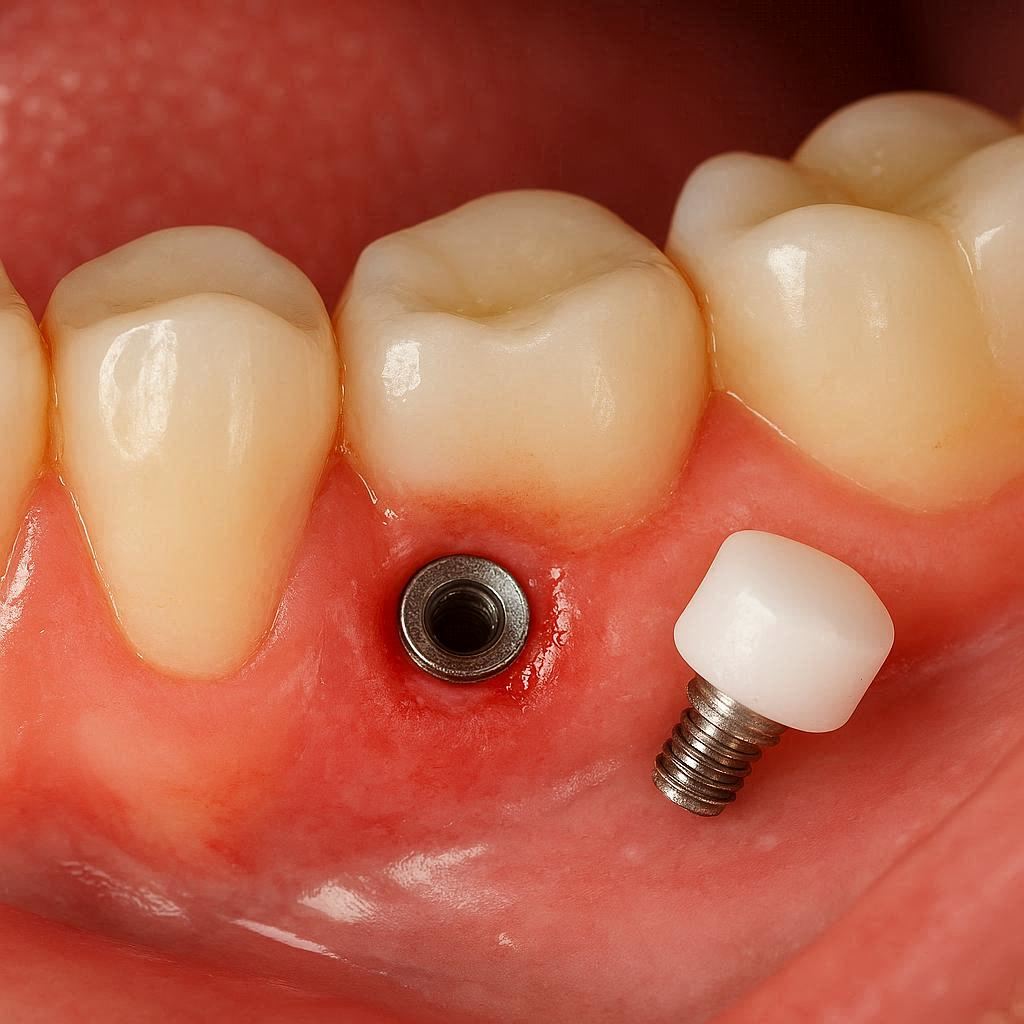
Above that, your dentist places a healing cap. This is a small screw-like piece. It protects the internal threads of the implant. It also shapes the gum tissue as it heals.
Think of it like a temporary cover. It keeps food and bacteria out. It also prevents gum tissue from growing over the implant.
Why Do Dentists Use Healing Caps?
Your dentist uses a healing cap for three main reasons.
First, it protects the implant. The inside of the implant has threads. These threads will later hold your final crown. If debris gets inside, the threads can get damaged.
Second, it guides gum healing. After implant placement, your gums want to close up. The healing cap keeps a small opening. This allows your dentist to easily access the implant later.
Third, it gives your mouth time. Bone and gum tissue need time to heal around the implant. The healing cap stays in place during this waiting period.
Different Types of Healing Caps
Not all healing caps are the same.
| Type | Material | Common Use |
|---|---|---|
| Standard healing cap | Titanium or surgical stainless steel | Most common. Durable and biocompatible. |
| Plastic healing cap | Medical-grade polymer | Temporary use. Often used for aesthetic cases. |
| Wide healing cap | Metal | Used when gum tissue is thick. |
| Narrow healing cap | Metal or plastic | Used for small implants or thin gums. |
Your dentist chooses the right type for your case. Most people get a metal healing cap. It stays in place well. It also resists wear.
Why Your Dental Implant Healing Cap Fell Out
Now we reach the main question. Why did it fall out?
There is rarely one single reason. Often it is a combination of small factors.
Normal Healing and Tissue Changes
Your gums change shape as they heal.
Right after surgery, your gums are swollen. As swelling goes down, the gum tissue shrinks. This shrinking can loosen the healing cap. It does not mean something is wrong. It means your body is healing.
Many dentists expect this. They may even tell you it could happen.
Insufficient Tightening
The healing cap is screwed into the implant. If it was not tightened enough, it can loosen over time.
Chewing, talking, and even swallowing create small vibrations. These vibrations can unscrew a cap that was not fully seated.
This is not always the dentist’s fault. Sometimes the cap feels tight but loosens later.
Chewing on the Opposite Side
You might think you are being careful. You chew only on the other side of your mouth. But food moves around. Hard pieces like nuts or popcorn kernels can travel to the implant side.
One small crunch can dislodge a loose healing cap.
Accident or Injury
A bump to the mouth can knock the cap loose. This includes:
- Falling down
- Getting hit during sports
- Biting down on a fork or spoon
- A child bumping into your face
Most injuries are minor. But they can still move the cap.
Grinding Your Teeth (Bruxism)
Do you grind your teeth at night? Many people do not know they grind.
Teeth grinding puts extra pressure on everything in your mouth. That includes your healing cap. Over time, this pressure can unscrew the cap.
If you wake up with jaw pain or headaches, grinding might be the cause.
Poor Quality of the Cap
This is rare but possible. Very cheap healing caps can have bad threads. The threads might not grip well. If your dentist used a low-quality part, it may fall out more easily.
Most reputable dentists use quality parts. But it is worth asking.
Is It an Emergency?
Here is the short answer: No.
Losing a healing cap is not a dental emergency. You do not need to rush to an emergency room. You do not need to call an after-hours dentist in the middle of the night.
However, you should not ignore it forever.
Think of it like a loose tire cap on a car. You can drive for a short time. But you should fix it soon.
When You Should Worry Less
You can relax if:
- You feel no pain
- There is no bleeding
- The implant looks clean
- You can call your dentist in the next few days
When You Should Act Faster
Call your dentist sooner if:
- You feel sharp pain
- You see swelling spreading to your face
- There is a bad taste in your mouth
- You see pus or discharge
- The implant post itself feels loose
These signs could mean infection. That needs prompt attention.
Important Note: The healing cap itself is not vital. The implant underneath is what matters. Most of the time, the implant is perfectly fine. The cap just came off.
What to Do Immediately After It Falls Out
Stay calm. Then follow these steps.
Step 1: Find the Cap (If You Can)
Look on your pillow. Check the sink. Look on the floor near where you were.
If you find it, do not throw it away. Your dentist might reuse it after sterilizing it. If you cannot find it, that is fine too.
Step 2: Rinse Your Mouth Gently
Use warm salt water. Mix half a teaspoon of salt in a cup of warm water.
Swish gently for 30 seconds. Do not spit hard. Just let the water fall out of your mouth.
This removes loose debris. It also soothes the gum tissue.
Step 3: Inspect the Area
Use a clean finger or a small mirror. Look at the implant site.
What do you see?
- A small metal post with a hole in the middle? That is the implant. Good.
- Red or pink gum tissue around it? That is normal.
- Bleeding? A little spotting is fine. Flowing blood is not.
Step 4: Do Not Try to Screw It Back In Yourself
I cannot say this strongly enough.
Do not try to put the cap back in yourself.
The threads are delicate. You could cross-thread them. That means forcing the cap in at the wrong angle. That can ruin the implant permanently.
Also, your fingers are not sterile. You could push bacteria deep into the implant.
Just leave it alone.
Step 5: Protect the Area While You Wait
You need to keep food and bacteria out until you see the dentist.
Here is what works:
- Use orthodontic wax. This is soft wax you can buy at any drugstore. Roll a small ball and press it gently over the implant hole. It stays in place for hours.
- Use a piece of sugar-free gum. Chew it until soft. Then press it over the site. This is a temporary trick.
- Eat soft foods. Avoid seeds, nuts, rice, and crunchy bread.
- Rinse after every meal. Use warm salt water each time.
Step 6: Call Your Dentist
Call during normal business hours. Tell the receptionist exactly what happened.
Say: “My healing cap fell out. I have the cap [or I do not have it]. I feel fine. When can I come in?”
Most dentists will see you within a few days. Some will say it can wait until your next scheduled visit.
Listen to their advice.
What Your Dentist Will Do
You go to the appointment. You feel a little nervous. But the fix is usually very simple.
If You Kept the Cap
The dentist will examine the cap. If it is clean and undamaged, they will sterilize it. Then they will screw it back in.
The whole process takes five minutes. You may feel a little pressure. You should not feel sharp pain.
If You Lost the Cap
No problem. Dentists keep extra healing caps in the office. They will find one that fits your implant brand.
Different implant brands have different thread patterns. A Straumann cap does not fit a Nobel Biocare implant. But your dentist will have the right match.
If the Gum Has Started to Close
Sometimes the gum tissue grows partly over the implant. This happens if the cap was missing for a week or more.
The dentist may need to numb the area. Then they will make a small cut to expose the implant. This sounds scary but it is minor. Healing takes only a few more days.
If the Implant Is Damaged
This is very rare. But it can happen if you waited too long or if you tried to fix it yourself.
A damaged implant may need to be removed. Then you heal. Then you start over with a new implant.
This is why you should act within a reasonable time.
How Long Can You Go Without a Healing Cap?
This is a common question. The answer depends on how long your implant has been in place.
Early Healing Stage (First 2-4 Weeks)
In the early weeks, the gum tissue wants to close quickly. You have less time.
If the cap falls out during this stage, call your dentist within 2-3 days. Do not wait a full week.
Mid-Healing Stage (1-3 Months)
Your gums have started to form a stable opening. The tissue is less aggressive about closing.
You can safely wait up to one week. But sooner is always better.
Late Healing Stage (3+ Months)
The implant is nearly ready for the final crown. The gum opening is mature and stable.
You can wait 1-2 weeks. Some dentists even say it is fine to leave it uncovered for the final weeks before the crown.
But always confirm with your dentist.
| Healing Stage | Time Since Surgery | Safe Wait Time |
|---|---|---|
| Early | 0-4 weeks | 2-3 days |
| Mid | 1-3 months | Up to 1 week |
| Late | 3+ months | 1-2 weeks |
Note: These are general guidelines. Your dentist may give you different instructions based on your healing.
Can You Prevent This from Happening Again?
Yes. You can reduce the risk significantly.
Ask Your Dentist to Check Tightness
At your next checkup, ask the dentist to test the healing cap. They have a special tool that measures torque. It takes ten seconds.
If it is loose, they will tighten it properly.
Use a Night Guard If You Grind
Do you suspect you grind your teeth? Ask your dentist to check for wear patterns. If you grind, get a custom night guard. It protects your implant and your natural teeth.
Avoid Sticky and Hard Foods
While the healing cap is in place, be mindful. Avoid:
- Caramel and taffy
- Hard candies
- Ice cubes
- Popcorn
- Nuts and seeds
- Crusty bread
These foods can grab the cap or knock it loose.
Maintain Gentle Oral Hygiene
You should still brush and floss. But be gentle around the implant site. Use a soft-bristled toothbrush. Do not scrub aggressively.
A water flosser on a low setting can help clean without pressure.
Keep Follow-Up Appointments
Do not skip your checkups. Your dentist needs to monitor healing. They can spot a loose cap before it falls out.
Common Myths About Healing Caps Falling Out
Let me clear up some false beliefs.
Myth 1: “It means the implant failed.”
False. The implant is a separate piece. The cap is just a cover. Implant failure is rare and has different signs. Those signs include pain, movement, and pus.
A missing cap alone does not mean failure.
Myth 2: “You can glue it back in.”
Do not do this. Glue has no place inside an implant. It will block the threads. It can also cause infection. Only a dentist should reattach the cap.
Myth 3: “It will heal fine on its own.”
Sometimes it does. But sometimes the gum grows over the implant. Then the dentist must cut it open again. That is more work and more discomfort.
It is better to have the cap replaced.
Myth 4: “It fell out because the dentist did a bad job.”
Not usually. Healing caps loosen for many reasons. Most are not the dentist’s fault. Gum shrinkage, grinding, and accidental bumps are common causes.
What If It Happens Multiple Times?
Some people lose the same healing cap two or three times.
If this happens to you, do not get frustrated. There is usually a reason.
Possible Causes for Repeated Loosening
- Your gums are shrinking a lot. This is normal for some people. The dentist may need to switch to a wider healing cap.
- You grind your teeth heavily. A night guard is the solution.
- The implant threads are damaged. This is rare but possible. Your dentist will check with a special tool.
- You are using the wrong size cap. Sometimes a smaller cap fits better for thin gums.
Your dentist will troubleshoot with you. In most cases, they find a solution quickly.
How Much Will It Cost to Replace?
This depends on your situation.
If You Have Dental Insurance
Most dental insurance plans cover implant restorations. Replacing a healing cap falls under that coverage. You may pay only a small copay. Sometimes nothing at all.
If You Pay Out of Pocket
The cost is usually low.
| Service | Typical Cost (USD) |
|---|---|
| Re-tighten existing cap | $0 – $50 |
| Replace with new cap | $50 – $150 |
| Minor gum surgery if closed | $150 – $300 |
These are estimates. Prices vary by location and dentist.
Note: Many dentists will not charge for a simple re-tightening. It takes only a few minutes. They see it as good customer service.
A Realistic Timeline of Healing After Cap Loss
Let me walk you through what to expect in the days after.
Day 1
The cap falls out. You follow the steps above. You call the dentist. You eat soft foods. You feel a little worried but you are okay.
Day 2-3
You see the dentist. They replace the cap. You feel some pressure during the procedure. Afterward, the gum may feel tender for a few hours. That is normal.
Day 4-7
The tenderness goes away. You return to normal eating, but stay careful. You resume gentle brushing.
Day 7-14
Everything feels normal again. The cap stays in place. You almost forget it happened.
Long Term
If you followed advice, no long-term harm occurs. Your implant heals on schedule. You get your final crown as planned.
When to See a Different Dentist
Sometimes your regular dentist is unavailable. Or maybe you are traveling. Or maybe you do not trust your current dentist.
In these cases, you can see a different dentist.
Any general dentist can replace a healing cap. They do not need to be a specialist. But they do need to know what brand of implant you have.
What to Bring to a New Dentist
- The name of your implant brand (if you know it)
- The healing cap itself (if you have it)
- Any paperwork from your original surgery
If you do not know the brand, the dentist can take an X-ray. Implants have different shapes. An experienced dentist can often identify the brand from an X-ray.
How This Affects Your Final Crown
You might worry that losing the cap will delay your final crown.
Usually, it does not.
The final crown attaches to the implant. The healing cap is just a placeholder. As long as the implant stays clean and the gum stays open, you are fine.
In most cases, the schedule does not change at all.
When It Might Cause a Delay
A delay can happen in two scenarios.
First, if the gum closed over the implant. Then the dentist needs to reopen it. That adds about one week of healing.
Second, if the implant got damaged. Then you may need a new implant. That adds three to six months.
But again, these scenarios are rare.
Frequently Asked Questions (FAQ)
Can I swallow a healing cap?
Yes, it can happen. It is usually not dangerous. The cap is small and smooth. It will pass through your digestive system. You will see it in your stool within 24-48 hours. If you have trouble swallowing or feel chest pain, see a doctor.
Can I eat normally after the cap falls out?
Eat soft foods only. Avoid anything hard, crunchy, or sticky. Rinse after every meal. Do not chew directly on the implant site.
Will the cap falling out hurt?
It usually does not hurt. You may not even notice it happened. Some people feel a small sharp edge with their tongue. That is how they discover it is gone.
Can I put a temporary cap from the drugstore?
No. Do not use any over-the-counter product. Only a dental healing cap fits correctly. Drugstore products are not sterile and do not match the threads.
How will I know if the implant is infected?
Signs of infection include:
- Increasing pain
- Swelling that spreads
- Redness around the gum
- A bad smell or taste
- Fever
If you have these signs, call your dentist immediately.
What if I am out of town for two weeks?
Call a local dentist where you are staying. Explain the situation. Most will help you for a small fee. If you cannot see a dentist, keep the area very clean. Rinse with salt water after eating. Use orthodontic wax to cover the hole. See your dentist when you return.
Additional Resources
For more information on dental implant care and healing, visit the American Academy of Implant Dentistry’s patient education page:
🔗 https://www.aaid.com/patients/
This resource provides verified information on implant types, healing stages, and what to expect during your treatment journey.
Final Checklist for Readers
Here is a quick summary. Save this or take a screenshot.
If your healing cap falls out:
- Stay calm
- Find the cap if possible
- Rinse with warm salt water
- Do not try to replace it yourself
- Cover the hole with orthodontic wax
- Eat soft foods
- Call your dentist within 1-3 days
- Go to the appointment
If you have pain, swelling, or discharge:
- Call your dentist immediately
- Do not wait
To prevent it from happening again:
- Ask your dentist to check tightness
- Use a night guard if you grind
- Avoid hard and sticky foods
- Keep follow-up appointments
Conclusion
A dental implant healing cap fell out. You now know exactly what to do. Stay calm. Rinse your mouth. Protect the area with wax. Call your dentist within a few days. In almost all cases, the fix is simple, quick, and inexpensive. Your implant will heal just fine, and your final crown will go in on schedule.
Disclaimer: This article is for informational purposes only. It does not replace professional medical or dental advice. Always consult your own dentist for guidance specific to your situation.