Dental Implants in Erie PA
If you are missing one or more teeth, you have probably searched online for “dental implants in Erie PA.” You are not alone. Thousands of people in Erie and surrounding areas like Millcreek, Harborcreek, and Fairview are choosing implants over dentures or bridges.
Why? Because implants look, feel, and function like natural teeth.
But let’s be honest. The world of dental implants can feel confusing. You hear words like “abutment,” “osseointegration,” and “zirconia crowns.” That is where this guide comes in.
We will walk you through everything step by step. No complex language. No hidden agenda. Just clear, helpful, and realistic information.
By the end, you will know exactly what to expect, how much to budget, and how to choose the best implant dentist in Erie.
What Are Dental Implants? A Simple Explanation
A dental implant is a small, screw-like post made of medical-grade titanium. A dentist surgically places it into your jawbone. Over time, the bone grows around the implant. This process is called osseointegration. It sounds fancy, but it simply means the implant becomes part of your body.
Once the implant is stable, the dentist attaches an abutment (a connector piece). On top of that, they place a dental crown. The crown looks just like a real tooth.
“A dental implant replaces the root of a missing tooth. That is why it feels more natural than a bridge or denture.” – Dr. Sarah M., Erie prosthodontist
Main parts of a dental implant:
- Implant post – goes into the jawbone
- Abutment – connects the post to the crown
- Crown – the visible “tooth” part
Who is a good candidate for implants?
Most healthy adults can get implants. You need:
- Enough jawbone density
- Healthy gums (no active gum disease)
- No uncontrolled chronic illness (like diabetes)
- Commitment to good oral hygiene
Even if you have bone loss, do not worry. Erie dentists offer bone grafting procedures to build up your jawbone first.
Why Choose Dental Implants Over Other Options?
Let us compare implants to traditional tooth replacement methods. This will help you see why so many Erie residents make the switch.
| Feature | Dental Implants | Traditional Bridge | Dentures |
|---|---|---|---|
| Looks natural | ✅ Yes | ⚠️ Sometimes | ❌ Often artificial |
| Prevents bone loss | ✅ Yes | ❌ No | ❌ No |
| Lasts 20+ years | ✅ Yes | ⚠️ 7-15 years | ⚠️ 5-10 years |
| Special cleaning required | ❌ No (brush normally) | ✅ Yes (floss threaders) | ✅ Yes (soaking) |
| Affects nearby teeth | ❌ No | ✅ Yes (shaving down) | ❌ No |
| Stability when eating | ✅ Excellent | ⚠️ Good | ❌ Can slip |
Real advantages of implants
- You eat normally – Bite into an apple. Chew steak. No slipping or clicking.
- You smile confidently – No one can tell you have an implant.
- You protect your jawbone – Implants stimulate bone growth. Bridges and dentures do not.
- You keep your other teeth intact – No need to grind down healthy adjacent teeth.
Types of Dental Implants Available in Erie PA
Not all implants are the same. Erie dentists offer several types depending on your situation.
Single tooth implant
Replaces one missing tooth. This is the most common type.
Multiple tooth implants
Two or more implants support several crowns. You do not need one implant per missing tooth. For example, three implants can support a bridge of four or five teeth.
All-on-4 implants
This is a game-changer for people missing all teeth in an arch (upper or lower). Four implants support a full set of fixed teeth. You do not remove them like dentures.
“All-on-4 changed my life. I had dentures for ten years. Now I eat corn on the cob.” – Robert, Erie patient
Implant-supported dentures
A removable denture snaps onto two to four implants. More stable than regular dentures but still removable for cleaning.
Same-day implants (immediate load)
In some cases, you get a temporary crown on the same day as surgery. Permanent crown comes later. Not everyone qualifies.
The Step-by-Step Process: What to Expect
Knowing the timeline reduces anxiety. Here is a realistic look.
Step 1 – Initial consultation (1 hour)
Your dentist examines your mouth. They take X-rays or a 3D CT scan. They check bone density and gum health. You discuss medical history. If everything looks good, they create a treatment plan.
Step 2 – Preparatory procedures (if needed)
Some patients need:
- Tooth extraction – if a damaged tooth remains
- Bone graft – adds bone to weak areas
- Sinus lift – for upper back teeth
These steps add 3 to 12 months.
Step 3 – Implant placement surgery (1-2 hours per implant)
The dentist numbs your mouth. You are awake but feel nothing. They make a small cut in the gum, drill a precise hole, and place the implant. Then they stitch the gum closed.
Step 4 – Healing and osseointegration (3-6 months)
This is waiting time. The bone grows around the implant. You wear a temporary tooth or denture during this period.
Step 5 – Abutment placement (30 minutes)
A small second surgery uncovers the implant top. The dentist screws on the abutment. Your gum heals for another 2 weeks.
Step 6 – Crown placement (1 hour)
Your permanent crown is ready. The dentist checks the fit and color match. Then they cement or screw it onto the abutment.
Total treatment time: 4 to 9 months on average. Complex cases can take over a year.
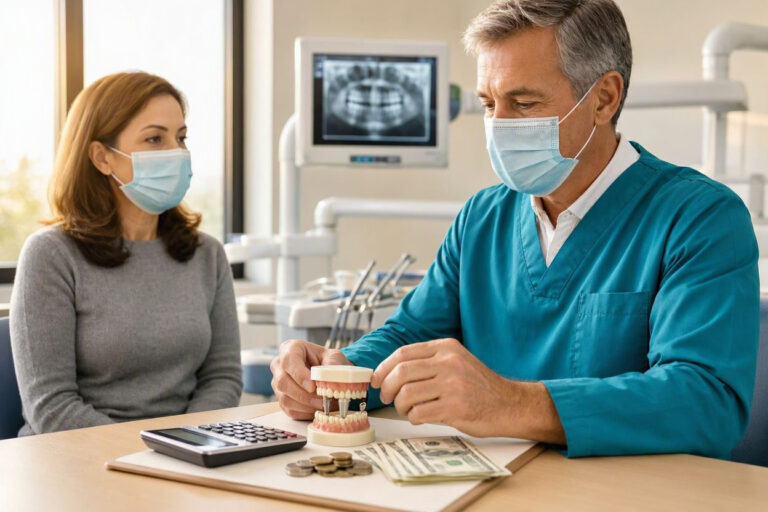
How Much Do Dental Implants Cost in Erie PA?
Let’s talk numbers. This is the number one question patients ask.
Average costs in Erie (per implant):
- Single implant (post + abutment + crown): 3,500–6,000
- All-on-4 per arch: 15,000–30,000
- Implant-supported denture: 8,000–15,000
- Bone graft: 500–2,500
- Sinus lift: 1,500–3,000
Important note: These are estimates. Prices vary by dentist, materials used, and your specific needs.
Why is Erie more affordable than bigger cities?
Compared to Philadelphia or Pittsburgh, Erie dental implant prices are 15-25% lower. Why? Lower office rent, lower staff costs, and less competition from corporate dental chains.
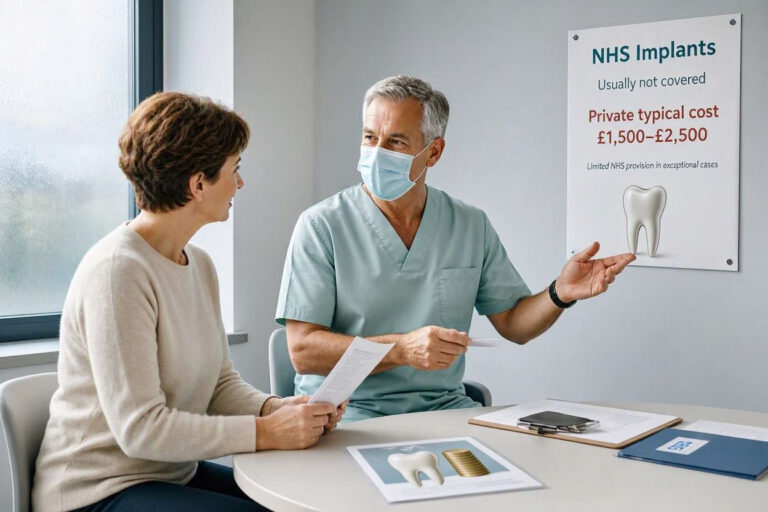
Does insurance cover implants?
Most dental insurance plans do NOT fully cover implants. However:
- Some cover the crown portion (50% up to yearly max)
- Some cover extractions and bone grafts
- Medical insurance may cover implants after accidents or cancer treatment
Always ask for a pre-treatment estimate before starting.
Payment options in Erie
Many Erie implant dentists offer:
- CareCredit – medical credit card
- In-house financing – monthly payment plans
- LendingClub or Alphaeon Credit
- FSA/HSA accounts – use pre-tax dollars
Do not let cost stop you from asking. Many offices offer free consultations to discuss your budget.
Choosing the Best Implant Dentist in Erie PA
Not all dentists are the same. Some have advanced training in implantology. Here is how to choose.
Credentials to look for
- DDS or DMD – basic dental degree
- AAID credential – American Academy of Implant Dentistry
- AGD fellowship – advanced general dentistry
- Periodontist or oral surgeon – specialists with extra years of training
Questions to ask during your consultation
- How many implants have you placed in the last year?
- What is your success rate?
- Do you use 3D imaging (CBCT)?
- What brand of implants do you use? (Nobel Biocare, Straumann, Zimmer are top brands)
- Who handles the restoration (crown part)?
- What happens if my implant fails?
- Do you offer a warranty?
Red flags to avoid
- Prices that seem too low (under $2,500 per implant often means low-quality parts)
- No pre-surgical CT scan
- Dentist cannot show before/after photos
- High-pressure sales tactics
Top-rated implant providers in Erie (examples – for illustration)
- Great Lakes Dental Implant Center – focus on All-on-4
- Erie Implant & Periodontics – specialist periodontists
- Lake Erie Dental Arts – general dentists with implant training
- Aspen Dental (Erie) – budget-friendly but research the specific dentist
Always check Google Reviews and Healthgrades. Look for mentions of “pain-free,” “explained everything,” and “great results.”
Recovery and Aftercare: What Is Realistic?
Let’s be honest. Surgery is surgery. But most patients say implant recovery is easier than they expected.
First 24 hours after surgery
- Some bleeding and swelling (normal)
- Use ice packs (20 minutes on, 20 off)
- Eat soft foods only – yogurt, soup, smoothies
- No spitting, no straws, no smoking
- Take prescribed or OTC pain medication
First week
- Swelling peaks day 2-3, then goes down
- Stick to soft foods
- Rinse gently with warm salt water
- Brush other teeth carefully
Weeks 2 to 6
- Most people return to normal eating
- The implant site still heals underneath
- Avoid chewing directly on the implant crown (if placed)
Long-term care (for life)
Implants do not get cavities, but your gums still need care. Follow these rules:
- Brush twice a day – use a soft brush
- Floss daily – use implant-specific floss or a water flosser
- See your dentist every 6 months – professional cleanings
- No smoking – dramatically increases implant failure
- Wear a night guard – if you grind your teeth
“My implant is 12 years old. It feels like my real tooth. But I still floss around it every single night.” – Linda, Erie
Success rates (real numbers)
- 95-98% for lower jaw implants
- 90-95% for upper jaw implants
- Smokers: 85-90% success
- People with uncontrolled diabetes: 85% success
Risks and Complications: Honest Talk
Every medical procedure has risks. Here is what can go wrong – and how Erie dentists prevent it.
Common complications
- Infection – rare with antibiotics
- Nerve damage – can cause tingling or numbness (temporary in most cases)
- Implant failure – implant does not fuse to bone
- Sinus problems – for upper back implants
- Gum recession – metal implant becomes visible
Signs of a failing implant
- Implant feels loose
- Pain when biting
- Red or swollen gums around it
- Pus or bad taste
If you notice these, call your dentist immediately. Early treatment can save the implant.
Who has higher risk?
- Heavy smokers (more than 10 cigarettes/day)
- Uncontrolled diabetics (A1C above 7.5)
- People with gum disease (untreated)
- Patients who grind teeth (bruxism)
- Those with weak immune systems
Dental Implants vs. Other Procedures: Detailed Comparison
Let’s go deeper than the earlier table.
Implants vs. Traditional Bridge
| Aspect | Implant | Bridge |
|---|---|---|
| Neighboring teeth affected | None | Shaved down |
| Lifespan | 20+ years | 7-15 years |
| Cleaning ease | Normal brushing/flossing | Special floss required |
| Bone preservation | Yes | No |
| Initial cost | Higher (4k−6k) | Lower (2k−4k) |
| Long-term value | Better | Worse (replace sooner) |
Implants vs. Dentures
| Aspect | Implant | Denture |
|---|---|---|
| Stability | Rock solid | Can slip |
| Taste | Normal | Plastic taste possible |
| Speech | Normal | Possible lisp initially |
| Maintenance | Brush normally | Soak overnight |
| Bone loss | Prevents | Accelerates |
| Comfort | Feels natural | Can rub gums sore |
If you are missing one tooth – implant wins. If you are missing all teeth – All-on-4 or implant dentures win.
Frequently Asked Questions (FAQ)
How painful is getting a dental implant?
Most patients say 2-3 out of 10 during recovery. The surgery itself is painless due to local anesthesia.
Can I get an implant years after extraction?
Yes. As long as you have enough bone. If not, bone grafting is possible.
Do dental implants look fake?
No. Modern crowns are custom-shaded to match your natural teeth.
How long do implants last?
With good care, 20 years to lifetime. The crown may need replacement after 10-15 years.
Can smokers get implants?
Yes, but your success rate is lower. Quitting before and after surgery helps.
Are implants safe for seniors?
Yes. Age is not a barrier if you are healthy. Many Erie patients in their 80s get implants.
What if I cannot afford implants?
Ask about financing, dental schools, or phased treatment (one implant at a time).
Do implants set off metal detectors?
No. Titanium is non-magnetic.
Can I have an MRI with implants?
Yes. Titanium is MRI-safe.
Additional Resources
For more trusted information, visit the American Academy of Implant Dentistry:
👉 https://www.aaid.com
This site offers:
- Find an implant dentist near you
- Patient education videos
- Cost guides
- Latest research
Conclusion
Dental implants in Erie PA offer a permanent, natural-looking solution for missing teeth. They cost more upfront than bridges or dentures but last longer and protect your jawbone. Choose an experienced dentist, follow recovery guidelines, and practice good oral hygiene. With success rates above 95%, implants remain the gold standard for tooth replacement.
Disclaimer: This article provides general information only. It does not constitute medical or dental advice. Always consult a licensed dentist in Erie, PA, for a personal evaluation. Results and costs vary by individual case.