Dental Office Cabinets: A Complete Guide to Choosing and Organizing
Every dental practice runs on supplies. Gloves, masks, instruments, impression materials, paperwork—the list is endless. Without smart storage, your treatment rooms become cluttered, your team wastes time searching for items, and your patients notice the chaos. Dental office cabinets are the backbone of an organized, efficient, and professional practice.
This guide covers everything you need to know about selecting, arranging, and maintaining cabinets in your dental office. Whether you’re outfitting a new practice or upgrading an older one, these practical insights will help you make confident decisions.
Why Cabinet Choice Matters More Than You Think
Cabinets aren’t just furniture. They affect workflow, infection control, and the overall feel of your office.
Efficiency and Workflow
When supplies are within arm’s reach, procedures move faster. When they’re buried in a distant closet, your assistant leaves the room repeatedly. Good cabinetry keeps everything in its place and close at hand.
Infection Control
Clinical areas require surfaces that can be wiped down and disinfected. Porous wood or complicated hardware can harbor bacteria. The right cabinet materials and designs support your hygiene protocols.
Durability and Cost
Dental offices are high-traffic environments. Cabinets get opened dozens of times a day. Cheap materials wear out quickly, leading to replacement costs and a shabby appearance. Investing in quality upfront saves money later.
Aesthetics and Patient Perception
Clean, well-designed cabinetry signals professionalism. Cluttered, mismatched storage looks disorganized and can increase patient anxiety.
“We replaced our old, mismatched cabinets with a uniform modular system. The rooms look bigger, our team finds things faster, and patients have commented on how clean everything feels.” – Dr. Alan Pierce, DDS
Types of Dental Office Cabinets
Not all cabinets serve the same purpose. Understanding the main categories helps you plan your storage strategy.
| Cabinet Type | Best Use | Key Features |
|---|---|---|
| Base Cabinets | Lower storage in treatment rooms and sterilization areas. | Drawers and doors, countertop surface on top. |
| Wall Cabinets | Upper storage for less frequently used items. | Shelves and small drawers, keeps counters clear. |
| Tall Cabinets | Full-height storage for supplies, records, and coats. | Maximum vertical storage, often with adjustable shelves. |
| Mobile Cabinets | Flexible storage that moves between rooms. | Locking casters, durable construction. |
| Under-Sink Cabinets | Storage around plumbing fixtures. | Moisture-resistant materials, often with pull-out trays. |
Materials: What Works Best in a Dental Office?
Cabinet material affects durability, hygiene, and appearance. Here’s how the most common options compare.
| Material | Pros | Cons | Best For |
|---|---|---|---|
| Laminate | Affordable, wide range of colors, easy to clean. | Can chip at edges, not heat resistant. | Budget-conscious practices, low-moisture areas. |
| Thermofoil | Seamless finish, moisture resistant, affordable. | Can peel in high heat, limited repair options. | Treatment rooms and sterilization areas. |
| Solid Wood | Durable, repairable, premium look. | Expensive, requires more maintenance. | Reception areas, executive offices. |
| Stainless Steel | Extremely hygienic, durable, easy to disinfect. | Industrial look, can dent, more expensive. | Sterilization rooms, clinical areas. |
| Melamine | Very affordable, decent durability. | Not moisture resistant, can swell if wet. | Staff break rooms, low-humidity areas. |
For clinical areas, thermofoil and stainless steel are the top choices. They withstand frequent cleaning and resist moisture. For reception and administrative areas, laminate or solid wood offer a warmer, more inviting look.
Custom vs. Stock Cabinets
Should you order custom-built cabinets or buy ready-made units? Here’s a balanced comparison.
Custom Cabinets
- Pros: Perfect fit for awkward spaces, tailored storage, unique design.
- Cons: Higher cost, longer lead times, harder to replace individual pieces.
- Best for: Practices with unusual layouts or specific workflow needs.
Stock Cabinets
- Pros: Lower cost, faster delivery, easy to replace or add units later.
- Cons: Limited size options, may not maximize space, fewer finish choices.
- Best for: Standard rectangular rooms and budget-conscious projects.
Semi-Custom Cabinets
A middle ground. You choose from standard sizes but customize doors, finishes, and internal fittings. This option often delivers the best balance of cost and fit.
“We went with semi-custom cabinets. They fit our odd-shaped sterilization room perfectly without the custom price tag. It was the right call.” – Maria Gonzalez, Practice Manager
Planning Cabinet Layout for Each Area
Different areas of your practice have different storage needs. Plan each one thoughtfully.
Treatment Rooms
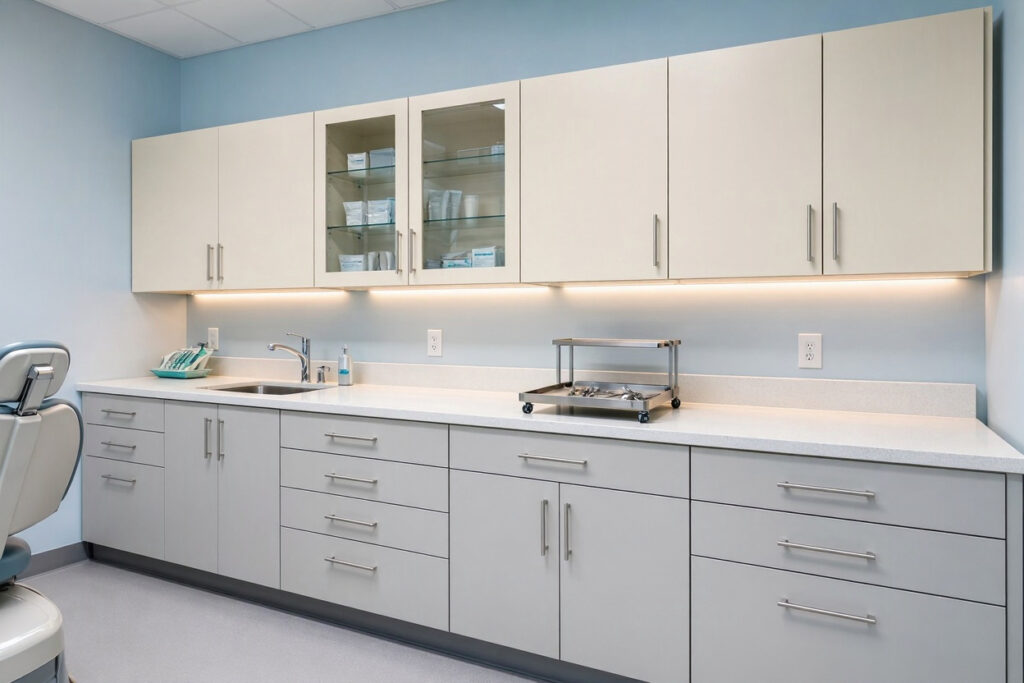
Keep frequently used items within arm’s reach of the dental chair. Use base cabinets with drawers for gloves, masks, and small instruments. Wall cabinets hold backup supplies. Avoid deep shelves where items get lost at the back.
Sterilization Area
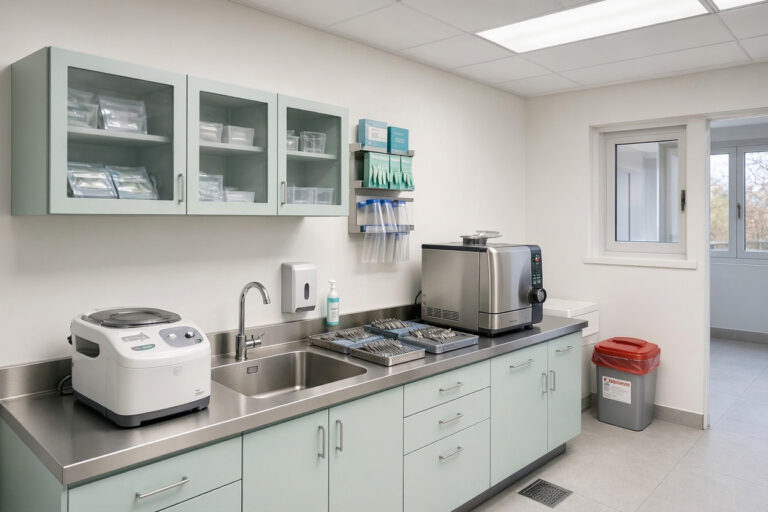
This is the most storage-intensive area. Plan cabinets for dirty instrument receiving, cleaning supplies, sterilized instrument storage, and packaging materials. Use closed cabinets to keep sterilized items free from contamination. For a complete workflow guide, see our article on dental office sterilization room design.
Reception and Front Office
Store patient files, office supplies, and personal belongings. Include a locking cabinet for sensitive documents and staff valuables. Open shelving can display decorative items or educational brochures.
Staff Break Room
Standard kitchen cabinets work well here. Include space for food, dishes, and personal mugs. Lockers or tall cabinets provide secure storage for coats and bags.
Organization Tips for Dental Office Cabinets
Great cabinets are only useful if they’re organized. These tips keep your storage functional.
- Label Everything: Use clear labels on drawers and shelves. Color-code by category (e.g., blue for restorative, green for hygiene).
- Follow the 80/20 Rule: Store the 20% of items you use 80% of the time in the most accessible spots.
- Use Drawer Dividers: Keep small items like burs and endo files from turning into a jumbled mess.
- Standardize Across Rooms: If possible, arrange cabinets identically in every treatment room. Staff can then find items instantly in any room.
- Conduct Regular Audits: Once a quarter, check for expired supplies, broken items, and misplaced stock.
- Keep Counts Visible: Use clear bins or open-front storage for high-use items so you can see when you’re running low.
| Organization Challenge | Simple Solution |
|---|---|
| Small items rolling around | Drawer dividers and small bins |
| Expired supplies hiding | First-in-first-out rotation, date labels |
| Staff can’t find items | Consistent labeling and standardized layouts |
| Cluttered counters | Wall cabinets and under-shelf baskets |
| Lost instruments | Magnetic strips inside cabinet doors |
Maintenance and Longevity
Cabinets are an investment. Protect them with basic care.
- Wipe Spills Immediately: Moisture is the enemy of most cabinet materials. Dry up spills right away.
- Avoid Harsh Chemicals: Use mild disinfectants approved for your cabinet finish. Bleach and abrasive cleaners can damage surfaces.
- Check Hardware Regularly: Tighten hinges and drawer slides. Replace worn parts before they fail completely.
- Control Humidity: In sterilization areas, ensure proper ventilation to prevent moisture damage.
- Touch Up Scratches: Use matching touch-up paint or markers to keep cabinets looking fresh.
An FAQ on Dental Office Cabinets
1. How much should I budget for dental office cabinets?
Costs vary widely. Stock cabinets might run $150 to $400 per linear foot. Semi-custom options range from $300 to $700 per linear foot. Custom cabinetry can exceed $1,000 per linear foot. Get multiple quotes and factor in installation.
2. What is the best cabinet material for sterilization rooms?
Stainless steel is the gold standard for hygiene and durability. Thermofoil is a good lower-cost alternative that resists moisture well. Avoid wood and melamine in wet areas.
3. Can I install dental cabinets myself?
Simple wall cabinets can be a DIY project if you’re handy. Base cabinets, especially those housing sinks or plumbing, often require professional installation. Improper installation can void warranties and create safety hazards.
4. How do I handle cabinet storage in a small dental office?
Maximize vertical space with tall cabinets and shelves near the ceiling. Use mobile carts that move between rooms. Consider under-sink storage and over-door organizers. For more strategies, read our guide on small dental office design.
5. How often should I replace dental office cabinets?
Quality cabinets should last 10 to 15 years with proper care. Replace them when doors sag, surfaces are damaged beyond repair, or the layout no longer supports your workflow.
Important Note for Readers
Always confirm that cabinet materials meet your local fire and building codes. In clinical areas, verify that surfaces are compatible with your infection control protocols. Consult your dental equipment supplier for guidance on cabinets designed specifically for healthcare environments.
Conclusion
Dental office cabinets are a foundational investment in your practice’s efficiency and professionalism.
The right materials and layout keep your team fast and your rooms hygienic.
Smart organization saves time, reduces waste, and lowers stress.
Quality cabinetry looks professional and lasts for years with basic care.
Additional Resource: For storage and organization standards in healthcare facilities, visit The Joint Commission. https://www.jointcommission.org/