Dental Office Exterior: Design Ideas for a Lasting First Impression
Before patients ever step inside your practice, they form an opinion based on what they see outside. The dental office exterior is your first opportunity to build trust, reduce anxiety, and signal professionalism. A well-designed exterior invites patients in. A neglected one raises doubts before the appointment even begins.
This guide covers everything you need to know about designing and improving your dental office exterior. From signage and landscaping to entryway details and lighting, you’ll find practical ideas to create a welcoming, professional presence that sets your practice apart.
Why Your Dental Office Exterior Matters
The exterior of your building is more than just a facade. It’s a powerful marketing tool and a reflection of your practice’s values.
First Impressions Are Formed in Seconds
Patients decide within moments whether they feel comfortable with your practice. A clean, well-maintained exterior signals that you care about details and professionalism. A shabby or confusing exterior creates doubt.
It Attracts New Patients
Many patients choose a dentist based on convenience and visibility. A clear, attractive exterior with strong signage helps new patients find you and feel confident about their choice.
It Reduces Patient Anxiety
Nervous patients often feel reassured by a calm, welcoming exterior. A pleasant approach, easy parking, and a clear entrance reduce the stress of an unfamiliar visit.
It Builds Community Presence
Your exterior is part of the neighborhood. A well-designed facade contributes to the area’s character and shows that your practice is invested in the community.
“We updated our exterior with new signage, landscaping, and lighting. New patient calls increased noticeably within the first month. Patients told us they noticed the difference.” – Dr. Susan Hartley, DDS
Signage: The Most Important Exterior Element
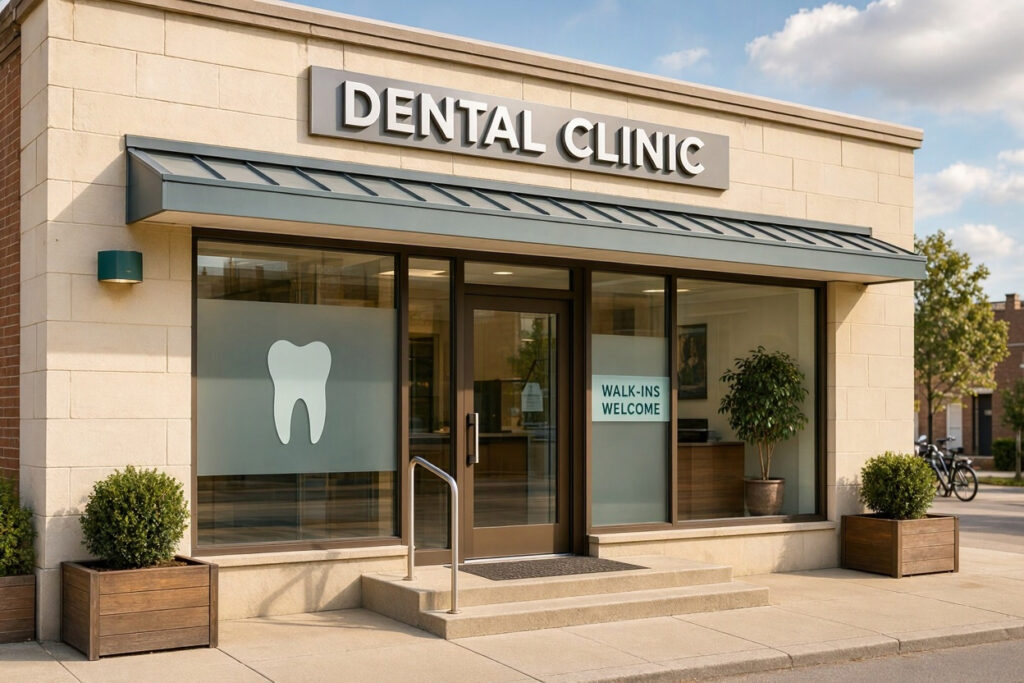
Your sign is the single most important piece of exterior design. It must be clear, visible, and professional.
Key Signage Considerations
- Legibility: Your practice name should be readable from the street and from a moving car. Use large, clear lettering.
- Lighting: Illuminated signs ensure visibility at night and in poor weather.
- Brand Consistency: Match your sign’s colors, fonts, and logo to your overall branding.
- Professionalism: Include your credentials (DDS, DMD) and any relevant certifications.
- Compliance: Check local zoning regulations for sign size, placement, and lighting.
Types of Signs
| Sign Type | Best For | Considerations |
|---|---|---|
| Monument Signs | Ground-level visibility, professional appearance. | Requires permits, good for standalone buildings. |
| Wall Signs | Building-mounted, visible from street. | Check landlord approval if renting. |
| Window Graphics | Small spaces, temporary promotions. | Ensure they don’t obstruct visibility into the office. |
| Pylon Signs | Multi-tenant buildings, high visibility. | Shared with other businesses, limited customization. |
| Digital Signs | Modern look, easy to update. | Higher cost, requires power and maintenance. |
“Our monument sign was an investment, but it made us look established and professional. Patients mention that they found us because the sign caught their eye.” – Tom Reeves, Dental Office Manager
Landscaping and Curb Appeal
Landscaping softens the clinical feel of a dental office and creates a welcoming atmosphere.
Low-Maintenance Landscaping Ideas
- Native Plants: Choose plants that thrive in your climate with minimal watering and care.
- Mulch Beds: Well-maintained mulch beds look tidy and suppress weeds.
- Seasonal Color: Add pots of seasonal flowers near the entrance for a pop of color.
- Shrubs and Hedges: Create a natural border and add greenery.
- Trees: Provide shade and soften the building’s appearance. Choose species with non-invasive roots.
Hardscaping Elements
- Walkways: Ensure paths are wide, smooth, and well-lit. Use materials that are slip-resistant.
- Planters: Large planters near the entrance add greenery without requiring garden beds.
- Benches: Provide seating for patients who arrive early or need to rest.
- Bike Racks: Encourage alternative transportation with secure bike parking.
Maintenance Matters
Overgrown lawns, dead plants, and litter create a negative impression. Schedule regular landscaping maintenance to keep your exterior looking its best year-round.
Entryway Design
The entrance is where patients transition from the outside world to your practice. Make it welcoming and easy to navigate.
Door and Entrance Considerations
- Accessibility: Ensure doors are wide enough for wheelchairs and strollers. Automatic doors are ideal for accessibility.
- Clear Signage: Post your hours, accepted insurance, and a welcome message.
- Shelter: An awning or canopy protects patients from rain and sun while entering.
- Lighting: Well-lit entrances feel safer and more inviting, especially in the evening.
- Cleanliness: Keep the entrance area free of clutter, trash, and cobwebs.
Windows and Glass
- Clean Windows: Streaky or dirty windows look unprofessional. Clean them regularly.
- Window Displays: Use window space for tasteful displays, seasonal decorations, or educational posters.
- Privacy Film: Use frosted film on lower windows for privacy while allowing light in.
- Window Treatments: Interior blinds or shades add polish and control glare.
Building Facade and Materials
The exterior materials of your building contribute to its overall appearance and durability.
| Material | Pros | Cons | Best Use |
|---|---|---|---|
| Brick | Classic, durable, low maintenance. | Can look dated if not updated. | Traditional buildings, accent features. |
| Stucco | Versatile, can be painted any color. | Can crack over time, requires maintenance. | Modern and Mediterranean styles. |
| Wood Siding | Warm, natural appearance. | Requires regular painting or staining. | Residential-feel practices. |
| Metal Panels | Modern, durable, low maintenance. | Can look industrial, limited colors. | Contemporary designs. |
| Stone Veneer | Elegant, natural look. | Expensive, heavy. | Accent walls, entrance features. |
Paint and Color
A fresh coat of paint can transform your building’s appearance. Choose colors that are professional, welcoming, and consistent with your brand. Avoid overly bright or unusual colors that might look unprofessional.
Parking and Accessibility
Patients need to park and access your office easily. Poor parking creates frustration before the appointment even starts.
Parking Considerations
- Adequate Spaces: Ensure enough parking for patients and staff. Consider peak hours.
- Clear Markings: Paint clear lines and signs for parking spaces.
- Accessible Parking: Provide designated handicapped parking close to the entrance.
- Lighting: Well-lit parking areas feel safer, especially for evening appointments.
- Signage: Post clear signs directing patients to the entrance.
Accessibility Features
- Ramps: Ensure ramps are available where needed and meet ADA requirements.
- Handrails: Install sturdy handrails on steps and ramps.
- Tactile Paving: Use textured surfaces to assist visually impaired patients.
- Clear Pathways: Keep walkways free of obstacles and debris.
Lighting Your Exterior
Good lighting extends your visibility into the evening and enhances safety and security.
Types of Exterior Lighting
- Sign Lighting: Illuminate your sign for nighttime visibility.
- Path Lighting: Light walkways and steps for safety.
- Security Lighting: Deter crime with motion-activated lights.
- Accent Lighting: Highlight architectural features or landscaping.
- Entrance Lighting: Ensure the entrance is brightly lit for safety and welcome.
Energy Efficiency
Choose LED fixtures for energy savings and long life. Consider solar-powered options for path lights and landscaping accents.
Seasonal Exterior Decorations
Seasonal touches show community spirit and keep your exterior fresh.
Appropriate Seasonal Decorations
- Spring: Planters with colorful flowers, a clean welcome mat.
- Summer: Flags, summer-themed wreaths, outdoor seating.
- Fall: Pumpkins, autumn leaves, harvest-themed displays. For ideas, see our article on dental office Halloween decorations.
- Winter: Holiday lights, wreaths, tasteful seasonal displays.
Guidelines for Seasonal Decor
- Keep It Tasteful: Avoid over-the-top displays that look cluttered.
- Respect All Beliefs: Choose decorations that are inclusive and non-religious.
- Maintain Safety: Ensure decorations don’t block walkways or create hazards.
- Update Regularly: Remove decorations promptly after the season ends.
An FAQ on Dental Office Exteriors
1. How much should I budget for exterior improvements?
Costs vary widely based on scope. New signage might cost $2,000 to $10,000. Landscaping upgrades can range from $1,000 to $20,000. A full facade renovation can exceed $50,000. Prioritize signage and cleanliness first.
2. Do I need a permit for a new sign?
In most areas, yes. Check with your local zoning or planning department for sign permits, size restrictions, and lighting regulations. Landlord approval is also required if you rent your space.
3. How can I improve curb appeal on a small budget?
Focus on cleanliness and simple updates: power wash the building, clean windows, add potted plants near the entrance, update the welcome mat, and ensure signage is clean and legible.
4. What is the most important exterior element for attracting patients?
Clear, professional signage is the most important. Patients need to find you easily and feel confident about your practice. Signage should be visible, well-lit, and consistent with your brand.
5. How often should I update my exterior?
Refresh landscaping seasonally. Update signage every 5 to 10 years or when your brand changes. Repaint the building every 5 to 7 years or as needed.
Important Note for Readers
Before making any changes to your building’s exterior, check with your landlord (if renting) and local authorities regarding permits and regulations. Some areas have strict rules about signage, colors, and modifications. Always prioritize accessibility and safety in your design.
Conclusion
Your dental office exterior is a powerful first impression that shapes patient perception.
Clear signage and welcoming landscaping attract new patients and build trust.
Thoughtful entryway design and accessibility features show you care.
Regular maintenance and seasonal updates keep your practice looking professional.
Additional Resource: For accessibility guidelines and ADA standards, visit the U.S. Department of Justice ADA website. https://www.ada.gov/