Dental Office Decor Ideas for a Waiting Area That Puts Patients at Ease
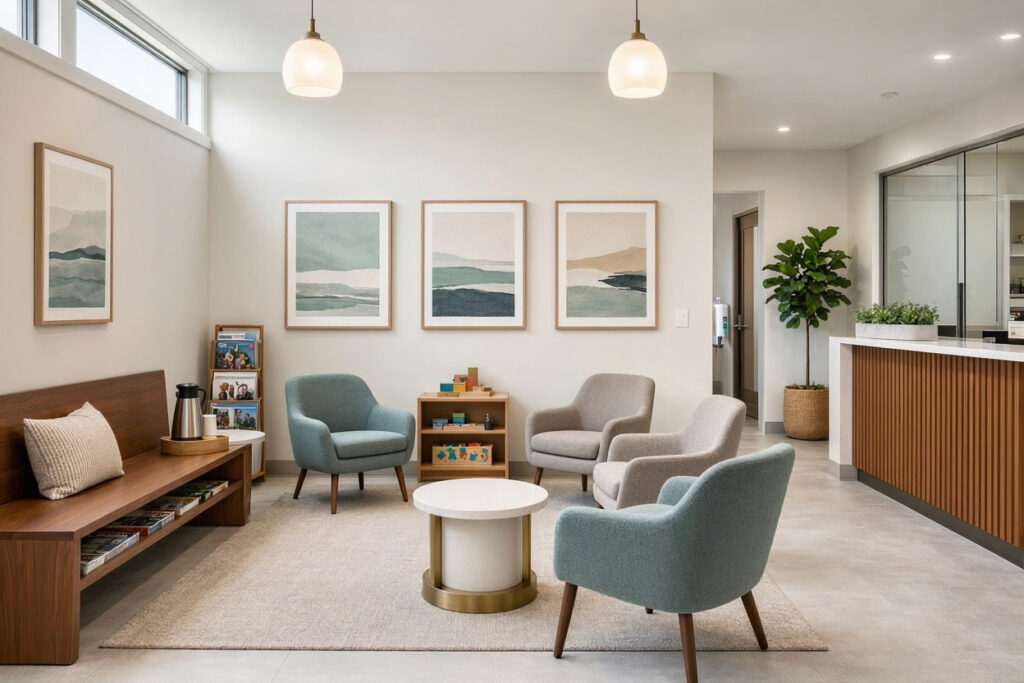
Patients rarely look forward to a dental appointment. The waiting area is where that nervous energy either settles or grows. Decor plays a bigger role in that moment than most practice owners realize. The right dental office decor ideas for a waiting area can turn a plain room into a space that feels calm, cared for, and genuinely welcoming.
This guide focuses on the decorative elements themselves: themes, textures, greenery, seasonal touches, and budget-friendly projects. If you’re planning a full redesign of the room’s layout or seating, our guide on dental office lobby design covers those structural decisions in depth. Here, we concentrate on the details that bring a waiting area to life.
Why Waiting Area Decor Deserves Its Own Plan
Decor is often the last item on a renovation checklist, squeezed in after equipment and flooring. That’s backwards. Patients sit in the waiting area with nothing to do but look around. Every detail gets noticed.
Decor Drives the Emotional Experience
A room with bare walls, harsh light, and mismatched chairs feels institutional. Soft textures, living plants, and warm artwork send a different message: this place is cared for, and so are you.
Decor Signals Your Standard of Care
Patients make subconscious judgments. If the waiting area looks neglected, they may wonder whether other details get neglected too. Thoughtful decor builds confidence before treatment starts.
Decor Manages Attention
Nervous patients need somewhere for their eyes to rest. A gentle focal point—a large landscape, a small aquarium, a green wall—gives anxious minds something pleasant to hold onto instead of the ticking clock.
“We hung one large photograph of a local lake behind the seating. Patients started commenting on it immediately. It gave the room a focal point and made conversations easier.” — Hannah Liu, Dental Office Manager
Start with a Decor Theme
Themes prevent the scattered look that comes from buying pieces one at a time. Choose a direction and let it guide every purchase.
| Theme | Core Elements | Best For |
|---|---|---|
| Calm Coastal | Soft blues, driftwood tones, seascape photography, woven baskets. | Practices near water or seeking a spa feel. |
| Botanical Retreat | Green palette, plant prints, natural wood, live plants. | Family practices with a wellness focus. |
| Warm Minimalist | Neutral tones, simple shapes, one or two statement pieces. | Modern urban practices with small spaces. |
| Local Character | Photos of local landmarks, work by regional artists. | Community-focused practices. |
| Gentle Playful | Muted pastels, friendly illustrations, soft shapes. | Practices with many pediatric patients. |
Whichever theme you choose, keep colors to two or three main tones plus one accent. Consistency reads as professionalism; variety for its own sake reads as clutter.
Wall Decor That Calms Rather Than Clutters
Walls occupy the most visual space in a waiting area, so they deserve the most thought.
Choose Subject Matter Carefully
Nature imagery consistently works: landscapes, water, forests, and soft botanical close-ups. Abstract pieces in gentle colors also perform well. Avoid anatomical posters, dark or stormy scenes, and busy patterns that create visual noise.
Scale Matters
One large piece usually looks better than six small ones. A large canvas or framed print gives the eye a single resting place and makes the room feel more spacious. If you prefer a gallery arrangement, keep frames uniform and spacing even.
Consider the View from the Chair
Patients sit for ten to thirty minutes. Place art at seated eye level—roughly 54 to 60 inches to the center of the piece. Art hung high above seating goes unnoticed.
Practical Notes on Framing
Use frames with protective glazing so pieces can be wiped clean. Avoid ornate frames with deep crevices that collect dust. In high-traffic spots, consider canvas prints without glass, which are easier to maintain.
For a deeper look at subject matter and placement by room, see our guide on dental office wall art.
Bring in Living Elements
Plants are among the highest-value decor investments in any waiting area.
Why Greenery Works
Live plants soften hard edges, add color without paint, and signal freshness. Many patients associate greenery with cleanliness and care.
Low-Maintenance Plant Options
| Plant | Light Needs | Why It Works in a Waiting Area |
|---|---|---|
| Snake plant | Low to moderate | Nearly indestructible, upright shape saves space. |
| Pothos | Low to moderate | Trailing habit softens shelves and counters. |
| ZZ plant | Low | Tolerates neglect and low light well. |
| Peace lily | Moderate | Lush foliage, tolerates fluorescent light. |
| Fiddle leaf fig | Bright indirect | Large statement plant for a corner. |
Practical Considerations
Place plants in sturdy, tip-resistant pots. Keep trailing varieties out of walkways. If maintenance is unreliable, high-quality artificial plants are a reasonable compromise—choose ones with realistic texture and keep them dusted. Avoid strongly scented flowers, since many patients are sensitive to fragrance.
Soft Textiles and Texture
Hard surfaces dominate dental offices. Adding softness changes how a room feels.
- Area rugs: A low-pile rug anchors the seating zone and reduces chair noise. Choose cleanable, commercial-grade options with non-slip backing.
- Throw pillows: Small accents that add color and warmth. Choose removable, washable covers.
- Upholstered ottomans: Provide extra seating and a softer look than plastic chairs.
- Window treatments: Sheer panels or simple roller shades soften glass walls while controlling glare.
- Baskets: Woven baskets holding magazines or blankets add texture and hide clutter.
Keep textiles coordinated with your color palette rather than adding new colors. Two or three textures in the same family look intentional; many competing patterns look chaotic.
Lighting as Decor
Fixtures are decorative objects as well as light sources.
- Replace bare fluorescent panels with warm-toned LED fixtures and diffusers.
- Add a floor lamp or two table lamps near seating for a residential glow.
- Use dimmers where possible to adjust the mood for different times of day.
- Consider a decorative pendant over a side table or near the reception desk as a focal point.
- Avoid strobing, flickering, or very cool-toned bulbs, which read as clinical.
Lighting changes are often the highest-impact, lowest-cost decor upgrade available.
Seasonal and Rotating Decor
Changing decor through the year keeps the space feeling fresh and shows community involvement.
A Simple Rotation Calendar
| Season | Decor Direction | Keep It Appropriate |
|---|---|---|
| Spring | Fresh flowers, pastel accents, light botanical prints. | Avoid heavy pollen-producing blooms. |
| Summer | Coastal or garden themes, bright but soft accents. | Watch for glare and heat near windows. |
| Fall | Warm tones, pumpkins, harvest baskets. | Keep pumpkins friendly, not spooky. |
| Winter | Soft lights, wreaths, tasteful neutral holiday decor. | Stay inclusive rather than specific to one holiday. |
For holiday-specific guidance, see our article on dental office Halloween decorations, which covers keeping seasonal decor friendly rather than frightening.
Rotation Rules
Store off-season items carefully so they stay in good condition. Keep a written inventory so you don’t rebuy items you already own. Remove seasonal decor promptly once the season ends—stale decorations look careless.
Budget-Friendly and DIY Decor Ideas
You don’t need a large budget to make a waiting area feel considered.
- Print and frame your own photography: High-quality prints of local scenery cost little and look personal.
- Frame children’s artwork: With parental permission, display art from young patients on a rotating basis.
- Create a gallery wall from matching frames: Buy inexpensive frames in one style and fill them with printed quotes or botanical prints.
- Paint a single accent wall: One wall in a soft accent color changes the whole room for the price of a can of paint.
- Use baskets for organization: Woven baskets hide magazines and toys while adding texture.
- Add a small bookshelf: A simple shelf holding books, a plant, and a framed photo feels homey.
- Repurpose furniture: A well-made console table from a secondhand shop, repainted, can serve as a display surface.
“Our best decor decision cost under a hundred dollars. We printed twelve photos of local parks, framed them identically, and hung them in a row. Patients ask about them constantly.” — Marcus Webb, Practice Consultant
What to Avoid in Waiting Area Decor
| Decor Choice | Why It’s a Problem | Better Alternative |
|---|---|---|
| Anatomical or medical posters | Can increase anxiety | Soft nature photography |
| Dark or moody artwork | Feels unwelcoming | Bright, calm imagery |
| Strong scented candles or diffusers | Triggers allergies and sensitivities | Unscented or lightly scented options |
| Cluttered surfaces | Creates visual stress | Clear surfaces with one or two objects |
| Mismatched furniture styles | Looks unplanned | Consistent style and palette |
| Fragile decor within reach | Breakage and safety risk | Durable, stable pieces |
| Outdated magazines | Signals neglect | Current issues or a digital display |
An FAQ on Waiting Area Decor
1. How much should I budget for waiting area decor?
A modest refresh—paint, framed prints, plants, and textiles—can cost $500 to $2,000. A full decor overhaul with custom art and new lighting may run $3,000 to $10,000. Prioritize lighting and wall art first, since they have the largest visual impact.
2. How often should I update waiting area decor?
Refresh seasonal items quarterly. Review the overall decor every two to three years. Replace worn or faded pieces as soon as they start to look tired.
3. Are artificial plants acceptable in a dental office?
Yes, if they look realistic and are kept clean. Dust artificial plants regularly. Live plants are preferable for air quality and authenticity, but reliable maintenance matters more than the choice itself.
4. Can I display patient artwork in the waiting area?
Yes, with written permission from parents or guardians. A rotating display of children’s art adds personality and gives young patients a reason to feel proud of your office.
5. Should waiting area decor match the treatment rooms?
It should coordinate rather than match exactly. Carry the same color palette and style language throughout, but treatment rooms generally need simpler, more minimal decor to keep patients calm.
6. Is it okay to use scented items in a waiting area?
Use caution. Many patients have allergies, asthma, or fragrance sensitivity. If you want a scent, choose a very subtle, professionally diffused option, and avoid it entirely in clinical areas.
Important Note for Readers
Before hanging heavy items, confirm wall construction and use appropriate anchors. Keep all decor out of pathways and away from exits. In seating areas used by children, avoid small removable parts and fragile items. Confirm that fabrics and surfaces can be cleaned according to your infection control protocols.
Conclusion
Waiting area decor shapes how patients feel before they ever reach the treatment chair.
A consistent theme, calming wall art, and greenery turn a plain room into a reassuring space.
Lighting, textiles, and seasonal rotation keep the area feeling cared for year-round.
Small, budget-friendly touches often make the strongest impression on nervous patients.
Additional Resource: For evidence-based guidance on designing calming healthcare environments, visit The Center for Health Design. https://www.healthdesign.org/