Dental Office Outfits for Women: A Practical Style Guide
What you wear to work in a dental office matters more than many people admit. Patients notice. Colleagues notice. And most importantly, you notice—because the wrong outfit makes a twelve-hour shift feel twice as long. Finding dental office outfits for women that balance professionalism, comfort, and practicality is a genuine challenge, especially when your role spans clinical care and patient conversation.
This guide breaks down what works for different roles in a dental practice, from hygienists to front desk coordinators to practice managers. You’ll find realistic recommendations, fabric considerations, and a few style rules worth following.
Why Workwear Deserves Thought in a Dental Office
Dental offices occupy an unusual space between healthcare and hospitality. The dress code has to serve both.
Hygiene Comes First
Clinical staff work close to patients’ mouths. Clothing must withstand frequent cleaning, resist stains, and not trap debris. Loose sleeves, dangling jewelry, and porous fabrics create real infection-control problems.
Patients Read Your Appearance
A polished appearance signals competence and care. Studies on healthcare perception consistently show that patients judge professionalism partly by how staff dress. A wrinkled, stained uniform undermines trust, even if the clinical work is excellent.
Comfort Affects Performance
Dental teams stand, bend, and twist for hours. Poorly fitting shoes and restrictive clothing cause fatigue that shows up in posture, mood, and patient interaction by mid-afternoon.
Dress Codes Carry Legal Weight
Some practices require uniforms and provide them; others offer a clothing allowance; some allow personal choice within guidelines. Whatever the policy, it should be written down and applied consistently. Check your local labor regulations if uniforms are mandatory.
“We switched from all-white uniforms to modern scrubs in brand colors. Staff comfort improved, and patients started commenting that the office felt more modern.” — Denise Carter, Practice Manager
Outfit Guidelines by Role
Different roles have different demands. Here’s how to approach each.
| Role | Best Options | Key Priorities |
|---|---|---|
| Dentist | Quality scrubs, optional white coat, closed-toe shoes. | Authority, hygiene, comfort during long procedures. |
| Dental Hygienist | Performance scrubs, supportive shoes, minimal jewelry. | Freedom of movement, stain resistance, ergonomics. |
| Dental Assistant | Scrubs with secure pockets, comfortable sneakers. | Functionality, easy cleaning, quick movement. |
| Front Desk / Reception | Business casual or branded polo and slacks. | Approachability, professionalism, polish. |
| Office Manager | Business casual, blazers optional. | Authority, warmth, comfort for long desk hours. |
| Sterilization Technician | Scrubs, protective outerwear, closed shoes. | Durability, moisture resistance, safety. |
Scrubs: The Clinical Standard
Scrubs remain the default for clinical roles, and modern options are far better than the boxy versions of the past.
Fabric Matters
- Polyester-spandex blends: Stretch, hold shape, resist wrinkles. Good for active roles.
- Cotton blends: Breathable and soft, but wrinkle more and fade faster.
- Antimicrobial fabrics: Increasingly common in healthcare; helpful but not a substitute for proper laundering.
- Moisture-wicking options: Valuable for hygienists and assistants who move constantly.
Fit and Cut
Choose scrubs with a bit of stretch through the shoulders and hips. Jogger-style scrub pants have become popular because they stay clear of the floor and reduce tripping risk. Tops should allow full arm movement without riding up.
Color Strategy
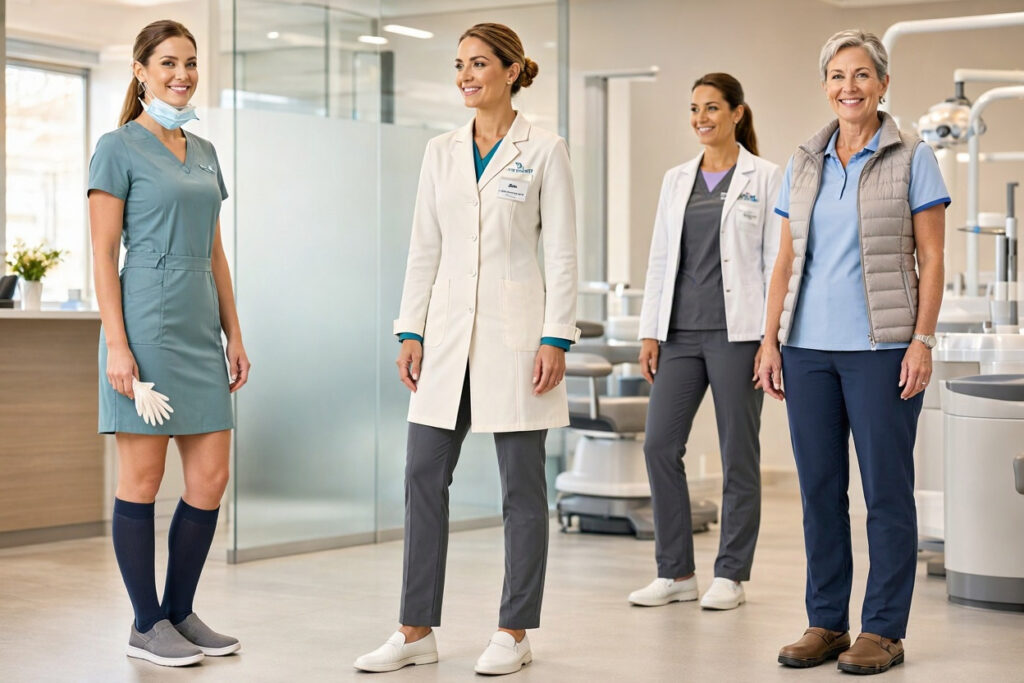
Many practices assign scrub colors by role—hygienists in one shade, assistants in another. This helps patients identify staff and creates a cohesive look. Popular choices include:
- Navy and charcoal: Hide stains well and look professional.
- Teal and sage: Calming and clinical.
- Burgundy: Warm and distinctive.
- Pastel shades: Friendly, especially in pediatric practices.
If your practice allows personal color choice, coordinate with colleagues so the team still looks unified.
Pockets and Practicality
Deep, secure pockets matter. Assistants and hygienists carry pens, small instruments, and notes. Look for scrub tops with chest pockets and pants with cargo-style pockets that close securely.
Business Casual for Front Office and Management
Front desk and management roles usually call for a step up from scrubs.
Reliable Combinations
- Tailored slacks with a blouse or knit top
- A simple sheath dress with a cardigan
- Dark jeans (if permitted) with a polished top
- A branded polo shirt with slacks for a unified team look
- A blazer over a simple top for management roles
Fabrics That Work
Choose wrinkle-resistant, machine-washable fabrics. Stretch ponte pants and ponte-blend blazers look polished while staying comfortable through long shifts. Avoid delicate fabrics that require dry cleaning—they’re impractical for daily wear in a busy office.
Shoes for Desk Roles
Comfortable flats, low wedges, or supportive loafers work well. Avoid heels that make standing and walking uncomfortable. Even desk staff move frequently to escort patients and handle paperwork.
Footwear: The Most Underrated Decision
Dental staff are on their feet constantly. Footwear deserves serious attention.
What to Look For
- Supportive arch: Essential for long shifts and hard floors.
- Slip resistance: Spills happen. Non-slip soles prevent accidents.
- Closed toe: Required in virtually all clinical settings.
- Washable or wipeable: Leather or synthetic uppers clean easily.
- Cushioning: Replace insoles regularly.
Recommended Shoe Types
| Shoe Type | Best For | Notes |
|---|---|---|
| Nursing clogs | Clinical staff standing for hours | Easy to clean, excellent support. |
| Athletic sneakers | Assistants and hygienists | Choose neutral colors for a professional look. |
| Slip-on loafers | Front desk and management | Polished appearance, easy on and off. |
| Compression socks | Anyone with long shifts | Reduce leg fatigue and swelling. |
Avoid open-toe shoes, sandals, and worn-out soles. Replace shoes every six to twelve months depending on wear.
Jewelry, Hair, and Grooming
Small details affect both hygiene and perception.
Jewelry Rules
- Keep rings simple. Stone-set rings can trap debris and tear gloves.
- Avoid dangling earrings and necklaces near clinical work.
- Watches with fabric bands are difficult to clean. Wipeable bands or no watch during procedures is safer.
- Some practices prohibit facial piercings in clinical areas.
Hair
Keep hair pulled back or secured during patient care. This prevents hair from contacting patients or equipment and looks neater through the day. Simple clips, headbands, and ponytails work well.
Nails and Hands
Short, clean nails are essential. Many practices prohibit artificial nails and nail polish in clinical roles because they can harbor bacteria and tear gloves. Check your local infection control guidelines.
Building a Cost-Effective Wardrobe
A full work wardrobe can get expensive. Here’s how to manage it sensibly.
- Start with neutrals: Two pairs of pants and three tops in coordinating colors create many outfits.
- Buy quality over quantity: Well-made scrubs last years longer than cheap ones.
- Watch for sales: Many uniform retailers offer bulk discounts or seasonal sales.
- Check your practice’s allowance: If your employer provides a uniform allowance, use it deliberately.
- Keep a spare set: Store a clean set of scrubs or a spare top in your locker for accidents and spills.
- Invest in good shoes first: Foot health affects everything else.
“I keep one clean spare set of scrubs at work. It has saved me twice after coffee spills and once after a rather enthusiastic patient. Worth every penny.” — Amanda Price, Dental Hygienist
Seasonal Adjustments
Dental offices are often temperature-controlled, but seasonal shifts matter.
| Season | Adjustment | Reason |
|---|---|---|
| Summer | Lighter fabrics, short sleeves where permitted, moisture-wicking scrubs. | Warmer commutes and busier schedules. |
| Winter | Layer with cardigans or fleece jackets in brand colors. | Offices can feel cool, especially near windows. |
| Rainy season | Water-resistant shoes and a spare pair of socks. | Wet feet make for a miserable shift. |
| Year-round | Keep a light layer at your workstation. | Temperature varies by room in most offices. |
For clinical areas, ensure any outer layer is clean and doesn’t interfere with PPE.
What to Avoid
| Outfit Choice | Why It’s Problematic | Better Alternative |
|---|---|---|
| Dangling jewelry | Hygiene risk, glove tears | Simple studs, no necklaces |
| Long, loose sleeves in clinical work | Can contact patients or equipment | Short sleeves or fitted cuffs |
| Open-toe shoes | Safety and hygiene violation | Closed-toe, slip-resistant shoes |
| Heavy perfume | Bothers patients and colleagues | Unscented lotion or nothing |
| Wrinkled or stained clothing | Looks unprofessional | Keep a spare set at work |
| Overly casual wear | Undermines trust | Follow practice dress code |
| Visible undergarments | Unprofessional appearance | Properly fitted layers |
An FAQ on Dental Office Outfits for Women
1. Are scrubs required in all dental offices?
No. Clinical roles usually require scrubs for hygiene reasons, but front desk and management often wear business casual. Policies vary by practice, so check your employee handbook.
2. What colors are best for dental scrubs?
Navy, charcoal, teal, and sage are practical choices because they hide minor stains and look professional. Many practices assign colors by role to help patients identify staff.
3. Can I wear nail polish or artificial nails in a dental office?
Many practices prohibit both for clinical staff because they can harbor bacteria and interfere with glove integrity. Check your local infection control guidelines and practice policy.
4. How many work outfits do I need?
A practical minimum is five to seven outfits, enough to get through a workweek without daily laundry. A spare set kept at work is a smart backup.
5. What shoes are best for dental hygienists?
Supportive, slip-resistant, closed-toe shoes with good arch support. Nursing clogs and athletic sneakers are popular choices. Replace them every six to twelve months.
6. Is it acceptable to wear a white coat?
Some dentists wear white coats for authority and a clinical look. Others prefer scrubs alone for comfort and a friendlier feel. Either is acceptable depending on practice culture.
Important Note for Readers
Always follow your practice’s written dress code and local infection control regulations. If you’re unsure whether an item is appropriate, ask your office manager before wearing it. Requirements vary significantly between practices and regions.
Conclusion
Choosing the right dental office outfits for women comes down to balancing hygiene, comfort, and professionalism.
Role-appropriate choices keep clinical staff safe and front office staff polished.
Quality fabrics and supportive shoes make long shifts far more manageable.
Small details—jewelry, hair, and grooming—protect both patients and your professional image.
Additional Resource: For infection control guidance relevant to workwear and hand hygiene, visit the CDC’s Dental Infection Control page. https://www.cdc.gov/oralhealth/infectioncontrol/index.html