Dental Office Manager Tips: Practical Advice for Running a Smooth Practice
The office manager is the backbone of a dental practice. You handle scheduling, staffing, billing, patient relations, and a hundred small crises before lunch. When you do your job well, no one notices. When something slips, everyone notices. This guide shares practical dental office manager tips that help you stay organized, lead your team, and keep the practice running smoothly without burning out.
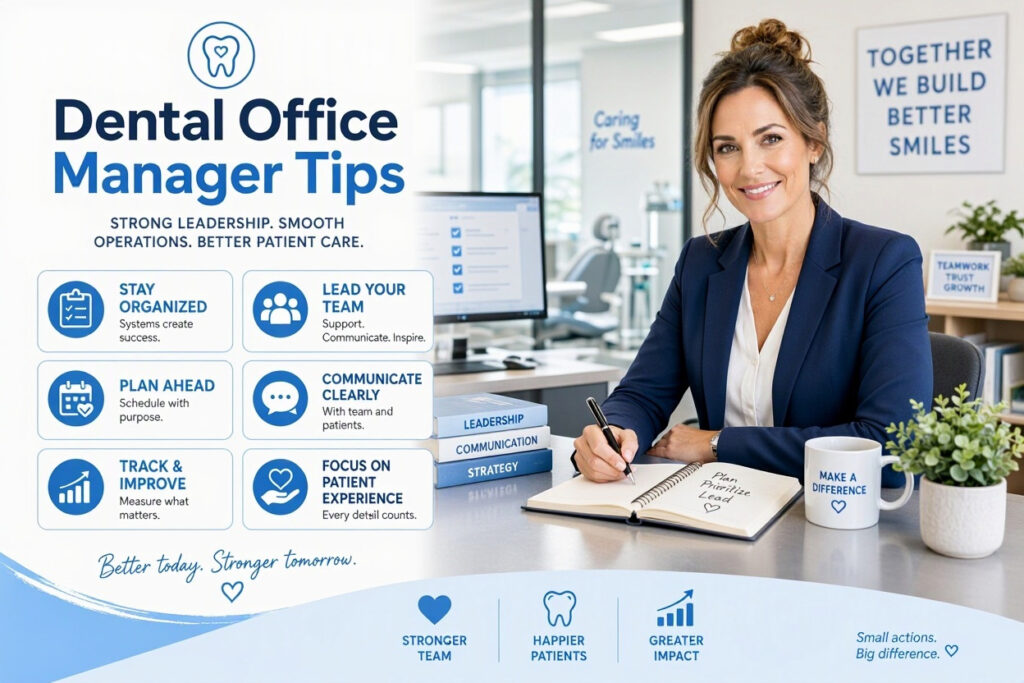
Understanding Your Role
The office manager title covers a wide range of responsibilities. In a small practice, you might handle everything from HR to marketing. In a larger one, you may focus on operations or finance. Either way, your core job is to keep the practice running so the clinical team can focus on patients.
That means you are part scheduler, part accountant, part counselor, and part problem-solver. Knowing which hat to wear and when is half the battle.
“A great office manager does not just manage tasks. They manage energy. They keep the team steady when the day gets chaotic.” — Dental Practice Management Coach
Core Responsibilities at a Glance
- Scheduling: Keeping the appointment book full and efficient.
- Staffing: Hiring, training, scheduling, and supporting the team.
- Billing and insurance: Claims, payments, and collections.
- Patient relations: Handling complaints, questions, and follow-ups.
- Compliance: HIPAA, OSHA, and licensure requirements.
- Operations: Supplies, equipment, vendors, and facilities.
- Reporting: Tracking key metrics and reporting to the owner.
Scheduling Tips That Protect Your Day
The schedule is the engine of the practice. A poorly managed schedule creates chaos for everyone.
Build a Schedule That Works
- Block by procedure type: Longer procedures in the morning when energy is high.
- Protect emergency slots: Reserve time each day for urgent cases.
- Confirm appointments 48 hours ahead: Reduces no-shows significantly.
- Use reminders: Text and email reminders cut missed appointments.
- Track no-shows: Identify patterns and address repeat offenders.
Sample Daily Schedule Structure
| Time | Block Type | Notes |
|---|---|---|
| 8:00 – 10:00 | Major procedures | High-focus time |
| 10:00 – 12:00 | Hygiene and fillings | Steady flow |
| 12:00 – 1:00 | Lunch | Protect this time |
| 1:00 – 3:00 | Mixed appointments | New patients, follow-ups |
| 3:00 – 4:30 | Emergencies and overflow | Buffer time |
| 4:30 – 5:00 | Admin and next-day prep | Reset for tomorrow |
Tip: Leave a small buffer between appointments. Back-to-back scheduling feels efficient until one patient arrives late or a procedure runs long.
Managing and Motivating Your Team
Your team is your greatest asset. How you lead them determines whether the practice feels calm or chaotic.
Leadership Tips That Work
- Communicate clearly: Set expectations and follow through.
- Be consistent: Apply rules fairly to everyone.
- Recognize good work: A quick thank-you goes a long way.
- Address problems early: Small issues grow into big ones when ignored.
- Ask for input: Staff often know what is not working before you do.
- Protect break times: Burned-out staff make mistakes.
Handling Conflict
Conflict happens in every practice. Handle it directly and privately.
- Listen to both sides before responding.
- Focus on behavior, not personality.
- Find a solution both parties can accept.
- Follow up to confirm the issue is resolved.
Important Note: Never discipline an employee in front of patients or other staff. Privacy protects dignity and trust.
Financial Management Basics
Even if your practice has an accountant, the office manager usually touches the money side daily.
Daily Financial Tasks
- Verify insurance eligibility before appointments.
- Collect copays and payments at the time of service.
- Post payments accurately the same day.
- Review the day’s production against the schedule.
- Flag unpaid claims for follow-up.
Monthly Financial Review
| Metric | What It Tells You |
|---|---|
| Production vs. collections | Whether you are collecting what you earn |
| Accounts receivable aging | How much money is stuck in unpaid claims |
| No-show rate | Health of your scheduling process |
| New patient count | Growth of the practice |
| Overhead percentage | Whether costs are in line with revenue |
Tip: Review accounts receivable weekly, not monthly. Claims that sit too long become harder to collect.
Patient Relations That Build Loyalty
Patients remember how you made them feel. Your front desk sets that tone.
Building a Great Patient Experience
- Greet every patient by name: It takes seconds and means a lot.
- Answer the phone with a smile: It comes through in your voice.
- Follow up after major procedures: A quick call builds trust.
- Handle complaints calmly: Listen fully before responding.
- Apologize when appropriate: A sincere apology de-escalates most situations.
Handling Difficult Patients
- Stay calm: Do not match their emotion.
- Listen first: Let them finish without interrupting.
- Acknowledge their concern: “I understand why that was frustrating.”
- Offer a solution: Be specific and realistic.
- Follow up: Confirm the issue is resolved.
Important Note: Document any serious complaints in writing. This protects both the patient and the practice.
Time Management for Busy Days
Office managers juggle many tasks at once. Good time management keeps you sane.
Prioritization Framework
- Urgent and important: Patient emergencies, payroll, compliance deadlines.
- Important but not urgent: Staff training, process improvements, marketing.
- Urgent but not important: Most interruptions and small requests.
- Neither: Time-wasters to eliminate.
Daily Habits That Help
- Start with a plan: Write your top three priorities each morning.
- Batch similar tasks: Return all calls at once, process all claims together.
- Close your door for focus time: Protect 30 minutes for deep work.
- Delegate when possible: Train staff to handle routine tasks.
- End with a reset: Clear your desk and plan tomorrow before you leave.
Compliance and Documentation
Compliance is not glamorous, but it protects your practice from fines and lawsuits.
Compliance Checklist
- HIPAA: Privacy policies, training, and documentation.
- OSHA: Safety training, hazard communication, and exposure control.
- Licensure: Track staff licenses and renewals.
- Continuing education: Monitor CE requirements for clinical staff.
- Infection control: Logs for sterilization and equipment maintenance.
Important Note: Review compliance requirements annually. Rules change, and outdated policies create risk.
Common Office Manager Mistakes
- Trying to do everything yourself: Learn to delegate.
- Avoiding hard conversations: Problems grow when unaddressed.
- Ignoring your own breaks: Burnout helps no one.
- Focusing only on tasks, not people: Relationships drive results.
- Skipping documentation: If it is not written down, it did not happen.
Frequently Asked Questions
What are the most important skills for a dental office manager?
Organization, communication, leadership, and basic financial literacy. Patience and problem-solving matter just as much.
How can an office manager reduce no-shows?
Send reminders 48 hours ahead, confirm appointments by text, and track patterns to identify repeat no-shows.
How do I handle a difficult patient?
Stay calm, listen fully, acknowledge their concern, and offer a specific solution. Document the interaction afterward.
What metrics should an office manager track?
Production, collections, accounts receivable aging, no-show rate, new patient count, and overhead percentage.
How do I avoid burnout as an office manager?
Delegate what you can, protect your breaks, set boundaries, and ask for help when the load gets heavy.
Additional Resource
For practice management training and resources, visit the American Association of Dental Office Management (AADOM) for professional development and networking.
Conclusion
Great dental office management comes down to consistency, communication, and care. Build a schedule that protects your day, lead your team with fairness, track your numbers closely, and put patients first. Learn to delegate and protect your own energy. Do these things well, and the practice runs smoothly even on the hardest days.