Pediatric Dental Office Design Interiors: Creating Spaces That Kids Love and Parents Trust
Children experience dental visits differently than adults. They feel fear more intensely, notice their surroundings more acutely, and remember experiences longer. That makes pediatric dental office design interiors especially important. The right environment turns anxiety into curiosity and tears into smiles. This guide covers practical design strategies for creating a pediatric dental office that children love and parents trust.
Why Pediatric Design Matters
A child’s first dental visit often shapes their attitude toward oral care for life. If the experience feels scary, they carry that fear into adulthood. If it feels fun and safe, they build healthy habits early.
Design plays a huge role in that experience. Colors, textures, lighting, and layout all send signals to a child’s brain. A bright, playful space says “this is fun.” A cold, clinical space says “this might hurt.”
“Children read environments faster than adults. They know within seconds whether a place feels safe. Design is your first chance to earn their trust.” — Pediatric Healthcare Designer
Key Goals of Pediatric Dental Design
- Reduce fear: Create a space that feels playful, not clinical.
- Engage children: Give them something to explore and enjoy.
- Reassure parents: Show professionalism, cleanliness, and safety.
- Support staff: Design for efficiency and stress reduction.
- Adapt to growth: Plan for changing needs as children grow.
Color Psychology for Children
Color is the most powerful tool in pediatric design. It sets the mood before a child even sits down.
Best Colors for Pediatric Dental Offices
- Bright blues: Calming and trustworthy. Good for treatment rooms.
- Soft greens: Natural and soothing. Works well in waiting areas.
- Warm yellows: Cheerful and energizing. Use as accents.
- Coral and orange: Friendly and inviting. Good for reception areas.
- Purple: Imaginative and playful. Works well in kids’ zones.
Colors to Use Carefully
- Red: Can feel aggressive or alarming to young children.
- Black: Can feel scary or heavy in large doses.
- Neon colors: Overstimulating in large areas. Use as small accents.
Comparison Table: Color Use by Room
| Room | Recommended Colors | Avoid |
|---|---|---|
| Waiting room | Soft blue, green, warm yellow | Red, dark colors |
| Treatment rooms | Light blue, mint green, white | Bright neon, black |
| Kids’ play area | Bright primaries, pastels | Muted grays |
| Reception | Coral, teal, warm white | Harsh contrasts |
| Hallways | Light neutrals with colorful accents | Dark or busy patterns |
Tip: Use color in zones. Bright colors in play areas, softer tones in treatment rooms. This helps children transition from play mode to calm mode.
Themed Design Ideas
A theme gives your office personality and makes it memorable. Children love themes because they create a story.
Popular Pediatric Themes
Underwater Adventure
Blue walls, fish decals, bubble lights, and an aquarium. Treatment rooms can feel like submarines or coral reefs.
Jungle Safari
Green walls, animal murals, and leaf-shaped ceiling decorations. A friendly lion or elephant mascot can guide children through the visit.
Space Exploration
Dark blue walls with glow-in-the-dark stars, rocket ship chairs, and planet mobiles. Great for older children.
Fairy Tale Forest
Trees, mushrooms, and friendly woodland creatures. Soft lighting and warm colors create a cozy feel.
Superhero City
Bright colors, comic-book style graphics, and capes for kids to wear during treatment. Empowers anxious children.
Theme Tips
- Keep it consistent: Carry the theme through waiting room, hallways, and treatment rooms.
- Avoid scary elements: No dark caves, sharp teeth, or threatening characters.
- Make it age-inclusive: A theme that works for a 4-year-old may not work for a 12-year-old. Add neutral elements for older kids.
Waiting Room Design for Children
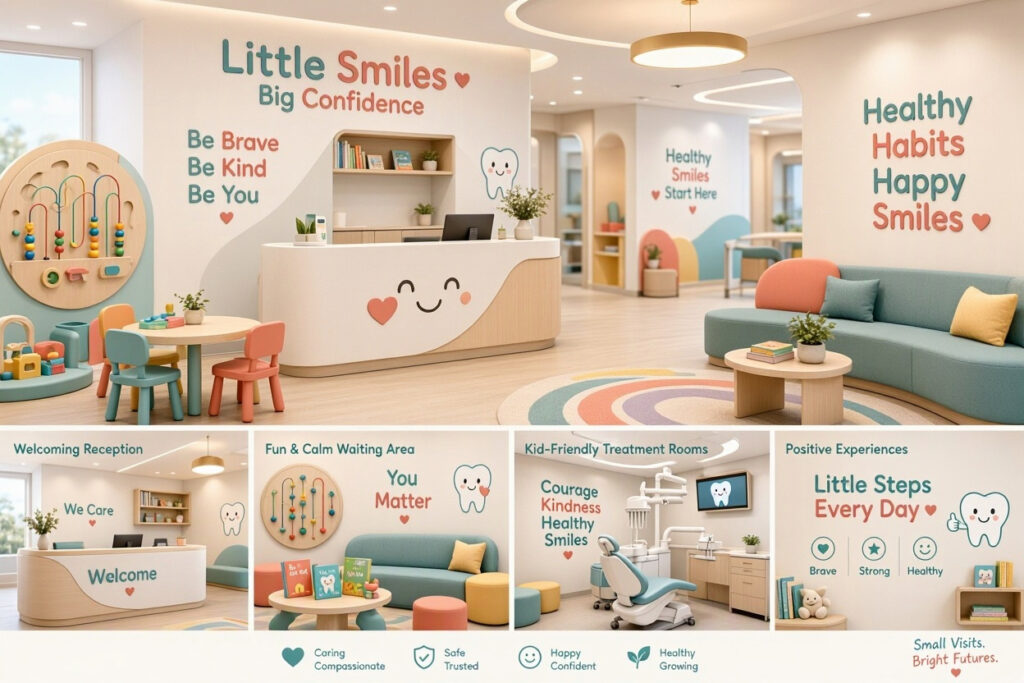
The waiting room is where anxiety builds. Design it to distract, engage, and comfort.
Key Features
- Play area: A defined space with toys, books, and activities.
- Comfortable seating: Chairs sized for children and adults.
- Entertainment: A TV playing gentle cartoons, or interactive wall panels.
- Clear sightlines: Parents should see children at all times.
- Separation: Keep the play area slightly apart from quiet seating for anxious patients.
Play Area Ideas
| Feature | Benefit | Budget Range |
|---|---|---|
| Soft play blocks | Safe, creative play | $50 – $200 |
| Wall-mounted activity panels | Engages multiple kids | $100 – $500 |
| Books and coloring station | Quiet engagement | $30 – $100 |
| Small slide or climber | Active play | $200 – $800 |
| Interactive floor games | Movement and fun | $500 – $2,000 |
Important Note: All play equipment must be cleanable and safe. Avoid small parts that could be choking hazards. Check for lead-free materials.
Treatment Room Design
Treatment rooms are where anxiety peaks. Design them to feel less clinical and more friendly.
Key Design Elements
- Ceiling decorations: Children lie back and stare at the ceiling. Put something interesting there—stars, animals, or a mobile.
- Wall murals: Friendly characters or scenes at child eye level.
- Chair covers: Colorful covers that make the dental chair less intimidating.
- Distraction screens: TVs on the ceiling or wall showing cartoons.
- Kid-sized furniture: Small chairs and steps for children to climb up.
- Reward display: A visible treasure chest or prize shelf.
Reducing Fear Through Design
- Hide scary equipment: Cover or store instruments out of sight until needed.
- Use friendly language on signage: “Tooth camera” instead of “X-ray machine.”
- Add soft lighting: Avoid harsh overhead lights.
- Include a comfort item: A stuffed animal or blanket for children to hold.
Tip: Let children choose a small toy or sticker before treatment starts. This creates a positive association before anything scary happens.
Lighting and Sound
Lighting and sound affect mood more than most people realize. Children are especially sensitive to both.
Lighting Tips
- Use warm, soft lighting in waiting areas.
- Add dimmers in treatment rooms to reduce harsh brightness.
- Use novelty lights: Star projectors, colored lamps, or fairy lights.
- Avoid fluorescent flicker: It can trigger anxiety or sensory issues.
Sound Tips
- Play gentle music in waiting areas.
- Use white noise machines to mask drill sounds.
- Offer headphones for children during treatment.
- Keep noise levels low: Use acoustic panels to absorb sound.
Important Note: Some children have sensory processing sensitivities. Offer quiet spaces and noise-canceling headphones for those who need them.
Safety and Accessibility
Pediatric offices must meet higher safety standards than adult practices.
Safety Checklist
- Rounded furniture edges: No sharp corners at child height.
- Non-slip flooring: Especially in play areas and hallways.
- Outlet covers: All unused outlets covered.
- Secure shelving: Anchored to walls to prevent tipping.
- Cleanable surfaces: All play areas and furniture easy to sanitize.
- Emergency exits: Clearly marked and accessible.
Accessibility Features
- Step stools at sinks and counters.
- Lowered handrails in hallways.
- Wide doorways for strollers and wheelchairs.
- Sensory-friendly quiet room for children with autism or anxiety.
Parent Comfort
Parents are part of the experience too. Design for their comfort and peace of mind.
- Comfortable adult seating in the waiting room.
- Clear visibility into treatment areas if parents want to watch.
- Coffee and water station in the waiting area.
- Educational materials about children’s oral health.
- Charging stations for phones and devices.
Tip: Offer a small area where parents can soothe a crying child in private. This reduces stress for everyone.
Budgeting for Pediatric Design
Pediatric design can fit many budgets. Prioritize the elements children notice most.
| Design Element | Typical Cost | Priority |
|---|---|---|
| Wall murals and decals | $500 – $3,000 | High |
| Themed furniture | $1,000 – $5,000 | Medium |
| Play area equipment | $500 – $2,000 | High |
| Ceiling decorations | $200 – $1,000 | High |
| Distraction screens/TVs | $500 – $2,000 | Medium |
| Themed lighting | $300 – $1,500 | Medium |
| Prize/treasure chest | $100 – $500 | High |
Note: Start with the waiting room and treatment room ceilings. These have the biggest impact on a child’s experience.
Common Mistakes to Avoid
- Overstimulation: Too many colors, sounds, and activities overwhelm children.
- Scary imagery: Dark themes, sharp shapes, or unfriendly characters increase fear.
- Ignoring older kids: A toddler theme alienates preteens.
- Poor cleanliness: Play areas get dirty fast. Plan for easy cleaning.
- No quiet space: Some children need calm, not play.
Frequently Asked Questions
What colors are best for a pediatric dental office?
Bright blues, soft greens, warm yellows, and coral are welcoming and calming. Avoid red and black in large areas.
How do I make a dental treatment room less scary for kids?
Add ceiling decorations, distraction screens, colorful chair covers, and hide equipment until needed. Use friendly language on signage.
What should a pediatric dental waiting room include?
A play area, comfortable seating for parents and children, entertainment, and clear sightlines so parents can supervise.
How much does pediatric dental office design cost?
Themed design elements range from $3,000 to $15,000 depending on scope. Start with high-impact areas like the waiting room and treatment room ceilings.
Do I need a separate quiet room for anxious children?
It helps. A small sensory-friendly space gives children with anxiety or sensory needs a place to calm down before treatment.
Additional Resource
For pediatric healthcare design guidelines and child-friendly space research, visit the Center for Health Design for evidence-based design resources.
Conclusion
Pediatric dental office design interiors shape how children feel about dental care for years. Use color thoughtfully, choose a fun theme, design the waiting room for play, and make treatment rooms less clinical. Add soft lighting, manage sound, and keep safety first. A well-designed space turns fear into fun and builds lifelong patients.