Do Dental Implants Last for Life?
The promise of permanence is one of the most compelling arguments for choosing dental implants over other tooth replacement options. You have likely heard the claim that implants can last a lifetime. This statement carries a powerful appeal, but it requires careful, nuanced examination. This comprehensive guide tackles the question of implant longevity head-on, with unflinching honesty. We will separate the enduring implant fixture from the prosthetic crown it supports, explore the hard data on survival rates, and, most importantly, identify the specific, controllable factors that determine whether your implant becomes a lifelong companion or a temporary solution. Your goal is a smile that lasts for decades, and this knowledge is your roadmap.
The Crucial Distinction: The Implant Fixture vs. the Restoration
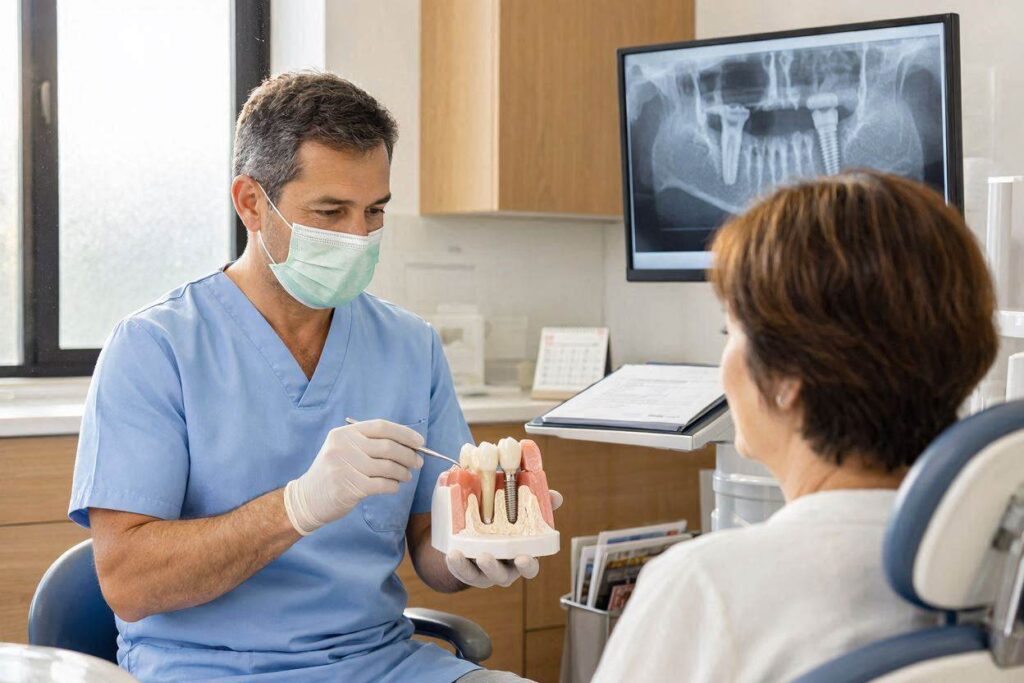
The single most important concept to grasp when discussing the lifespan of a dental implant is that it is not one monolithic object. It is a system of three distinct components, each with its own material properties, vulnerabilities, and longevity profile. The implant fixture is the titanium or zirconia post surgically embedded in your jawbone. This is the component designed with true lifetime potential. The abutment is the connector piece, usually titanium or zirconia, that screws into the implant and protrudes through the gum to support the visible tooth. The restoration, or crown, is the custom-made, tooth-shaped prosthetic fixed to the abutment. It is typically crafted from porcelain, zirconia, or a combination of materials.
When a dentist says an implant can last a lifetime, they are referring specifically to the osseointegrated fixture. This titanium post, once fused to your bone, has the potential to remain a healthy, functioning part of your body for the rest of your life. The living bone cells that cling to its surface are constantly remodeling and renewing their bond. The titanium itself is biocompatible, corrosion-resistant, and extraordinarily strong. However, the crown is a mechanical device that endures millions of cycles of force in a harsh, wet, bacterially active environment. It is subject to wear, material fatigue, and potential fracture. A more accurate, honest framing is that the implant root can last a lifetime, but the visible crown will likely require replacement or maintenance at some point over the decades.
Understanding Survival Rates vs. Success Rates
The scientific literature on dental implants uses specific terminology that can be misleading to the layperson. You will often encounter the term “survival rate.” A 95 percent ten-year survival rate sounds impressive, and it is. But it means the implant fixture is still physically present in the mouth at the ten-year mark. It does not mean the implant is healthy, aesthetically pleasing, and free of complications. An implant with significant bone loss, chronic inflammation, and a loose, chipped crown is a “survivor” by this metric, but no patient would call it a success.
A more meaningful standard is the “success rate,” which applies strict criteria. A truly successful implant, according to the widely used criteria established by Albrektsson and colleagues, must show no mobility, no persistent pain or paresthesia, no peri-implant radiolucency on X-ray, and less than 0.2 millimeters of annual vertical bone loss after the first year of function. When these rigorous success criteria are applied, the long-term rates decline. Studies tracking implants over 15 to 20 years show success rates in the 80 to 90 percent range for most populations. This is still an excellent outcome for a medical device placed in a hostile oral environment, but it is not 100 percent. It means that out of every ten patients, one or two will experience a significant complication requiring intervention over two decades. This realistic picture frames the discussion properly.
The Biological Determinants of Implant Longevity
The life-or-death threat to your implant is the biological health of the bone and gum tissues that surround it. Peri-implantitis is the leading cause of late-term implant loss. This condition does not emerge randomly. It is the predictable, cumulative consequence of a persistent bacterial challenge. The implant surface, particularly the moderately rough surfaces engineered to accelerate osseointegration, becomes a formidable enemy if exposed. Once bone loss exposes these micro-rough textures to the oral cavity, they become plaque traps of the highest order, impossible to clean with home tools. The disease process then accelerates. Your genetic susceptibility to inflammation and your immune system’s response to the bacterial biofilm are major variables. Some patients can have average hygiene and never develop peri-implantitis. Others, with a hyper-inflammatory genetic profile, must maintain flawless, obsessive levels of cleanliness.
Your systemic health is an equally powerful biological determinant. Well-controlled chronic conditions can coexist with healthy implants for decades. Uncontrolled diabetes, with its associated microvascular damage and impaired immune function, creates a constant, low-grade threat to the bone-implant interface. Autoimmune conditions like rheumatoid arthritis, and the immunosuppressive medications used to treat them, can dampen the bone’s natural remodeling capacity. Hormonal changes, including the significant drop in estrogen after menopause, accelerate bone loss throughout the body, including the jaw. A patient’s health status at age 50, when the implant is placed, is not a static condition. It evolves over the next 30 years. The implant’s longevity depends on your ability to maintain good systemic health and to communicate any major health changes to your implant dentist.
The Role of Periodontal History
A past history of periodontal disease is the single most significant risk factor for future peri-implantitis. The bacteria that caused your gum disease colonized your mouth, created a specific microbial profile in your plaque, and demonstrated that your immune system responds to these pathogens with a destructive inflammatory response. This scenario does not disappear when your teeth are removed and replaced with implants. The same bacteria, the same host response, and the same vulnerability remain. You do not get a clean slate. You get a second chance, but only if you and your professional team remain relentlessly committed to controlling the disease.
This is why periodontal stability is a prerequisite for implant placement. Any active gum disease must be fully treated and brought into a state of remission. After the implants are placed, you are not a “cured” patient. You are a “periodontal maintenance” patient for life. Your professional cleaning intervals are likely three or four months, not six. These visits are not routine cleanings; they are targeted anti-infective interventions designed to continually disrupt the biofilm and prevent the re-emergence of the destructive disease process around your expensive implants. Patients with a periodontal history who lapse from this maintenance schedule have a drastically higher rate of implant failure.
The Mechanical Forces That Threaten Longevity
While biology attacks the implant from the gum side, mechanical forces assault the prosthetic components from above. Occlusal overload is the term for forces that exceed the physiological tolerance of the implant system. Your natural teeth have a periodontal ligament that acts as a sophisticated biological shock absorber. It provides a tiny amount of “give” and sends proprioceptive feedback to your brain about how hard you are biting. An implant has none of this. It is a rigid, unyielding connection directly to the bone. You cannot feel how hard you are biting on an implant. You can generate bite forces on a single posterior implant that far exceed the bone’s capacity to withstand them, without feeling any warning pain.
This chronic overload can manifest in two ways. Biologically, it can cause microfractures at the bone-implant interface and trigger a process of bone resorption, leading to a loss of osseointegration and eventual loosening. Mechanically, it can lead to a cascade of prosthetic failures: the abutment screw loosens, the screw fractures, the porcelain on the crown chips or cracks, or, in the most severe and rare outcome, the implant fixture itself fractures. The most potent generator of these destructive forces is nocturnal bruxism, the unconscious clenching and grinding of teeth during sleep. The forces generated during a bruxism episode can be ten times the forces of normal chewing. For an implant patient with untreated bruxism, a catastrophic mechanical failure is not a matter of if, but when.
The Design of the Restoration Matters
The way your dentist designs the biting surface of your implant crown has a direct and lasting impact on the forces transmitted to the implant. The implant should be protected from damaging off-axis lateral forces. The occlusion should be designed so that during heavy chewing, the forces are directed vertically down the long axis of the implant, where the bone is strongest and most tolerant. Light contacts in a lateral excursive movement should ideally be on the natural teeth, not the implant. This concept is called “implant-protected occlusion,” and its mastery separates a highly skilled implant restorative dentist from an average one.
Another critical design factor is the emergence profile, the contour of the crown as it emerges from the gum. If the crown is over-contoured or under-contoured, it can create a food trap or a plaque-retentive ledge that makes home care impossible. The connection between the abutment and the implant fixture must be a precision, machined fit. A microscopic gap at this connection acts as a bacterial reservoir, a dead space where biofilm thrives and leaks inflammatory byproducts directly into the surrounding bone. A poorly fitting abutment is a silent, chronic driver of bone loss. The longevity of your implant is built on the microscopic precision of these connections, details that you as a patient never see but that your bone feels every moment.
The Overwhelming Importance of Maintenance and Hygiene
You have read it repeatedly because it is the unvarnished truth: the single greatest variable determining whether your implant lasts for life is you. Your daily habits either fortify or undermine the foundation of your implant. An implant cannot decay, but it can be lost to neglect. Neglect manifests as the failure to perform the daily, meticulous mechanical disruption of the biofilm at the gumline and in the hidden interproximal spaces. A patient who brushes twice a day with a soft electric toothbrush, uses a water flosser with an implant tip, and threads specialized fuzzy floss or interdental brushes through every implant space daily is building a fortress of biological health.
The professional maintenance visit is the indispensable complement to home care. Your hygienist uses instruments that are softer than titanium to clean the implant surfaces without scratching them. They probe and measure, creating a longitudinal record of your gum health. The periodic radiograph, usually taken once a year, is the objective, undeniable report card. It shows, in black and white, whether the bone level is stable or if there is a developing shadow of radiolucency indicating bone loss. The patient who maintains their recall appointments faithfully catches problems at the stage of mucositis, a condition that is 100 percent reversible. The patient who skips appointments catches problems at the stage of peri-implantitis, where permanent bone damage has already occurred. The difference in outcome between these two patients, over 20 years, is the difference between a lifelong implant and a failed one.
Professional Maintenance Protocols
A proper implant maintenance visit is not a quick polish. It is a systematic, thorough clinical process. The clinician will first review your medical history for any changes. They will conduct a comprehensive visual and tactile examination of every implant and restoration. They will use a flexible, plastic or titanium periodontal probe to gently measure the sulcus depth around each implant, recording any bleeding or exudate. These probing depths, recorded over time, are the most sensitive early indicator of developing inflammation.
The cleaning procedure uses specialized instrumentation. Gold, copper alloy, titanium, or plastic scalers are used to remove calculus from the implant abutment and the restoration margins. An ultrasonic scaler with a non-metal tip designed for implants may be used. The implant surfaces are then polished with a non-abrasive, fine-grit paste and a soft rubber cup. The occlusion is checked meticulously with articulating paper to ensure no new interferences have developed. Finally, the clinician will review and re-demonstrate the specific home care techniques for your unique implant configuration. This is not a cosmetic cleaning; it is a strictly prophylactic medical procedure designed to prevent a disease process.
Realistic Expectations Over a Lifetime
To honestly answer the question, “Do dental implants last for life?” you must adopt a lifetime perspective. If you are 35 years old when you receive an implant, you are asking that implant to survive 50, 60, or even 70 years. That is an extraordinary demand. Even the most successful natural teeth often fail to last that long without some intervention. The realistic, evidence-based expectation is that a well-placed, well-restored, and obsessively maintained dental implant has an excellent chance of providing decades of trouble-free service, and a very good probability of lasting for life for many patients.
However, you must budget emotionally and financially for the maintenance and potential replacement of the prosthetic components. The porcelain crown, subjected to millions of chewing cycles, may chip, wear, or require replacement after 15 to 25 years. This is normal maintenance, akin to replacing the tires on a well-built car. The abutment screw, a tiny mechanical component under constant stress, may loosen or, rarely, fracture and require replacement. These are not “implant failures.” They are predictable maintenance events for a complex prosthetic system functioning in a demanding environment. The patient who understands this distinction, who views their implant as a long-term investment requiring ongoing, low-level maintenance, is the patient who reports the highest satisfaction and achieves the greatest longevity.
Conclusion
The core question of whether dental implants last for life receives an honest answer when we separate the osseointegrated titanium fixture, which has true lifetime potential, from the prosthetic crown, which is subject to decades of mechanical wear and may need eventual replacement. The biological longevity of the implant is perpetually contested by the threat of peri-implantitis, driven overwhelmingly by a past periodontal history, inconsistent home biofilm disruption, and lapses in professional maintenance. The mechanical longevity of the restoration depends on a precisely designed, implant-protected occlusion and the rigorous management of destructive parafunctional forces like bruxism through the consistent use of a nightguard.
Frequently Asked Questions
What is the average lifespan of the crown on a dental implant?
With excellent home care and regular professional maintenance, a well-made porcelain or zirconia implant crown can last 15 to 25 years or more before needing replacement due to normal wear or minor chipping. It is the component most likely to need eventual attention.
Can an implant last 30 years or more?
Yes. Clinical studies tracking implants for 30 years show that the titanium fixture can absolutely remain healthy and functional for that duration and beyond in a patient with controlled systemic health, no smoking history, and impeccable oral hygiene.
Is it true that implants are stronger than natural teeth?
This is a misleading myth. The materials of an implant are stronger than dentin and enamel, but the biological system of a natural tooth, with its periodontal ligament shock absorber and sensory feedback, is more resilient and adaptable to functional forces than a rigid, osseointegrated implant.
What is the number one thing I can do to ensure my implant lasts?
Without question, the single most impactful action is to maintain a meticulous, multi-tool daily oral hygiene routine that includes water flossing and interproximal brushing around the implant, combined with adherence to your recommended professional maintenance schedule.
At what point is an implant considered a failure?
An implant is considered failed if it exhibits clinical mobility, progressive and unarrestable bone loss, persistent untreatable pain, or if it fractures. An implant with no mobility that has some manageable bone loss is a compromised but surviving implant, not a failed one.
Additional Resource
The Academy of Osseointegration is a leading international organization dedicated to the science and clinical practice of implant dentistry. They offer a wealth of peer-reviewed publications and consensus statements on long-term implant outcomes. You can find their resources at: https://www.osseo.org/