Do Dental Implants React Negatively To Cold Temperatures?
Many people experience tooth sensitivity to cold temperatures. Ice cream, cold drinks, and cold air can cause sharp pain in sensitive teeth. If you have dental implants or are considering them, you may wonder whether implants react to cold the same way natural teeth do.
This guide explains how dental implants respond to cold temperatures. You will learn about the differences between natural teeth and implants, what causes cold sensitivity, and when to be concerned about implant-related discomfort.
Understanding Dental Implants and Temperature Sensitivity
Natural teeth have nerves inside them. When cold temperatures reach these nerves, they can trigger pain. This is why people with sensitive teeth experience discomfort when eating ice cream or drinking cold beverages.
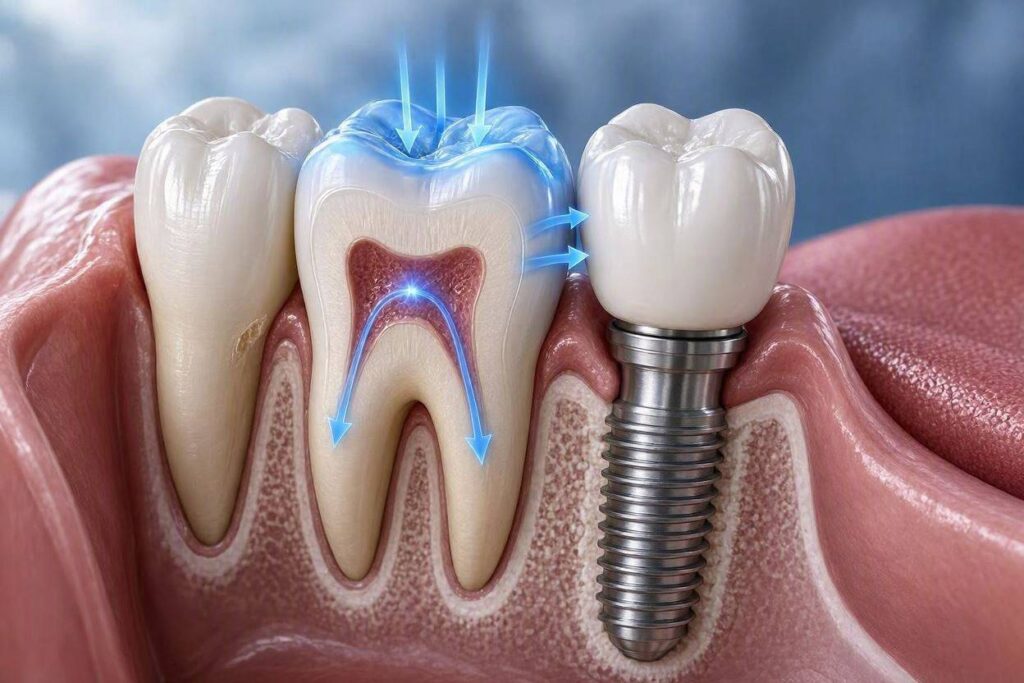
Dental implants are different. An implant is an artificial tooth root made of titanium or zirconia. It has no nerve tissue inside it. The crown placed on top of the implant is also artificial. This means the implant itself cannot feel cold or heat.
Why Implants Do Not Feel Cold
The absence of nerve tissue is the key reason implants do not react to cold. Natural teeth have a pulp chamber containing nerves and blood vessels. When cold reaches the pulp, it sends pain signals to the brain.
Implants have no pulp, no nerves, and no blood vessels. The titanium post is inert metal. The crown is made of porcelain or zirconia. Neither material can transmit temperature sensations to a nerve because there is no nerve to receive the signal.
What About the Surrounding Tissues?
While the implant itself cannot feel cold, the tissues around it might. The gums and bone surrounding the implant contain nerves. If these tissues are healthy, they should not react to normal cold temperatures.
However, if the gums around the implant are inflamed or receding, you might experience sensitivity. This sensitivity comes from the gum tissue, not the implant itself. Exposed implant surfaces or receding gums can make the area feel sensitive to temperature changes.
Can Cold Cause Damage to Implants?
Dental implants are designed to withstand normal temperature variations in the mouth. Hot coffee, cold ice cream, and everything in between are safe for implants.
Thermal Expansion
All materials expand and contract with temperature changes. Titanium and porcelain have different thermal expansion rates. However, the temperature range in the mouth is relatively narrow, from near freezing to about 140 degrees Fahrenheit. Implants are designed to handle this range without problems.
Extreme Cold
Extremely cold temperatures, such as biting directly into ice or very hard frozen foods, can potentially damage the crown. Porcelain crowns can chip or crack under extreme force, especially if combined with cold temperatures. This is not a reaction to the cold itself but to the force of biting something hard.
Sensitivity After Implant Surgery
While the implant itself does not feel cold, you may experience sensitivity after surgery. This is normal and temporary.
Post-Surgical Sensitivity
After implant placement, the surrounding tissues are healing. You may experience sensitivity to hot and cold during the first few weeks. This sensitivity comes from the surgical site, not the implant.
Healing Period
As the tissues heal, the sensitivity should resolve. If sensitivity persists beyond a few weeks, contact your dentist.
After Crown Placement
Some patients experience mild sensitivity after the crown is placed. This is usually due to the gum tissue adjusting to the new crown. It should resolve within a few days.
When to Be Concerned About Cold Sensitivity
If you have a dental implant and experience cold sensitivity, it may indicate a problem with the surrounding tissues.
Peri-Implantitis
Peri-implantitis is inflammation and infection around the implant. It can cause gum recession, exposing the implant surface. This may lead to sensitivity. Peri-implantitis requires prompt treatment.
Gum Recession
Gum recession around the implant can expose the abutment or implant surface. This area may be sensitive to temperature changes. Gum recession can be caused by aggressive brushing, gum disease, or improper implant placement.
Crown Problems
A loose or damaged crown can cause sensitivity. If the crown is not properly sealed, temperature changes can affect the underlying tissues.
Adjacent Natural Teeth
Sometimes, the sensitivity you feel is not from the implant but from adjacent natural teeth. Natural teeth can develop sensitivity due to decay, gum recession, or enamel erosion.
Comparing Implants to Natural Teeth
Understanding the differences between implants and natural teeth helps explain temperature responses.
Natural Teeth
Natural teeth have nerves that respond to temperature. They can experience sensitivity when enamel wears thin, gums recede, or decay develops. Cold sensitivity in natural teeth is common and often indicates a problem.
Dental Implants
Implants have no nerves and cannot feel temperature. They do not develop cavities and do not experience the same type of sensitivity as natural teeth. Any sensitivity around an implant comes from the surrounding tissues.
Which Is Better?
In terms of temperature sensitivity, implants have an advantage. They do not experience the sharp pain that sensitive natural teeth can cause. However, the surrounding tissues still require care to prevent problems.
How to Prevent Sensitivity Around Implants
Maintaining healthy tissues around your implant prevents sensitivity and other problems.
Practice Good Oral Hygiene
Brush twice daily and floss daily. Use a soft-bristled toothbrush and non-abrasive toothpaste. Pay special attention to the area around the implant.
Avoid Aggressive Brushing
Brushing too hard can cause gum recession around the implant. Use gentle, circular motions.
Visit Your Dentist Regularly
Regular dental visits allow your dentist to monitor the implant and surrounding tissues. Early detection of problems prevents complications.
Address Teeth Grinding
If you grind your teeth, the force can damage the crown and surrounding tissues. Wear a night guard to protect your implant.
Avoid Extremely Hard Foods
Biting into ice, hard candy, or other very hard foods can damage the crown. Avoid these to protect your investment.
Important Notes for Patients
- Dental implants cannot feel cold because they have no nerves.
- Sensitivity after surgery is normal and should resolve during healing.
- Persistent sensitivity around an implant may indicate a problem with the surrounding tissues.
- Cold temperatures do not damage implants under normal circumstances.
- Avoid biting into extremely hard or frozen foods to protect the crown.
- Good oral hygiene prevents gum recession and other problems that cause sensitivity.
Frequently Asked Questions
Can dental implants get cold sensitive?
No, dental implants themselves cannot feel cold because they have no nerves. However, the surrounding gum tissue can be sensitive if it is inflamed or receding.
Why does my implant hurt when I drink cold water?
If your implant area hurts with cold water, the sensitivity is coming from the surrounding tissues, not the implant. This may indicate gum recession, inflammation, or a problem with the crown.
Can cold weather affect dental implants?
No, cold weather does not affect dental implants. The implant is inside your mouth, which maintains a consistent temperature.
Do implants feel different from natural teeth in cold weather?
Implants do not feel temperature the way natural teeth do. You may notice that your implant does not react to cold, while your natural teeth do.
Is it normal to have sensitivity after implant surgery?
Yes, some sensitivity after surgery is normal. The tissues are healing. This sensitivity should resolve within a few weeks.
Can ice cream damage my dental implant?
Ice cream cannot damage your implant. However, if you have sensitive gums around the implant, the cold may cause temporary discomfort.
Why are my natural teeth sensitive but not my implant?
Natural teeth have nerves that respond to temperature. Implants have no nerves. This is why your natural teeth may be sensitive while your implant is not.
Should I avoid cold foods with dental implants?
No, you can enjoy cold foods with dental implants. The implant will not react to the temperature. If you experience sensitivity, it is coming from the surrounding tissues and should be evaluated.
Conclusion
Dental implants do not react negatively to cold temperatures because they contain no nerve tissue. The titanium post and porcelain crown are inert materials that cannot transmit temperature sensations. Any cold sensitivity around an implant comes from the surrounding gum tissue and may indicate inflammation or recession. After surgery, temporary sensitivity is normal and resolves during healing. With proper care, you can enjoy cold foods and drinks without worrying about your implant.
Additional Resource
For more information on dental implant care and what to expect, visit the American Academy of Implant Dentistry at www.aaid.com. This professional organization offers patient education resources on implant treatment and maintenance.
Meta Description
Do dental implants react negatively to cold temperatures? Learn why implants cannot feel cold, what causes sensitivity around implants, and when to be concerned about implant-related discomfort.
continue
What Is A Dental Implant Coping?
Dental implant treatment involves several components and stages. If you are researching implants or preparing for treatment, you may encounter the term “coping.” This term can be confusing because it is used in different contexts within implant dentistry.
This guide explains what a dental implant coping is, the different types of copings, and their role in the implant restoration process.
Understanding the Term “Coping” in Implant Dentistry
The word “coping” in dentistry refers to a thin covering or component that fits over another structure. In implant dentistry, copings serve several purposes depending on the stage of treatment.
There are three main types of copings used in implant treatment:
- Transfer copings used during impressions
- Temporary copings used during the healing phase
- Final copings that serve as the framework for the crown
Transfer Copings
Transfer copings are used during the impression-taking process. They help create an accurate model of your implant position.
Purpose of Transfer Copings
When your dentist takes an impression of your implant, they need to capture the exact position and angle of the implant. A transfer coping is attached to the implant during the impression. It transfers the implant’s position to the dental model.
How Transfer Copings Work
The transfer coping is screwed or snapped onto the implant. Impression material is then placed around it. When the impression is removed, the transfer coping either stays in the impression or is removed separately. The dental laboratory uses the transfer coping to create a model that accurately replicates your implant position.
Types of Transfer Copings
There are two main types of transfer copings. Pick-up copings remain in the impression when it is removed from the mouth. Transfer copings are removed from the mouth separately and then reattached to the impression in the laboratory.
Temporary Copings
Temporary copings are used during the healing phase to support temporary restorations.
Purpose of Temporary Copings
After the implant is placed and the abutment is attached, you may need a temporary crown or bridge while the final restoration is being made. A temporary coping serves as the base for this temporary restoration.
How Temporary Copings Work
The temporary coping fits over the abutment. A temporary crown is then fabricated around the coping. This gives you a functional and aesthetic tooth while you wait for the final restoration.
Materials Used
Temporary copings are usually made from plastic or acrylic. They are designed to be inexpensive and easy to modify.
Final Copings
Final copings serve as the framework for the permanent crown. This is the most common use of the term “coping” in implant dentistry.
Purpose of Final Copings
The final coping is a thin metal or ceramic structure that fits over the abutment. The porcelain crown is built on top of this coping. The coping provides strength and support for the crown.
How Final Copings Work
The coping is custom-made to fit precisely over your abutment. It is usually made of metal, such as gold alloy or titanium, or ceramic like zirconia. The porcelain is then layered on top of the coping to create the final crown.
Types of Final Copings
There are several types of final copings. Cast metal copings are made from gold alloy or base metal alloys. They provide excellent strength and fit. Ceramic copings are made from zirconia or other ceramics. They offer better aesthetics because they are tooth-colored.
The Role of Copings in the Implant Process
Copings play a crucial role at each stage of implant treatment.
During Impressions
Transfer copings ensure that the dental laboratory receives an accurate model of your implant position. This accuracy is essential for creating a crown that fits properly.
During Temporary Restoration
Temporary copings support temporary crowns, allowing you to have a functional tooth during the healing period.
During Final Restoration
Final copings provide the framework for the permanent crown. They ensure a precise fit and support the porcelain.
What a Coping Looks Like
The appearance of a coping depends on its type and purpose.
Transfer Copings
Transfer copings look like small metal posts or cylinders. They are designed to fit onto the implant and be captured in the impression.
Temporary Copings
Temporary copings are usually white or tooth-colored plastic cylinders. They are not visible once the temporary crown is placed.
Final Copings
Final copings are thin metal or ceramic structures. A metal coping looks like a small metal cap. A ceramic coping is white. The coping is not visible after the porcelain is applied.
Why Copings Are Important
Copings are essential for the success of implant treatment. Here is why they matter.
Accuracy
Transfer copings ensure that the dental model accurately replicates your implant position. This accuracy is crucial for a proper fit.
Support
Final copings provide structural support for the crown. They help distribute chewing forces evenly.
Aesthetics
Ceramic copings improve the aesthetics of the final crown. They allow light to pass through more naturally, creating a more lifelike appearance.
Durability
Metal copings add strength and durability to the crown. They reduce the risk of fracture under chewing forces.
Important Notes for Patients
- Copings are components used during different stages of implant treatment.
- You may not see the copings because they are often covered by temporary or final restorations.
- The type of coping used depends on your specific case and your dentist’s preferences.
- Copings are essential for accurate impressions and proper crown fit.
- Discuss any questions about your treatment with your dentist.
Frequently Asked Questions
What is a coping in dental implants?
A coping is a component used in implant dentistry. It can be a transfer coping for impressions, a temporary coping for temporary restorations, or a final coping that serves as the framework for the crown.
Can I see the coping on my implant?
Usually not. Temporary copings are covered by temporary crowns. Final copings are covered by porcelain. You only see the final crown.
What is a transfer coping used for?
A transfer coping is used during impressions to accurately transfer the implant position to the dental model.
What materials are copings made from?
Copings can be made from plastic, acrylic, metal alloys like gold or titanium, or ceramics like zirconia.
Is a coping the same as an abutment?
No, a coping is different from an abutment. The abutment is attached to the implant post. The coping fits over the abutment or the implant depending on the type.
How long does a temporary coping last?
A temporary coping lasts for the duration of the healing period, usually a few weeks to a few months, until the final crown is ready.
Does the final coping stay in my mouth?
Yes, the final coping remains in your mouth as part of the crown. It is covered by porcelain and is not visible.
Why is accuracy important in implant impressions?
Accuracy in impressions ensures that the final crown fits properly. A poorly fitting crown can cause discomfort, inflammation, and implant failure.
Conclusion
A dental implant coping is a component used at various stages of implant treatment. Transfer copings help capture accurate impressions. Temporary copings support temporary restorations during healing. Final copings serve as the framework for the permanent crown. Copings are essential for accuracy, support, and durability in implant restorations. While you may not see them, they play a vital role in the success of your implant.
Additional Resource
For more information on dental implant components and treatment, visit the American Academy of Implant Dentistry at www.aaid.com. This professional organization offers patient education resources on implant dentistry.