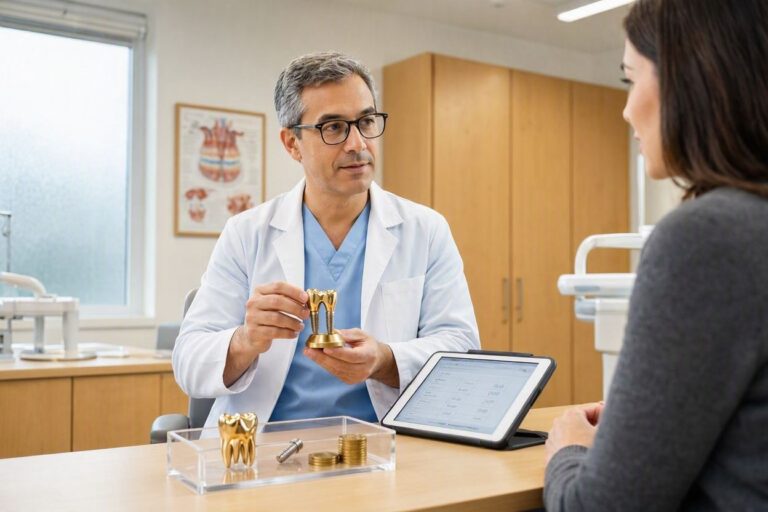
Does SoonerCare Cover Dental Implants?
You live in Oklahoma. You rely on SoonerCare, the state’s Medicaid program, for your healthcare needs. You are missing one or more teeth, and you have heard that dental implants are the best available solution. The question forms with a mix of hope and skepticism born of experience with public assistance programs: will SoonerCare pay for dental implants? Or is this another essential service that exists beyond the reach of the safety net?
The answer, delivered with the directness that this topic demands, is that SoonerCare does not cover dental implants for adults as a routine, standard benefit. The Oklahoma Health Care Authority, which administers SoonerCare, limits adult dental services to a defined list of procedures focused on pain relief, infection control, and basic restorative function. Dental implants, along with other major prosthetic procedures like fixed bridges, fall outside this defined scope. The adult dental benefit is designed to provide emergency extractions, fillings, and removable partial or complete dentures, not fixed, surgically placed tooth replacements.
However, as with other state Medicaid programs, “does not cover” is not an absolute, immutable prohibition. Narrow exception pathways exist, primarily through the prior authorization process with a compelling medical necessity justification. This guide explores the structure of SoonerCare adult dental benefits, the specific exclusion of implants, the theoretical and practical exception pathways, and the realistic alternatives available to SoonerCare members who need tooth replacement. The goal is not to promise coverage where none exists, but to provide a clear, accurate map of the current landscape so you can make informed decisions without wasting time and hope on dead ends.
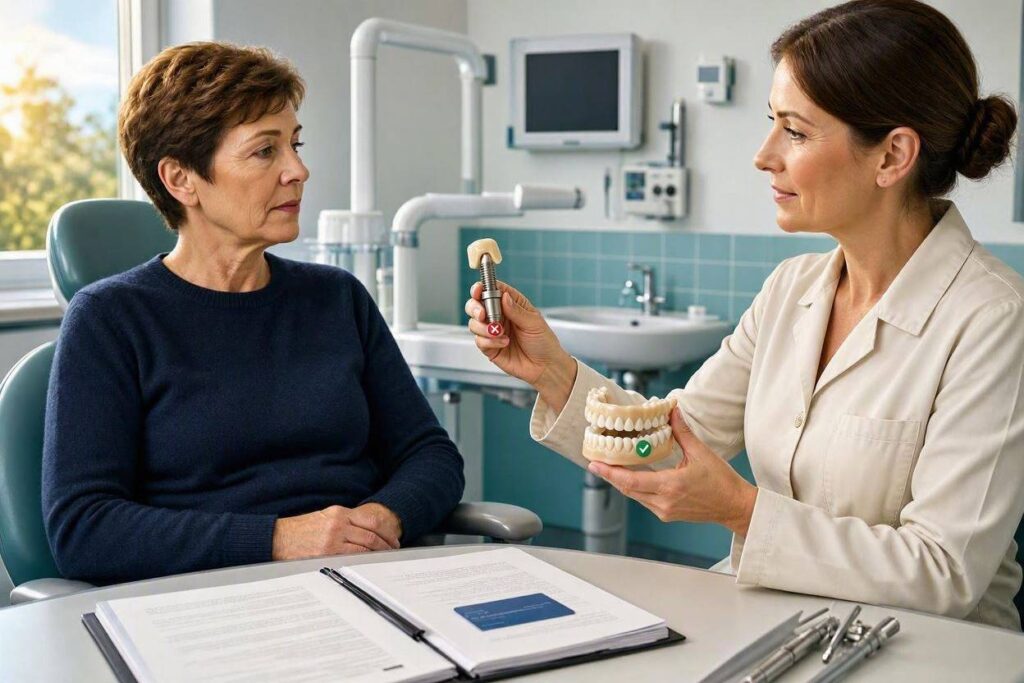
The SoonerCare Adult Dental Benefit Structure
Understanding why SoonerCare excludes implants requires understanding the program’s overall approach to adult dental care. Unlike the pediatric dental benefit, which is comprehensive under federal EPSDT mandates, the adult dental benefit is optional for state Medicaid programs. Oklahoma, like many states, has chosen to offer a limited adult dental benefit rather than no benefit at all, but it prioritizes services that address immediate pain and infection over those that provide optimal long-term function.
The SoonerCare adult dental benefit, as defined by the Oklahoma Health Care Authority, covers a specific list of services. Covered services include periodic oral examinations, cleanings, dental X-rays, simple and surgical extractions, amalgam and composite fillings, root canal treatment on anterior teeth only, and full and partial dentures. The denture benefit is the critical point of comparison. SoonerCare will pay for a removable partial or complete denture, a prosthesis that sits on the gums and is taken out at night. It will not pay for a fixed bridge or a dental implant, which are classified as major, non-covered services.
This distinction is rooted in cost-effectiveness analysis from the payer’s perspective. A removable partial denture costs SoonerCare a few hundred dollars in reimbursed fees. A single dental implant with crown would cost several thousand dollars, even at Medicaid fee-for-service rates, which are substantially lower than commercial insurance rates. For a program operating under perpetual budget constraints, the denture represents a functional, albeit less desirable, tooth replacement that fits within the allocated resources. The implant represents an unbudgeted expenditure that would require either increased state funding or cuts to other covered services.
The SoonerCare Dental Fee Schedule: A Definitive Document
The most authoritative source of truth about SoonerCare dental coverage is the program’s published fee schedule. This document, available on the Oklahoma Health Care Authority website, lists every dental procedure code for which SoonerCare will reimburse a provider. If a code is not on the list, the service is not covered.
Dental implant procedure codes include D6010 for surgical placement of the implant body, D6056 for a prefabricated abutment, D6057 for a custom abutment, and D6058 for an implant-supported crown. A review of the current SoonerCare dental fee schedule confirms that these codes are absent. They do not appear on the list of covered services. This absence is the definitive, black-and-white answer to the coverage question. No D6010 code on the fee schedule means no reimbursement for the implant fixture. No amount of provider advocacy can change the fee schedule; only a policy change by the Oklahoma Health Care Authority can add a code to the list.
Patients should verify this themselves rather than relying on a provider’s verbal statement. Navigate to the OHCA website, locate the dental provider resources section, and download the current dental fee schedule. Search for “D6010” and “implant.” If the search returns no results, you have your answer. This self-verification protects you against the rare but damaging scenario of a provider claiming coverage and billing you after the claim is denied.
Medical Necessity and the Prior Authorization Pathway
The absence of a code from the fee schedule is not always the final word. Medicaid programs have mechanisms for covering non-listed services when they are demonstrably medically necessary and no covered alternative is adequate. This is the prior authorization appeal pathway, and it is difficult, time-consuming, and rarely successful for dental implants, but it exists.
The argument for medical necessity must establish that a conventional denture, which SoonerCare covers, is not merely less desirable but clinically inadequate or contraindicated for the specific patient. The strongest arguments involve documented anatomical or medical conditions that preclude successful denture wear. Examples include a patient with a history of head and neck radiation therapy, where the oral mucosa is too fragile and poorly vascularized to tolerate the friction of a removable prosthesis. Another example is a patient with a documented, severe, anatomic gag reflex that makes wearing a removable upper denture impossible, confirmed by a specialist evaluation.
The prior authorization submission must include a detailed narrative letter from the treating dentist or oral surgeon. This letter should cite the specific medical condition, explain why a removable prosthesis is contraindicated, and reference the relevant peer-reviewed literature supporting implants as the medically necessary alternative. Supporting documentation from the patient’s physician, such as an oncologist or a gastroenterologist, strengthens the submission. Radiographs and photographs should document the anatomical limitation.
Even with a compelling submission, approval is highly uncertain. The SoonerCare dental director reviews the case and makes a determination based on program policy and available funding. A denial does not mean the case was poorly argued; it may simply reflect a policy decision that the program cannot bear the cost, regardless of the clinical merits. Patients pursuing this pathway must approach it with realistic expectations and an understanding that denial is the most probable outcome.
The Hospital-Based Exception
A separate and commonly misunderstood pathway involves dental procedures performed in a hospital setting. SoonerCare, like other Medicaid programs, may cover certain dental services provided in an inpatient or outpatient hospital setting if the patient’s medical condition requires hospitalization for safe delivery of care. This is not a coverage expansion for the dental procedure itself. It is coverage for the hospital facility fees, the anesthesia services, and the associated medical care.
The implant placement and the implant hardware remain non-covered dental procedures. The hospital-based pathway addresses the patient with severe developmental disabilities, uncontrolled seizures, or complex medical comorbidities who cannot safely receive dental treatment in a traditional dental office. For such a patient, the state may approve the hospital and anesthesia charges, allowing the surgery to be performed safely. The dental surgeon’s fee and the implant components must be covered by another source, such as the patient, a charitable program, or a separate grant. This pathway facilitates safe access to care; it does not fund the implant itself.
Alternatives for SoonerCare Members Needing Tooth Replacement
For the vast majority of SoonerCare members for whom the implant prior authorization pathway is a dead end, the practical question shifts from “can I get implants?” to “what tooth replacement options are available to me?” The covered benefits provide a path, albeit one that requires a mindset shift from the fixed, permanent ideal to a removable, functional reality.
Removable Partial and Complete Dentures: This is the covered, accessible standard of care. SoonerCare will pay for a set of complete dentures or a removable partial denture. These prostheses are fabricated by a dental laboratory and delivered by a SoonerCare-enrolled dentist. The quality of Medicaid dentures is often criticized by patients, but a well-made set of dentures, fabricated by a skilled dentist who takes accurate impressions and carefully registers the bite, can provide acceptable function and aesthetics. The key is finding a provider who takes pride in removable prosthodontics and treats Medicaid dentures with the same care as fee-for-service dentures. This requires research, asking for before-and-after photos, and reading patient reviews.
The Oklahoma Mission of Mercy: This annual two-day free dental clinic, organized by the Oklahoma Dental Association, provides cleanings, fillings, and extractions to thousands of uninsured and underinsured Oklahomans. It does not provide dental implants. However, for a patient with a painful, infected tooth that needs extraction before a replacement can be considered, the Mission of Mercy can eliminate the extraction cost. The patient can then use SoonerCare’s denture benefit for the replacement, having saved the out-of-pocket extraction fee.
Dental Schools and Residency Programs: The University of Oklahoma College of Dentistry in Oklahoma City offers reduced-fee care provided by dental students and resident dentists under faculty supervision. While the dental school does not accept SoonerCare directly, its fees are substantially lower than private practice. A patient could potentially use the SoonerCare denture benefit for a removable prosthesis, or, if they can self-fund, explore the implant option at the dental school at a reduced rate. This hybrid approach—using SoonerCare for covered services and self-paying for non-covered services at the lowest possible cost—may be the most viable strategy.
The Importance of Prevention and Preservation
A hard truth that must be spoken in any discussion of public aid and dental implants is that the best strategy is to avoid needing them. Prevention is not a platitude; it is a financial imperative for the SoonerCare population. SoonerCare covers regular dental checkups, cleanings, and fillings. Using these preventive benefits is the most effective way to preserve natural teeth and avoid the cascade of extractions and replacements.
For a tooth that is already compromised, the anterior root canal benefit is worth pursuing. SoonerCare covers root canal treatment on front teeth. Saving a natural tooth with a root canal and a filling, even a large one, preserves the natural root, the periodontal ligament, and the sensory feedback mechanisms. It avoids the bone loss that follows extraction. It keeps the door open for a future implant if the tooth is eventually lost. The natural tooth is always superior to any replacement. Exhaust every covered preservation option before resigning yourself to extraction and the replacement dilemma.
Conclusion
SoonerCare does not cover dental implants for adults, as confirmed by the absence of implant procedure codes from the Oklahoma Health Care Authority dental fee schedule. A narrow medical necessity exception exists through the prior authorization process, but approval is rare and requires documented contraindication to the covered alternative of removable dentures. SoonerCare members seeking tooth replacement should maximize the covered denture benefit, explore dental school options for reduced-cost implants if self-funding is possible, and prioritize preventive care to preserve natural teeth.
Frequently Asked Questions
Q: If I pay for the implant myself, will SoonerCare at least cover the crown on top?
A: No. The implant crown is billed under code D6058, which is also absent from the SoonerCare fee schedule. The entire implant-related treatment, from the surgical placement to the final restoration, is a non-covered service. Paying for the implant fixture does not unlock coverage for the abutment or crown.
Q: Can a child on SoonerCare get a dental implant for a congenitally missing tooth?
A: The pediatric EPSDT benefit mandates comprehensive dental care for children, which may include services not covered for adults. A child with a congenitally missing tooth, such as a missing lateral incisor, may have a stronger case for an implant through the prior authorization process. The argument would center on the developmental and psychological harm of a visible anterior gap in a child or adolescent. Each case is determined individually, and approval is not guaranteed, but the pediatric pathway is more robust than the adult pathway.
Q: What about mini dental implants? Are those a covered alternative?
A: Mini implants are billed under similar procedure codes to standard implants and are equally absent from the fee schedule. They are not a separate, covered benefit category. The same exclusions and the same prior authorization pathway apply.
Q: If SoonerCare does not cover implants, why do some Oklahoma dentists advertise “Medicaid implants”?
A: Treat such advertising with extreme skepticism. A provider cannot bill SoonerCare for a non-covered service. These advertisements may refer to limited, grant-funded pilot programs that are not part of the standard SoonerCare benefit, or they may be misleading marketing designed to generate inquiries that are then converted to self-pay or financed treatment. Always verify coverage directly with the Oklahoma Health Care Authority before committing to treatment.
Additional Resource:
For the official SoonerCare dental fee schedule and provider manual, visit the Oklahoma Health Care Authority: https://oklahoma.gov/ohca.html