Does Vaping Affect Dental Implants?
You have dental implants, or you are considering them. You also vape. Perhaps you switched from traditional cigarettes to an e-cigarette, believing it to be a safer alternative. Maybe you have never smoked but picked up vaping socially. You enjoy the flavors and the ritual. You have invested in your smile with dental implants, and you want to protect that investment. The question you need answered is this: Does vaping, with its aerosolized chemicals and nicotine, affect the success, healing, and long-term health of dental implants? The honest answer is yes, vaping poses a real threat to dental implants, in many of the same ways that traditional smoking does. This guide will explore the specific mechanisms by which vaping harms the peri-implant tissues, the surgical healing process, and the long-term stability of your implants.
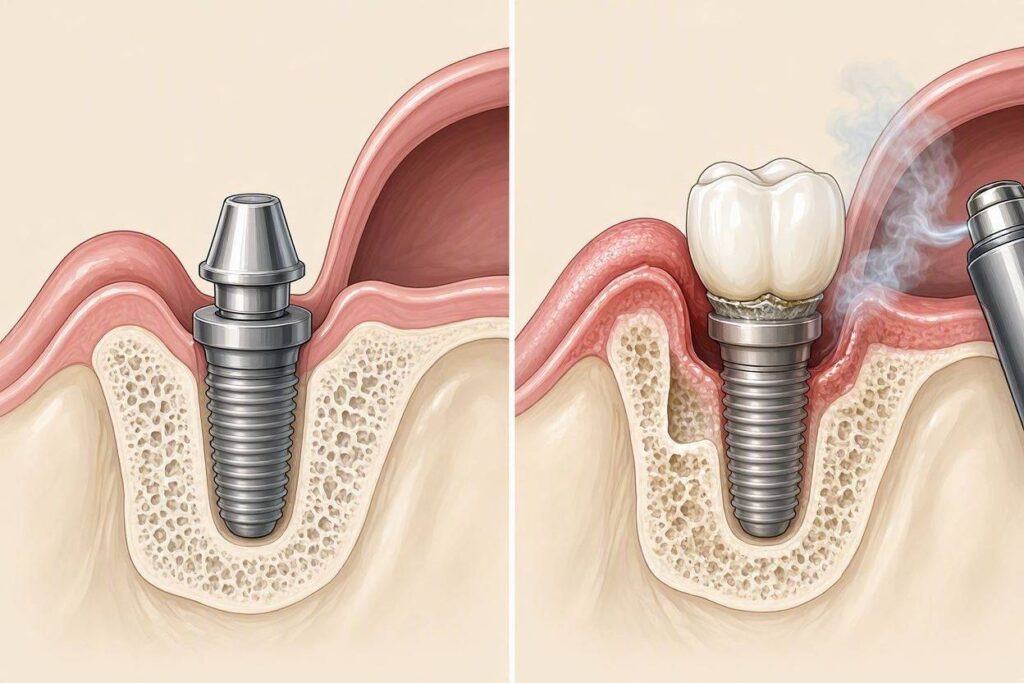
The Misconception of Vaping as “Safe”
Many people believe that vaping is harmless, or at least significantly less harmful than smoking. While vaping eliminates the tar and many of the carcinogenic combustion products of burning tobacco, it is far from benign. The aerosol produced by e-cigarettes contains nicotine, a potent vasoconstrictor and immunomodulator, propylene glycol and vegetable glycerin, which can dry the oral tissues, and a cocktail of flavoring chemicals that can be cytotoxic. The effects of these chemicals on the oral cavity and specifically on the bone and soft tissue around dental implants are an active area of research, but the evidence to date raises serious concerns. A dental implant requires a pristine healing environment, a robust blood supply, and a balanced immune response. Vaping compromises all three.
Nicotine: The Primary Culprit
Nicotine is the common thread between traditional cigarettes and most vaping liquids. It is the primary driver of the negative effects on dental implants. Nicotine is a vasoconstrictor. It causes the blood vessels, particularly the small capillaries that supply the gums and bone, to constrict and narrow. This significantly reduces blood flow and oxygen delivery to the tissues. Wound healing after implant surgery is a highly oxygen-dependent process. The cells that build new bone, osteoblasts, and the cells that fight infection, neutrophils, need oxygen to function. A nicotine-induced reduction in blood flow starves the healing surgical site of oxygen and nutrients.
Nicotine also suppresses the immune response. It impairs the function of neutrophils, the first responders of the immune system, reducing their ability to migrate to the surgical site and engulf bacteria. It alters the production of inflammatory cytokines, disrupting the delicate balance of inflammation needed for normal healing. A patient who vapes nicotine is healing with a compromised immune system, leaving the implant site more vulnerable to infection and less capable of achieving robust osseointegration.
Furthermore, nicotine has been shown to directly inhibit the proliferation and function of osteoblasts, the bone-forming cells. It can also stimulate osteoclasts, the bone-resorbing cells. The net effect is a shift in bone metabolism toward resorption and away from formation. This is particularly dangerous for a dental implant, which relies on active bone formation for osseointegration and ongoing bone maintenance.
The Effects on Osseointegration
Osseointegration is the biological process by which the bone grows directly against the titanium surface of the implant. It requires a cascade of cellular events: blood clot formation, angiogenesis (new blood vessel growth), migration of osteoblasts to the implant surface, and deposition of new bone. Nicotine impairs every stage of this process. Reduced blood flow limits the delivery of the cells and growth factors needed for new bone formation. Impaired osteoblast function means that even when cells arrive at the implant surface, they are less effective at laying down bone. Studies comparing implant success rates in smokers versus non-smokers consistently show a significantly higher failure rate in smokers. While long-term data specific to vaping and implant osseointegration in humans is still emerging, the presence of nicotine in most vaping products leads to the reasonable conclusion that the risk is similar.
Vaping and Peri-Implant Health
Once the implant has integrated and the crown is in function, the long-term threat is peri-implantitis. Peri-implantitis is a bacterial infection that causes inflammation and progressive bone loss around the implant. Vaping creates an oral environment that is highly conducive to peri-implantitis.
Vaping causes xerostomia, or dry mouth. Propylene glycol and vegetable glycerin are humectants; they absorb water. The aerosol dehydrates the oral tissues. Saliva is the mouth’s natural cleanser and buffer. It washes away food debris, neutralizes acids, and contains antimicrobial enzymes. A dry mouth has less saliva, allowing bacterial plaque to accumulate more readily on the implant crown, the abutment, and the surrounding gum tissue. A thick, sticky biofilm is the precursor to peri-implant mucositis, the reversible inflammation of the gum, and peri-implantitis, the destructive bone loss.
Vaping also raises the temperature of the oral cavity and introduces heat and chemicals. Some studies suggest that the heat and the chemical constituents of the vaping aerosol can cause cellular damage to the oral epithelium and alter the oral microbiome, favoring the growth of pathogenic, disease-causing bacteria over healthy bacteria. A disrupted microbiome, combined with a dry mouth and a compromised immune system, is a perfect storm for peri-implant disease.
The Danger of Flavoring Chemicals
The thousands of flavoring compounds used in e-liquids are a wild card. Many of these chemicals are approved for ingestion, but their safety when inhaled and exposed to the oral tissues is largely unknown. Some studies have shown that certain flavoring compounds are cytotoxic, meaning they kill cells, to gingival fibroblasts and oral epithelial cells. Exposing healing gum tissue and the delicate peri-implant mucosa to these chemicals could cause low-grade chronic inflammation, impair the attachment of the gum to the abutment surface, and increase susceptibility to bacterial invasion.
Heat and Thermal Effects
The vapor from e-cigarettes is hot. Repeated exposure of the oral soft tissues to heat can cause chronic thermal irritation. The gum tissue around the implant abutment is a delicate cuff. It is attached to the abutment surface by a thin epithelial and connective tissue seal. Chronic thermal irritation can cause this tissue to become inflamed and hyperemic, and may contribute to the breakdown of the soft tissue seal, creating a pathway for bacteria.
The Surgical Healing Period: A Critical Window
The most critical time to abstain from vaping is the immediate post-operative period after implant placement. The first two to four weeks are when the blood clot is replaced by granulation tissue, new blood vessels are forming, and the initial stages of bone healing begin. Nicotine’s vasoconstrictive effect during this window is most damaging. A reduced blood supply at the surgical site can lead to wound dehiscence, where the incision opens, delayed healing, and an increased risk of infection. Many implant surgeons require their patients to be nicotine-free for a period before and after surgery. Some will test for nicotine before proceeding with surgery. Vaping is not a loophole; it is a nicotine delivery system.
Vaping vs. Smoking: Is It Any Better for Implants?
While vaping eliminates the tar and carbon monoxide of combustible cigarettes, which also have harmful effects, the core mechanism of nicotine-induced vasoconstriction and immunosuppression is identical. Vaping may lack some of the carcinogens of cigarette smoke, but from the perspective of dental implant healing and maintenance, it is not safe. The other chemical constituents, the humectants that cause dry mouth, and the flavorings with unknown long-term effects, add additional layers of risk that are not present with pharmaceutical nicotine replacement therapy, like patches or gum.
If a patient is a heavy smoker and switches to vaping, they are still exposing their oral tissues to nicotine, heat, and chemicals. The implant surgeon cannot view a patient who vapes as a non-smoker. They are a nicotine user and must be risk-stratified accordingly.
Recommendations for Vapers with Dental Implants
If you have dental implants and you vape, the best course of action for your oral and overall health is to quit nicotine entirely. We recognize that this is a difficult addiction to overcome. As a harm reduction step, reducing the frequency of vaping and the nicotine concentration of the e-liquid may lessen the negative impact. However, no level of vaping has been proven safe for implant health.
If you are planning to get a dental implant, be honest with your implant surgeon about your vaping habit. Do not lie and claim to be nicotine-free if you are not. The surgeon needs this information to properly assess your risk, plan the surgery, and manage your post-operative care. Some surgeons may postpone elective implant surgery until you have achieved a period of abstinence.
You must be meticulously vigilant about your oral hygiene. The dry mouth and biofilm-promoting effects of vaping make plaque control more challenging. Brush your teeth and your implant crowns at least twice a day. Use interdental brushes, a water flosser, and any other tools recommended by your hygienist. Rinse with water frequently to counteract dry mouth. Attend your professional implant maintenance visits without fail, typically every three to four months, so that any early signs of inflammation can be detected and treated promptly.
Summary of Vaping Effects on Dental Implants
- Nicotine in vaping liquids constricts blood vessels and impairs the immune response, compromising healing and osseointegration.
- Vaping causes dry mouth, reducing the protective effects of saliva and promoting plaque accumulation.
- Vaping contributes to an increased risk of peri-implant mucositis and peri-implantitis.
- Flavoring chemicals and heat may cause additional cellular damage and inflammation to the peri-implant soft tissues.
- The post-operative healing period is a critical window during which vaping is especially harmful.
Conclusion
Vaping negatively affects dental implants. The nicotine, heat, and chemicals in e-cigarette aerosol compromise the blood supply, immune function, and tissue health essential for successful implant integration and long-term survival. A patient who vapes faces a higher risk of implant failure, delayed healing, and peri-implantitis. If you have implants or are planning to get them, the strongest recommendation is to stop vaping entirely. If you cannot or will not stop, you must accept the increased risk, be transparent with your dental team, and commit to an exceptionally rigorous hygiene and maintenance protocol.
Frequently Asked Questions (FAQ)
1. Can a dentist tell if I vape?
There is no specific test for vaping, but a dentist may see signs of dry mouth, oral tissue irritation, and increased plaque that are consistent with nicotine use or vaping.
2. Is nicotine-free vaping safe for dental implants?
Eliminating nicotine removes the vasoconstrictive and immunosuppressive effects, but the other chemicals, humectants, and flavorings may still cause oral dryness and cellular irritation. Nicotine-free vaping is likely less harmful but still not proven safe.
3. How long should I stop vaping before implant surgery?
Many surgeons recommend complete nicotine cessation at least two to four weeks before surgery and throughout the entire healing period, ideally permanently.
4. Can I vape after the implant has healed?
While the implant may be integrated, vaping continues to increase the risk of peri-implantitis and other oral health problems.
5. Is vaping worse than smoking for implants?
Both are harmful. Vaping eliminates some tobacco combustion byproducts but retains nicotine and adds other potentially harmful chemicals. Neither is safe.
6. What are the signs of peri-implantitis that a vaper should watch for?
Redness, swelling, bleeding upon brushing or probing, pus, bad taste, a dull ache, gum recession around the implant, and a feeling of looseness.
7. Can a water flosser help counteract the effects of vaping?
A water flosser is an excellent tool for flushing the peri-implant sulcus and is highly recommended for all implant patients, especially those at increased risk due to vaping, but it does not reverse the systemic effects of nicotine.
Additional Resource
For more information on the effects of smoking and vaping on oral health, visit the American Dental Association:
American Dental Association – Tobacco Use and Cessation