How Do Temporary Dental Implants Operate?
The journey to a final, permanent dental implant restoration often includes a critical intermediate step: the temporary prosthesis. These provisional restorations are not mere placeholders. They serve a sophisticated set of biological, functional, and aesthetic functions that are essential to the ultimate success of your implant. This comprehensive guide explains exactly how temporary dental implants operate. We will explore the different types of provisional restorations, the specific clinical roles they play, and the timeline during which they are worn. Your understanding of this temporary phase will transform it from a confusing waiting period into an active, purposeful stage of your treatment.
The Purpose-Driven Design of Temporary Implant Restorations
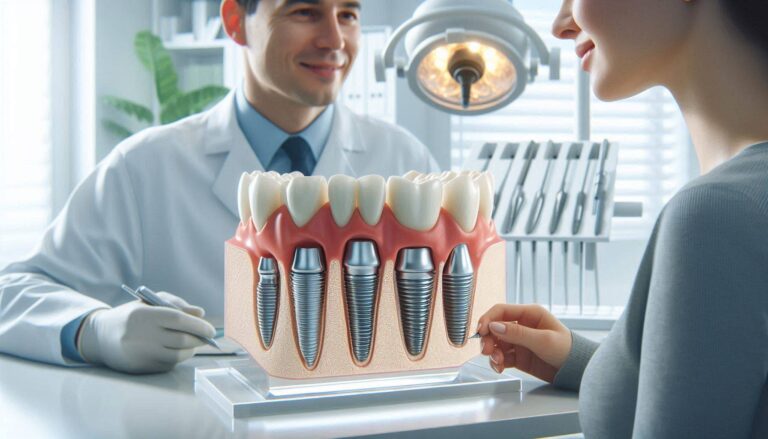
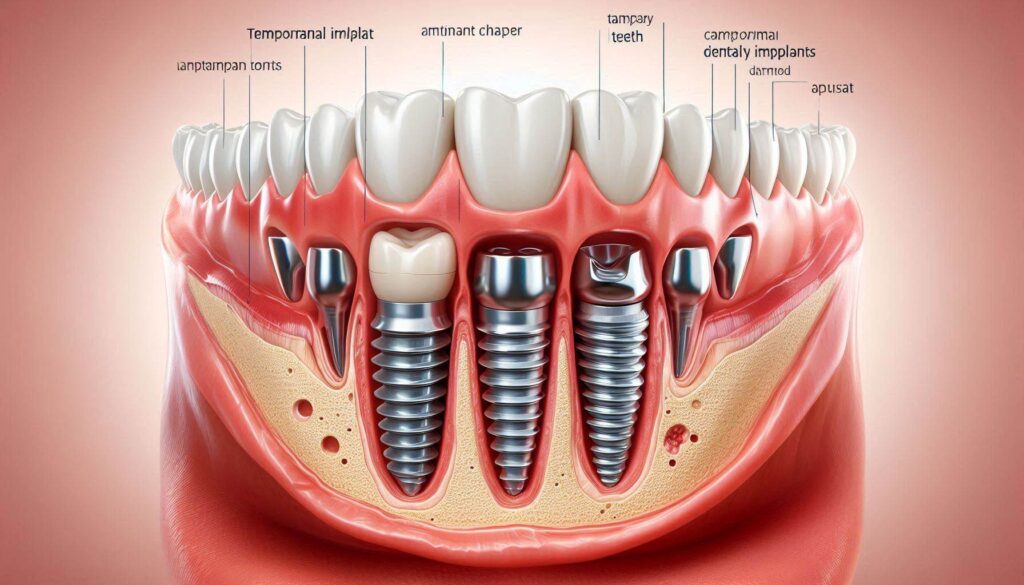
A temporary dental implant restoration is a provisional crown, bridge, or denture that is attached to your dental implant during the healing phase, after the implant has been placed but before the final, permanent prosthesis is fabricated. The fundamental distinction is between provisional and definitive. A provisional restoration is designed for a finite service life with specific, transitional goals. A definitive restoration is engineered for long-term durability, optimal aesthetics, and permanent function. The temporary is not a failed attempt at a final product. It is a precision tool with a job to do.
The first and most critical function of a temporary implant restoration, particularly in the aesthetic zone where the front teeth are visible, is to sculpt the gum tissue. When a tooth is lost, the gum and the underlying bone begin to change shape. The bone resorbs, and the gum collapses into the defect. A dental implant is placed, but the gum tissue around it does not magically assume the perfect, scalloped, natural contour. It must be guided. The temporary crown or healing abutment is shaped to apply gentle, controlled pressure to the gum tissue, creating an emergence profile that mimics a natural tooth. The lab technician or dentist crafts the provisional with a specific subgingival contour that pushes the gum into the ideal position, creating the natural-looking scallop and the presence of the interdental papilla, the small triangle of gum between teeth. This process is called soft tissue conditioning, and it is one of the most artistically demanding aspects of implant dentistry.
Functional and Phonetic Testing Before Finalization
The temporary phase serves as a real-world test drive for your final restoration. The permanent crown, made of solid zirconia or porcelain fused to metal, is expensive and difficult to modify once it is fabricated. You do not want to discover an occlusal interference or a phonetic issue after it is permanently cemented or screwed into place. The temporary restoration allows you and your dentist to evaluate the function and feel of the new tooth in your mouth before the final version is made.
During the weeks or months you wear the provisional, you provide invaluable feedback. Does the tooth feel too bulky? Does it hit too hard when you chew? Do you have difficulty pronouncing any sounds? The letter “S” and “F” sounds are particularly sensitive to the contour of the front teeth. A temporary restoration that causes a lisp can be easily adjusted by the dentist, adding or subtracting material to refine the shape. This phonetic and functional testing period allows the final restoration to be designed with a level of precision that is impossible to achieve in a single appointment. The temporary is a working prototype, and your subjective experience wearing it is critical data that informs the final product. This is how temporaries operate as a diagnostic tool, not just a cosmetic cover.
Types of Temporary Implant Restorations
Temporary restorations for dental implants are not a single, uniform category. They vary by the timing of their placement, the method of their retention, and the material from which they are fabricated. The choice of which type of temporary to use is a critical clinical decision that your implant team makes based on the specific requirements of your case. The major categories are the immediate post-operative temporary, the provisional restoration placed during the healing abutment phase, and the laboratory-fabricated provisional restoration used for complex full-arch cases.
An immediate temporary, often called an immediate provisional, is placed on the day of implant surgery. The implant is placed into the extraction socket or healed bone, and a temporary crown is attached directly to the implant or to an interim abutment within minutes. This is the “teeth in a day” concept. The immediate temporary is always placed out of occlusion, meaning it does not touch the opposing teeth when you bite down fully. This is an absolute, non-negotiable requirement to protect the implant from the micro-motion that would destroy the fragile osseointegration process. The immediate temporary provides instant aesthetic gratification. You walk out of the surgical appointment with a visible, natural-looking tooth. This is a powerful psychological benefit, but it comes with a strict behavioral contract. You must commit to a soft-food diet and must not use the tooth for any functional purpose until the implant has fully integrated.
The Healing Abutment and the Second-Stage Provisional
In the more traditional, two-stage surgical protocol, the implant is buried under the gum tissue for the entire osseointegration period. No temporary crown is attached to it. You may wear a removable, tooth-supported provisional, such as a flipper or an essix retainer, which is a clear plastic tray with a false tooth. This removable appliance is purely aesthetic. It fills the gap in your smile. It performs no implant-maturing function. After the integration period, a second small surgery is performed to uncover the implant and attach a healing abutment, which is a small metal or plastic cylinder that protrudes through the gum.
After the gum tissue has healed around the healing abutment for a few weeks, the healing abutment is removed and a temporary crown is fabricated. This provisional is attached to the implant. It now begins the active work of sculpting the soft tissue emergence profile. The dentist or lab technician will adjust the contour of this provisional over several appointments, adding or subtracting small amounts of material to perfect the shape of the gum. This is the classic phased approach to implant temporization. It takes longer but allows for a very high degree of control and predictability, especially in aesthetically demanding anterior cases. The removable flipper is retired, and the fixed provisional takes over.
Materials Used in Temporary Implant Provisionals
The materials used for temporary implant restorations are specifically selected for their clinical properties during the provisional phase. They are not the same materials used for the final crown. The most common materials are polymethyl methacrylate (PMMA) and bis-acryl composite resin. These materials are strong enough to withstand gentle chewing forces but are softer and less wear-resistant than the ceramics used for definitive restorations. This is a deliberate choice. The material should wear, not the opposing natural tooth.
PMMA is a classic dental acrylic that has been used for decades. It is easily adjusted, relined, and repaired. It can be polished to a smooth, aesthetic surface. Its slight flexibility can be an advantage, providing a minor shock-absorbing effect on the implant during the early phases of loading. Bis-acryl composite is a newer material that is stronger and more color-stable than traditional PMMA. It is often used for longer-term provisionals that may need to function for many months. Both materials are designed to be provisional. They will gradually wear, stain, and lose their polish over time. This is normal and expected. They are not failing. They are simply demonstrating their finite service life, signaling that it is time for the definitive restoration.
The Transition from Temporary to Permanent
The transition from the provisional to the definitive restoration is a landmark appointment. The temporary has completed its mission. It has sculpted the gum tissue into a healthy, natural form. It has provided the data on occlusion, phonetics, and aesthetics that informed the design of the final crown. Your dentist will remove the temporary and take a final impression, either using traditional elastomeric materials or, more commonly today, a digital intraoral scanner. The shape of the provisional, which has been perfected over weeks, is captured in this impression. The lab technician who fabricates the final crown will replicate the exact emergence profile of the temporary.
The final restoration, typically a solid monolithic zirconia crown or a porcelain-fused-to-zirconia crown, is then fabricated. It is cemented or screwed into place onto the implant. The occlusion is meticulously checked and adjusted. The fit is verified with a radiograph. The temporary phase, which can last anywhere from a few weeks to over a year in complex full-mouth rehabilitation cases, is now over. You have graduated to your permanent, functional, and beautiful new tooth. The temporary was not an inconvenience. It was the bridge between a surgical site and a lifelong restoration. It operated as a biological sculptor, a functional test bed, and an aesthetic blueprint. Understanding this active role transforms the perception of the provisional phase from a passive waiting period into an essential, active stage of your treatment.
Conclusion
Temporary dental implant restorations operate as precision tools that actively sculpt the gum tissue into a natural emergence profile, serve as a functional and phonetic test drive for the final restoration, and provide essential psychological and aesthetic continuity during the healing period. They are available as immediate same-day provisionals, second-stage healing abutment-based crowns, or removable appliances, each selected based on the surgical protocol and the aesthetic demands of the case. The provisional phase, constructed from adjustable, wear-tolerant materials like PMMA, is a purposeful, active stage that gathers critical biological and patient-feedback data, culminating in a seamless transition to a definitive, lifelong restoration designed from the perfected blueprint of the temporary.
Frequently Asked Questions
Is a temporary implant tooth absolutely necessary?
Not always. In a posterior, non-visible area, a temporary may not be needed, and the implant can simply be left to heal under the gum or with a low-profile healing abutment. In the aesthetic zone, some form of provisional is almost always used to develop the soft tissue contours.
How long do I wear a temporary implant crown?
The duration varies widely. A simple case may have a temporary for 4 to 8 weeks. A complex aesthetic case or a full-arch reconstruction may involve a provisional for 6 to 12 months or more to fully mature and stabilize the gum tissues before the final impression.
Can I eat normally with a temporary implant crown?
No, you must be very careful. An immediate temporary is placed out of occlusion and is for aesthetics only. You must not chew on it at all. A later-stage provisional can tolerate light forces, but you must avoid hard, crunchy, and sticky foods to prevent fracturing the provisional material or overloading the healing implant.
What happens if my temporary crown falls off?
You should contact your dental office immediately. Do not attempt to glue it back yourself. The gum tissue can begin to collapse over the implant within hours. Your dentist will clean and re-attach or replace the temporary to protect the tissue contours that have been developed.
Will the permanent tooth look better than the temporary?
Yes, it should. The temporary is constructed from provisional materials that are inherently less aesthetic and less polished than the final ceramic crown. The final restoration is fabricated by a master ceramist with multiple layers of porcelain or highly polished full-contour zirconia, delivering a superior level of translucency, surface texture, and color stability.
Additional Resource
The American College of Prosthodontists is the leading professional organization for the art and science of replacing missing teeth. Their patient resources provide extensive information on the restorative phase of implant treatment, including the critical role of provisionals. Visit their website at: https://www.gotoapro.org/