Have a Bump on the Inside of Your Lip?
Finding an unexpected lump, swelling, or spot inside your mouth can immediately trigger a wave of anxiety. You might be running your tongue over it constantly, wondering how it got there and, more importantly, how to get rid of it.
The good news is that the vast open space of our oral cavity is highly sensitive, meaning even a tiny structural change feels massive. Most small bumps on the inner lip are completely harmless, temporary, and resolve on their own with a little time or basic home care.
This comprehensive guide breaks down everything you need to know about that mysterious inner lip bump, exploring common causes, practical remedies, and clear signs that indicate it is time to seek professional medical advice.
Understanding Your Oral Anatomy: Why Do Bumps Form?
The inside of your lips is lined with a delicate, moist tissue known as the oral mucosa. This lining is packed with tiny blood vessels, nerve endings, and hundreds of microscopic salivary glands called minor salivary glands.
Because your mouth is constantly involved in biting, chewing, speaking, and swallowing, this delicate tissue faces daily mechanical stress. When a minor injury occurs, or when a tiny salivary duct becomes blocked, the body responds rapidly by causing localized swelling, fluid retention, or inflammation. This is why small, localized nodules can develop seemingly overnight.
The Most Common Causes of a Bump on the Inside of Your Lip
Identifying the specific characteristics of your lip bump—such as its color, texture, texture variance, pain level, and duration—is the first step toward understanding what is happening. Let us look at the most frequent culprits behind these oral spots.
1. Oral Mucoceles (Mucous Retention Cysts)
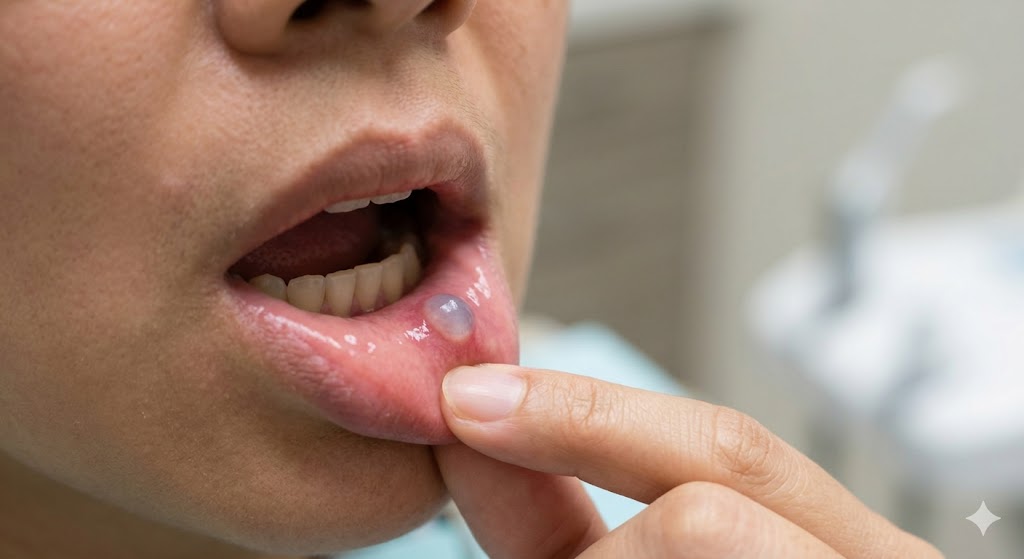
An oral mucocele is perhaps the most common reason for a distinct, painless swelling on the lower inner lip.
- How They Form: A mucocele develops when one of your minor salivary gland ducts becomes damaged or severed, usually because you accidentally bit your lip or chewed on the inside of your mouth. Instead of emptying cleanly into your mouth, the saliva leaks into the surrounding tissue, forming a small fluid-filled pool or sac.
- Appearance: They generally appear as smooth, round, dome-shaped translucent bluish or flesh-colored nodules.
- Sensation: They are typically painless, smooth to the touch, and feel like a small, soft, fluid-filled balloon under the surface. They can fluctuate in size, occasionally draining and flattening out, only to fill back up days later.
2. Canker Sores (Aphthous Ulcers)
Unlike mucoceles, canker sores are notoriously uncomfortable and painful, making eating, drinking, and talking a challenge.
- How They Form: The exact trigger for aphthous ulcers can vary wildly, often involving minor tissue injury, high stress levels, systemic fatigue, nutritional deficiencies (especially iron, folate, or vitamin B12), or sensitivities to certain ingredients in toothpaste like sodium lauryl sulfate (SLS).
- Appearance: They begin as a small, red inflammatory spot or bump that quickly develops into an open ulcer with a white, grey, or yellowish center and a bright red, inflamed border.
- Sensation: They produce a sharp, stinging pain, particularly when exposed to salty, spicy, or acidic foods.
3. Fibromas (Oral Irritation Fibromas)
An oral fibroma is a completely benign, non-cancerous mass of dense, fibrous connective tissue.
- How They Form: A fibroma is essentially the oral equivalent of a scar or a callus. It develops as a direct response to chronic, long-term irritation. If you have a habit of repeatedly biting the exact same spot on your lip, or if a sharp tooth or a rough edge of a dental brace constantly rubs against the inner mucosal tissue, the body builds up dense fibrous tissue to protect the area.
- Appearance: A smooth, firm, flesh-colored nodule that matches the surrounding pink lining of your mouth.
- Sensation: They are firm, tough, completely painless, and do not change in size over short periods.
4. Cold Sores (Oral Herpes)
Cold sores are viral infections caused by the Herpes Simplex Virus (HSV-1). While they are famous for appearing on the outer border of the lips, they can occasionally erupt on the inner mucosal surfaces.
- How They Form: After a primary infection, the virus lies dormant in nerve pathways and can reactivate due to stress, illness, fatigue, or sun exposure.
- Appearance: They present as tight clusters of tiny, fluid-filled blisters that eventually pop, ooze fluid, and form a crusty scab.
- Sensation: Before the blisters emerge, people almost always experience a distinct, localized tingling, burning, or itching sensation at the site. They can be highly painful and are deeply contagious until completely healed.
5. Oral Thrush (Candidiasis)
Oral thrush is a fungal infection caused by an overgrowth of Candida albicans, a yeast that naturally lives inside the human mouth in small, controlled quantities.
- How They Form: When your immune system is temporarily weakened, or when your oral microbiome is disrupted—often due to a course of broad-spectrum antibiotics, corticosteroid inhaler use, uncontrolled diabetes, or dry mouth—the yeast multiplies rapidly.
- Appearance: It typically presents as creamy, milky-white patches or slightly raised bumps on the inner cheeks, tongue, or inner lips.
- Sensation: These raised white patches can often be scraped away, leaving behind a raw, red, tender, and bleeding tissue surface underneath. It often leaves a cottony feeling in the mouth and a loss of taste.
Comparing Common Inner Lip Bumps at a Glance
To help you distinguish between these various conditions, the comparative table below highlights the defining features of each type of inner lip bump:
| Type of Bump | Primary Color | Sensation & Pain | Texture & Consistency | Typical Duration |
| Mucocele | Clear, bluish, or pink | Painless, fluid-filled | Soft, smooth, bouncy | Weeks to months (can recur) |
| Canker Sore | White/yellow with red border | Highly painful, sharp sting | Flat ulceration with raised edge | 7 to 14 days |
| Fibroma | Flesh-colored, pale pink | Painless, non-reactive | Firm, solid, smooth | Permanent unless removed |
| Cold Sore | Red base with clear blisters | Tingling, burning, painful | Cluster of fragile blisters | 10 to 14 days |
| Oral Thrush | Creamy white, milky patches | Tender, burning sensation | Soft, scrapable raised layer | Variable (requires treatment) |
Safe and Effective Home Management Strategies
If your inner lip bump is small, painless, or resembles a minor injury or canker sore, you can often manage it safely at home while waiting for it to heal naturally.
- Maintain Gentle Oral Hygiene: Continue brushing your teeth thoroughly, but switch to a soft-bristled toothbrush to avoid accidentally striking or scratching the inflamed bump. Consider using a toothpaste formula free of sodium lauryl sulfate (SLS) to prevent further chemical irritation.
- Utilize Warm Saltwater Rinses: Mix half a teaspoon of regular table salt into a glass of warm water. Swish the mixture gently around your mouth for 30 seconds before spitting it out. Repeat this process three to four times a day. Saltwater acts as a natural, mild antiseptic that cleanses the area, eases swelling, and speeds up cellular recovery.
- Apply Cold Compresses: If the bump stems from an accidental bite or mechanical trauma, apply an ice cube wrapped in a clean, damp washcloth to the outside of your lip for a few minutes. This constricts local blood vessels, minimizes acute swelling, and numbs local nerve endings.
- Adjust Your Daily Diet: While your oral lining is recovering, steer completely clear of crunchy chips, hard crusty bread, spicy curries, acidic citrus fruits, and excessively hot beverages. Instead, opt for soft, cool, easy-to-chew foods like yogurt, smoothies, cooked oatmeal, mashed potatoes, and cooled broths.
- Avoid Touching or Picking: It can be highly tempting to constantly play with the bump using your teeth, fingers, or tongue. Avoid squeezing, popping, or poking the bump with sharp tools like needles. Attempting to puncture a mucocele or cyst at home introduces bacteria from your hands directly into the open wound, setting the stage for a secondary infection.
Important Note for Readers: Never attempt to surgically pop, drain, or cut out an oral cyst or bump by yourself at home. Doing so can damage delicate nerve structures, sever salivary ducts permanently, introduce deep bacterial infections, and cause permanent scarring.
When to Seek Professional Dental or Medical Care
While the vast majority of inner lip bumps clear up without medical intervention, some symptoms demand the expertise of a licensed dentist or oral health specialist.
  Signs That Warrant a Professional Evaluation:
  │
  ├── Duration: The bump persists for more than two consecutive weeks without shrinking.
  ├── Size: The mass grows rapidly or interferes with chewing, speaking, or swallowing.
  ├── Pain: Severe, throbbing, or unmanageable discomfort that over-the-counter pain relievers cannot ease.
  ├── Changes: The bump displays irregular, jagged borders, bleeds spontaneously, or feels rock-hard.
  └── Systemic Symptoms: The oral bump is accompanied by a fever, swollen lymph nodes, or general malaise.
If you notice any of these warning signs, schedule an oral evaluation. A professional can properly diagnose the condition and recommend clinical treatments, such as a quick surgical excision for a persistent fibroma, a minor cryotherapy procedure to freeze off a stubborn mucocele, or a prescription-strength antimicrobial treatment.
Frequently Asked Questions (FAQ)
Can stress cause a bump to form on the inside of my lip?
Yes. Chronic psychological stress and severe lack of sleep weaken your body’s immune defenses. This vulnerability makes you significantly more susceptible to developing painful canker sores, and it can actively trigger an outbreak of viral cold sores if you carry the HSV-1 virus.
How long does a typical inner lip bump last?
The duration depends heavily on the root cause. A standard canker sore or an accidental bite swelling usually runs its course and completely heals within 7 to 14 days. However, mechanical developments like mucoceles can stick around for several weeks or months, and fibrous tissue calluses (fibromas) are permanent until removed by a dentist.
Is an oral mucocele contagious to other people?
No. An oral mucocele is a localized structural issue caused entirely by mechanical trauma or a blocked minor salivary gland duct. It does not involve any infectious viral, bacterial, or fungal pathogens, meaning it cannot be passed to another person through kissing, sharing utensils, or close contact.
Summary
A bump on the inside of your lip is a highly common issue usually caused by mild trauma, blocked glands, or minor sores. Most instances resolve within two weeks through simple home care, lifestyle adjustments, and basic saltwater rinses. If the lesion is unmanageable, solid, or refuses to clear up, consult a dental professional promptly.
Additional Resources
For more information on proper oral hygiene practices, structural conditions, and professional dental advice, please explore the American Dental Association (ADA) Public Resources.