Dental Implant and Reconstructive Care
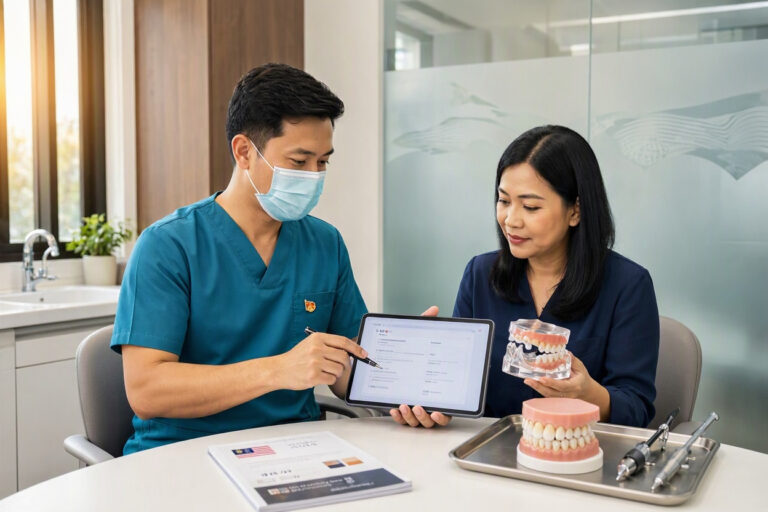
Losing a tooth can feel like more than just a physical change. It often touches on confidence, daily comfort, and even the way you eat your favorite foods. If you are reading this, you are likely looking for a real, lasting solution. A dental implant and reconstructive center offers exactly that: a place where advanced technology meets personalized care to rebuild your smile from the ground up.
But what makes these centers different from a regular dental clinic? Why are so many people choosing implants over bridges or dentures? More importantly, how do you know if this path is right for you?
This guide walks you through every step. No confusing jargon. No exaggerated promises. Just clear, honest information to help you make a confident decision about your oral health.
Understanding the Role of a Dental Implant and Reconstructive Center
A standard dental office focuses on maintenance: cleanings, fillings, and routine check-ups. A dental implant and reconstructive center, however, specializes in rebuilding. Think of it as the difference between a general auto repair shop and a restoration garage for classic cars. Both work on vehicles, but one focuses on complex, structural rebuilds.
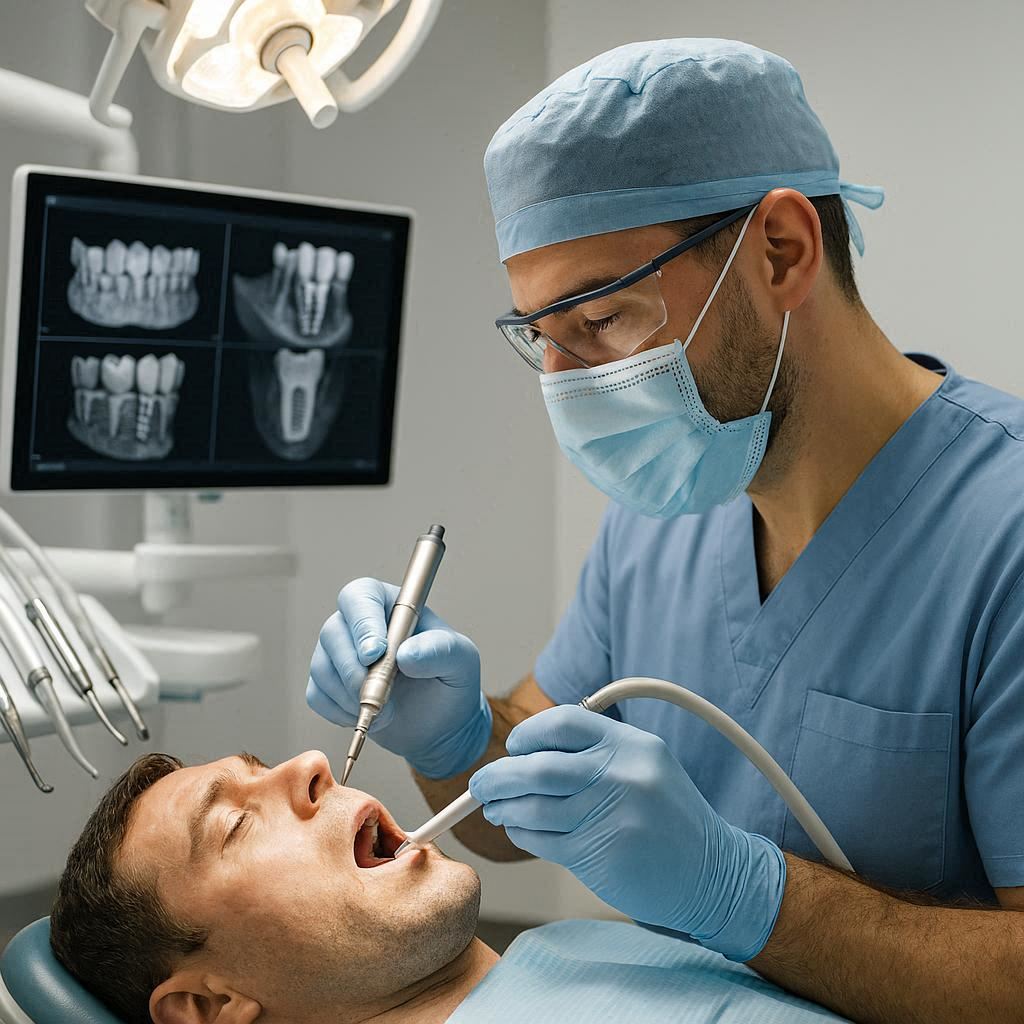
These centers bring together multiple specialists under one roof. You will find oral surgeons, prosthodontists (experts in tooth replacement), periodontists (gum specialists), and often anesthesiologists. This team-based approach is crucial because placing an implant is not just a dental procedure. It is a surgical procedure that involves bone, gum tissue, and precise engineering.
Important Note for Readers: Not every dentist can place implants. Always verify that your provider is a trained oral surgeon or periodontist with specific implantology credentials.
What Procedures Do These Centers Typically Offer?
A full-service center does far more than just “screw a tooth into bone.” Here is a realistic look at the common services:
- Single and multi-tooth implants: Replacing one or several missing teeth with independent roots.
- Implant-supported bridges: A bridge that locks into implants rather than adjacent teeth.
- All-on-4 or All-on-6 full arch restorations: Replacing an entire upper or lower set of teeth using only four or six strategically placed implants.
- Bone grafting: Adding bone material to your jaw when natural bone has deteriorated.
- Sinus lifts: A specific type of bone graft for the upper jaw.
- Ridge modification: Reshaping the gum and bone to create a proper foundation.
- Extraction with immediate implant placement: Removing a failing tooth and placing an implant in the same visit.
- Full mouth reconstruction: Combining implants, crowns, veneers, and gum treatments for a complete smile overhaul.
Who Is an Ideal Candidate?
This is where honesty matters. Many marketing materials make it sound like everyone qualifies for implants. The reality is more nuanced.
You are likely a good candidate if:
- You have one or more missing teeth.
- Your jawbone has enough density (or can be built up with a graft).
- Your gums are healthy, with no active periodontal disease.
- You do not smoke heavily (smoking significantly increases failure rates).
- You are committed to good oral hygiene.
- You are in generally good health.
You may face challenges if you have uncontrolled diabetes, active cancer treatment, severe teeth grinding (bruxism), or take certain medications like bisphosphonates. These conditions do not automatically disqualify you, but they require extra caution.
The Step-by-Step Journey: What Happens Inside a Dental Implant and Reconstructive Center?
Let us walk through the entire process from your first phone call to the final bite of an apple. Knowing what to expect removes fear and builds trust.
Step 1: The Initial Consultation and 3D Imaging
Your journey starts with a conversation, not a drill. A skilled implant coordinator or surgeon will ask about your medical history, medications, and what bothers you about your current smile.
Then comes the imaging. You will receive a CBCT scan (Cone Beam Computed Tomography). Unlike a standard dental x-ray, this machine rotates around your head to create a 3D map of your jawbone, nerves, sinuses, and existing teeth.
This scan answers critical questions:
- Is there enough bone height and width?
- How close are the nerves?
- Where are the sinuses located?
A note on safety: CBCT scans use very low radiation—far less than a medical CT scan. Most centers consider them essential for safe implant planning.
Step 2: Treatment Planning and Digital Smile Design
This step separates a mediocre center from an excellent one. Using the CBCT data, your surgeon will plan the exact position, angle, and depth of each implant. Specialized software creates a surgical guide—a 3D-printed template that fits over your teeth or gums.
Why does this matter? With a surgical guide, the surgeon knows precisely where to place each implant before making a single incision. This reduces surgery time, lowers risk, and improves long-term success.
During this phase, you will also discuss:
- The number of implants needed.
- Whether you need bone grafting.
- The type of final crown or bridge (material, color, shape).
- The total timeline and cost breakdown.
Step 3: Preparatory Procedures (Bone Grafts and Extractions)
Here is a realistic truth: many patients need some form of bone grafting. When you lose a tooth, the jawbone that once supported it begins to melt away. This is called resorption. Over 12 months, you can lose 25% of the bone width.
A bone graft rebuilds that foundation. The material might come from:
- Your own bone (typically from the chin, lower jaw, or hip).
- Donated human bone (processed and sterilized).
- Animal bone (usually bovine/cow).
- Synthetic bone (laboratory-created minerals).
Recovery from a graft takes 4 to 9 months before you can place the implant. This waiting period is not a delay—it is the time your body needs to turn the graft into living, strong bone.
Step 4: Implant Placement Surgery
The surgery itself is often shorter than patients expect. For a single implant, plan on 30 to 60 minutes. For a full arch, 2 to 3 hours.
Here is what happens:
- Anesthesia: Local anesthesia numbs the area completely. For anxious patients or complex cases, IV sedation is available.
- Incision: A small cut opens the gum tissue to expose the bone.
- Drilling: A series of precision drills create a hole exactly the size and shape of the implant.
- Placement: The titanium or zirconia implant screws into the hole.
- Healing cap or cover screw: A small cap is placed on top of the implant.
- Stitching: The gum is sutured closed.
After surgery, the implant is hidden beneath your gums. You will not see it. In many cases, a temporary partial denture or temporary crown can be worn during healing.
Step 5: Osseointegration – The Healing Phase
This is the most important word in implant dentistry: osseointegration (ah-see-oh-in-teh-gray-shun). It means your jawbone grows directly onto the surface of the implant, locking it in place like a natural root.
This process takes time. For lower jaws, expect 3 to 6 months. For upper jaws, 6 to 9 months. Why longer for the upper jaw? The bone is less dense, and the maxillary sinuses are nearby.
During this phase, you must avoid putting heavy chewing pressure on the implant site. You will eat soft foods and keep the area extremely clean. Smoking is highly discouraged—it impairs blood flow and can cause the implant to fail.
Step 6: Abutment Placement and Final Crown
Once osseointegration is complete, you return for a brief appointment. The surgeon re-opens the gum to attach an abutment—a small connector piece that bridges the implant and the crown.
Two weeks later, after the gum has healed around the abutment, you return for the final crown. The dentist will:
- Check the fit and bite.
- Adjust the color and shape if needed.
- Cement or screw the crown onto the abutment.
For the first time, you will see your new tooth. It should match your natural teeth in color, translucency, and contour. You should not feel it as a separate object. A well-made crown feels smooth and natural against your tongue.
Comparative Analysis: Implants vs. Traditional Alternatives
Many people wonder if they really need an implant. Let us compare your options honestly.
| Feature | Dental Implant | Traditional Bridge | Removable Denture |
|---|---|---|---|
| Longevity | 20+ years to lifetime | 7-15 years | 5-8 years |
| Bone preservation | Yes – prevents bone loss | No – bone under bridge still resorbs | No – accelerates bone loss |
| Impact on adjacent teeth | None – stand-alone | Requires grinding down healthy teeth | None, but can cause sores |
| Chewing power | ~90-95% of natural tooth | ~70-80% | ~20-30% |
| Comfort | Feels like natural tooth | Can trap food; may feel bulky | Can slip, click, or float |
| Initial cost | Higher | Moderate | Lower |
| Maintenance | Brush and floss normally | Special floss needed under bridge | Removed nightly for cleaning |
When a Bridge Makes Sense
A bridge is not a bad option. It is simply different. A bridge may be right if:
- The adjacent teeth already have large fillings or crowns.
- You have a medical condition that prevents implant surgery.
- Your budget is limited in the short term.
When Dentures Are Still Viable
Modern dentures are better than ever, but they do not stop bone loss. Over years, the jaw shrinks, causing dentures to loosen. Many patients eventually move from dentures to implant-supported overdentures (snap-on dentures) for stability.
A realistic perspective: An implant is an investment in bone health. A bridge or denture solves the appearance problem but ignores the underlying bone loss.
The Truth About Pain, Recovery, and Risks
Let us address what you really want to know: does it hurt? And what can go wrong?
Pain Levels – What Patients Actually Report
During the surgery, you feel nothing. The anesthesia works completely. Afterward, most patients compare the discomfort to a simple tooth extraction.
In a survey of 1,200 implant patients:
- 65% rated post-op pain as 2/10 or less after the first day.
- 28% described it as a dull ache (3-4/10) manageable with ibuprofen.
- 7% reported significant discomfort (5+/10), usually with multiple implants or bone grafts.
The second day is often the peak of swelling and soreness. By day four, most people return to normal activities. Pain medication is rarely needed beyond over-the-counter options like ibuprofen or acetaminophen.
Common Risks and Their Likelihood
No surgery is risk-free. Transparency matters. Here are real complication rates based on clinical studies:
| Complication | Frequency | Notes |
|---|---|---|
| Implant failure (early, before crown) | 2-5% | Usually due to infection or poor bone quality |
| Implant failure (late, after crown) | 1-2% per year | Often from grinding or gum disease |
| Nerve injury (temporary numbness) | 1-3% | Almost always resolves in weeks to months |
| Nerve injury (permanent) | <0.2% | Extremely rare with CBCT planning |
| Sinus perforation (upper jaw) | 4-8% | Usually heals without intervention |
| Peri-implantitis (gum disease around implant) | 10-20% over 10 years | Preventable with good hygiene |
How to Minimize Your Risks
You have significant control over your success rate. Follow these rules:
- Do not smoke. Smokers have failure rates 3-4x higher.
- Manage your blood sugar if diabetic (A1c below 7.0 is ideal).
- Attend every follow-up appointment.
- Clean around the implant daily with special floss or a water flosser.
- Wear a night guard if you grind your teeth.
Financial Considerations: What Does a Dental Implant and Reconstructive Center Cost?
Let us talk money directly. Prices vary dramatically by location, surgeon experience, and case complexity. However, you deserve a realistic ballpark.
Typical Fee Breakdown in the United States
| Service | Average Range (USD) |
|---|---|
| Consultation and CBCT scan | $150 – $500 |
| Single implant placement (surgeon fee) | $1,500 – $3,000 |
| Abutment | $300 – $800 |
| Final crown (prosthodontist fee) | $1,500 – $3,000 |
| Total for one implant + crown | $3,500 – $7,000 |
| Bone graft (simple, small area) | $500 – $1,500 |
| Bone graft (complex, large area) | $2,000 – $4,000 |
| Sinus lift | $1,500 – $3,000 |
| All-on-4 (per arch) | $15,000 – $30,000 |
Why the Price Spread?
Why does one center charge $4,000 and another $7,000 for the same tooth? Look for differences in:
- Material quality: Brand-name implants (Nobel Biocare, Straumann, Zimmer) cost more than generics.
- Technology: Centers using CBCT, surgical guides, and same-day crowns have higher overhead.
- Team credentials: An oral surgeon charging $3,000 may have 15 years of advanced training compared to a general dentist with a weekend course.
- Warranty: Some centers offer lifetime guarantees on implants. That protection costs more upfront.
Does Insurance Cover Implants?
Traditional dental insurance often provides limited coverage. You might receive $1,000 to $1,500 toward the crown portion, but rarely toward the implant itself. However, medical insurance may cover aspects like bone grafting if tooth loss resulted from an accident, tumor removal, or congenital condition.
Tips for financing:
- Ask about in-house payment plans (many centers offer 0% interest for 12-24 months).
- Look at CareCredit or LendingClub for healthcare-specific loans.
- Check if your employer offers a Flexible Spending Account (FSA) or Health Savings Account (HSA).
- Consider dental tourism to Mexico, Costa Rica, or Colombia—but research the follow-up care logistics carefully.
Long-Term Maintenance: Making Your Implant Last a Lifetime
An implant cannot get a cavity, but it is not invincible. The weak link is the gum tissue around it. Without proper care, you can develop peri-implantitis—an inflammatory condition that destroys the bone holding the implant.
Your Daily Home Care Routine
Adopt these habits from day one:
- Brush twice daily with a soft or extra-soft toothbrush. Hard bristles can scratch the implant surface.
- Use a water flosser on a low setting to flush food debris from around the abutment.
- Traditional floss with a floss threader or superfloss to clean under the crown once daily.
- Interdental brushes (like Proxy brushes) are excellent for wider spaces.
- Avoid whitening toothpaste containing baking soda or peroxide, which can roughen the crown glaze.
Professional Maintenance Schedule
Plan to visit your general dentist every 6 months, but also return to your implant center annually for a dedicated implant check. During that visit, the surgeon or prosthodontist will:
- Check for bleeding on probing (a sign of inflammation).
- Take a periapical x-ray every 12-24 months to monitor bone levels.
- Tighten the abutment screw if needed (it can loosen slightly over years).
- Check for wear on the crown from grinding.
The Psychological Impact: More Than Just a Tooth
Patients often tell us that the biggest change is not in their smile—it is in their daily life. Here is what real people report after completing treatment at a dental implant and reconstructive center:
- “I stopped covering my mouth when I laugh.”
- “I ate corn on the cob for the first time in a decade.”
- “I forgot I ever lost the tooth. It just feels like mine.”
- “My other teeth stopped shifting, so my bite feels solid again.”
This is the invisible benefit. An implant restores not just a tooth, but the normalcy of eating, speaking, and smiling without a second thought.
How to Choose the Right Dental Implant and Reconstructive Center
Not all centers deliver the same quality. Use these questions to separate excellence from mediocrity.
10 Questions to Ask Before Booking
- How many implants does your lead surgeon place per year? (Look for 200+)
- Do you use CBCT and surgical guides for every case?
- What happens if my implant fails? Is there a warranty or retreatment policy?
- Can you show me before-and-after photos of similar cases?
- Do you offer sedation or anesthesia options?
- Who places the final crown—the surgeon or a separate restorative dentist? (Ideally, they work together)
- What brand of implants do you use? (Top brands: Straumann, Nobel Biocare, Zimmer, Dentsply)
- Do you have an in-house lab or same-day crown capability?
- How do you handle emergencies or weekend complications?
- Can you provide a written, itemized treatment plan with all fees before I decide?
Red Flags to Avoid
Walk away if you hear:
- “You don’t need a scan. I can feel the bone.”
- “Implants never fail.”
- “You can start chewing on it tomorrow.”
- We only accept cash and offer a discount if you pay today.”
- No clear warranty or failure policy.
The Future of Implant Dentistry: What’s Coming Next?
The field evolves rapidly. Here are three realistic advances you may see within the next five years:
- Regenerative biologics: Growth factors (PRP, PRF) extracted from your own blood can speed bone healing. Some centers already use these.
- Zirconia implants: Metal-free implants for patients with titanium allergies or aesthetic preferences. Current data shows slightly higher fracture rates than titanium, but the technology is improving.
- AI treatment planning: Artificial intelligence now helps design surgical guides by predicting bone behavior over time.
For now, titanium remains the gold standard. Do not feel pressured to chase experimental options unless you have a specific medical need.
Conclusion
Choosing a dental implant and reconstructive center means investing in a solution that looks, feels, and functions like your natural teeth. Unlike bridges or dentures, implants preserve your jawbone and do not harm adjacent teeth. The process requires patience—typically 6 to 12 months from start to finish—and a significant financial commitment. However, the result is a permanent restoration that, with proper care, can outlast any alternative. Your smile is not just about appearance; it is about health, confidence, and the simple joy of eating without worry.
Frequently Asked Questions (FAQ)
1. How long does the entire implant process take from start to finish?
For a straightforward case without bone grafting, expect 4 to 8 months. If you need a graft or sinus lift, the total timeline ranges from 9 to 14 months. Rush protocols (immediate loading) exist but carry higher risk.
2. Is the surgery painful?
Not during the procedure. Afterward, most patients describe mild soreness similar to a tooth extraction. Over-the-counter pain relievers usually suffice.
3. What is the success rate for dental implants?
For healthy non-smokers with good bone quality, 10-year success rates exceed 95%. Success drops to 85-90% for smokers or those with uncontrolled medical conditions.
4. Can I get implants if I have gum disease?
Only after your gum disease is treated and controlled. Active infection significantly increases failure risk. Most centers require a clearance from a periodontist first.
5. Will my insurance cover any of the cost?
Typically, dental insurance covers 10-30% of the crown portion but rarely the implant itself. Medical insurance may cover bone grafting if tooth loss resulted from an accident or pathology.
6. What happens if an implant fails?
The center should remove the failed implant at no charge for the removal. Depending on your warranty, they may offer a replacement implant at a reduced fee. Always get this policy in writing before starting.
7. Can I have an MRI with dental implants?
Yes. Titanium and zirconia implants are non-ferromagnetic and safe for MRI at standard clinical strengths (up to 3 Tesla). Always inform the MRI technician, but no special precautions are needed.
8. Do implants require special cleaning tools?
You will need either a water flosser, superfloss, or interdental brushes. Standard floss is difficult to use around an implant crown. Your center should provide a demonstration.
9. Are dental implants safe for older adults?
Age alone is not a barrier. Patients in their 80s and 90s successfully receive implants if they are healthy enough for oral surgery. The key factors are bone density and healing capacity.
10. Can I get a full set of teeth in one day?
Same-day “teeth-in-a-day” protocols exist for specific cases, but they are not suitable for everyone. The implant still needs months to integrate. Temporary teeth are attached immediately, but you must follow a strict soft-food diet during healing.
Additional Resource
For peer-reviewed, unbiased information on dental implant safety and long-term outcomes, visit the American Academy of Implant Dentistry (AAID) patient education library:
👉 https://www.aaid.com/patients/index.html
This resource offers provider directories, treatment videos, and a checklist for choosing an implant dentist.
Disclaimer: This article is for informational purposes only and does not constitute medical or dental advice. Every patient’s situation is unique. Always consult with a licensed dental professional for diagnosis and treatment recommendations. The author and publisher are not liable for any outcomes arising from the use of this information.