How Challenging Are Dental Implants?
Dental implants are often described as the gold standard for tooth replacement. They look natural, function like real teeth, and can last a lifetime. What is less often discussed with equal candor is the degree of difficulty involved. The challenge is not merely surgical. It is financial, emotional, temporal, and behavioral. A patient considering implants deserves a clear-eyed understanding of what the process demands. This article examines the challenges of dental implants from every angle, not to discourage, but to prepare. The patient who enters treatment with realistic expectations is the patient most likely to succeed.
The Surgical Challenge: What the Body Endures
The surgical placement of a dental implant is a controlled trauma. The body must heal from it, and healing requires time, patience, and physiological resources. For most patients, the surgery itself is not a major physical ordeal. It is performed under local anesthesia in an outpatient setting. The level of surgical invasion is comparable to a tooth extraction. But comparing it to a simple extraction understates the complexity.
The Precision Requirement
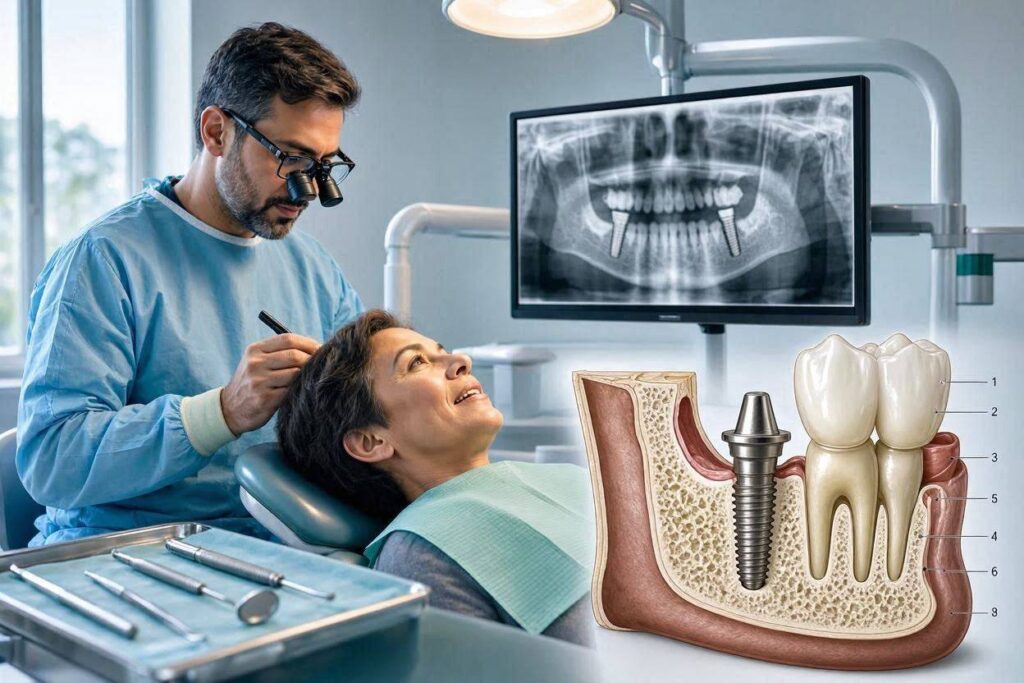
Implant surgery demands exceptional precision. The implant must be placed at a specific depth, angle, and position within the bone. A deviation of a millimeter can compromise the aesthetic outcome, injure a nerve, or perforate the sinus. This precision is achieved through careful pre-operative planning, often involving 3D Cone Beam CT imaging and computer-guided surgical templates. The dentist is working within millimeters of critical anatomical structures. The mental focus required of the surgeon is intense. The patient, lying still with their mouth open, may not appreciate the concentration happening behind the surgical loupes.
The Post-Operative Recovery
The challenge of recovery is not typically the pain. Most patients describe the discomfort as mild to moderate, peaking at 48 hours and manageable with over-the-counter medication. The challenge is the disruption to normal life. Swelling. Bruising. A soft diet for days or weeks. The inability to chew on the surgical side for months. The vigilance required to avoid disturbing the healing site. The need to refrain from smoking, which is a potent inhibitor of healing and a leading cause of implant failure.
For a single implant in a straightforward case, recovery is a minor inconvenience. For full-arch implant surgery, where four to eight implants are placed and a temporary prosthesis is attached, recovery is a significant event. Swelling can be dramatic. Bruising can extend down the neck and chest. The diet is restricted to liquids and very soft foods for weeks. The patient must adapt to a new, temporary prosthesis that feels foreign in the mouth. This is not minor surgery. It is reconstructive surgery, and the recovery reflects that.
The Waiting: Osseointegration
The most psychologically challenging part of implant treatment for many patients is the waiting. After the implant is placed, it must heal undisturbed for three to six months. During this period, the patient sees no visible progress. There is a gap where the tooth will eventually be, or a temporary restoration that is deliberately suboptimal to avoid loading the implant. The implant is buried under the gum, doing its silent biological work. The patient must trust that osseointegration is occurring, without any external evidence. This period of suspended anticipation tests patience. The desire for immediate results, so common in modern life, must be set aside.
The Anatomical Challenge: When Bone Is Lacking
Not every jawbone is ready to receive an implant. Bone loss following tooth extraction is the rule, not the exception. The bone that once supported the tooth root begins to resorb within weeks of extraction and continues to shrink for years. The longer a tooth has been missing, the less bone remains.
The Need for Bone Grafting
Insufficient bone volume is the most common anatomical challenge in implant dentistry. It requires a solution: bone grafting. Bone grafting is a separate surgical procedure, or an extension of the implant surgery, that adds time, cost, and recovery burden. A minor socket graft is a small addition. A major ridge augmentation or sinus lift is a significant surgical event in its own right. The patient who expected a single implant may find themselves facing a staged sequence of grafting, healing, implant placement, more healing, and finally restoration. The timeline can stretch from a few months to over a year.
The Sinus and Nerve Limitations
In the upper back jaw, the maxillary sinus expands into the space vacated by missing teeth. The bone floor of the sinus can be paper-thin. Implants cannot be placed into the sinus without a sinus elevation procedure, which lifts the sinus membrane and places graft material to create vertical bone height.
In the lower jaw, the inferior alveolar nerve runs through a bony canal. The implant must be placed with a safety margin above this nerve. If there is insufficient bone height above the nerve, the options are limited: a shorter implant, a nerve lateralization procedure, or an alternative treatment.
These anatomical challenges are not rare. They are common. The patient must understand that their specific anatomy may make implant treatment more complex, more expensive, and lengthier than the idealized version they have imagined.
The Financial Challenge: A Significant Investment
The cost of dental implants is a genuine barrier. It is the challenge most frequently cited by patients who are considering treatment and the one that causes the most distress.
The Numbers
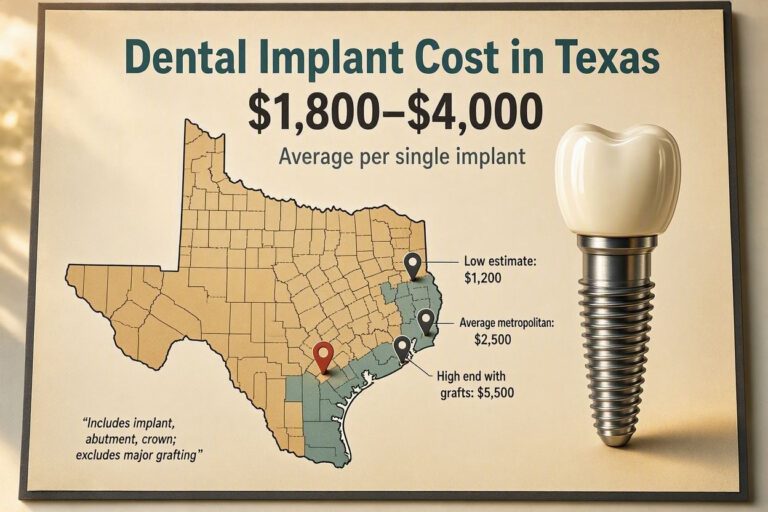
A single implant and crown in the United States typically costs $3,000 to $6,000. Multiple implants multiply the cost. Full-arch restoration can range from $20,000 to $35,000 per arch. Bone grafting adds hundreds to thousands of dollars. These are not amounts most households can absorb without planning, saving, or financing.
Dental insurance provides limited relief. Annual maximums of $1,000 to $2,000 are quickly exhausted. Many plans exclude implants or limit coverage with waiting periods and missing tooth clauses. The patient is often left with a substantial out-of-pocket obligation.
The Financing Burden
Financing options exist, but they come with their own challenges. Healthcare credit cards offer promotional interest-free periods, but deferred interest can be punishing if the balance is not cleared in time. Personal loans add interest costs. In-house payment plans require a relationship of trust with the practice. The financial challenge does not end when the implant is placed. It extends through months of payments.
The Value Proposition
The counterargument is that implants are a long-term value. A bridge may need replacement every ten to fifteen years and involves damaging healthy teeth. A denture is less expensive but less functional and does not prevent bone loss. Over a lifetime, an implant can be the most cost-effective option. But the lifetime value argument requires the patient to have the upfront capital or credit access to make the initial investment. This is the financial challenge in essence: paying for decades of value in a single lump sum, or over a few years of financing, at a point in life when other financial demands are pressing.
The Time Challenge: A Months-Long Commitment
Implant treatment is not a single appointment. It is a process that unfolds over months. The minimum timeline for a straightforward single implant without grafting is about four to five months from placement to final crown. If grafting is required, the timeline extends to eight to twelve months or more. Full-arch cases can take six to twelve months from surgery to final prosthesis.
During this time, the patient has multiple appointments: consultation, imaging, preparatory procedures, implant surgery, post-operative visits, uncovering, impressions, try-ins, and delivery. Each appointment requires time off work, travel, and the logistics of arranging child care or other responsibilities.
The patient must also accommodate the dietary restrictions and activity limitations during each healing phase. This is not a weekend procedure. It is a commitment that spans seasons. The patient who understands this at the outset is less likely to feel frustrated or abandoned during the long middle phase of treatment.
The Skill Challenge: Finding the Right Clinician
Implant dentistry is not a recognized specialty in the way orthodontics or oral surgery is. General dentists, periodontists, and oral surgeons all place implants. The skill, experience, and judgment of the clinician are the most significant variables in the outcome.
The Training Spectrum
A general dentist may have taken a weekend course and placed a handful of implants. Another may have completed a year-long comprehensive training program and placed thousands. Both are legally permitted to offer implant services. The patient has the challenge of discerning the difference.
The Questions to Ask
The patient must become an informed consumer. How many implants has the clinician placed? What training have they completed? What is their complication rate? Do they use 3D imaging for planning? Do they offer a warranty? A clinician who welcomes these questions and answers them transparently is demonstrating professionalism. One who is defensive or dismissive is sending a warning signal.
The Consequences of Inexperience
Poorly planned or poorly executed implant surgery can result in nerve injury, sinus perforation, implant failure, infection, and aesthetically unacceptable results. The repair of a failed implant case is more difficult and more expensive than getting it right the first time. The patient’s choice of clinician is the single most important decision in the entire implant journey.
The Maintenance Challenge: A Lifetime Commitment
The challenges of dental implants do not end when the crown is delivered. Implants require meticulous, lifelong maintenance. The patient who views the implant as a “fit and forget” solution is at risk for peri-implant disease and late failure.
Daily Home Care
Cleaning around an implant is more demanding than cleaning around a natural tooth. The soft tissue attachment is weaker. The junction between the crown and the abutment is a potential bacterial reservoir. The patient must use specialized floss, interdental brushes, or a water flosser daily. Technique matters. The dentist or hygienist must teach the patient how to clean effectively and verify at recall visits that the patient is doing so.
Professional Maintenance
Regular professional maintenance visits, typically every three to six months, are essential. The peri-implant tissues are probed, the prosthesis is cleaned with specialized instruments, and radiographs are taken periodically to assess bone levels. These visits are not optional. They are the surveillance system that detects problems early, when they are still manageable.
The Behavioral Commitment
The patient who is not willing or able to commit to daily cleaning and regular professional maintenance may not be a good candidate for implants. This is not a judgment. It is a realistic assessment of the demands of implant ownership. A conventional denture or bridge may be a more appropriate choice for a patient who struggles with daily oral hygiene.
The Emotional and Psychological Challenge
The emotional dimension of implant treatment is underrecognized. The patient has lost a tooth, which carries its own grief and adjustment. The surgical process generates anxiety. The waiting period generates frustration. The financial strain generates stress. The temporary prosthesis may feel awkward or unattractive. The fear of failure—that the implant will not integrate, that the money will be wasted, that the outcome will be disappointing—lurks in the background.
These feelings are normal. They do not indicate weakness. A supportive dental team acknowledges the emotional journey and provides reassurance, clear communication, and empathy. The patient who knows what to expect, who is given realistic timelines, and who is treated with respect navigates the emotional challenges more successfully.
Who Should Not Pursue Implants
Not everyone is a suitable candidate for dental implants, and recognizing this is a form of wisdom, not failure. Absolute or relative contraindications include active, uncontrolled periodontal disease, which must be treated and stabilized first. Heavy smoking with an unwillingness to quit or reduce significantly increases the risk of failure and peri-implantitis. Uncontrolled diabetes with poor glycemic control impairs healing and increases infection risk. Active high-dose bisphosphonate therapy for cancer is a strong contraindication due to the risk of medication-related osteonecrosis of the jaw. Insufficient bone volume with a patient unwilling or unable to undergo grafting is a practical limitation. A patient who cannot commit to daily oral hygiene and regular maintenance may not be a suitable candidate.
The honest dentist identifies these challenges and either addresses them with the patient or recommends alternative treatment.
Conclusion
Dental implants present a constellation of challenges. The surgical procedure demands precision and imposes a recovery period. Anatomical limitations like bone loss require additional procedures that add time and expense. The financial burden is significant and poorly covered by insurance. The time commitment stretches over months. The patient must find a skilled clinician and must commit to lifelong daily and professional maintenance. The emotional journey tests patience and resilience. Yet for the patient who is a good candidate, who understands the challenges, and who is prepared to meet them, dental implants offer a uniquely functional, aesthetic, and durable solution. The challenge is real, but so is the reward.
Frequently Asked Questions
Is dental implant surgery more painful than an extraction?
Most patients report that implant surgery is comparable to or slightly less uncomfortable than a tooth extraction. Post-operative pain is generally mild to moderate and well-managed with medication.
What is the hardest part of getting dental implants?
For many patients, the hardest part is not the surgery but the waiting. The months of healing with a temporary restoration require patience. The financial commitment is also a significant challenge.
Can a dental implant fail years after placement?
Yes. Late failure is usually caused by peri-implantitis, a destructive inflammatory process resulting from bacterial plaque. Excellent home care and regular professional maintenance are the best prevention.
How do I know if my dentist is qualified to place implants?
Ask about their specific implant training, the number of implants they have placed, their use of 3D imaging, and their complication rate. A qualified clinician answers these questions openly.
Are there people who should not get dental implants?
Yes. Heavy smokers, patients with uncontrolled diabetes, those on certain medications, and those unable to maintain good oral hygiene may not be good candidates. Each case must be evaluated individually.
What happens if I do not have enough bone for implants?
Bone grafting can rebuild lost bone volume. Even patients with significant bone loss can often become implant candidates after appropriate grafting procedures.
Additional Resource:
American Academy of Periodontology – Dental Implant Information
https://www.perio.org/consumer/dental-implants