Can Dental Implants Restore Face Shape?
The face is supported by a complex scaffold of bone, muscle, fat, and teeth. When teeth are lost, the underlying alveolar bone—the specialized portion of the jaw that supports the tooth roots—begins to resorb. This bone loss does not merely affect the mouth; it progressively alters the contours and proportions of the entire lower face. The question of whether dental implants can restore face shape is a question about whether replacing the tooth roots can halt, reverse, or compensate for this bony resorption. The answer is nuanced: dental implants are the most effective means available to preserve the jawbone and support the facial soft tissues, but they cannot reverse bone that has already been lost without adjunctive bone grafting. This guide provides a comprehensive, anatomically precise explanation of how tooth loss changes the face, how implants and implant-supported prostheses counteract these changes, and what a patient can realistically expect.

How Tooth Loss Changes Facial Shape
The face is divided into three vertical thirds. The lower third, from the base of the nose to the chin, is directly supported by the teeth and the alveolar bone. When the teeth are present, the facial muscles, particularly the orbicularis oris (the circular muscle around the mouth) and the buccinator (the cheek muscle), are supported by the dental arches. The lips are supported by the anterior teeth. The vertical dimension of the lower face—the distance between the nose and the chin when the teeth are in contact—is maintained by the occlusion.
Alveolar Bone Resorption
The alveolar bone exists solely to house the teeth. When a tooth is extracted, the functional forces transmitted through the periodontal ligament to the bone cease. The body initiates a process of disuse atrophy. The bone resorbs. This resorption begins immediately after extraction and is most rapid in the first year, but it continues throughout life. The pattern of resorption is predictable: the ridge loses width first, primarily on the facial (cheek-side) aspect, and then loses height.
In the maxilla (upper jaw), the bone resorbs upward and inward. In the mandible (lower jaw), it resorbs downward and outward. Over decades of edentulism, the maxilla becomes smaller and retrudes, while the mandible becomes wider and relatively more protrusive. This creates the classic “prognathic” appearance of an edentulous elderly patient: a protruding chin, a sunken upper lip, and deep nasolabial folds.
Soft Tissue Collapse
The lips are supported by the anterior teeth and the alveolar ridge. When the anterior teeth are lost and the ridge resorbs, the lip support collapses. The upper lip flattens and inverts, becoming thin and retruded. The lower lip loses its support and may roll inward. The vertical dimension of the lower face decreases as the mandible rotates upward and forward, seeking a stable contact with the maxilla. This rotation causes the chin to protrude and the corners of the mouth to turn downward.
The loss of bone and tooth support causes the perioral soft tissues to collapse inward. The cheeks, which were supported by the buccal surfaces of the posterior teeth and the alveolar ridges, become sunken. Deep creases form: nasolabial folds (from the nose to the corners of the mouth), marionette lines (from the corners of the mouth to the chin), and vertical lip lines. The patient appears prematurely aged.
What Dental Implants Can Do
Dental implants are the only tooth replacement option that addresses the root cause of these facial changes: the loss of the tooth root and the cessation of bone stimulation.
Preservation of Existing Bone
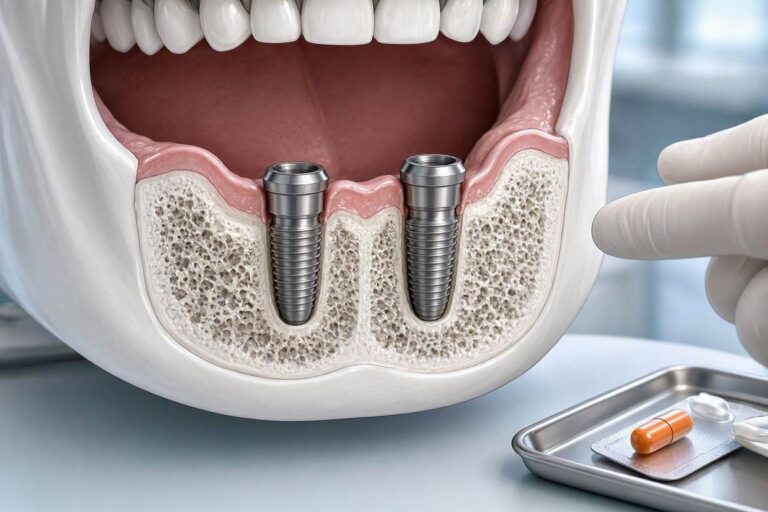
When an implant is placed and osseointegrated, it transmits the forces of chewing directly to the bone, just as a natural tooth root does. The bone around the implant is functionally loaded. The osteoblasts (bone-building cells) are stimulated to maintain bone density. The resorption that inevitably follows tooth loss is arrested at the implant site. This is the most important contribution of implants to facial preservation. An implant placed at the time of extraction or soon after can preserve the ridge contour and prevent the initial collapse.
Support for the Lips and Cheeks
An implant-supported crown, bridge, or denture is anchored to the bone, not resting on the gum tissue. It provides a stable, fixed foundation for the prosthetic teeth. The prosthetic teeth are positioned to provide optimal lip and cheek support. The anterior teeth support the upper and lower lips, restoring a full, natural lip contour. The posterior teeth support the buccal corridor, filling the space between the corners of the mouth and the posterior teeth, eliminating the sunken cheek appearance.
For a patient with a single missing anterior tooth, an implant-supported crown restores the local lip support and prevents the bone resorption that would create a concavity in the ridge.
Restoration of Vertical Dimension
In the edentulous patient, a full-arch implant-supported fixed bridge (such as an All-on-4 or All-on-6) or an implant-supported overdenture restores the correct vertical dimension of the lower face. The prosthetic teeth are designed to establish the proper occlusal plane and the correct distance between the maxilla and mandible. This restores the lower facial height, softens the nasolabial folds and marionette lines, and provides a more youthful, balanced facial profile.
The Limitations: What Implants Cannot Do Without Adjunctive Procedures
Dental implants are a powerful tool for facial support, but they have limitations. They cannot reverse soft tissue aging or replace lost bone without grafting.
Bone That Is Already Lost
An implant placed into a ridge that has already resorbed will preserve the remaining bone. It will not regenerate the bone that is gone. If a patient has been edentulous for many years and has severe ridge resorption, the placement of implants alone will not restore the lost ridge height and width. The prosthetic teeth attached to the implants may appear long, and the gum tissue may not have a natural contour. The lip support will be provided by the prosthetic flange of the restoration, not by the underlying bone and gum tissue.
To restore the lost bone volume, a bone graft is required. A block bone graft, a particulate graft, or a ridge-splitting procedure can rebuild the ridge to its original dimensions. Implants are then placed into the augmented ridge. This combined approach restores both the bone and the facial support.
Soft Tissue Aging and Volume Loss
Implants and prosthetic teeth address the dental and skeletal components of facial aging. They do not address the soft tissue changes of aging. The skin loses elasticity and collagen. The subcutaneous fat pads atrophy and descend. The platysma muscle (the neck muscle) becomes lax. These changes create jowls, deepened nasolabial folds, and neck laxity that implants cannot correct.
A patient who is seeking comprehensive facial rejuvenation may combine implant-supported dental restoration with soft tissue procedures such as dermal fillers, fat transfer, or a facelift. The dental restoration provides the foundation; the soft tissue procedures address the skin and fat.
The Removable Overdenture Limitation
An implant-supported overdenture (snap-on denture) provides superior retention and function compared to a conventional denture. However, it still has a denture base that covers the palate and rests on the gum tissue. The lip and cheek support is provided by the denture flange, not by the implants themselves. While this is a significant improvement over a loose denture, it does not provide the same degree of facial support as a fixed full-arch bridge, where the teeth emerge directly from the gum tissue without a bulky denture base.
The Ideal Treatment Sequence for Facial Support
The ideal pathway to preserve or restore facial shape with implants is to intervene early.
- Extraction with Ridge Preservation: At the time of tooth extraction, the socket is grafted to preserve the bone volume. This maintains the ridge contour and prevents the initial collapse.
- Implant Placement: The implant is placed within the first 3 to 6 months after extraction, before significant resorption has occurred. If possible, an immediate implant is placed on the day of extraction.
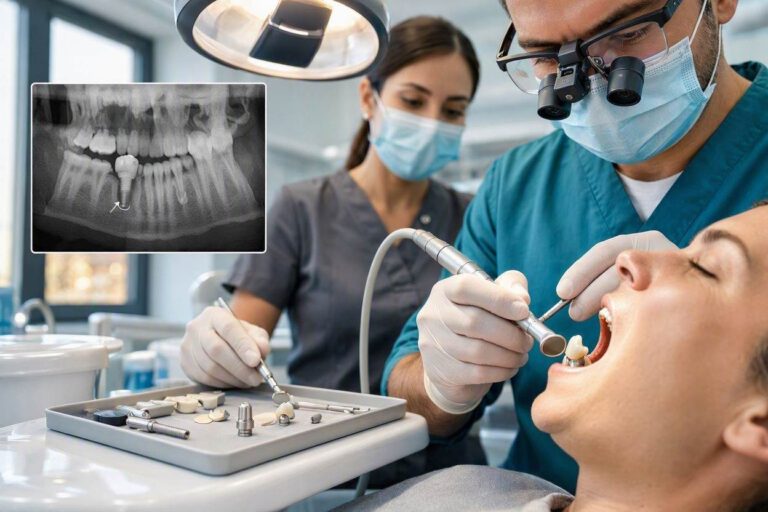
- Prosthetic Restoration: The implant crown, bridge, or fixed full-arch prosthesis is designed with proper lip and cheek support, restoring the facial contours.
- Long-Term Maintenance: The patient maintains the implant and the remaining dentition, preserving the bone and the facial support for decades.
For the patient who has already experienced significant bone loss, the sequence involves staged bone grafting to rebuild the ridge, followed by implant placement and prosthetic restoration.
Conclusion
Dental implants can restore face shape by preserving the alveolar bone through functional loading, providing stable support for the lips and cheeks via the prosthetic teeth, and restoring the lost vertical dimension of the lower face. They are the only tooth replacement that addresses the root cause of post-extraction facial collapse—the loss of the tooth root and the cessation of bone stimulation. However, implants cannot regenerate bone already lost without adjunctive grafting procedures, and they do not reverse the soft tissue changes of aging, such as skin laxity and fat loss. Early intervention with ridge preservation and implant placement offers the best opportunity to maintain natural facial contours for a lifetime.
Frequently Asked Questions
Will dental implants make me look younger?
Dental implants supporting a properly designed prosthesis can restore the dental and skeletal support of the lower face, which can take years off your appearance. The lips will be fuller, the nasolabial folds will soften, and the chin will be in a more balanced position. However, implants alone will not tighten loose skin or replace lost facial fat. The overall rejuvenation effect can be dramatic, particularly in patients who have been edentulous and have lost vertical dimension.
Can I get implants just to plump up my lips?
Implants are placed to replace missing teeth, not solely for cosmetic lip augmentation. However, implant-supported anterior restorations do provide lip support. If you have missing anterior teeth and have lost lip support, implants are the appropriate treatment. If you have healthy teeth and desire fuller lips, dermal fillers or other cosmetic procedures are the appropriate treatment.
I have had dentures for 20 years and my face has collapsed. Can implants help?
Yes, but you will likely need bone grafting first to rebuild the resorbed ridge. Once the bone volume is restored, implants can be placed and a fixed or removable prosthesis can be fabricated. The restoration will restore your vertical dimension and provide lip and cheek support. The transformation can be life-changing. A prosthodontist and an oral surgeon working together can evaluate your specific bone loss and create a comprehensive treatment plan.
Does an implant-supported denture provide the same facial support as a fixed bridge?
An implant-supported overdenture provides significantly more facial support than a conventional denture because it is retained by implants. However, a fixed full-arch bridge (All-on-4) provides a more natural emergence of the teeth from the gum tissue, without a bulky denture flange, and may provide slightly better lip support. The choice between the two depends on your bone volume, your budget, and your aesthetic goals.
Additional Resource
The American College of Prosthodontists provides a patient education section at gotoapro.org. Prosthodontists are specialists in the restoration and replacement of teeth and the management of facial aesthetics related to tooth loss. The site includes a “Find a Prosthodontist” tool and detailed information on the relationship between dental restorations and facial support, including the role of implants in facial rejuvenation.