How Long Can You Keep Teeth Whitening Gel?
You buy a teeth whitening kit with high hopes for a brighter smile. You use it once or twice, see some results, then tuck the remaining gel into the bathroom cabinet. Weeks or months pass. You find the tubes again and wonder: Is this stuff still good? Can I still use it?
This question matters more than most people realize. Using expired or improperly stored whitening gel leads to disappointing results at best. At worst, it causes gum irritation, tooth sensitivity, or chemical burns. The gel sitting in your cabinet has a finite lifespan, and understanding that lifespan protects your smile and your wallet.
We will walk through every aspect of whitening gel longevity. You will learn what manufacturers recommend, what happens chemically as gel ages, how to spot expired product, and how to store gel properly. Let’s settle this question completely.
Understanding Teeth Whitening Gel Composition
Before we discuss shelf life, you need to understand what sits inside those syringes and pens. Whitening gel is not a simple, stable liquid. It contains active ingredients that degrade over time.
The Active Ingredients
Most at-home whitening gels rely on hydrogen peroxide or carbamide peroxide as their bleaching agent. These compounds break down stain molecules on and within your tooth enamel. Hydrogen peroxide works faster because it releases oxygen immediately upon contact with teeth. Carbamide peroxide breaks down more slowly, first into hydrogen peroxide and urea, then the hydrogen peroxide does the actual whitening.
This chemical reactivity creates both the whitening power and the stability problem. Peroxide compounds naturally want to break down. They do not stay potent forever.
The Inactive Ingredients
The gel base contains thickeners, humectants, stabilizers, and sometimes desensitizing agents. Glycerin or propylene glycol keeps the gel viscous enough to stay on teeth. Carbopol or similar thickening agents create the gel consistency. Stabilizers like phosphoric acid or citric acid help maintain a low pH that slows peroxide breakdown. Flavorings and sweeteners improve the taste.
Each component has its own stability profile. When any component degrades, the entire formulation changes.
Why Peroxide Degrades Over Time
Hydrogen peroxide naturally decomposes into water and oxygen gas. Heat accelerates this process dramatically. Light also triggers decomposition, which explains why manufacturers package gel in opaque syringes or tubes. Even at room temperature in dark packaging, a slow, steady degradation occurs.
Carbamide peroxide faces a similar fate. It hydrolyzes into hydrogen peroxide and urea, and then the hydrogen peroxide decomposes. The rate depends on temperature, pH, and exposure to contaminants.
Manufacturer Shelf Life Guidelines
Every legitimate whitening product carries an expiration date. Understanding what that date means helps you make informed decisions.
Typical Expiration Periods
Most manufacturers print an expiration date 12 to 24 months from the production date. Unopened, properly stored gel should maintain full potency through that date. Once you open a syringe or pen, the clock speeds up. Exposure to air introduces moisture and contaminants. The gel contacts oxygen, which accelerates peroxide breakdown.
Some professional-grade gels supplied by dentists carry shorter windows. A dentist might give you gel intended for use within a few weeks or months. Always check the labeling or ask your provider directly.
What the Expiration Date Actually Means
The expiration date represents the manufacturer’s guarantee of full potency and safety. After that date, the peroxide concentration begins dropping below the labeled percentage. The gel does not turn dangerous immediately. It simply becomes less effective.
A 35% carbamide peroxide gel might test at 30% a few months past expiration. Six months later, it could drop to 20% or lower. You waste your time applying weak gel, and you expose your gums to degraded chemicals for minimal whitening benefit.
Regulatory Requirements
In the United States, the FDA considers teeth whitening gels as cosmetic products when sold over the counter. Manufacturers must conduct stability testing to support their expiration dating. Products sold through dentists face similar requirements. The European Union and other regulatory bodies have parallel standards.
These regulations exist because degraded peroxide products can change pH, grow bacteria, or separate into irritating components. The expiration date is not arbitrary. It reflects actual stability data.
| Gel Type | Typical Unopened Shelf Life | Shelf Life After Opening | Storage Temperature |
|---|---|---|---|
| Hydrogen Peroxide Gel (OTC) | 12-18 months | 2-4 weeks | 2-8°C (refrigerated ideal) |
| Carbamide Peroxide Gel (OTC) | 18-24 months | 4-8 weeks | 2-8°C (refrigerated ideal) |
| Carbamide Peroxide Gel (Professional) | 12-24 months | 2-4 weeks | 2-8°C |
| Whitening Pens | 12 months | 2-4 weeks | Room temp, away from light |
| Pre-loaded Trays | 18 months | Use immediately upon opening | Cool, dark place |
Important Note: The above ranges represent common industry practices. Always check your specific product labeling. Some formulations use advanced stabilizers that extend shelf life. Others may have shorter windows due to higher peroxide concentrations or simpler formulations.
Factors That Shorten Gel Lifespan
Even within the official shelf life, certain conditions destroy your gel prematurely. Knowing these factors helps you avoid wasting product.
Heat Exposure
Heat ranks as the number one enemy of peroxide gels. Temperatures above 25°C (77°F) sharply accelerate decomposition. A gel stored in a hot bathroom during summer loses potency weeks or months faster than refrigerated gel. Leaving gel in a hot car for a few hours can ruin it completely.
The decomposition reaction releases oxygen gas. You might notice swollen syringes or pens. The plunger may push outward. When you open the cap, gel might squirt out forcefully. These signs indicate advanced degradation and probable potency loss.
Light Exposure
Ultraviolet light and even strong visible light break peroxide bonds. This explains the opaque, often black or dark blue packaging used for whitening products. If you transfer gel to a clear container or leave it in direct sunlight, you destroy the active ingredient within hours or days.
Air and Moisture Contamination
Once you uncap a syringe, ambient air enters. Oxygen triggers slow decomposition. Humidity introduces water, which dilutes the gel and alters its pH. Bacteria from the air or from contact with your teeth can colonize the gel, especially if you touch the applicator tip to your teeth or gums.
Always replace caps tightly. Never touch the applicator tip to any surface, including your teeth. Squeeze gel onto a clean applicator or directly into a tray without contact.
Cross-Contamination
Some kits require you to fill trays directly from the syringe. If the tray touches your teeth and then you reapply the syringe tip to the tray, you transfer oral bacteria into the gel reservoir. This contamination can cause the gel to spoil, grow mold, or develop an off odor.
Frequent Opening and Closing
Every time you open the syringe, you expose fresh gel to air and potential contaminants. Minimize the number of times you uncap the product. If you whiten multiple times per week, consider using one syringe until finished before opening another.
How to Check If Your Gel Has Expired or Gone Bad
Your gel might sit in the cabinet for a while. Before applying anything to your teeth, perform a quick inspection.
Check the Printed Date
Look for an expiration date or a manufacturing date plus a recommended use period. If the date has passed, assume reduced potency. If no date exists and you bought the kit more than two years ago, replace it.
Visual Inspection
Fresh whitening gel looks clear or slightly translucent. It flows smoothly from the syringe. Signs of degradation include:
- Cloudiness or opacity where the gel was previously clear
- Separation into liquid and solid layers
- Crystallization or grittiness
- Yellowing or browning of the gel
- Bubbles throughout the gel, indicating oxygen release
- Mold spots or fuzzy growth
Any of these signs means discard the gel immediately. Do not attempt to mix separated gel back together. The chemical structure has changed irreversibly.
Smell Test
Peroxide-based gels have a mild, slightly sharp odor. Degraded gel sometimes smells sour, rancid, or unusually strong. If the scent makes you recoil, trust your nose and throw the product away.
Texture Test
Squeeze a tiny amount onto your finger. It should feel smooth and gel-like, not watery, gritty, or chunky. Run it between your fingers. Any grittiness suggests crystallization of ingredients or stabilizer failure.
Performance Test
If the gel looks, smells, and feels normal but you doubt its potency, apply a small amount to one tooth as a test. After the recommended wear time, check for any whitening effect. If you see zero change after a legitimate application, the peroxide has likely degraded. However, avoid using expired gel for this test. The risk of irritation outweighs the minor benefit of checking potency.
Can You Extend the Shelf Life of Whitening Gel?
You cannot make gel last forever, but you can maximize its useful life through proper handling.
Refrigeration Benefits
Cold temperatures slow chemical reactions, including peroxide decomposition. Most manufacturers recommend refrigerating unopened gel, though few require it. Refrigeration at 2-8°C (35-46°F) can extend effective shelf life by several months beyond room temperature storage.
Do not freeze whitening gel. Freezing causes phase separation as water crystallizes. The gel’s structure breaks down, and thawing does not restore it. Keep gel in the refrigerator compartment only.
Proper Sealing and Handling
After each use, wipe the syringe tip with a clean, dry tissue. Replace the cap firmly. Store the syringe upright if possible to prevent leakage. Keep the product in its original opaque packaging or wrap it in foil if you lose the box.
Single-Use Considerations
Some professional systems provide single-use syringes or capsules. Use the entire contents in one session as directed. Do not attempt to save partially used single-dose products for later. They lack preservative systems designed for multi-use scenarios.
Avoid Decanting
Never transfer gel to a different container. The original syringe provides light protection, air exclusion, and a sterile interior. A random jar or bottle introduces air, light, and contaminants. You might also confuse the gel with other products, creating a safety hazard.
What Happens If You Use Expired Whitening Gel
People sometimes use expired gel, thinking it just might be weaker. The reality involves more risks than you might expect.
Reduced Effectiveness
The most obvious outcome: your teeth do not whiten, or they whiten unevenly. You waste time wearing trays or strips filled with degraded gel. You might leave it on longer trying to compensate, which increases gum irritation risk without improving results.
Increased Sensitivity and Irritation
As peroxide decomposes, the gel’s pH can shift. Degraded gel often becomes more acidic. Applying acidic gel to your teeth can etch enamel slightly and definitely irritate gum tissue. The breakdown products may include compounds more irritating than the original peroxide.
Bacterial Contamination Risk
Opened gel sitting at room temperature for months can harbor bacteria. Your mouth contains hundreds of bacterial species. If any transferred to the gel, they can multiply. Applying contaminated gel to your teeth introduces a bacterial load to your gums and any microscopic cuts or irritated areas.
Chemical Burns
In rare cases, highly degraded gel can cause chemical burns on gums. The decomposition products vary by formulation, and some are quite irritating. If you feel immediate burning, stinging, or see white patches on your gums after applying old gel, remove it instantly and rinse thoroughly.
Warning: Never use gel that shows visible signs of spoilage, smells off, or has passed its expiration date by more than a few months. The small savings from using old gel never justifies the risk of gum damage or chemical burns.
Differences Between Gel Types and Their Longevity
Not all whitening gels age the same way. The specific formulation affects how long the product remains viable.
Carbamide Peroxide vs. Hydrogen Peroxide
Carbamide peroxide generally offers better stability than hydrogen peroxide at room temperature. The urea component provides some buffering and stabilization. However, once opened, both types degrade at significant rates. The practical difference matters mainly for unopened storage.
Hydrogen peroxide gels, especially higher concentrations, demand more careful refrigeration. They lose potency faster at room temperature. If you use a hydrogen peroxide system, plan to finish it within weeks of opening rather than months.
Gel vs. Strips vs. Pens
Pre-filled whitening strips have the shortest viable period after opening the pouch. Manufacturers design each strip for single use. Once you open the foil pouch, air and moisture attack the peroxide immediately. Use the strip within minutes.
Whitening pens expose a small amount of gel each time you twist or click the mechanism. The gel in the barrel stays somewhat protected, but the tip area degrades. Pens typically last 2-4 weeks once opened if stored properly.
Syringes provide the best multi-use protection because you control how much gel exits and the cap seals tightly. Still, the clock ticks from the first opening.
Professional vs. Over-the-Counter Formulations
Dentist-dispensed gels sometimes contain stronger stabilizer systems because professionals demand consistent results. However, the higher peroxide concentrations often used professionally also decompose faster. The net effect varies by brand.
Some professional systems ship with refrigeration packs and require immediate refrigeration at the dental office. If your dentist hands you gel without mentioning storage requirements, ask directly.
Storage Best Practices: A Comprehensive Guide
Let’s consolidate everything into actionable storage instructions.
Before Opening
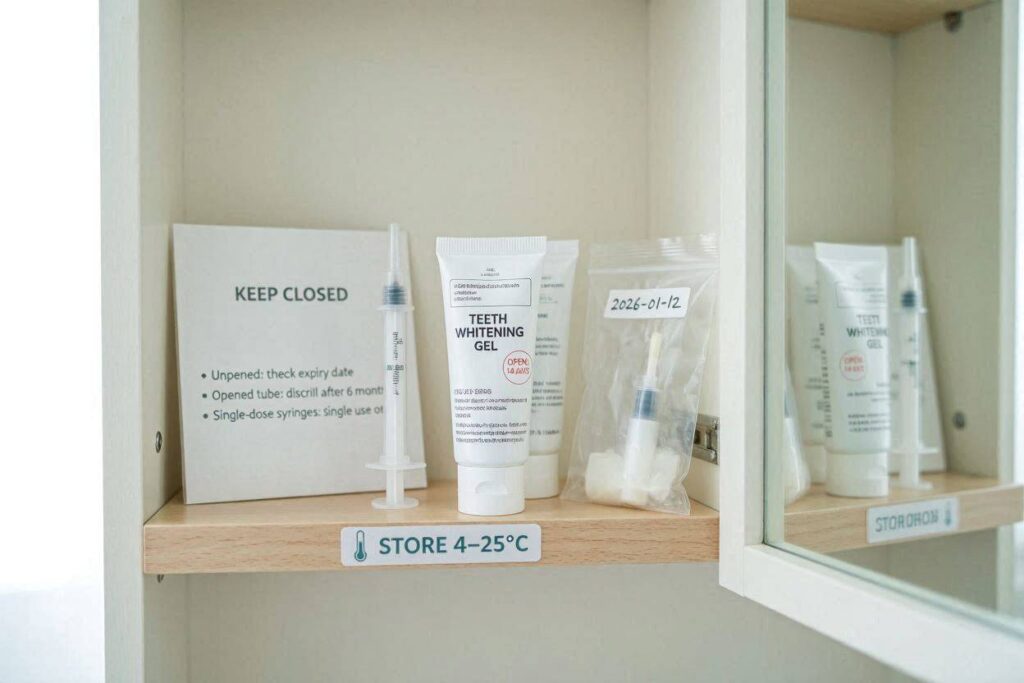
- Store unopened gel in a cool, dark place
- A refrigerator set between 2-8°C (35-46°F) provides ideal conditions
- Keep gel in original packaging to block light
- Do not store near heat sources like radiators, stoves, or sunny windows
- Check expiration dates before purchasing; choose products with the furthest dates
After Opening
- Refrigerate gel between uses whenever possible
- If refrigeration is not available, store in the coolest, darkest cabinet you have
- Wipe the syringe tip clean after each use
- Replace the cap immediately and tightly
- Avoid touching the tip to any surface
- Label the opening date on the syringe with a marker if you want to track usage time
- Use opened gel within the manufacturer’s recommended period, typically 2-8 weeks
During Whitening Sessions
- Squeeze only the amount needed for one application
- Do not return excess gel from a tray back into the syringe
- If gel in the tray touches your teeth, discard it after the session
- Keep the syringe capped when not actively dispensing
Travel Considerations
- If traveling with whitening gel, pack it in carry-on luggage to avoid cargo hold temperature extremes
- Use an insulated bag with a small ice pack for long trips
- Hotel room refrigerators work for storage during stays
- Do not leave gel in a parked car, even for short periods
Signs It Is Time to Replace Your Gel
Even if you follow every storage guideline, gel eventually needs replacement. Here are the definitive signs.
You Have Had It Longer Than the Recommended Period
If the manufacturer says use within 6 weeks of opening and you opened it 3 months ago, replace it. The guidelines exist for good reason.
You Notice Any Change in Appearance
Cloudiness, separation, color change, or bubbles all signal degradation. Trust what you see. The gel should look exactly like it did when new.
You Experience Unusual Sensitivity
If you used the same gel before without issues and now feel stinging, burning, or unusual sensitivity, the gel may have degraded. Stop using it and try a fresh batch to compare.
You See No Results After Proper Use
Applying properly stored, potent gel according to directions should produce visible whitening within a few sessions. If you see absolutely no change, the active ingredient may have broken down.
The Expiration Date Has Passed by More Than 3 Months
A few weeks past expiration might be acceptable if the gel was refrigerated and appears perfect. Beyond three months, the risk of significant potency loss rises too high to justify continued use.
What to Do With Old or Expired Gel
Dispose of expired whitening gel responsibly. Do not pour large amounts down the drain, as peroxide can harm aquatic life in high concentrations.
Household Disposal
For small amounts of consumer gel, wiping the contents onto a paper towel and disposing in household trash works. Rinse the empty syringe and recycle if your local program accepts the plastic type. Check the resin identification code on the syringe.
Take-Back Programs
Some dental offices accept expired whitening products for proper disposal. Ask your dentist at your next visit. Pharmacies in some regions also accept cosmetic product returns for disposal.
Do Not Share or Give Away
Never give your partially used whitening gel to someone else. The product contacts your mouth indirectly. Sharing creates a hygiene risk. Expired gel helps no one.
The Economics of Gel Longevity
Understanding shelf life helps you make smarter purchasing decisions.
Buy What You Can Use
Kits with multiple syringes seem like better value, but only if you use them before they expire. If you whiten once yearly, a smaller kit or single-syringe system prevents waste. The larger kit costs more upfront but wastes half its contents.
Calculate Cost Per Usable Application
A $50 kit with 10 applications costs $5 per use if you use all 10. If you use only 6 before the rest expires, your cost becomes $8.33 per application. Sometimes a seemingly more expensive single-use system actually costs less per effective whitening session.
Timing Your Whitening
Plan to whiten consistently once you open a kit. Starting and stopping with weeks between sessions exposes the gel to degradation without providing whitening benefit. Complete your whitening course within the recommended period after opening.
Professional Guidance on Gel Storage
Dentists and dental hygienists witness the consequences of using degraded gel. Their advice emphasizes caution.
What Dental Professionals Say
“The most common mistake patients make is using whitening gel they bought two years ago and stored in the bathroom,” says one experienced hygienist. “They complain of sensitivity and blame the whitening process, but the degraded gel caused the problem. Fresh gel used correctly rarely causes significant issues.”
Dentists also note that patients sometimes compensate for weak, expired gel by wearing trays longer or more frequently. This overuse irritates gums and increases sensitivity without achieving the desired whitening.
Manufacturer Recommendations vs. Real-World Use
Manufacturers conduct stability testing under controlled conditions. Real bathrooms fluctuate in temperature and humidity. Real people forget to refrigerate gel. Real syringes get contaminated by accidental contact. The manufacturer’s expiration date assumes proper handling. If your handling falls short, the practical shelf life shortens accordingly.
Frequently Asked Questions
Can I use whitening gel after the expiration date?
You can, but you probably should not. The peroxide concentration drops below effective levels, and degradation byproducts may irritate your gums. A few weeks past expiration with perfect storage might still work. Beyond that, results become unpredictable.
Does refrigerating whitening gel really make a difference?
Yes, significantly. Cold temperatures slow the chemical decomposition of peroxide compounds. Refrigerated gel maintains potency noticeably longer than gel stored at room temperature. The difference becomes most apparent after opening.
How do I know if my whitening gel is still good?
Check the appearance, smell, and texture. Fresh gel looks clear and uniform, smells mildly sharp, and feels smooth. Any cloudiness, separation, strong odor, or grittiness means the gel has degraded. When in doubt, replace it.
Can expired whitening gel damage my teeth?
Expired gel probably will not permanently damage enamel, but it can cause gum irritation, chemical burns on soft tissue, and increased sensitivity. The risk of temporary but painful side effects rises substantially with degraded product.
Why does my whitening gel syringe look swollen?
Swelling indicates gas buildup from peroxide decomposition. The gel has released oxygen, and pressure builds inside the syringe. This gel has significantly degraded. Discard it, and be careful when opening the cap, as gel may squirt out forcefully.
Can I freeze whitening gel to make it last longer?
No. Freezing causes phase separation and destroys the gel structure. Once thawed, the gel will not perform properly and may cause irritation. Refrigeration above freezing is the coldest safe temperature.
How long do whitening pens last after opening?
Most whitening pens remain viable for 2-4 weeks after first use. The brush tip exposes gel to air and bacteria. Even with proper capping, the small amount of gel in the tip mechanism degrades faster than gel protected deep in a syringe.
Is professional whitening gel different from drugstore gel in terms of shelf life?
Professional gels sometimes use more sophisticated stabilizer systems, but their higher peroxide concentrations often offset this advantage. The practical shelf life after opening remains similar: use within 4-8 weeks for best results.
What happens if I leave the cap off my whitening gel overnight?
The exposed gel surface dries out and degrades. The gel inside the syringe body may remain partially protected, but potency has certainly decreased. Squeeze out and discard the first small amount, then assess the remaining gel carefully. Replace if any doubt exists.
Can I mix old whitening gel with fresh gel to use it up?
Never do this. The old gel contaminates the fresh gel with degradation products and possibly bacteria. You ruin both portions. Use fresh gel only.
Additional Resource
For more information about the safety and regulation of teeth whitening products, visit the American Dental Association’s page on whitening at:
https://www.ada.org/resources/ada-library/oral-health-topics/whitening
Conclusion
Teeth whitening gel has a finite and relatively short useful life, especially after opening. Proper refrigeration, careful handling, and respect for expiration dates ensure you get the full whitening power you paid for. Using old or degraded gel risks gum irritation, increased sensitivity, and wasted time with no whitening results. When in doubt about your gel’s condition, replace it rather than gamble with your oral health. Smart storage habits and realistic purchasing decisions make your whitening experience both safer and more effective.
Frequently Asked Questions (FAQ)
Q: How long can you keep teeth whitening gel once opened?
A: Most opened whitening gel stays effective for 2 to 8 weeks, depending on the formulation and how carefully you store it. Refrigeration extends this window. Always check your specific product instructions.
Q: What are the signs that teeth whitening gel has gone bad?
A: Look for cloudiness, separation into layers, yellowing or browning, grittiness, bubbles throughout the gel, or a sour/off smell. Any of these signals mean the gel should be discarded.
Q: Should I store teeth whitening gel in the refrigerator?
A: Yes, refrigeration at 2-8°C (35-46°F) significantly slows peroxide decomposition and extends shelf life. Do not freeze the gel, as freezing destroys its structure.
Q: Can using expired teeth whitening gel harm my teeth?
A: Expired gel may not permanently harm enamel, but it can cause gum irritation, chemical burns, and increased tooth sensitivity. The degraded chemicals pose more risk than fresh product.
Q: Why does my whitening gel have bubbles in it?
A: Bubbles indicate oxygen gas released from peroxide decomposition. The gel has degraded and lost significant potency. Dispose of it.
Disclaimer: This article provides general information about teeth whitening gel storage and shelf life. It does not constitute dental or medical advice. Always follow your specific product’s instructions and consult your dentist with concerns about whitening treatments or oral health.