How Long Do Dental Implants Really Last?
When you lose a permanent tooth, it can impact your confidence, your speech, and your ability to enjoy your favorite foods. For decades, traditional dental bridges and removable dentures were the go-to solutions for missing teeth. However, modern dental technology has introduced a highly successful, permanent alternative: dental implants.
If you are considering this tooth replacement option, the most crucial question on your mind is likely: How long do dental implants really last?
When dental professionals discuss implants, they often use terms like “permanent” or “lifetime solution.” While it is true that dental implants boast an exceptionally high success rate, expecting a medical device to last forever without proper care, or regardless of your health status, is unrealistic.
This comprehensive guide breaks down the true lifespan of dental implants, explores how modern biological dentistry influences their success, and compares implants to other leading tooth replacement options.
The Reality of Dental Implant Longevity
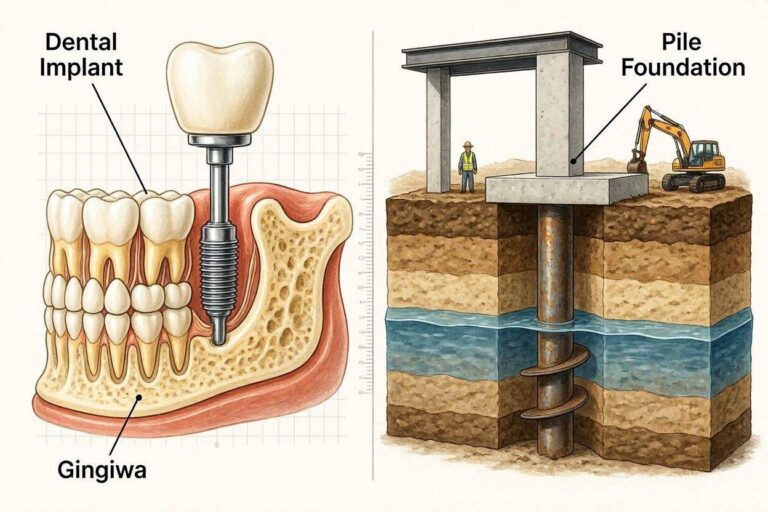
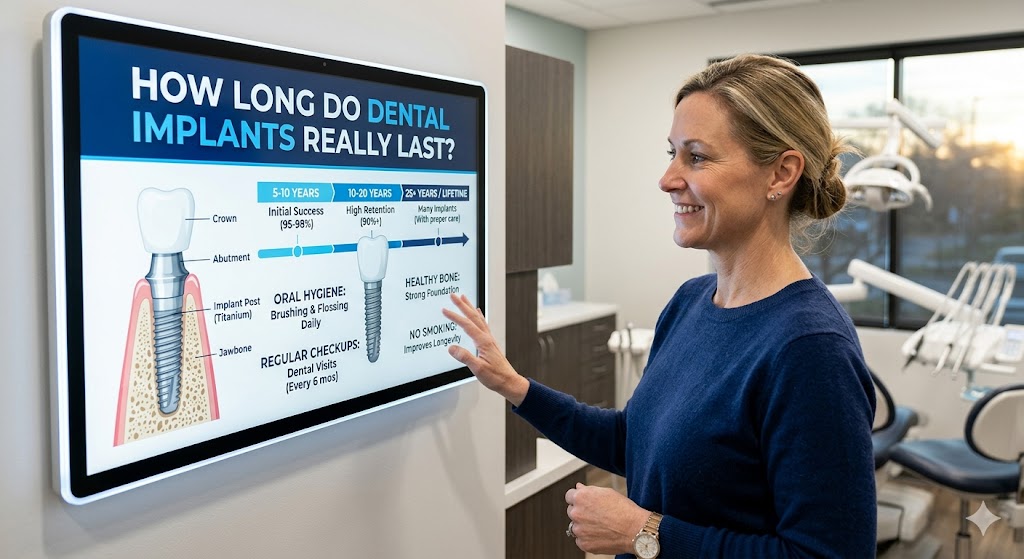
To understand how long an implant lasts, it helps to look at its anatomy. A dental implant is not a single piece; it consists of three distinct parts:
- The Implant Post: A small titanium or ceramic screw surgically inserted into your jawbone. It acts as a prosthetic tooth root.
- The Abutment: A connector piece that attaches to the post and sits just above the gumline.
- The Prosthetic Crown: The artificial, custom-made tooth that is visible in your mouth.
When dentists state that dental implants can last a lifetime, they are primarily referring to the implant post. Because the post undergoes a natural fusion process with your jawbone—a biological phenomenon known as osseointegration—it becomes a permanent part of your anatomy.
The visible crown, however, sustains daily wear and tear from chewing and biting. As a result, the crown typically lasts between 10 to 15 years before it may require repair or replacement due to normal usage.
Average Lifespan and Documented Success Rates
Clinical studies consistently show that dental implants have an overall success rate of 95% to 98% over a 10-year period. When placed by a skilled professional and maintained with excellent oral hygiene, the underlying implant post can easily last 25 years to a lifetime.
“Dental implants are the closest thing to natural teeth that modern medicine can offer. While the structural post can remain securely integrated into the jawbone for the rest of a patient’s life, the crown on top should be viewed much like a tire on a luxury car—it is built to last, but decades of daily mileage mean it will eventually need maintenance or replacement.”
Key Factors That Influence Implant Lifespan
An implant’s survival depends heavily on individual health variables, lifestyle habits, and structural care.
1. Oral Hygiene and Maintenance
The single most common cause of premature implant failure is poor oral hygiene. Just like natural teeth, the gums and bone surrounding an implant can become infected. This condition is known as peri-implantitis. It causes inflammation, weakens the bone supporting the post, and can ultimately cause the implant to loosen and fail.
2. Lifestyle Habits and Smoking
Smoking or using tobacco products significantly hinders the body’s healing capacity. Tobacco restricts blood flow to the gums and bone tissues, which slows down the crucial osseointegration process. Statistical data shows that implant failure rates are significantly higher in smokers compared to non-smokers.
3. Medical Conditions and Systemic Health
Certain systemic health issues can interfere with bone healing and long-term implant stability. Uncontrolled diabetes, autoimmune disorders, and conditions that compromise the immune system make it harder for the jawbone to fuse with and support the implant post.
4. Jawbone Density and Quality
An implant needs a strong, robust foundation of bone to stay securely anchored. If you have suffered from long-term tooth loss, periodontal disease, or bone thinning, you may lack the necessary bone density. In these cases, a bone graft is often required before implant placement to ensure a lasting foundation.
Biological Dentistry vs Regular Dentistry
To truly understand the longevity of dental implants and how your body reacts to them, it is valuable to examine the philosophy of the professional placing them. This brings us to the distinction between biological dentistry and regular (conventional) dentistry.
+------------------------+-------------------------------------+-------------------------------------+
| Feature                | Regular Dentistry                   | Biological Dentistry                |
+------------------------+-------------------------------------+-------------------------------------+
| Primary Focus          | Treating specific dental symptoms   | Whole-body wellness and systemic   |
|                        | and localized oral diseases.        | health connections.                 |
+------------------------+-------------------------------------+-------------------------------------+
| Material Selection     | Standard, regulatory-approved       | Biocompatible, non-toxic, and       |
|                        | materials (including amalgams).     | metal-free materials preferred.     |
+------------------------+-------------------------------------+-------------------------------------+
| Treatment Philosophy   | Focuses on mechanical repair and    | Emphasizes minimally invasive       |
|                        | structural restoration of teeth.     | treatments that support immunity.   |
+------------------------+-------------------------------------+-------------------------------------+
| Material Testing       | Rarely uses individualized          | Utilizes biocompatibility testing   |
|                        | compatibility testing for metals.   | to ensure zero immune reactivity.   |
+------------------------+-------------------------------------+-------------------------------------+
What Is a Biological Dentist?
A biological dentist—often referred to as a holistic or integrative dentist—is a fully licensed dental professional who practices dentistry by evaluating how oral treatments affect the entire human body.
While conventional dentistry primarily focuses on treating isolated issues within the mouth (such as filling a cavity or fixing a broken tooth), biological dentistry views the mouth as an intrinsic, interconnected gateway to your overall systemic health.
Biological dentists utilize non-toxic, biocompatible materials and actively avoid substances they believe could burden the immune system, such as mercury amalgam fillings. When it comes to tooth replacement, a biological dentist will carefully evaluate how an implant material interacts with your specific immune profile.
Are Biological Dentists Depending on Age?
A common question among patients is whether the choice to see a biological dentist depends on age. The short answer is no; biological dentistry benefits individuals at every stage of life, though the clinical focus shifts as we age.
- Children and Young Adults: For younger patients, biological dentists focus on conservative cavity preventions, non-toxic fillings, proper jaw development, and airway optimization to prevent sleep apnea later in life.
- Adults: For adults looking into tooth replacement, biological practitioners prioritize biocompatibility testing. This ensures that the dental implant material used will not trigger chronic inflammation or autoimmune responses as the patient ages.
- Seniors: Older adults often have underlying systemic health conditions, weaker immune responses, or reduced bone density. Biological dentists tailor implant therapies for seniors by incorporating nutrition optimization, natural healing boosters (like Platelet-Rich Fibrin), and using metal-free materials that place less stress on an aging immune system.
Are Biological Dentists Depending on Location?
The availability and practices of biological dentists can vary significantly depending on location.
In major metropolitan areas and regions with a high concentration of holistic health wellness centers, finding a certified biological dentist who offers advanced metal-free zirconia implants is relatively easy. However, in more rural or remote areas, patients may find fewer biological practitioners available.
Because biological dentistry requires specialized post-graduate training and advanced diagnostic equipment, patients living in regions with limited access often travel to dedicated holistic dental hubs to receive specialized, biocompatible implant care.
Biological Dentists vs Exact Dentures
When faced with extensive tooth loss, patients often choose between advanced implant restorations offered by biological dentists or traditional removable prosthetics, such as exact dentures.
Removable exact dentures are custom-made dental appliances designed to closely replicate the natural look of your teeth and gums. They rest directly on top of your gum tissue and are held in place by natural suction or mild dental adhesives.
The Pros and Cons of Exact Dentures
While exact dentures are highly accessible, cost-effective upfront, and require no invasive surgical procedures, they have distinct physiological drawbacks:
- Bone Loss: When you lose teeth, your jawbone no longer receives stimulatory signals from chewing forces. Because dentures sit on top of the gums rather than replacing the root, the underlying jawbone gradually deteriorates over time.
- Stability and Comfort: Dentures can occasionally slip, shift, or cause sore spots along the gumline, requiring periodic adjustments and relining.
- Lifespan: An exact denture typically needs to be completely replaced every 5 to 7 years due to structural wear and changes in the shape of your jawbone.
The Biological Implant Alternative
In contrast, biological implants offer a structural, fixed alternative that addresses the root cause of bone degradation. By using metal-free materials like zirconia, a biological dentist can restore full chewing function while protecting the structural integrity of your jaw.
- Bone Preservation: Implants mimic natural tooth roots, actively stimulating the bone and preventing the facial structural collapse associated with long-term denture wear.
- Systemic Harmony: Biological implants avoid metal ions leaking into the surrounding tissue, maintaining long-term immunological balance.
Understanding Implant Failure: Signs and Preventions
While dental implants have a stellar long-term success rate, failure can still occur. Understanding the timeline and signs of implant failure can help you take immediate action to save your restoration.
Early vs. Late Implant Failure
Implant failures are categorized into two distinct timeframes:
- Early Failure (Within 3 to 4 Months): This occurs during the initial healing phase before the implant has fully fused with the bone. It is typically caused by surgical trauma, an underlying infection, insufficient bone support, or structural movement of the implant during the healing period.
- Late Failure (Years Later): This occurs after the implant has successfully fused and been functional for some time. Late failure is almost always caused by mechanical overloading (severe teeth grinding) or a bacterial infection (peri-implantitis) resulting from poor oral hygiene.
Critical Warning Signs to Watch For
If you notice any of the following symptoms around your dental implant, contact your provider immediately:
- Severe pain or discomfort that persists long after the initial surgical healing phase.
- Visible swelling, redness, or bleeding in the gum tissue surrounding the implant post.
- A loose or shifting feeling when you press on the implant crown or attempt to chew food.
- Difficulty chewing or biting down normally.
[Important Note for Readers] If you experience a loose sensation around your dental implant, do not panic, but do see your dentist right away. In many cases, it is simply the top prosthetic crown or connecting abutment screw that has worked loose, which can be easily tightened or replaced without harming the underlying implant post.
Step-by-Step Practical Advice for Maximizing Implant Lifespan
To ensure your dental implant lasts for decades, integrate these foundational daily habits and professional care strategies into your routine:
- Brush Diligently Twice a Day: Use a soft-bristled toothbrush (ideally sonic or electric) and a non-abrasive toothpaste to thoroughly clean all surfaces of your implant crown and natural teeth.
- Floss Daily with Specialized Tools: Use dental floss specifically designed for implants, or utilize a water flosser (oral irrigator) to clear away trapped plaque and debris from beneath the gumline and around the abutment.
- Protect Against Teeth Grinding (Bruxism): If you unconsciously grind your teeth at night, the immense mechanical pressure can fracture the ceramic crown or loosen the implant post. Ask your dentist to craft a custom-fitted nightguard to cushion your smile.
- Avoid Using Your Teeth as Tools: Never use your implant crowns—or your natural teeth—to crack open nuts, chew on ice cubes, open plastic packaging, or bite your fingernails.
- Commit to Bi-Annual Cleanings: Visit your dentist at least twice a year for professional cleanings and routine diagnostic X-rays. This allows your hygienist to clean hard-to-reach areas and enables your dentist to catch potential issues before they develop into implant threats.
Conclusion
Dental implants offer an incredibly durable, life-changing solution for missing teeth, with the foundational post capable of lasting a lifetime when paired with exceptional oral hygiene and a healthy lifestyle. By partnering with a skilled practitioner—such as a biological dentist who prioritizes whole-body health and biocompatible materials—you can significantly optimize your healing and safeguard your long-term success. While the visible prosthetic crowns will require standard maintenance or replacement every 10 to 15 years, proper daily care ensures your dental implant investment remains secure, functional, and beautiful for decades to come.
Frequently Asked Questions (FAQ)
Is the process of getting dental implants painful?
The surgical placement of a dental implant is typically performed under local anesthesia, meaning you will feel absolutely no pain during the procedure itself. Afterward, you may experience mild soreness, minor swelling, or bruising around the surgical site for 3 to 7 days, which can be managed easily with standard over-the-counter pain relievers or natural recovery protocols.
Can dental implants stain like natural teeth?
The ceramic, porcelain, or zirconia materials used to create modern dental implant crowns are highly resistant to staining. They will not discolor from coffee, tea, or red wine in the same manner as natural tooth enamel. However, the bonding materials can accumulate surface stains over time, so regular professional cleanings remain essential.
Am I too old to get dental implants?
There is no upper age limit for dental implant surgery. As long as you are in good general health, have controlled systemic conditions, and possess sufficient bone density to support the implant post, you can safely undergo the procedure and enjoy the stable benefits of implants well into your senior years.
What is the difference between titanium and zirconia implants?
Titanium implants are the traditional standard; they are highly durable, cost-effective, and have decades of clinical success data supporting them. Zirconia implants are a metal-free alternative favored by biological dentists; they offer excellent aesthetic benefits for patients with thin gum tissues and provide a highly biocompatible option for individuals with metal sensitivities.
Additional Resource
For detailed guidance on professional safety standards, certification frameworks, and finding accredited holistic dental specialists in your area, visit the official International Academy of Biological Dentistry and Medicine (IABDM).