Why Kids Grind Their Teeth
It can be quite startling for a parent checking on their sleeping child to hear a loud, grating, clicking, or scraping sound coming from their mouth. This involuntary habit of clenching or grinding the teeth is known medically as bruxism (Leung et al., 2025).
While it is an incredibly common childhood habit—affecting an estimated 30% of children during sleep (Schmitt Pediatric Care Advice, n.d.)—it understandably leaves parents with many questions. Understanding the underlying factors behind this behavior can help you protect your child’s developing smile and support their overall well-being.
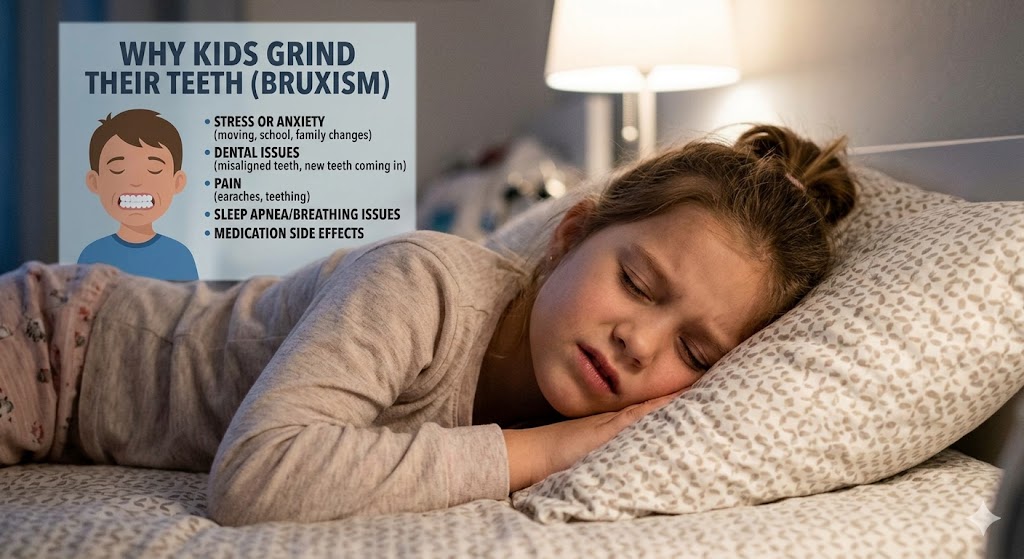
Understanding the Roots of Childhood Bruxism
To understand why children grind their teeth, it is essential to look at the human body as an interconnected system. Bruxism rarely happens in a vacuum. Instead, it is usually a physical manifestation of local, psychological, or systemic factors working together (Tsitadze, 2021).
1. Growth, Development, and Tooth Eruption
For many toddlers and young children, grinding is a temporary developmental response. As baby teeth emerge and later drop out to make way for permanent adult teeth, the bite changes rapidly. This temporary misalignment can feel strange to a child. They may unconsciously shift their jaw or grind their teeth together to find a comfortable resting position or to soothe the discomfort of a newly erupting tooth (Schmitt Pediatric Care Advice, n.d.).
2. Stress, Anxiety, and Emotional Changes
Children experience stress differently than adults, but their bodies react to emotional tension in similar ways. The central nervous system regulates bruxism, and emotional triggers like starting a new school year, moving to a new house, or family changes can alter neurotransmitter patterns, causing jaw clenching (Tsitadze, 2021). This tension often transfers directly to the jaw muscles during sleep, leading to nightly grinding episodes (Schmitt Pediatric Care Advice, n.d.).
3. Airway Restrictions and Sleep Disturbances
A significant, yet frequently overlooked, cause of sleep bruxism is airway obstruction. When a child’s airway is partially blocked—often due to enlarged tonsils, adenoids, or seasonal allergies—their oxygen levels can drop slightly during sleep. This triggers a micro-arousal in the brain, causing the body to move the jaw forward to reopen the airway (Lal, n.d.). The grinding sound is often the byproduct of this protective reflex. Children with conditions like obstructive sleep apnea have a much higher risk of exhibiting bruxism (Leung et al., 2025).
Common Signs and Symptoms to Watch For
Because grinding mostly happens when a child is asleep, they are rarely aware they are doing it (Leung et al., 2025). Parents can watch for several telltale indicators during waking hours:
- Morning Complaints: The child may complain of a dull headache, earache, or a tired, sore jaw when they wake up (Tsitadze, 2021).
- Visible Tooth Wear: Look for flattened tips on the canine teeth, or chewing surfaces that appear unusually smooth and flat (Athenaeum Pub, n.d.).
- Audible Noises: Distinct grinding or clicking sounds coming from their bedroom at night (Athenaeum Pub, n.d.).
- Daytime Habits: Biting nails, chewing on pencils, or sucking on fingers can be signs of a systemic tendency toward oral fixations or awake bruxism (Leung et al., 2025).
What is a Biological Dentist?
When searching for solutions to childhood bruxism, many parents encounter the concept of a biological dentist. A biological dentist—also commonly called a holistic, natural, or integrative dentist—is a fully licensed dental professional who approaches oral health from a whole-body perspective (Pallardy, 2022).
“Biological dentistry is based on the core assertion that the human body is a single, interconnected unit. What happens in the mouth impacts the entire body, and systemic health conditions profoundly affect the teeth and gums.” (Vigarniya, n.d.)
Rather than simply drilling and filling a cavity or prescribing a rigid nightguard to stop the symptoms of grinding, a biological dentist seeks to identify the root cause of the behavior (Pallardy, 2022). They focus heavily on using biocompatible, non-toxic materials, minimizing radiation exposure, and evaluating factors like sleep quality, airway health, and nutritional status before recommending an intervention (Thakur, 2011).
Are Biological Dentists Depending on Age?
A common question parents ask is whether biological dental practices change depending on the age of the patient. The core philosophy of treating the whole person remains identical, but the actual clinical techniques and focuses shift dynamically as a child grows.
| Patient Age Group | Primary Biological Focus Areas | Typical Interventions & Approaches |
| Infants & Toddlers (0–3 Years) | * Airway patency * Breastfeeding dynamics * Identification of tongue/lip ties | * Parent education on airway health * Gentle frenectomy if feeding or breathing is restricted |
| Young Children (4–7 Years) | * Proper jaw and facial bone development * Management of early tooth eruption * Identifying sleep disturbances | * Myofunctional therapy clues * Addressing enlarged tonsils or food sensitivities |
| Pre-Teens & Teens (8+ Years) | * Airway-focused orthodontics * Stress management for school/social anxiety * Safe restorative care | * Biocompatible, non-extraction expanders * Custom nightguards and stress reduction |
For very young children, a biological dentist will rarely recommend a structural nightguard, as the jaw is growing too quickly and structural restraints could interfere with natural bone development. Instead, they focus on sleep hygiene, breathing patterns, and dietary adjustments (Leung et al., 2025). As the child enters late childhood and adolescence, treatments may expand to include specific biocompatible appliances to guide jaw growth and protect permanent teeth (Thakur, 2011).
Are Biological Dentists Depending on Location?
The availability and exact style of biological dentistry can vary heavily depending on your location. Because biological or holistic dentistry is an approach and philosophy rather than a separate, legally recognized specialty board, any licensed general dentist can incorporate these methods into their practice (Pallardy, 2022).
In progressive urban areas or regions with a high concentration of integrative health professionals, you are more likely to find dentists who are active members of organizations like the International Academy of Oral Medicine and Toxicology (IAOMT) or the Holistic Dental Association (HDA) (Pallardy, 2022). These practitioners often have access to advanced equipment, such as low-radiation digital X-rays and ozone therapy modules (Pallardy, 2022; Thakur, 2011).
In more remote or rural locations, finding a dedicated biological dentist can be more challenging. However, many conventional dentists in these areas are increasingly adopting biocompatible practices—such as using mercury-free composite fillings—due to growing patient demand for safer materials (Pallardy, 2022).
Are Biological Dentists vs Exact Dentures
While children dealing with bruxism do not require dentures, understanding how a biological dentist approaches tooth replacement highlights their overall philosophy compared to conventional practices.
When a traditional dentist creates standard dentures, the primary focus is typically on visual aesthetics and basic chewing mechanics. They use standard dental acrylics and base metals to build the prosthetic device.
A biological dentist approaching the same task focuses intently on the biocompatibility of the materials used. They recognize that dental materials sit in the mouth 24 hours a day, interacting constantly with the body’s immune system. They often utilize materials that are free from heavy metals, specific bisphenols (BPA), and toxic dyes.
Furthermore, a biological approach looks closely at how the replacement teeth align with the temporomandibular joint (TMJ) and the muscles of the head and neck. If the alignment of a prosthetic or a dental restoration is off by even a fraction of a millimeter, it can disrupt the central nervous system and trigger a cascade of muscle tension, leading directly to a nighttime grinding or clenching habit (Tsitadze, 2021).
Biological Dentistry vs Regular Dentistry
To choose the best pathway for a child who is grinding their teeth, it helps to look at how a biological dentist compares to a regular, conventional dentist across key clinical categories.
| Clinical Feature | Regular (Conventional) Dentistry | Biological (Holistic) Dentistry |
| Core Goal | Treats specific dental diseases, fixes structural issues, and manages isolated localized symptoms (Vigarniya, n.d.). | Aims to identify the root cause of oral issues by analyzing whole-body systemic health (Pallardy, 2022). |
| Material Choice | Uses standard materials approved by regulatory bodies, which may include dental amalgams or standard plastics (Srinivasan, 2021). | Exclusively favors non-toxic, biocompatible materials to prevent systemic immune irritation (Srinivasan, 2021). |
| Bruxism Treatment | Typically involves prescribing a protective plastic nightguard to stop tooth wear (Schmitt Pediatric Care Advice, n.d.). | Investigates sleep quality, airway blockages, stress, and structural jaw alignment (Lal, n.d.; Tsitadze, 2021). |
| Root Canal Therapy | Standard, everyday procedure used to save an infected tooth structure. | Approached with high caution; evaluates potential chronic, low-grade inflammatory impacts on the body (Srinivasan, 2021). |
| Preventive Focus | Emphasizes topical fluoride treatments, standard sealants, and twice-yearly professional cleanings. | Focuses on optimal nutrition, herbal alternatives, airway evaluation, and a balanced oral microbiome (Thakur, 2011). |
Practical Steps for Parents to Help Reduce Grinding
If your child is currently grinding their teeth at night, there are several gentle, practical steps you can take at home to help soothe their nervous system and reduce the frequency of bruxism episodes:
- Establish a Relaxing Bedtime Routine: Limit screen time, loud music, and high-energy physical activities for at least an hour before sleep (Leung et al., 2025). Switch to calming activities like reading a book together or listening to soothing music (Schmitt Pediatric Care Advice, n.d.).
- Try Simple Jaw Relaxation Exercises: If your child exhibits daytime clenching, encourage them to stretch their jaw gently by yawning widely a few times, or gently massage the muscles just below their cheekbones and in front of their ears (Schmitt Pediatric Care Advice, n.d.).
- Evaluate Airway and Breathing: Pay close attention to how your child breathes while asleep. If they regularly breathe through their mouth, snore, or sweat excessively during sleep, consult a pediatric professional to check for airway obstructions (Leung et al., 2025).
- Focus on Nutritional Support: A balanced diet rich in essential vitamins and minerals supports muscle and nerve relaxation. Talk to a professional about evaluating your child for common deficiencies, such as magnesium or calcium, which are sometimes linked to muscle tension (Tsitadze, 2021).
Important Note for Parents: Most children naturally outgrow sleep bruxism by around the age of six as their adult teeth begin to settle into place (Schmitt Pediatric Care Advice, n.d.). However, if the grinding is exceptionally severe, causes morning pain, or is accompanied by loud snoring and mouth breathing, it is highly recommended to seek a professional evaluation to protect their teeth and optimize their sleep health (Leung et al., 2025; Schmitt Pediatric Care Advice, n.d.).
Frequently Asked Questions
Can seasonal allergies cause a child to grind their teeth?
Yes. Seasonal allergies can cause the nasal passages and adenoids to swell, forcing a child to breathe through their mouth. This shift in breathing dynamics changes the position of the jaw and can trigger involuntary sleep bruxism as the body attempts to keep the airway open (Lal, n.d.; Tsitadze, 2021).
Are the mouthguards prescribed by regular dentists safe for young kids?
Standard hard plastic nightguards are excellent for protecting permanent teeth in teenagers and adults. However, for young, rapidly growing children, rigid nightguards are rarely used because they can inadvertently restrict the natural development and expansion of the jaw bones (Schmitt Pediatric Care Advice, n.d.).
How do I find out if a dentist follows a biological approach?
Since “biological” is not an official standalone specialty degree, you can check the dentist’s website or call their office to ask about their philosophy. Look for indicators like memberships in the Holistic Dental Association (HDA), a explicit focus on biocompatible materials, low-radiation diagnostic equipment, and an emphasis on whole-body wellness (Pallardy, 2022).
Additional Resource
For parents interested in learning more about holistic approaches to pediatric oral wellness, airway development, and non-toxic materials, exploring the comprehensive guidelines provided by the Holistic Dental Association (HDA) offers valuable educational articles, provider directories, and preventative health tools.
References
- Athenaeum Pub. (n.d.). Etiology, diagnosis and treatment of bruxism in children: A review of the literature. Athenaeum Pub. https://athenaeumpub.com/etiology-diagnosis-and-treatment-of-bruxism-in-children-a-review-of-the-literature-2/
- Lal, S. J. (n.d.). Bruxism management. StatPearls – NCBI Bookshelf. https://www.ncbi.nlm.nih.gov/books/NBK482466/
- Leung, A. K. C., Wong, A. H. C., Lam, J. M., & Hon, K. L. (2025). Sleep bruxism in children: A narrative review. Current Pediatric Reviews, 21, 40-50. https://doi.org/10.2174/1573396320666230915103716
- Pallardy, C. (2022). Holistic dentistry: Finding a balance. Academy of General Dentistry. https://www.agd.org/constituent/news/2022/02/14/holistic-dentistry-finding-a-balance
- Schmitt Pediatric Care Advice. (n.d.). Teeth grinding. AAP Publications. https://publications.aap.org/patiented/article-pdf/doi/10.1542/ppe_schmitt_508/1851863/ppe_schmitt_508.pdf
- Srinivasan, K. (2021). Holistic dentistry: Natural approaches to oral health. Scholars Middle East Publishers. https://saudijournals.com/media/articles/SB_110267-270.pdf
- Thakur, N. (2011). Holistic dentistry: Natural approaches to oral health. Journal of International Oral Health, 3(2), 9-13. https://www.ispcd.org/userfiles/rishabh/jioh-03-02-009.pdf
- Tsitadze, T. (2021). Prevalence and risk-factors of bruxism in children and adolescent population and its impact on quality of life (review). Scientific Biomedical News. https://www.geomednews.com/Articles/2021/1_2021/36-39.pdf
- Vigarniya, M. M. (n.d.). A literature review on holistic dentistry. Journal of Oral Health and Community Dentistry. https://www.johcd.net/abstractArticleContentBrowse/JOHCD/53/12/3/14892/abstractArticle/Article
Conclusion
Childhood teeth grinding is a highly common, multifactorial habit often driven by natural jaw growth, emotional stress, or subtle nighttime airway restrictions. While regular dentistry protects teeth structurally with standard guards, biological dentistry looks deeper to resolve the systemic, whole-body root causes using non-toxic approaches. By creating a calm bedtime routine and consulting a comprehensive dental professional, you can comfortably guide your child past this developmental phase.