What Are the Signs of Dental Implant Failure?
You notice something that was not there before. A subtle shift when you press your tongue against the implant crown. A hint of blood when you brush. A sensation that is difficult to describe but impossible to ignore. You try to convince yourself it is nothing, that you are being overly vigilant, that implants are supposed to last a lifetime. But the quiet unease persists. Recognizing the signs of dental implant failure early, when intervention can still make a difference, is the most powerful tool you have for protecting your investment. This guide provides a systematic framework for identifying the warning signs of implant failure, distinguishing them from benign variations in healing and function, and understanding exactly what each sign means for the future of your implant.
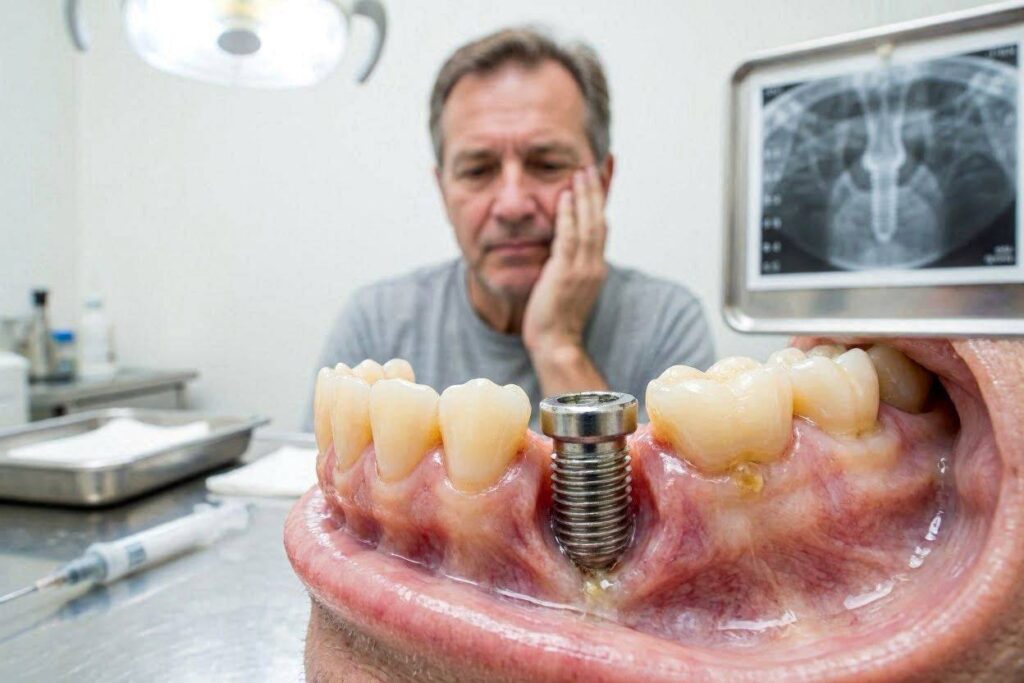
Understanding What Implant Failure Actually Means
Before examining specific signs, it is essential to understand what dental implant failure is and what it is not. The term encompasses distinct clinical scenarios with different implications.
The Clinical Definition of Failure
Dental implant failure refers to the loss of osseointegration, the direct structural and functional connection between living bone and the implant surface. An implant that has failed is no longer anchored in bone and cannot support a functional restoration.
Failure is distinct from implant complications. A loose abutment screw, a chipped crown, or peri-implant mucositis are problems that can be resolved without removing the implant. These complications do not constitute implant failure, though they require treatment to prevent progression to failure.
The clinical hallmark of true implant failure is mobility. An integrated implant is rigidly fixed in bone and cannot be moved. Any perceptible movement, even slight, indicates that osseointegration has been lost. This is the definitive sign against which all other warning signs are measured.
Early vs. Late Failure
Early failure occurs during the initial healing period, before the implant is restored with a crown, or shortly after restoration. It represents a failure of the implant to achieve osseointegration. Instead of bone forming on the implant surface, fibrous tissue encapsulates the implant.
Late failure occurs after the implant has been restored and in function, sometimes years after successful integration. It represents a breakdown of previously established osseointegration. Peri-implantitis, the inflammatory destruction of bone around the implant, is the leading cause of late failure.
The signs of early and late failure overlap but have different timelines and sometimes different presentations. Early failure typically presents with signs during the healing period. Late failure often presents with gradual changes that may go unnoticed without professional monitoring.
The Definitive Sign: Implant Mobility
Mobility is the one sign that definitively confirms implant failure. All other signs are warning indicators that may or may not indicate failure, but mobility is diagnostic.
How to Recognize Implant Mobility
An integrated dental implant should feel exactly like a natural tooth that is fused to the bone, without any give, movement, or springiness when pressure is applied. Any deviation from this absolute rigidity is abnormal.
You may notice mobility when biting down on the implant crown. Instead of the solid resistance you expect, there is a slight give, a sensation that the tooth depresses or rocks under pressure. This sensation may be subtle initially, detectable only with specific movements.
You may notice mobility when pressing on the implant with your tongue or finger. The implant should not move in any direction. Lateral pressure should meet absolute resistance. Any rocking, rotation, or vertical movement indicates failure.
Mobility may be accompanied by a dull sound when you tap on the implant, compared to the sharp, high-pitched sound of a healthy integrated implant. Your dentist can demonstrate this difference during an examination.
Distinguishing Implant Mobility from Other Movement
Not all movement associated with an implant restoration means the implant itself is mobile. Distinguishing the source of movement is critical, as the treatment and prognosis differ dramatically.
Abutment screw loosening causes the crown and abutment to move as a unit while the implant body remains rigidly fixed in bone. The movement is at the level of the implant platform, not within the bone. This mechanical problem is fully reversible by tightening the screw.
Crown cement failure causes the crown to move on the abutment while the abutment and implant remain stable. The crown may lift off or rotate. This restorative problem is resolved by recementing the crown.
Natural tooth mobility adjacent to the implant can create the illusion that the implant is moving. The adjacent natural tooth, which has physiological mobility within its periodontal ligament, moves under pressure while the implant remains rigid. The brain misattributes the movement to the implant.
Only a dental professional can definitively determine the source of perceived movement through clinical examination. If you detect any movement, seek evaluation promptly. Do not continue to manipulate the area, as this can worsen the problem.
Soft Tissue Warning Signs
The gum tissue surrounding an implant provides visible evidence of the underlying health or disease state. Changes in this tissue are often the earliest patient-observable signs of developing problems.
Bleeding on Probing or Brushing
Healthy peri-implant tissue does not bleed with normal brushing, flossing, or professional probing. Bleeding indicates inflammation of the soft tissue surrounding the implant.
Bleeding that appears when you brush around the implant, particularly if this is a new development, is the most sensitive early indicator of peri-implant inflammation. The bleeding may be minimal, appearing as pink on the toothbrush or in the sink when you rinse.
Bleeding during interdental cleaning, whether with floss, interdental brushes, or water flossers, indicates inflammation between the implant and adjacent teeth. This area is particularly vulnerable because it is difficult for both the patient and the professional to clean effectively.
Bleeding is a sign of peri-implant mucositis, the reversible precursor to peri-implantitis. It does not mean the implant is failing. But untreated mucositis can progress to peri-implantitis, and peri-implantitis can progress to implant failure. Bleeding is an early warning that should not be ignored.
Color Changes
Healthy peri-implant tissue is pink and firm, similar to healthy gum tissue around natural teeth. Changes in color indicate changes in the underlying tissue health.
Redness around the implant, particularly if it is confined to the marginal tissue immediately adjacent to the implant, indicates inflammation. The redness results from increased blood flow, a hallmark of the inflammatory response. Mild redness that resolves with improved hygiene may be insignificant. Persistent or deepening redness warrants evaluation.
Bluish or purplish discoloration may indicate venous congestion associated with chronic inflammation. This color change suggests that the inflammatory process has been present for some time, even if other symptoms have been subtle.
Pale, whitish tissue around the implant may indicate fibrosis or a lack of adequate blood supply. While less common than redness, this appearance can indicate compromised tissue health.
Swelling and Contour Changes
Healthy peri-implant tissue has a knife-edged margin where it meets the implant or abutment, with a stippled texture similar to an orange peel. Changes in this contour indicate inflammation or other pathology.
Swelling creates a puffy, rolled appearance of the tissue margin. The tissue loses its sharp contour and appears enlarged, particularly between the implant and adjacent teeth where the papilla should form a triangular point.
Generalized swelling of the tissue around the implant may indicate infection, particularly if accompanied by pain and redness. Swelling that is localized to one side of the implant may indicate a dental abscess or a foreign body reaction, such as to retained cement.
Tissue overgrowth, where the gum grows over the implant crown or abutment, can occur in response to chronic low-grade irritation or as a medication side effect. This overgrowth creates deep pockets that are difficult to clean and harbor bacteria.
Suppuration
Suppuration, or pus, is an unequivocal sign of infection. Unlike bleeding, which may indicate reversible mucositis, pus indicates an established infectious process that has overwhelmed the tissue’s immune defenses.
Pus may be visible as a yellow or white discharge from around the implant, either spontaneously or when pressure is applied to the surrounding tissue. It may be subtle, appearing only as a small amount of cloudy fluid when the tissue is pressed.
You may notice a persistent bad taste that localizes to the implant area and does not resolve with brushing or mouthwash. This taste results from purulent drainage into the mouth. Halitosis that does not respond to oral hygiene may also indicate peri-implant infection.
Suppuration indicates that the implant is infected. Whether the infection is confined to the soft tissue or extends to the bone requires professional evaluation with radiographs. Implants with suppuration require prompt treatment.
Recession and Tissue Loss
Gum recession around an implant exposes structures that should be covered. The progression and extent of recession determine its significance.
Mild recession of 1 to 2 millimeters may be stable and acceptable, particularly if the exposed surface is the smooth abutment or crown margin. This level of recession often results from normal tissue remodeling after implant placement and may not progress further.
Progressive recession that continues over time is concerning. The patient may notice that the implant crown appears longer than it did previously, or that the gum line no longer matches the adjacent teeth. Progressive recession indicates ongoing tissue and possibly bone loss.
Recession that exposes the implant surface, particularly the roughened portion of the implant designed for bone contact, is a significant finding. The roughened surface cannot be effectively cleaned by the patient and harbors bacterial biofilm. Exposed implant threads indicate significant bone loss.
Pain and Discomfort Patterns
Pain is not always present with implant failure, and its absence does not guarantee health. However, certain pain patterns are warning signs that require attention.
Pain on Function
Pain that occurs specifically when biting or chewing on the implant is significant. An integrated implant should transmit forces to the bone without discomfort. Pain on loading suggests inflammation at the bone-implant interface or, in advanced cases, movement of the implant within the bone.
The pain may be sharp and brief, occurring only at the moment of biting, or it may be a dull ache that persists after loading. Either pattern warrants evaluation. Do not simply avoid chewing on that side without seeking diagnosis. The underlying problem will progress.
Spontaneous Pain
Pain around an implant that is present at rest, without loading, indicates inflammation or infection that is significant enough to produce symptoms continuously. This is different from the transient discomfort of normal healing.
Dull, aching pain that is constant or recurs throughout the day is concerning. It may indicate bone involvement, as the soft tissue alone typically does not produce this type of pain.
Throbbing pain, particularly if it awakens you from sleep, suggests an acute infectious process, possibly an abscess. This requires prompt professional attention and likely antibiotic therapy.
Pain on Percussion
Your dentist tests implant health by tapping on the implant crown with a mirror handle or similar instrument. A healthy integrated implant produces a sharp, high-pitched sound and no discomfort.
An implant that is failing or has significant peri-implantitis may produce a dull sound when percussed, reflecting the loss of rigid bone contact. The percussion may also elicit pain if inflammation is present at the bone-implant interface.
You may notice this yourself if you tap on the implant crown with a clean fingernail. A dull sound compared to tapping on a natural tooth, or discomfort with tapping, warrants professional evaluation.
The Significance of Painless Failure
Some of the most advanced implant failures present with no pain whatsoever. The implant may be mobile, the surrounding bone may be significantly resorbed, and infection may be present, yet the patient feels nothing.
This occurs because the implant-bone interface lacks the sensory innervation of the periodontal ligament around natural teeth. The inflammatory process can destroy bone silently, without the pain that would accompany similar bone destruction elsewhere in the body.
The absence of pain does not mean the implant is healthy. Regular professional evaluation with probing and radiographs is essential specifically because pain is an unreliable indicator of implant health.
Radiographic Signs
While patients cannot take their own radiographs, understanding what their dentist is looking for helps them participate meaningfully in monitoring their implant health.
What Normal Implant Radiographs Show
A healthy implant radiograph shows the implant body surrounded by bone without any dark lines or gaps between the implant surface and the bone. The bone level should be at or near the implant platform or the first thread.
Some crestal bone loss during the first year after restoration, typically 1 to 1.5 millimeters, is considered normal remodeling. After this initial remodeling, bone levels should remain stable on sequential radiographs.
Stable bone levels over multiple years indicate a healthy implant, even if some bone loss occurred during the first year. The key is stability, not the absolute bone level.
What Abnormal Radiographs Show
A radiolucent line, appearing as a dark halo around the implant, indicates that bone is not in contact with the implant surface. This may be a localized area or may surround the entire implant. A complete radiolucent halo indicates loss of osseointegration.
Progressive bone loss on sequential radiographs, where the bone level is lower on each successive image, indicates active disease. Peri-implantitis is the most common cause, though occlusal overload can produce similar bone loss patterns.
Bone loss that extends to involve adjacent teeth or that creates a communication with the sinus or nasal cavity represents advanced disease that threatens not only the implant but surrounding structures.
Changes in Function
Changes in how the implant functions during chewing or speaking can signal developing problems.
Altered Sensation When Chewing
A sensation of pressure, movement, or give when biting on the implant that was not present before is concerning. This may be the earliest perception of implant mobility before frank movement can be detected.
A clicking sensation when biting may indicate a loose abutment screw rather than implant failure. However, this symptom warrants evaluation because a loose screw that remains untreated can lead to screw fracture.
The feeling that the implant is higher than the surrounding teeth, or that your bite has changed, may indicate that the implant is moving within the bone and extruding slightly, or that the surrounding teeth are shifting in response to bone loss around the implant.
Food Impaction Changes
An increase in food trapping around an implant that previously did not trap food suggests a change in the tissue contours or the contact relationship with adjacent teeth. This can indicate progressive bone loss that is altering the architecture of the area.
Food impaction is not just a nuisance. The trapped food promotes bacterial growth and inflammation, accelerating the disease process. Changes in food impaction patterns warrant professional evaluation.
Thermal Sensitivity
Natural teeth can be sensitive to hot and cold because of fluid movement in the dentinal tubules stimulating nerve endings. Implants lack this mechanism entirely because they have no natural tooth structure, no dentin, and no nerve supply within the implant.
True thermal sensitivity should not occur with implants. If you experience sensitivity to hot or cold that you attribute to an implant, the sensation likely originates from an adjacent natural tooth. However, this symptom warrants evaluation to identify the actual source, which may be a problem with the adjacent tooth that requires treatment.
Systemic Signs of Implant Infection
Most implant problems remain localized to the implant site. However, significant infections can produce systemic symptoms.
Fever and Malaise
Fever in association with an implant is concerning for significant infection. Localized peri-implantitis rarely causes fever. An abscess associated with a failing implant can produce systemic symptoms including fever, chills, and general malaise.
These symptoms indicate that the infection has moved beyond the local tissues and is affecting the body systemically. Prompt treatment is necessary.
Swollen Lymph Nodes
Enlarged, tender lymph nodes under the jaw or in the neck on the same side as the implant indicate that the immune system is mounting a response to local infection. This finding suggests that the infection is established and spreading.
Lymph node involvement warrants prompt evaluation. Antibiotic therapy may be necessary in addition to local treatment of the implant site.
The Timeline of Warning Signs
Understanding when different signs typically appear helps place symptoms in context.
During the Healing Period
The first weeks after implant placement involve normal post-surgical symptoms including swelling, mild discomfort, and some bleeding. Distinguishing normal healing from early failure requires attention to the trajectory of symptoms.
Normal healing symptoms peak at 48 to 72 hours and then steadily improve. Pain that increases after day three or four, swelling that increases rather than decreases after day three, or bleeding that persists significantly beyond 24 hours may indicate early failure or infection.
Implants that fail during the healing period may present with persistent discomfort, mobility when tested at the uncovering appointment, or radiographic evidence of failure to integrate.
After Restoration
The first year after restoration is a critical period. Normal bone remodeling occurs during this time, but excessive bone loss or soft tissue changes should be evaluated.
Implants that are going to fail in the medium term often show warning signs during the first year. Bleeding on probing, increasing probing depths, and radiographic bone loss beyond the expected 1 to 1.5 millimeters are concerning findings.
Long-Term Warning Signs
Implants that have been healthy for years can develop problems. Changes in previously stable tissues, new bleeding, deepening probing depths, or radiographic bone loss indicate a new problem that requires evaluation.
The late development of mobility is particularly concerning, as it indicates that osseointegration has been lost after a period of successful function. This represents a late failure that requires implant removal.
When to Seek Immediate Care
Certain signs warrant urgent rather than routine evaluation.
Signs Requiring Same-Day Attention
Implant mobility of any degree, even slight, should be evaluated within 24 hours. A mobile implant is failing, and continued function on it will cause further bone damage.
Pus or suppuration around an implant indicates active infection that requires prompt treatment. Delaying allows the infection to progress and cause further tissue destruction.
Severe pain that is not controlled by over-the-counter medications, particularly if accompanied by swelling or fever, requires urgent evaluation.
Swelling that is expanding, particularly if it affects the floor of the mouth, under the tongue, or the throat, can compromise the airway and requires emergency attention.
Signs That Can Wait for a Scheduled Appointment
Mild bleeding that resolves with improved hygiene and does not recur can be discussed at the next routine maintenance visit, provided there are no other concerning signs.
Slight redness that improves with better brushing technique and does not progress is likely reversible mucositis that can be managed at home with follow-up at the next scheduled visit.
Minor food impaction that is new but not accompanied by other signs can be evaluated at a routine appointment, though the patient should inform the dental office so the appointment can be scheduled appropriately.
Conclusion
The signs of dental implant failure range from early warning indicators including bleeding on brushing, gum redness, swelling, and recession, which may represent reversible peri-implant mucositis rather than failure but require prompt attention to prevent progression, to more serious signs including suppuration, progressive bone loss on radiographs, pain on function, and changes in how the implant feels during chewing, which indicate established disease requiring professional intervention. The definitive sign of implant failure is mobility, as an integrated implant is absolutely rigid in bone and any perceptible movement confirms that osseointegration has been lost and the implant cannot be saved. The absence of pain does not indicate health, as many failing implants progress silently without discomfort, making regular professional evaluation with probing and radiographs essential for detecting problems before they become irreversible. Any mobility, suppuration, severe pain, expanding swelling, or systemic signs of infection require urgent professional evaluation, while milder signs including bleeding and redness warrant prompt but non-emergency assessment.
Frequently Asked Questions
How do I know if my implant is failing or just healing?
Normal healing involves symptoms that peak at 48 to 72 hours and then steadily improve. Pain, swelling, or bleeding that worsens after day three or four may indicate a problem. After the initial healing period, a healthy implant should be symptom-free. Any new symptoms that develop after the implant has healed warrant evaluation.
Can a failing implant be saved?
Implants with peri-implant mucositis or early peri-implantitis that are not mobile can often be treated successfully. Once an implant becomes mobile, indicating complete loss of osseointegration, it cannot be saved and must be removed. Early intervention when warning signs first appear provides the best chance for implant salvage.
Is bleeding around an implant always a sign of failure?
No. Bleeding indicates peri-implant mucositis, which is reversible with professional cleaning and improved home care. It does not mean the implant is failing. However, untreated mucositis can progress to peri-implantitis with bone loss, and peri-implantitis can progress to implant failure. Bleeding is an early warning that should not be ignored.
How quickly does implant failure progress?
The rate varies. Peri-implantitis can progress slowly over years or rapidly over months depending on bacterial virulence, host response, and risk factors including smoking and diabetes. Overload failure can progress quickly once bone loss begins. Early failure during healing typically becomes apparent within weeks.
Can an implant fail years after placement?
Yes. Late implant failure can occur years or even decades after successful integration. The most common cause is peri-implantitis, driven by bacterial plaque and inadequate maintenance. Regular professional monitoring and meticulous home care reduce but do not eliminate the risk of late failure.
What should I do if I think my implant is failing?
Contact your implant dentist or a dental specialist promptly. Describe your symptoms clearly. Do not delay hoping the problem resolves, as it typically will not. Avoid chewing on the implant and do not manipulate it. Early evaluation and intervention provide the best opportunity for treatment.
Are failing implants always painful?
No. Many failing implants, particularly those with gradual bone loss from peri-implantitis, are painless. The absence of pain is one reason regular professional monitoring is essential. Pain is more common with acute infection or with implants that are mobile and moving within the bone.
Can a loose implant be tightened?
If the mobility is due to a loose abutment screw, the screw can be retightened. If the implant itself is mobile within the bone, it cannot be tightened. The implant must be removed and, after healing, a replacement implant can be placed. Only professional evaluation can determine the source of mobility.
Additional Resource
American Academy of Periodontology: Dental Implant Information
https://www.perio.org/for-patients/periodontal-treatments-and-procedures/dental-implant-procedures/