How Do You Remove A Dental Implant?
You have a dental implant that is failing. The bone has receded. The implant is loose. Or perhaps it is not loose, but it is in the wrong position, causing persistent pain, nerve damage, or an intractable cosmetic problem. Your dentist has delivered the difficult news: the implant must come out. The thought fills you with anxiety. You remember the surgery to put it in. You imagine a more violent, more destructive version of that surgery to take it out. How is a dental implant removed? Is it a difficult procedure? Will it destroy your jawbone? Will you be able to get another implant later? This guide will answer all your questions about the process of explantation, the surgical removal of a dental implant.
The Goal of Implant Removal: Atraumatic Extraction
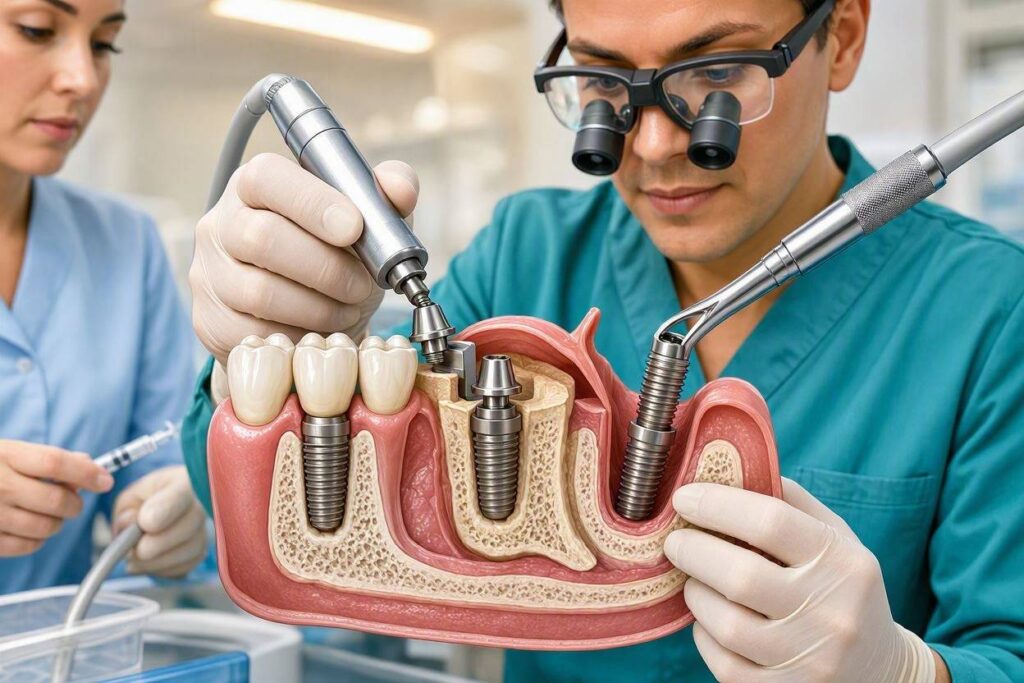
The most important concept to understand is that modern implant removal is performed with the goal of being as atraumatic as possible. The surgeon wants to remove the failing implant while preserving the maximum amount of healthy bone. This preserved bone is the foundation for a future implant or another restoration. The surgeon does not simply grab the implant with pliers and yank it out like a nail from a piece of wood. That approach would destroy the bone and create a much larger defect. Instead, the surgeon uses a combination of specialized techniques and instruments to sever the bone-implant connection with minimal collateral damage.
The difficulty of removing an implant depends on the reason for removal. A failed implant that has lost its osseointegration, the bone has already separated from the implant surface, is often relatively easy to remove. It may be mobile. The surgeon can unscrew it or gently lift it out. An implant that is still well-integrated but must be removed due to a positional problem or a fractured component is much more challenging to remove. The bone is still tightly bound to the implant surface. The surgeon must carefully cut the implant out of the bone.
Indications for Implant Removal
Why would an otherwise integrated implant need to be removed? The indications fall into several categories.
Failure of Osseointegration. The implant is mobile. It never fused with the bone or has lost its integration due to infection or overload. This is the most common reason for removal.
Advanced Peri-Implantitis. The infection around the implant has caused such severe bone loss that the implant is no longer stable or predictably treatable. In some cases, the implant can be treated with regenerative surgery. In advanced cases, removal is the best option.
Malpositioned Implant. The implant was placed in a position that makes it impossible to restore with a functional and aesthetic crown. The implant may be too close to an adjacent tooth, too far to the cheek, too far to the tongue, or at an angle that cannot be corrected. A non-restorable implant must be removed.
Nerve Injury or Proximity. The implant is impinging on the inferior alveolar nerve, causing persistent numbness, tingling, or pain. If repositioning or coronectomy is not possible, removal of the implant may be necessary to relieve the pressure on the nerve and allow potential recovery.
Implant Fracture. The implant body has fractured. The remaining piece is buried in the bone and cannot be restored. It must be removed.
Progressive Systemic Disease. In rare cases, a patient may develop a condition that requires the removal of metal implants, such as a severe metal hypersensitivity, though this is controversial and rarely necessary, or a need for hyperbaric oxygen therapy for another condition.
The Explantation Toolkit
The surgeon has an array of instruments specifically designed for atraumatic implant removal.
Reverse Torque Ratchet. This is the simplest tool. If the implant has a solid internal connection and is only partially integrated or has a small amount of remaining bone, the surgeon can attach a ratchet wrench to the implant and turn it counterclockwise. Most implant systems have a specific removal tool that engages the internal connection. Applying a controlled, high torque in the reverse direction can shear the bone-implant interface and unscrew the implant. This technique is effective for implants that are failing but still have some integration.
Piezo Surgical Unit. This is a game-changing technology for implant removal. A piezo surgical unit uses ultrasonic micro-vibrations to cut bone. The tip of the handpiece oscillates at a frequency that cuts mineralized tissue, bone, but does not cut soft tissue, such as nerves or gums. The surgeon can make precise, microscopic cuts in the bone immediately surrounding the implant. The piezo unit allows the surgeon to trephine, or core out, the implant with incredible precision and without the heat generation or the risk of damaging adjacent structures that comes with traditional rotary drills. The bone cut is very thin, preserving maximum bone volume. The piezo unit is the gold standard for removing well-integrated implants.
Trephine Burs. A trephine bur is a hollow, cylindrical drill. It cuts a core of bone around the implant. Trephines come in various diameters to match the implant. The surgeon selects a trephine that is slightly larger than the implant body. The trephine is cooled with sterile saline as it cuts. The goal is to remove a thin shell of bone surrounding the implant, allowing the implant to be unscrewed or lifted out. The downside of trephine burs is that they remove more bone than piezo surgery and generate heat, which must be managed carefully. They are still a useful and commonly used tool.
Implant Extraction Forceps and Elevators. Once the bone-implant interface has been sufficiently weakened, or for a mobile implant, the surgeon uses specialized forceps or small elevators to gently grip the implant and remove it. The force is applied carefully to avoid fracturing the surrounding bone plates.
Step-by-Step: Removal of a Mobile, Failed Implant
Let us walk through a typical procedure for a failed implant that is clinically mobile.
Anesthesia. The area is thoroughly numbed with local anesthetic. If the patient is anxious or multiple implants are being removed, sedation may be offered.
Flap Elevation. A small incision is made in the gum, and the tissue is gently reflected to expose the top of the implant and the surrounding bone. This may not be necessary if the implant is very loose and the surrounding tissue is healthy.
Removal. The surgeon grasps the implant with extraction forceps or attaches a driver. With gentle rotational and tractional forces, the implant is lifted out. There is often no bone attached to the implant. The bone-implant interface has already been replaced by inflammatory granulation tissue. The surgeon feels very little resistance.
Debridement. The socket is thoroughly cleaned. All inflammatory granulation tissue is scooped out with curettes. The socket is irrigated with sterile saline to remove debris and bacteria.
Bone Grafting. The socket is typically filled with bone graft material to preserve the ridge volume for a future implant. A barrier membrane may be placed over the graft.
Closure. The gum is sutured back into place over the grafted socket. The sutures are removed in one to two weeks.
Step-by-Step: Removal of an Integrated, Non-Mobile Implant
The removal of a well-integrated implant is more involved.
Anesthesia and Flap. After anesthesia, a flap is elevated to expose the implant and the surrounding bone fully. The surgeon must visualize the bony anatomy.
Bone Troughing with Piezo or Trephine. Using the piezo surgical unit, the surgeon creates a narrow trough in the bone around the coronal portion of the implant. The cuts are like a small moat around the implant collar. The cuts extend apically along the implant body. The goal is to sever the bony attachment, particularly at the top of the implant where the bone is densest. If a trephine bur is used, it is run at low speed with irrigation, carefully coring around the implant. The surgeon must be cautious not to overheat the bone and not to veer into adjacent teeth or vital structures.
Removal with Reverse Torque. Once the bone attachment is severed, the removal tool is engaged, and reverse torque is applied. The implant is unscrewed. The bone defect is examined.
Debridement and Grafting. The site is debrided. Any remaining granulation tissue or bone fragments are removed. The resulting bone defect is often a well-defined cylindrical space, ideal for bone grafting. The graft is packed into the defect. A membrane is placed. The gum is sutured.
The Importance of Bone Grafting After Removal
When an implant is removed, it leaves a defect in the jawbone. The size of the defect depends on the reason for removal and the technique used. If the implant failed due to peri-implantitis, there is often a significant crater of bone loss around the implant. If the implant was removed atraumatically from a healthy site, the defect is a clean socket matching the implant’s shape. In both cases, bone grafting at the time of explantation is critical. The graft preserves the ridge width and height. Without a graft, the socket will fill with a blood clot, and the walls will collapse inward as it heals, resulting in a narrow, short ridge that may not be able to support a future implant. The graft acts as a scaffold, maintaining the space and allowing the body’s natural bone-forming cells to migrate in and regenerate bone over time.
Healing and Recovery After Implant Removal
Recovery from implant removal is generally less painful and faster than recovery from the original implant placement. The procedure is often shorter. The surgical trauma, particularly for a mobile implant, is minimal. Post-operative instructions are similar: soft diet, gentle oral hygiene, avoidance of smoking, and pain management with over-the-counter or prescribed analgesics.
The bone graft healing period is typically three to six months. During this time, the patient may wear a temporary removable tooth, a flipper, or a temporary bridge, if aesthetics are a concern. The temporary prosthesis must be adjusted so that it does not put pressure on the healing graft. After the graft has matured and a new CBCT scan confirms adequate bone volume, a new implant can be planned.
Can a Failed Implant Site Be Re-Implanted?
Yes, in the vast majority of cases. The failure of one implant does not mean you are permanently ineligible for an implant at that site. The key is to identify and address the cause of the initial failure before attempting a second implant. If the failure was due to peri-implantitis, the infection must be completely resolved. If it was due to overload, the new plan must include a nightguard and careful occlusal design. If it was due to smoking, the patient must commit to smoking cessation.
The success rate for a replacement implant placed into a healed, grafted site is high, provided the underlying risk factors are controlled. The waiting period is crucial. Rushing to replace a failed implant without adequate healing and resolution of the underlying problem invites a second failure.
Conclusion
Dental implant removal is a controlled, atraumatic procedure that aims to extract the failing or problematic implant while preserving as much healthy bone as possible. The difficulty varies from the simple unscrewing of a mobile implant to the precise micro-surgical removal of a well-integrated implant using piezo surgery or trephine burs. Bone grafting at the time of removal is standard practice to prepare the site for a future replacement implant. While losing an implant is a discouraging setback, modern explantation and regenerative techniques make successful re-implantation a realistic and predictable outcome.
Frequently Asked Questions (FAQ)
1. Is dental implant removal painful?
The procedure is performed under local anesthesia, so you should not feel pain during the removal. Post-operative discomfort is typically mild to moderate and manageable with pain relievers.
2. How long does it take to remove a dental implant?
A mobile implant can be removed in minutes. A well-integrated implant requiring piezo surgery may take 30 to 60 minutes.
3. Will I have a hole in my gum after the implant is removed?
The gum tissue is sutured over the site to cover the bone graft. It will heal closed. If a healing abutment is not placed, the gum will close over the site completely.
4. Can I get a new implant immediately after the old one is removed?
Immediate replacement is sometimes possible in strict circumstances, such as when a healthy implant is being removed for positional reasons and the bone is healthy. In most cases of failure, a delayed approach after bone grafting and healing is safer and more predictable.
5. What happens if the implant cannot be removed with reverse torque?
If reverse torque fails, the surgeon will use the piezo unit or trephine burs to cut a thin layer of bone around the implant until it can be dislodged.
6. Can a broken implant fragment be left in the bone?
Small, apical fragments of a well-integrated, non-infected implant may sometimes be left in the bone if removal would cause excessive damage. This is a clinical judgment call and requires long-term monitoring.
7. How much does implant removal cost?
The cost varies depending on complexity, ranging from a few hundred dollars for a simple removal to $1,000 to $2,000 or more for a complex, integrated implant removal with bone grafting.
Additional Resource
For more information on dental implant complications and their management, visit the Academy of Osseointegration:
Academy of Osseointegration