How Much Does It Cost To Fill A Cavity In Mexico?
A cavity is a small problem that can become a big one if you ignore it. It starts as a tiny hole in your tooth. If left untreated, it can grow, cause pain, and lead to a root canal or even tooth loss. The solution is a simple filling. But if you live in the United States, the UK, or Canada, you know that even a simple filling can cost hundreds of dollars.
That is why millions of people travel to Mexico for dental care. The cost of filling a cavity in Mexico is a fraction of what you would pay at home. You can save 60% to 80% on dental work, even after factoring in travel and accommodation.
But how much does it actually cost? Is the quality good? Is it safe? This guide will answer all your questions. We will break down the prices for different types of fillings. We will compare them to US prices. We will explain how to find a reputable dentist, what to expect during your visit, and how to plan a dental vacation. By the end, you will know exactly what to expect.
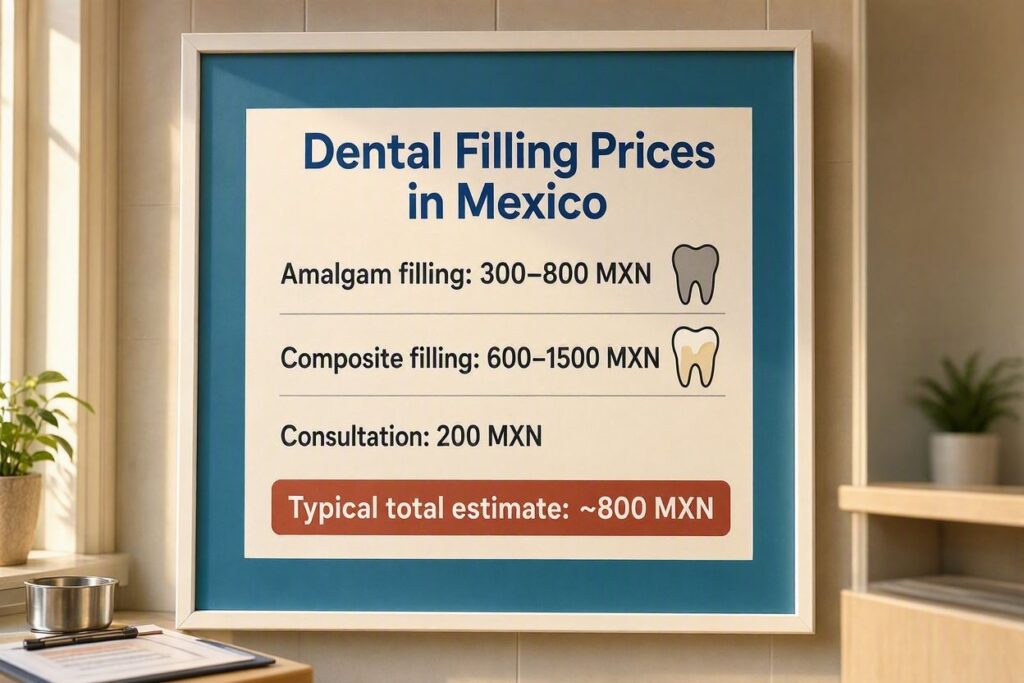
The Average Cost Of A Cavity Filling In Mexico
Let’s start with the numbers. These are average prices in Mexico for common types of fillings.
| Type of Filling | Price in Mexico (USD) | Price in USA (USD) | Savings |
|---|---|---|---|
| Amalgam (Silver) Filling | $20 – $50 | $100 – $250 | 70-80% |
| Composite (White) Filling | $30 – $80 | $150 – $350 | 70-80% |
| Porcelain Inlay/Onlay | $200 – $500 | $800 – $1,800 | 70-75% |
| Glass Ionomer Filling | $25 – $60 | $100 – $250 | 70-75% |
| Root Canal + Filling | $150 – $400 | $700 – $1,500 | 75-80% |
| Deep Cavity (Near Nerve) | $80 – $150 | $200 – $500 | 60-70% |
As you can see, the savings are significant. A simple composite filling that costs $250 in the US might cost only $50 in Mexico. Even a complex procedure like a root canal and filling can be 80% cheaper.
Why Is Dental Care So Cheap In Mexico?
You might wonder why prices are so low. Is the quality lower? The answer is no. The lower prices are due to several factors.
1. Lower Cost Of Living
The cost of living in Mexico is much lower than in the US or Canada. Rent, food, utilities, and salaries are all cheaper. This means dental clinics have lower overhead costs. They can charge less and still make a profit.
2. Lower Labor Costs
Dentists in Mexico earn less than their counterparts in the US. However, they are still well-paid by local standards. This helps keep prices down.
3. Competition
Mexico has a large number of dental clinics, especially in border towns and tourist areas. This competition drives prices down. Clinics compete on price and quality to attract international patients.
4. No Insurance Bureaucracy
In the US, dental insurance companies and administrative costs add to the price. In Mexico, many clinics deal directly with patients. There is less bureaucracy, which reduces costs.
5. Government Support
The Mexican government supports medical tourism. They have invested in infrastructure and training. This has helped create a strong healthcare system.
Factors That Affect The Cost Of A Filling In Mexico
Not all fillings cost the same. Here are the main factors that influence the price.
1. The Type Of Filling
Amalgam fillings are the cheapest. They are made of a silver-colored alloy. Composite fillings are tooth-colored and more expensive. Porcelain inlays and onlays are the most expensive because they are custom-made in a lab.
2. The Size Of The Cavity
A small cavity is quick and easy to fill. A large cavity takes more time and materials. It may also require a build-up or a crown.
3. The Location Of The Tooth
Front teeth are more visible. You will want a tooth-colored composite filling for these. Back teeth are less visible. You might choose a cheaper amalgam filling. However, many dentists now recommend composite for all teeth because it is mercury-free and bonds better.
4. The Dentist’s Experience
A highly experienced dentist will charge more than a recent graduate. But even the most experienced dentists in Mexico charge less than average dentists in the US.
5. The City You Visit
Prices vary across Mexico. Border towns like Tijuana and Juarez are generally cheaper. Resort areas like Cancun and Puerto Vallarta are slightly more expensive. Mexico City and Guadalajara are in the middle.
6. Additional Procedures
If the cavity is deep and close to the nerve, you may need a root canal. This adds to the cost. If the tooth is severely damaged, you may need a crown.
Comparison Table: Filling Costs In Popular Mexican Cities
| City | Composite Filling (USD) | Root Canal + Filling (USD) |
|---|---|---|
| Tijuana | $30 – $70 | $150 – $350 |
| Juarez | $25 – $60 | $120 – $300 |
| Cancun | $40 – $90 | $200 – $450 |
| Puerto Vallarta | $35 – $80 | $180 – $400 |
| Mexico City | $30 – $75 | $150 – $380 |
| Guadalajara | $30 – $70 | $140 – $360 |
| Los Algodones | $25 – $60 | $130 – $320 |
Los Algodones, also known as “Molar City,” is a small town on the US-Mexico border. It is famous for its high concentration of dental clinics. Prices there are among the lowest in Mexico.
Types Of Fillings And Their Costs
Let’s look at each type of filling in more detail.
1. Amalgam (Silver) Fillings
Amalgam is a mixture of mercury, silver, tin, and copper. It has been used for over 150 years. It is strong, durable, and cheap. However, it is silver-colored and does not look natural. Some people are concerned about the mercury content, though studies show it is safe.
- Cost in Mexico: $20 – $50
- Cost in USA: $100 – $250
- Pros: Very durable, cheapest option.
- Cons: Visible, contains mercury, can expand and crack teeth over time.
2. Composite (White) Fillings
Composite fillings are made of a resin and glass mixture. They are tooth-colored and bond directly to the tooth. They are the most popular choice today.
- Cost in Mexico: $30 – $80
- Cost in USA: $150 – $350
- Pros: Natural-looking, bonds to tooth, mercury-free.
- Cons: Less durable than amalgam for large cavities, can stain over time.
3. Glass Ionomer Fillings
These are made of acrylic and glass. They release fluoride, which helps prevent further decay. They are often used for children’s teeth or for fillings near the gum line.
- Cost in Mexico: $25 – $60
- Cost in USA: $100 – $250
- Pros: Releases fluoride, good for baby teeth.
- Cons: Weaker than composite, not for biting surfaces.
4. Porcelain Inlays And Onlays
These are custom-made in a lab. They are used for larger cavities that are too big for a simple filling but not big enough for a crown. They are very durable and look natural.
- Cost in Mexico: $200 – $500
- Cost in USA: $800 – $1,800
- Pros: Very durable, natural-looking.
- Cons: Expensive, requires two visits.
5. Root Canal + Filling
If the cavity has reached the nerve, you need a root canal. The dentist removes the infected pulp, cleans the canal, and fills it. Then a filling or crown is placed on top.
- Cost in Mexico: $150 – $400
- Cost in USA: $700 – $1,500
- Pros: Saves the tooth, relieves pain.
- Cons: More expensive, multiple visits.
Is Dental Care In Mexico Safe?
This is the most important question. Is it safe to get a filling in Mexico?
The answer is generally yes, especially in reputable clinics. Mexico has many excellent dentists. Many of them have trained in the US, Canada, or Europe. They use modern equipment and follow international standards of hygiene and safety.
International Accreditation
Many Mexican dental clinics have international accreditation. The most common is the Joint Commission International (JCI) accreditation. This is the gold standard for healthcare quality. Clinics with JCI accreditation meet strict standards for patient safety and care.
Modern Technology
Mexican dental clinics often have the latest technology. They use digital X-rays, intraoral cameras, and advanced filling materials. In some cases, the equipment is newer than what you would find in a typical US dental office.
English-Speaking Staff
In border towns and tourist areas, most dentists and staff speak English. They are used to treating international patients. They will explain your treatment options clearly and answer all your questions.
However, Not All Clinics Are Equal
There are good clinics and bad clinics in Mexico, just like anywhere else. Some clinics in tourist areas are more focused on volume than quality. They may rush treatments or use cheap materials. It is important to do your research and choose a reputable clinic.
How To Choose A Good Dentist In Mexico
Here are some tips to find a trustworthy dentist.
1. Check Reviews
Look for reviews on Google, Facebook, and dental tourism websites. Read both positive and negative reviews. Look for patterns. If many people complain about the same issue, avoid that clinic.
2. Check Accreditation
Look for clinics with JCI accreditation or ISO certification. These clinics have met international standards.
3. Check The Dentist’s Qualifications
Look at the dentist’s profile on the clinic’s website. Where did they train? How many years of experience do they have? Do they specialize in the treatment you need?
4. Ask For Before And After Photos
A good clinic will have a portfolio of before and after photos. This shows their work and helps you understand what to expect.
5. Visit The Clinic
If you are already in Mexico, visit the clinic in person. Look at the cleanliness. Check the equipment. Talk to the staff. Trust your gut.
6. Ask Questions
Do not be afraid to ask questions. Ask about the materials they use, the warranty on their work, and what happens if there are complications.
7. Avoid Pressure
A good clinic will not pressure you into treatment. They will give you a clear treatment plan and let you decide.
Popular Dental Tourism Destinations In Mexico
Mexico has many cities that cater to dental tourists. Here are the most popular.
Tijuana
Tijuana is the most popular destination for Americans. It is just across the border from San Diego. It has hundreds of dental clinics. Prices are very low.
Los Algodones
Los Algodones is a small town in Baja California. It is known as “Molar City” because it has more dentists per capita than any other place in the world. It is a short drive from Yuma, Arizona.
Juarez
Juarez is across the border from El Paso, Texas. It has many dental clinics and is popular with Texans.
Cancun
Cancun is a resort destination. It has many high-end dental clinics. Prices are slightly higher than in border towns, but still much lower than in the US.
Puerto Vallarta
Puerto Vallarta is a beautiful beach city. It has a growing number of dental clinics. It is popular with tourists and expats.
Mexico City
Mexico City is the capital. It has some of the best dentists in the country. Prices are moderate.
Guadalajara
Guadalajara is Mexico’s second-largest city. It has excellent dental schools and clinics. Prices are very reasonable.
What Is Included In The Price?
When you get a quote from a Mexican dental clinic, ask what is included. Some clinics quote a low price but then charge extra for materials, X-rays, or follow-up visits.
A typical quote for a filling should include:
- Consultation and examination.
- X-rays (if needed).
- Local anesthesia.
- The filling material.
- Polishing and finishing.
- Post-treatment instructions.
It may not include:
- Root canal (if needed).
- Crown (if needed).
- Medications.
- Follow-up visits.
Always ask for a written treatment plan with a full breakdown of costs.
How To Plan A Dental Trip To Mexico
A dental trip can be a great way to save money and get a vacation. Here is how to plan it.
Step 1: Research Your Treatment
Find out what treatment you need. Get a quote from your local dentist. This will help you compare prices.
Step 2: Research Clinics In Mexico
Look for clinics that specialize in your treatment. Read reviews. Check accreditation. Contact them for a quote.
Step 3: Send Your Records
Send your dental X-rays and records to the Mexican clinic. They will give you a treatment plan and a quote.
Step 4: Plan Your Trip
Decide how long you need to stay. A simple filling can be done in one visit. A root canal might require two visits. Implants require multiple trips.
Step 5: Book Flights And Accommodation
Book your flights and hotel. Many dental clinics offer packages that include accommodation and airport transfers.
Step 6: Get Travel Insurance
Check if your travel insurance covers dental treatment. Most do not. You may need special medical travel insurance.
Step 7: Enjoy Your Trip
Combine your dental treatment with sightseeing, relaxation, and good food.
The Risks Of Dental Tourism
Dental tourism is not without risks. Here are some things to consider.
1. Language Barriers
While many dentists speak English, misunderstandings can happen. Make sure you understand the treatment plan fully.
2. Follow-Up Care
If you have a problem after you return home, your local dentist may not want to fix another dentist’s work. You may have to pay for corrective treatment.
3. Treatment Time
Some treatments take longer than expected. You might need to stay longer than planned.
4. Quality Variations
Not all clinics are equal. Some may use cheap materials or rush treatment. Do your research.
5. Legal Recourse
If something goes wrong, it is harder to take legal action in a foreign country.
Is Dental Tourism In Mexico Worth It?
For many people, yes. If you need major dental work like implants, crowns, or a full mouth restoration, the savings can be enormous. You can save enough to cover your flights, hotel, and a holiday.
However, for minor treatments like a single filling, it may not be worth the hassle. The savings are small, and you can get it done at home.
Quotes From Dental Tourists In Mexico
“I needed three fillings. In the US, I was quoted $900. In Tijuana, I paid $150. I used the savings to pay for a weekend trip. The dentist was excellent. I am very happy.” — Robert, USA
“I got a root canal and a filling in Los Algodones. It cost me $300. In Canada, it would have been $1,800. The clinic was clean and modern. I would do it again.” — Emma, Canada
“I had a cavity filled in Cancun. It cost $70. In the UK, it would have been £150. The dentist was very professional. I love my new smile.” — David, UK
Important Note For Readers
Prices for dental care in Mexico change over time. The ranges in this article are estimates based on current market data. Always get a personalized quote from a licensed dentist. Do not rely solely on online information for your treatment decisions. Your specific needs may result in a different price.
Frequently Asked Questions (FAQ)
1. How much does it cost to fill a cavity in Mexico?
A composite filling in Mexico costs $30 to $80. An amalgam filling costs $20 to $50. A root canal and filling costs $150 to $400.
2. Is dental care in Mexico safe?
Yes, dental care in Mexico is generally safe, especially in accredited clinics. Mexico has many well-trained dentists who use modern equipment and follow international hygiene standards.
3. How much does a dental filling cost in Tijuana?
A composite filling in Tijuana costs $30 to $70. A root canal and filling costs $150 to $350.
4. Can I get a filling in Mexico without insurance?
Yes. Most dental clinics in Mexico deal directly with patients. You pay out of pocket, but the prices are much lower than in the US.
5. How long does it take to get a filling in Mexico?
A simple filling takes about 30 to 60 minutes. You can usually get it done in one visit.
6. Do Mexican dentists speak English?
Most dentists in border towns and tourist areas speak English. They are used to treating international patients.
7. Can I use my dental insurance in Mexico?
Most US and Canadian dental insurance plans do not cover treatment in Mexico. However, some international health insurance plans do. Check with your provider.
8. What is the best city in Mexico for dental work?
Los Algodones is known as “Molar City” and has the highest concentration of dentists. Tijuana and Juarez are also popular. Cancun and Puerto Vallarta are good for combining treatment with a beach holiday.
9. Are there any risks of getting dental work in Mexico?
The main risks are communication barriers, lack of follow-up care, and quality variations between clinics. Choose a reputable clinic to minimize these risks.
10. Can I get a full mouth restoration in Mexico?
Yes. Many clinics specialize in full mouth restorations, including implants, crowns, and veneers. The savings can be tens of thousands of dollars.
Conclusion
The cost of filling a cavity in Mexico is significantly lower than in the United States, Canada, or the UK. You can save 60% to 80% on procedures like fillings, root canals, and crowns. The quality of care is generally excellent, especially in accredited clinics. Dental tourism in Mexico is a viable option for people who need dental work and want to combine it with a holiday. However, it is important to do your research, choose a reputable clinic, and understand the risks. With proper planning, you can get a healthy smile and a memorable vacation without breaking the bank.
Additional Resource:
For more information on dental tourism and to find accredited dental clinics in Mexico, visit the Mexican Dental Association: