How Much Does The X-Ray And Dental Examination Cost?
Going to the dentist is one of those things we know we should do, but it often comes with a cloud of uncertainty—not just about our teeth, but about our wallets. The moment you sit in that chair, you might wonder, “Is this going to cost me a fortune?”
It is a valid concern. Healthcare costs, especially in dentistry, can feel opaque. You are often quoted a price for a cleaning, only to find out that the “exam” and “X-rays” are separate line items on the bill. This guide aims to pull back the curtain on the real costs of dental X-rays and examinations.
We are going to look at the average prices across the United States, how insurance plays into the equation, and what factors change the price tag. Whether you are a cash-pay patient or using insurance, knowing these numbers helps you make better decisions for your health and your budget.
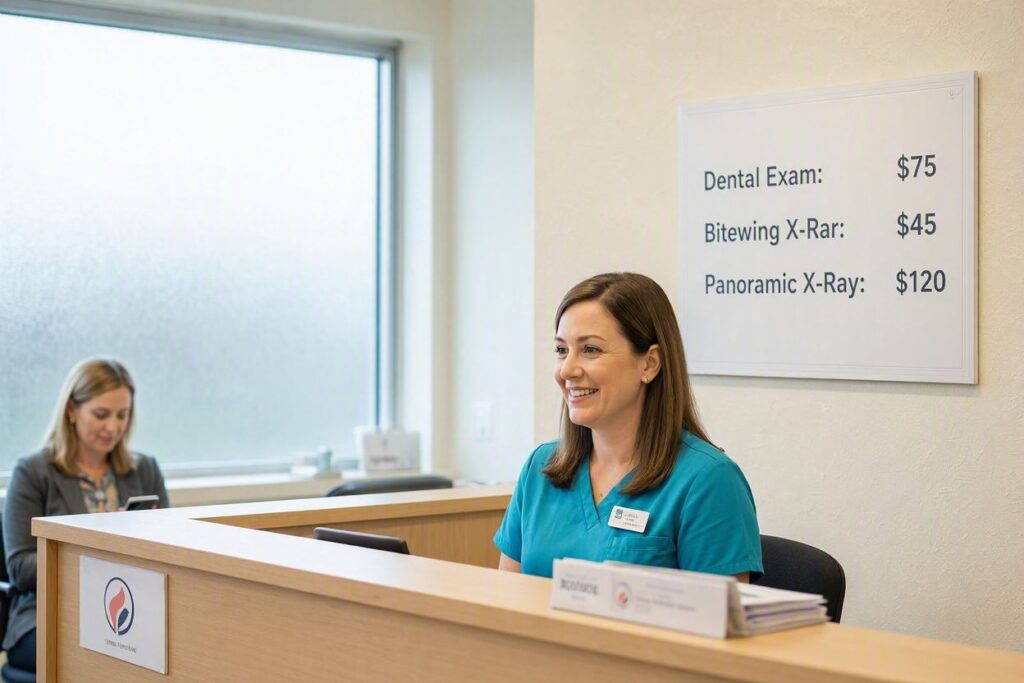
Understanding The Dental Examination: More Than Just A Look
Before we get into the hard numbers, let’s clarify what actually happens during a dental examination. It is not just a quick peek inside your mouth. A comprehensive exam is a systematic process.
When you visit a new dentist, they usually perform a “Comprehensive Oral Evaluation.” This is different from a “Periodic Oral Evaluation,” which you get at your regular six-month checkup.
The Comprehensive Exam
The comprehensive exam is the deep dive. It usually happens when you are a new patient or if it has been a very long time since your last visit. During this appointment, the dentist does the following:
- Medical History Review: They look at your overall health. Conditions like diabetes or heart disease affect your oral health.
- Head and Neck Exam: They feel your lymph nodes and jaw joints for any swelling or clicking.
- Soft Tissue Exam: They check your gums, cheeks, tongue, and throat for signs of oral cancer or infection.
- Hard Tissue Exam: They check every tooth for decay, cracks, and wear.
- Occlusion Check: They look at how your top and bottom teeth fit together.
Because this takes more time and clinical expertise, it costs more than a standard checkup.
The Periodic Exam
This is the standard checkup you get every six months. It is shorter. The dentist is primarily looking for changes since the last visit. They are checking to see if that small spot of decay has grown or if your gums have receded further.
A Quick Note: Insurance companies usually cover two periodic exams per year. They typically cover one comprehensive exam every few years, depending on your specific plan.
Why Are Dental X-Rays Necessary?
You might wonder why the dentist needs to take pictures if they can just look at your teeth. The truth is, the human eye can only see so much. The surface of your teeth might look fine, but problems often start in the spaces between the teeth or underneath the gums.
Dental X-rays (radiographs) allow the dentist to see:
- Hidden Decay: Cavities between teeth that are invisible to the naked eye.
- Bone Loss: Signs of gum disease that affect the bone supporting your teeth.
- Impacted Teeth: Teeth that are stuck under the gums, like wisdom teeth.
- Abscesses: Infections at the root of the tooth.
- Developmental Issues: Problems with how teeth are forming in children.
Without X-rays, a dentist is essentially working blind. They are a critical diagnostic tool, not just an add-on to make your bill higher.
The Cost Of Dental X-Rays
The cost of X-rays varies wildly based on the type of image taken and where you live. A small X-ray of one tooth is much cheaper than a full-mouth series.
Here is a breakdown of the average prices for different types of X-rays without insurance.
Bitewing X-Rays
Bitewings are the most common type. You bite down on a piece of plastic, and the machine takes a picture of the back teeth. This helps the dentist see cavities between teeth.
- Average Cost: $20 to $50 for a set of four.
- Frequency: Usually taken once a year.
Periapical X-Rays
These are more focused. They show the entire tooth from the crown (top) to the root tip and the surrounding bone.
- Average Cost: $15 to $30 per image.
- Use Case: Usually taken when you have a specific toothache to see what is happening at the root.
Panoramic X-Rays
This is a big machine that circles your head. It creates a single image of your entire mouth, including the upper and lower jaws, sinuses, and temporomandibular joints (TMJ). It is great for seeing wisdom teeth.
- Average Cost: $80 to $150.
- Use Case: Usually taken every 3 to 5 years or for new patients.
Full Mouth Series (FMX)
An FMX is a combination of 18 to 20 intraoral pictures. It covers all the teeth and roots in detail.
- Average Cost: $100 to $200.
- Use Case: Often required for new patients to establish a baseline.
3D Imaging (CBCT)
This is a cone-beam CT scan. It creates a 3D model of your jaw. It is used for complex procedures like dental implants or root canals.
- Average Cost: $150 to $400.
- Use Case: Specialized planning for surgery.
Table: Average Cost Of Dental X-Rays (Without Insurance)
| Type of X-Ray | Average Price Range (USD) | Typical Frequency |
|---|---|---|
| Bitewing (Set of 4) | $20 – $50 | Every 6-12 months |
| Periapical (Single) | $15 – $30 | As needed for specific pain |
| Panoramic | $80 – $150 | Every 3-5 years |
| Full Mouth Series (FMX) | $100 – $200 | Every 3-5 years or for new patients |
| CBCT (3D Scan) | $150 – $400 | For implants or complex surgery |
The Cost Of The Dental Examination
Now that we have covered the pictures, let’s look at the cost of the doctor’s time. The examination fee covers the dentist’s expertise in analyzing your mouth and the X-rays.
New Patient Exam (Comprehensive)
This is the most expensive exam because it takes the longest.
- Average Cost: $50 to $150.
- What it includes: Detailed charting, medical history review, and diagnosis.
Periodic Exam (Existing Patient)
This is the standard checkup.
- Average Cost: $30 to $80.
- What it includes: Quick check for changes, cavities, and gum health.
Limited Exam (Problem Focused)
This happens when you call with a toothache. You go in, and the dentist looks only at that specific tooth.
- Average Cost: $25 to $60.
- What it includes: Examining the specific area of pain and maybe one X-ray.
Table: Average Cost Of Dental Exams (Without Insurance)
| Type of Exam | Average Price Range (USD) | Best For |
|---|---|---|
| Comprehensive (New Patient) | $50 – $150 | Establishing a baseline at a new office |
| Periodic (Routine) | $30 – $80 | Your 6-month checkup |
| Problem Focused (Limited) | $25 – $60 | Emergencies or specific tooth pain |
The “Bundle”: What You Actually Pay At The Checkup
When you go for a cleaning, you usually don’t pay for the exam and X-rays separately. You pay for a “package” or a “prophylaxis” visit.
Most dentists bundle the following into one fee for a routine visit:
- Prophylaxis (Cleaning): $75 – $150
- Periodic Exam: $30 – $80
- Bitewing X-rays: $20 – $50
Total Average Out-of-Pocket Cost: $125 to $280.
If you are a new patient, the cost is higher because of the comprehensive exam and full X-rays.
- Comprehensive Exam: $50 – $150
- Full Mouth X-rays or Panoramic: $100 – $200
- Cleaning: $75 – $150
Total Average New Patient Cost: $225 to $500.
How Insurance Changes The Equation
Dental insurance works differently than medical insurance. Most dental plans have an annual maximum benefit—usually around $1,000 to $1,500. They also have deductibles (usually $50) and coinsurance (usually 20% for preventive care, 50% for major work).
Preventive Care (Exams and X-rays)
Here is the good news: Most dental insurance plans cover exams and X-rays at 100%. They consider these “preventive” services because catching a problem early saves the insurance company money in the long run.
However, there is a catch. You usually have to meet your deductible first. If your deductible is $50, you might pay the first $50 of your visit, and insurance covers the rest.
Important Note: Insurance companies have rules on how often they pay for X-rays.
- Bitewings: Usually covered once every 6 to 12 months.
- Full Mouth X-rays: Usually covered once every 3 to 5 years.
- Exams: Usually covered twice a year.
If you get X-rays more often than this, you will likely pay out of pocket.
Table: How Insurance Typically Covers Diagnostics
| Service | Coverage Percentage | Frequency Limits |
|---|---|---|
| Periodic Exam | 100% | 2 times per year |
| Comprehensive Exam | 100% | 1 time every 3 years |
| Bitewing X-Rays | 100% | 1 time per year |
| Panoramic X-Ray | 100% | 1 time every 3-5 years |
What If You Don’t Have Insurance?
If you are a cash-pay patient, you have a few options to save money.
1. Ask for a Discount
Many dental offices offer a 5% to 10% discount if you pay in full on the day of service. It saves them the hassle of billing, and they pass those savings to you. It never hurts to ask.
2. In-House Membership Plans
Many private practices offer their own membership plans. You pay a monthly or annual fee (e.g., $25/month or $300/year). In exchange, you get:
- 2 cleanings
- 2 exams
- All necessary X-rays
- A percentage off other treatments (usually 10-20%)
This is often cheaper than paying per visit if you don’t have insurance.
3. Dental Schools
Dental schools need patients for students to practice on. The work is supervised by licensed dentists. It takes longer, but the costs are significantly lower. An exam at a dental school might cost $20 to $40, and X-rays might be half the private practice price.
Factors That Influence The Cost
Why does a cleaning cost $75 in one town and $150 in another? Several factors drive the price.
Geographical Location
This is the biggest factor. Real estate, taxes, and the cost of living are higher in big cities.
- New York City: A comprehensive exam and X-rays could cost $400+.
- Rural Midwest: The same services might cost $150.
The Type of Practice
- Solo Practitioner: Usually the most affordable. You are paying for the dentist’s time and a small staff.
- Group Practice: Can be slightly more expensive due to higher overhead.
- Boutique/Spa Dentistry: These offices offer amenities like massages, TVs, and sedation. They charge a premium. An exam here could be double the standard rate.
The Dentist’s Experience
A dentist who has been practicing for 30 years and is a renowned specialist will charge more than a new graduate. You are paying for their reputation and expertise.
Special Cases: Children and Seniors
The cost of exams and X-rays can vary for different age groups.
Children
Children often need different types of X-rays. They might need occlusal X-rays (to see how teeth are erupting) which are specific to kids.
- Cost: Generally similar to adults, $30 to $80 for an exam.
- Note: Many pediatric dentists are great at making the experience fun, but their prices can be slightly higher due to the specialized care required.
Seniors
Seniors often have more complex dental needs.
- Cost: The exam itself costs the same, but they might need more frequent X-rays to monitor bone loss or existing restorations.
- Note: Medicare generally does not cover routine dental exams or X-rays. This is a major issue for seniors. They usually have to pay out of pocket or buy a separate dental plan.
The “Wait and See” Approach: A Dangerous Gamble
It is tempting to skip the X-rays and exam to save $100. But this is a false economy.
Let’s compare the cost of prevention versus the cost of treatment.
- Prevention: $150 for an exam and X-rays.
- Treatment (if you skip): A small cavity found early costs $200 for a filling. A cavity that goes unnoticed until it hurts might need a root canal ($800) and a crown ($1,200).
The Math: Skipping a $150 exam can lead to a $2,000 bill down the road. Regular exams and X-rays are an investment in avoiding pain and high costs.
Summary: The Breakdown
To give you a clear picture, here is a summary of what you can expect to pay.
Scenario 1: You Have Insurance and Go for a Checkup
- Exam: Covered (100%)
- X-rays: Covered (100%)
- Cleaning: Covered (100%)
- Total Out of Pocket: $0 (assuming you have met your deductible).
Scenario 2: You Have Insurance but Haven’t Met Your Deductible
- Exam: $60
- X-rays: $40
- Cleaning: $100
- Total: $200 (You pay this until the deductible is met).
Scenario 3: You Have No Insurance (New Patient)
- Comprehensive Exam: $100
- Full Mouth X-rays: $150
- Cleaning: $100
- Total: $350.
Scenario 4: You Have No Insurance (Routine Visit)
- Periodic Exam: $50
- Bitewings: $40
- Cleaning: $100
- Total: $190.
FAQs
Q: How often do I really need X-rays?
A: It depends on your risk for cavities and gum disease. Healthy adults usually need bitewings once a year. If you have a history of many cavities, your dentist might suggest them every six months. Children often need them more frequently because their teeth change quickly.
Q: Can I refuse X-rays?
A: Yes, you can. However, your dentist may ask you to sign a waiver stating you refused them against their advice. They do this for legal protection. Also, they might not be able to diagnose problems between teeth without them.
Q: Why does the dentist charge for an exam if they are already doing a cleaning?
A: The cleaning is performed by a hygienist. The exam is performed by the dentist. They are two different professionals with different levels of training. You are paying for the dentist’s diagnostic expertise.
Q: Does a dental exam hurt?
A: No. It is a visual and physical inspection. If you have a sore spot, you might feel a bit of pressure, but it shouldn’t be painful.
Q: What is a “D0150”?
A: This is the dental code for a comprehensive oral evaluation. If you look at your bill, you might see codes instead of names. D0150 is the new patient exam, and D0120 is the periodic exam.
Conclusion
Understanding the cost of dental X-rays and examinations takes the fear out of the dentist’s office. While prices can range from $100 to over $400 for a full new-patient visit, insurance often covers these preventive costs entirely. Even if you pay out of pocket, remember that these diagnostic tools save you money by catching small problems before they become painful and expensive emergencies. Do not skip your checkups; your wallet and your smile will thank you in the long run.
Additional Resources
For more detailed information on dental procedure codes and insurance guidelines, you can visit the American Dental Association (ADA) website at ADA.org. They provide consumer resources that explain treatments and billing practices.