What Is Gingivitis In Spanish?
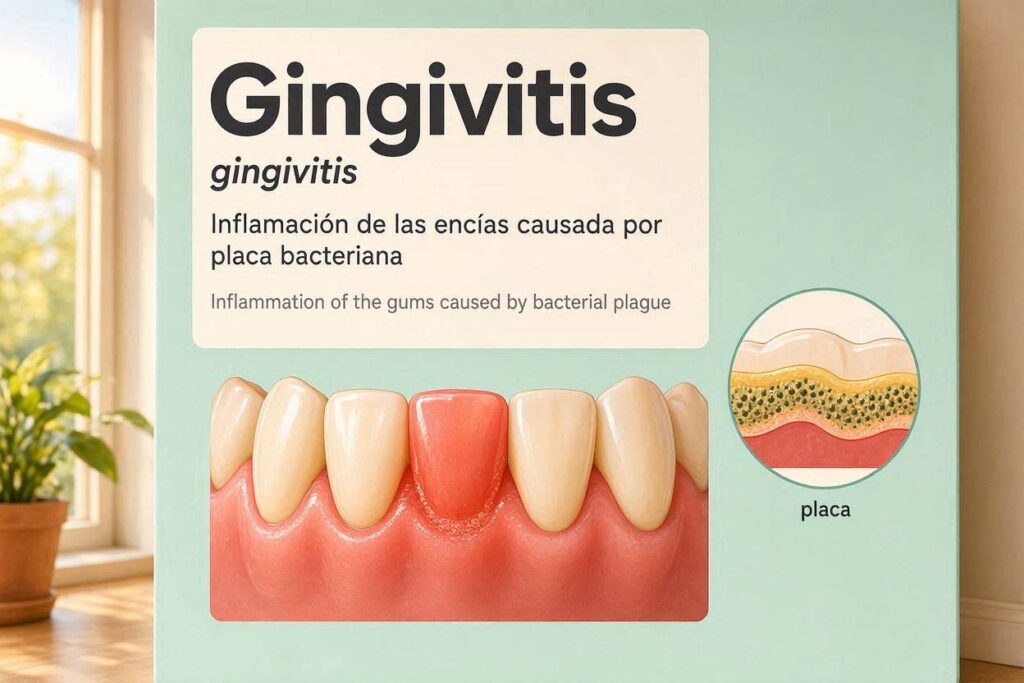
Gingivitis, the most common and mildest form of periodontal disease, is known in Spanish as “gingivitis.” The medical term is identical in both English and Spanish because it derives from the Latin “gingiva” meaning gum, and the suffix “-itis” meaning inflammation. However, for Spanish-speaking patients, the clinical term is often accompanied by more colloquial, descriptive phrases that a dentist or hygienist will use to explain the condition in clear, culturally resonant language. The most important Spanish phrase for a dental professional to know is “inflamación de las encías,” which translates directly to “inflammation of the gums.”
The Clinical Definition and Spanish Terminology
Gingivitis is the reversible inflammatory response of the marginal gingival tissues to the bacterial biofilm, or dental plaque, that accumulates at the gum line. The inflammation is characterized by redness, swelling, and a tendency to bleed easily when brushing or flossing. It is not a deep infection; the bone and the periodontal ligament that anchor the tooth are not yet affected. This is the crucial therapeutic point. Gingivitis is completely reversible with effective oral hygiene.
In a clinical setting, a Spanish-speaking dentist will use the formal diagnostic term “gingivitis.” When describing the condition to a patient, they will likely say “sus encías están inflamadas” (your gums are inflamed), “las encías le sangran porque están enfermas” (your gums bleed because they are sick), or “tiene una infección leve de las encías” (you have a mild gum infection). Understanding these phrases is essential for effective patient communication and for obtaining truly informed consent for the recommended periodontal treatment.
Plaque and Tartar: The Spanish Vocabulary of the Cause
The bacterial cause of gingivitis is dental plaque, which in Spanish is “placa dental” or “placa bacteriana.” The dentist will explain that this is a colorless, sticky film that forms constantly on the teeth. If it is not removed by daily brushing and flossing, it hardens into calculus or tartar. The Spanish term for this calcified deposit is “sarro” or “cálculo dental.” “Sarro” is the more commonly used word in everyday patient conversation across most Spanish-speaking communities.
The dental hygienist will explain that “el sarro” is rough and porous, providing an ideal surface for more plaque to accumulate. It cannot be removed with a toothbrush; it requires professional mechanical removal, which in Spanish is “una limpieza dental profesional” or more formally, “un raspado y alisado radicular,” the term for scaling and root planing.
Describing the Signs and Symptoms in Spanish
Effective patient education requires the ability to describe not just the diagnosis, but the specific, observable signs the patient can see at home. Gingivitis is often painless, so the patient may not realize their gums are unhealthy until a dental professional points out the visual indicators or until they notice bleeding.
The classic signs of gingivitis are explained as follows: the gums change from a healthy pale pink color (“color rosa pálido”) to a red or purplish color (“color rojo o morado”). They swell, becoming puffy and losing the knife-edge stippled texture, described as “encías hinchadas” or “inflamadas.” The most pathognomonic sign is bleeding on gentle provocation, such as brushing or flossing. The dentist will ask, “¿Le sangran las encías cuando se cepilla los dientes o usa el hilo dental?” (Do your gums bleed when you brush your teeth or use dental floss?). Many patients mistakenly believe this bleeding is normal or that they are brushing too hard. A crucial part of treatment is explaining “el sangrado de las encías no es normal; es un signo de enfermedad” (gum bleeding is not normal; it is a sign of disease).
Risk Factors Explained in the Spanish Context
The conversation about gingivitis risk factors must be culturally and linguistically appropriate. The dentist will discuss specific, modifiable risks. Smoking is a major risk factor, and the connection is made clear: “Fumar cigarrillos es una de las causas principales de la enfermedad de las encías” (Smoking cigarettes is one of the principal causes of gum disease). Diabetes control is another critical area, explained as “la diabetes mal controlada empeora la gingivitis, y la gingivitis puede dificultar el control del azúcar en la sangre” (poorly controlled diabetes worsens gingivitis, and gingivitis can make it difficult to control blood sugar).
Hormonal changes during pregnancy are a common trigger, a condition known as “gingivitis del embarazo.” The dentist reassures the patient that this is a known, common phenomenon, but it requires meticulous home care and professional monitoring during the pregnancy to prevent it from progressing to periodontitis, which has been linked to adverse pregnancy outcomes.
The Treatment Plan: From Diagnosis to Home Care
The professional treatment for gingivitis is a thorough prophylaxis, or dental cleaning. In Spanish, this is “una profilaxis dental” or simply “una limpieza.” The hygienist will explain the procedure: “Vamos a remover la placa y el sarro de sus dientes, especialmente debajo de la línea de la encía, para eliminar la causa de la inflamación” (We are going to remove the plaque and tartar from your teeth, especially below the gum line, to eliminate the cause of the inflammation).
The home care instructions are the most critical part of the treatment plan. The patient must master the correct brushing technique. The dentist or hygienist will teach “cepíllese los dientes dos veces al día, usando una técnica suave y apuntando el cepillo hacia la línea de la encía en un ángulo de 45 grados” (brush your teeth twice a day, using a gentle technique and aiming the brush at the gum line at a 45-degree angle). Flossing instruction is equally detailed: “use el hilo dental todos los días, deslizándolo suavemente entre los dientes y curvándolo contra la superficie del diente por debajo de la encía” (use dental floss every day, sliding it gently between the teeth and curving it against the tooth surface below the gum). An antimicrobial mouth rinse, “un enjuague bucal antimicrobiano,” may be prescribed as a short-term adjunct.
Conclusion
Gingivitis in Spanish is the same clinical word, “gingivitis,” but its effective communication to a patient requires the descriptive phrase “inflamación de las encías” and a rich vocabulary of related terms including “placa,” “sarro,” and “sangrado.” Patient education hinges on the clear, culturally fluent explanation that bleeding gums are a sign of infection, not normalcy, and that the condition is completely reversible with professional “limpieza” and meticulous daily “cepillado” and “uso de hilo dental.” The Spanish-speaking dentist bridges the clinical term and the lived patient experience to empower behavior change.
Frequently Asked Questions
Q: Is “gingivitis” the only term Spanish speakers use?
A: “Gingivitis” is the universal clinical term. A more colloquial phrase a patient might use is “las encías inflamadas” or “las encías sangrantes.” A dentist will use both the formal diagnosis and the descriptive phrase to ensure full comprehension.
Q: How do you say “bleeding gums” in Spanish?
A: “Encías sangrantes” or more commonly used in a sentence, “sangrado de las encías.” The verb “sangrar” means to bleed.
Q: What is a “deep cleaning” called in Spanish?
A: A deep cleaning, or scaling and root planing, is called “raspado y alisado radicular.” Patients may colloquially call it “una limpieza profunda.”
Additional Resource
For culturally tailored, evidence-based patient education materials on gum disease and oral health in Spanish, the following organization provides authoritative, bilingual resources.
- American Dental Association Spanish Language Resources: mouthhealthy.org/es