How Much for a Dental Implant in Mexico
The search for affordable dental care has turned the world into a global village, and Mexico stands as its brightest, most accessible capital for North American patients. A short flight from almost anywhere in the U.S. or Canada lands you in a country where the cost of living, laboratory work, and professional real estate is a fraction of what it is north of the border. But the price is only one part of the story. The real question is not just “how much,” but “how much for a safe, lasting, brand-verified implant placed in a modern, sterile clinic.” This guide is a definitive map of the Mexican dental implant landscape. It provides you with exact, realistic price ranges, city-by-city comparisons, a breakdown of what your money pays for, and the red flags that separate a world-class dental tourism clinic from a discount disaster. The goal is not to convince you to go to Mexico. The goal is to arm you with the knowledge to make a safe, informed choice if you decide the economics work for you.
The Economic Reality Behind the Price Difference
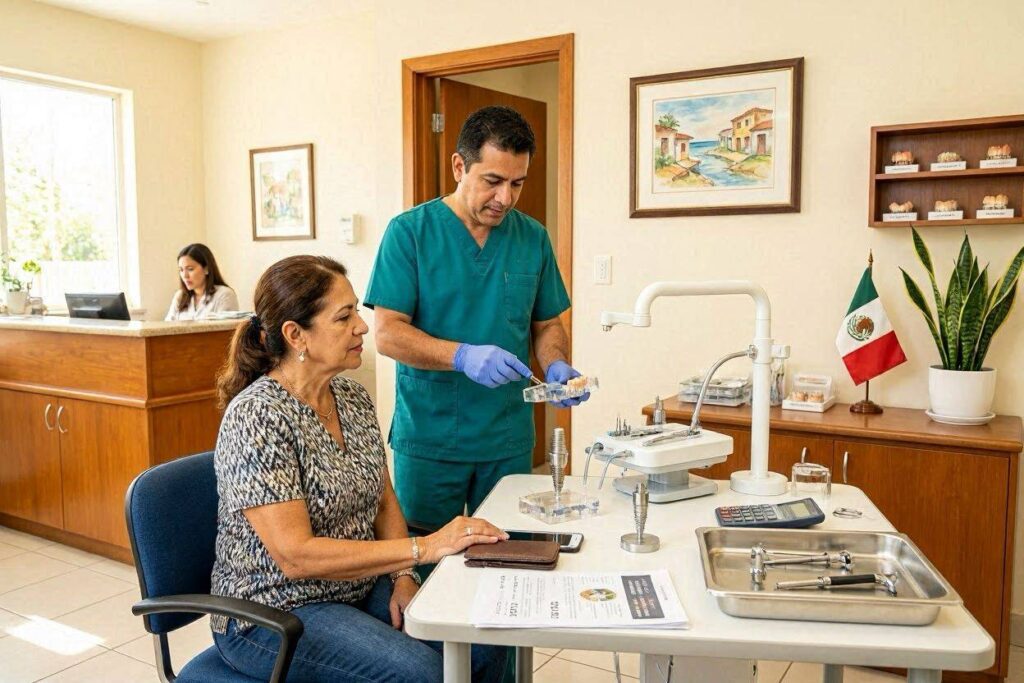
The dramatic cost reduction is not because Mexican dentists are less skilled. It is a pure function of macroeconomics. A dentist in Mexico City or Guadalajara graduating from a rigorous university program does not carry a student debt load equivalent to a $300,000 mortgage. The monthly rent on a modern, beautifully appointed dental suite in a medical tower in Tijuana is a fraction of the lease on a comparable space in San Diego, just twenty miles away. The highly skilled dental laboratory technician who hand-crafts your porcelain crown earns a salary aligned with the Mexican economy, not the Californian one. The identical implant fixture—a Straumann or Nobel Biocare titanium post—is sold by the manufacturer at a different, market-adjusted price point to Mexican dental suppliers. The same sterile-packaged, Swiss-engineered device costs less for the clinic to acquire, and that saving cascades to you. You are not buying a discount product. You are buying a global product at a local market price.
The All-Inclusive Cost: Real Numbers for a Single Implant
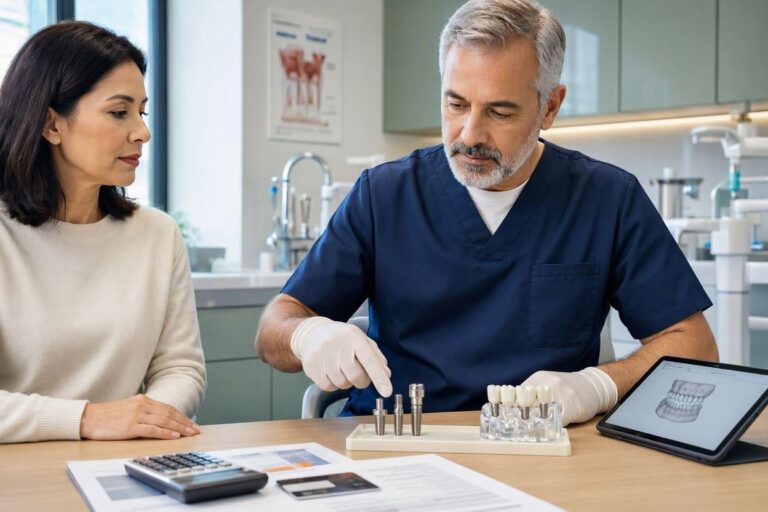
A safe, high-quality single dental implant in a reputable, internationally accredited Mexican clinic will cost between $900 and $1,800 USD. This is an all-inclusive figure for the complete process. This price ranges from the placement of the implant fixture to the delivery of the final crown. It represents a saving of 60% to 75% compared to the average $4,000 to $6,000 fee in the United States. This price point assumes a standard case with no bone grafting. The range reflects the implant brand and the crown material. A package at $900 to $1,200 will typically use a high-quality, globally respected value brand like Osstem, MIS, or Dentium, with a porcelain-fused-to-metal (PFM) crown. A premium package at $1,400 to $1,800 will specify a premium brand like Straumann, Nobel Biocare, or Zimmer Biomet, with a highly aesthetic full zirconia crown.
Critical Warning: You will see advertising for implants at $500 or $600. These prices are a warning sign. They are often a bait-and-switch tactic. You arrive and discover the price is for the fixture only, and the abutment, crown, and a series of fees for “surgical guides,” “sterilization kits,” and “special bone grafts” are added. Alternatively, the clinic uses a non-branded, counterfeit implant. A price below $900 for a complete package forces the clinic to compromise on something invisible but vital.
A Detailed Price Breakdown by Brand and Crown Material
A transparent Mexican clinic will itemize the quote. Understand these layers.
| Component | Economy Package (Value Brand + PFM) | Premium Package (Premium Brand + Zirconia) |
|---|---|---|
| Implant Fixture | Osstem, Dentium, MIS | Straumann, Nobel Biocare |
| Abutment | Stock Titanium | Custom Titanium or Zirconia |
| Crown Material | Porcelain-Fused-to-Metal (PFM) | Full Monolithic Zirconia |
| All-Inclusive Price Range | $900 – $1,200 USD | $1,400 – $1,800 USD |
| Ideal For | Molars, budget-conscious, functional | Front teeth, aesthetics-focused, long-term value |
The fee includes the initial consultation, a 3D CBCT scan, the surgical placement, the implant, a healing cap, the final abutment, the crown, and all follow-up visits for the case. Ask for this list in writing: “Does your all-inclusive quote include the CBCT, the final crown, and all follow-up visits for one year?”
The Major Destinations: A City-by-City Price and Experience Map
Mexico’s dental tourism is not one uniform market. Different cities have distinct personalities, price points, and travel experiences.
Los Algodones: The Capital of Dental Tourism
This small border town near Yuma, Arizona, is famously called “Molar City.” It has the highest concentration of dental clinics per square block anywhere in the world. The entire economy is built on catering to American and Canadian dental patients. The competition is ferocious, which drives prices to the lowest point in Mexico. An all-inclusive single implant ranges from $900 to $1,400 USD. The town is safe and walkable during the day, with clinics clustered within a few blocks of the border crossing. You park in Yuma, walk across, and have your appointment. The speed and efficiency are unmatched. The disadvantage is the sheer volume. Some clinics operate on a high-turnover model. You must vet your clinic carefully to find one that offers truly personalized, unrushed care.
Tijuana: Modern and Sophisticated
Tijuana is the closest major Mexican city to the California border, serving patients from San Diego, Los Angeles, and beyond. The Zona Rio medical district is filled with gleaming, modern, multi-specialty dental centers. The implant price range is slightly higher than Los Algodones, averaging $1,200 to $1,800 USD. The advantage is access to a higher concentration of specialists—board-certified oral surgeons and prosthodontists—who work with the most advanced digital workflow, including in-house CBCT and CAD/CAM same-day crown milling. Tijuana is the choice for complex full-arch All-on-4 cases. You can fly into San Diego, take a pre-arranged medical transport across the border, and stay in a comfortable hotel overnight.
Cancun and Playa del Carmen: The Destination Experience
For patients who want to combine a beach vacation with a major dental reconstruction, Cancun is the market leader. The prices are the highest in Mexico, still a bargain at $1,400 to $2,000 USD for a premium single implant package. The clinics here are built for the international patient who expects a five-star experience, English-speaking concierges, and resort-like recovery. This is an excellent option for a patient with a large treatment plan who wants to recover while looking at the Caribbean Sea.
Guadalajara and Mexico City: The Inland Metropolises
These are enormous, sophisticated cities with top-tier university dental programs. The dental tourism infrastructure is less slick than in border towns, but the quality of specialist care can be even higher. Prices are moderate, similar to Tijuana. This option is best for the independent traveler who is comfortable navigating a large, non-tourist-centric city, or for expatriates living in these regions.
The Full-Arch Implant Cost: All-on-4 in Mexico
The most dramatic savings are realized with full-mouth reconstructions. A full-arch, screw-retained fixed bridge on four to six implants, known commonly as All-on-4, costs $20,000 to $30,000 USD per arch in the United States. In Mexico, the same procedure, using premium implants and a high-quality, milled acrylic or zirconia final bridge, ranges from $8,000 to $14,000 USD per arch. This is a life-changing saving. The procedure is typically completed in a single, 5-to-7-day trip for the surgery and delivery of a fixed, temporary set of teeth. You return four to six months later for a second, shorter trip to receive the final, durable prosthesis. The fee includes all the surgery, the implants, the temporary bridge, and the final bridge. This is the procedure that has made Mexico the definitive global destination for dental implant tourism.
Safety Protocols and Accreditation: The Non-Negotiables
A low price without verified safety is a liability. A safe Mexican clinic exhibits the following characteristics:
- 3D CBCT Scanner: The clinic must have an in-house cone beam CT scanner. This is non-negotiable. Blind implant surgery with only a 2D X-ray is dangerous.
- Verified Implant Brands: The clinic must proudly display and name the implant brands they use. Ask to see the sterile package with the manufacturer’s label before surgery.
- Vacuum Autoclave Sterilization: The instruments must be sterilized in a medical-grade vacuum autoclave, and the pouches should have indicator strips showing a completed cycle. A reputable clinic will give you a tour of their sterilization room without hesitation.
- English Fluency: The dentist and the patient coordinator must speak fluent, medical-level English. Communication is safety.
- Independent Reviews: A substantial, positive, and verifiable online presence on platforms like Google, Dental Departures, or WhatClinic, with patient photos and detailed reviews over several years.
The Two-Trip Protocol and Follow-Up Guarantee
A standard implant requires two trips. The first trip is for the surgery. The implant is placed and left to heal under the gum for four to six months. The second trip is for the impressions and delivery of the final crown. A legitimate clinic provides a written, international warranty. They specify that if the implant fails within a certain period, the replacement implant and surgery are provided at no cost, and they will coordinate with a local dentist in your home country for basic follow-up or cover the cost of your return flight if necessary. You must discuss and receive this guarantee in writing before you commit.
The Danger of the “Too Good to Be True” Deal
A Mexican clinic advertising a $600 all-inclusive implant is cutting corners in one of three ways. They are using a counterfeit or unbranded implant with no traceable quality control. They are skipping the CBCT scan and placing the implant using guesswork. Or they are baiting you with a low price that only covers the fixture, with the abutment and crown added as hidden, non-negotiable extras once you are in the chair. A quality implant restoration requires a skilled surgeon, a branded implant, and a high-end dental lab. The combined hard costs of these items, even in Mexico, exceed $600. Do not be the patient who pays twice—once for the cheap implant, and again for the surgical removal and bone reconstruction of a catastrophic failure.
Conclusion
A safe, complete single dental implant in a reputable Mexican clinic costs between $900 and $1,800 USD, representing a 60-75% saving compared to U.S. prices, with the final fee determined by the implant brand tier and the crown material. Major hubs like Los Algodones offer the most competitive prices through high-volume competition, while Tijuana and Cancun provide sophisticated, specialist-driven care with full digital workflows. The key to a successful outcome is verifying the implant brand directly, insisting on a 3D CBCT scan, and securing a written international warranty for your treatment.
Frequently Asked Questions
Is it safe to travel to Mexico for a dental implant right now?
Yes, the dental tourism corridors—Los Algodones, Tijuana’s Zona Rio, Cancun’s Hotel Zone—are safe, well-traveled, and economically vital. Thousands of patients cross the border weekly for dental care. Use a clinic that arranges direct transportation from the airport or border and stay in recommended hotels.
What if I have a problem with my implant after I come home?
A reputable Mexican clinic will provide a warranty and a protocol. This typically involves the clinic paying for an X-ray and an examination by a local dentist they have vetted in your home network, or covering the cost of your return flight for them to manage the complication directly. Get this protocol in writing as part of your treatment plan.
How long do I need to stay in Mexico for a single implant?
For the surgical trip, plan for 3 to 4 days. Day one is the consultation, CBCT, and surgery. Day two is a follow-up check. You can fly home on day three. The second trip, four to six months later, is for 4 to 5 days to allow for impressions and the delivery of the final crown.
Can I really get a premium brand like Straumann in Mexico?
Yes, absolutely. Reputable Mexican clinics are authorized distributors for the same premium Swiss and Swedish implant brands used in the U.S. The implant is the identical, sterile-packaged device. Ask to see the packaging. The savings come from the lower surgical and laboratory fees, not a cheaper version of the implant.
Additional Resource:
For verified clinic listings and patient reviews, explore the dental tourism platform Dental Departures at www.dentaldepartures.com, which focuses specifically on transparent pricing and quality verification in Mexico.
Disclaimer: The prices in this article are approximate ranges for the Mexican dental tourism market and are subject to change. This is an educational guide and does not replace a personal clinical examination and consultation with a licensed dental professional.