How To Tighten The Screw On A Dental Implant?
Dental implants are designed to be durable and long-lasting, but like any mechanical system, they can occasionally require maintenance. One issue that may arise is a loose screw connecting the implant components. While this can feel concerning, understanding how implant screws work and what to do when one becomes loose helps you address the problem effectively.
This guide explains the anatomy of dental implant screws, why they become loose, and the proper steps to tighten them. You will learn when you can manage the issue at home and when professional intervention is necessary.
Understanding Dental Implant Components
Before discussing how to tighten screws, it helps to understand the different parts of a dental implant.
The Three Main Components
A dental implant consists of three primary parts:
1. Implant Post:
The titanium screw surgically placed in the jawbone. This serves as the artificial tooth root and fuses with the bone through osseointegration.
2. Abutment:
The connector piece attached to the implant post. It protrudes above the gum line and supports the crown.
3. Crown:
The visible artificial tooth attached to the abutment. This is the part you see and use for chewing.
The Screws Involved
Two different screws are involved in most implant systems:
Abutment Screw:
This screw connects the abutment to the implant post. It is located below the gum line and requires professional access.
Prosthetic Screw:
This screw connects the crown to the abutment. In some systems, it is accessible through a small opening in the crown.
Why Do Dental Implant Screws Become Loose?
Several factors contribute to screw loosening.
Normal Wear and Tear
Over time, the forces of chewing can gradually loosen screws. This is more common in single-tooth implants than in bridges or dentures.
Bruxism (Teeth Grinding)
Patients who grind or clench their teeth place excessive force on implants, increasing the risk of screw loosening.
Improper Torque
If the screw was not tightened to the correct torque during placement, it may loosen prematurely.
Component Misfit
If the crown, abutment, and implant are not perfectly aligned, stress concentrates on the screw, causing loosening.
Cement Failure
In cement-retained crowns, the cement may fail, making the crown feel loose even though the screw is intact.
Signs of a Loose Dental Implant Screw
Recognizing the signs helps you address the problem early.
Common Symptoms
- Feeling of movement in the implant
- Clicking or shifting when chewing
- Slight mobility of the crown
- Food trapping around the crown
- Discomfort or tenderness
- A change in bite alignment
Important Note: A loose implant post (the part in the bone) is a serious problem requiring immediate attention. A loose crown or abutment screw is less urgent but should still be addressed promptly.
Can You Tighten a Dental Implant Screw Yourself?
The short answer is no. You should never attempt to tighten a dental implant screw yourself.
Why DIY Tightening Is Dangerous
Risk of Damage:
Using household tools can damage the screw, abutment, or crown. The screw has a specific torque requirement that only a dentist can apply correctly.
Risk of Infection:
Accessing the screw requires sterile conditions. Doing this at home introduces bacteria and risks infection.
Risk of Further Loosening:
Improper tightening can worsen the problem, leading to complete failure of the restoration.
Risk of Swallowing Components:
Small components can be accidentally swallowed or aspirated if handled improperly.
What You Can Do at Home
While you cannot tighten the screw yourself, you can take steps to manage the situation:
- Avoid chewing on the affected side
- Keep the area clean with gentle brushing
- Rinse with warm salt water
- Schedule a dental appointment promptly
- Avoid sticky or hard foods
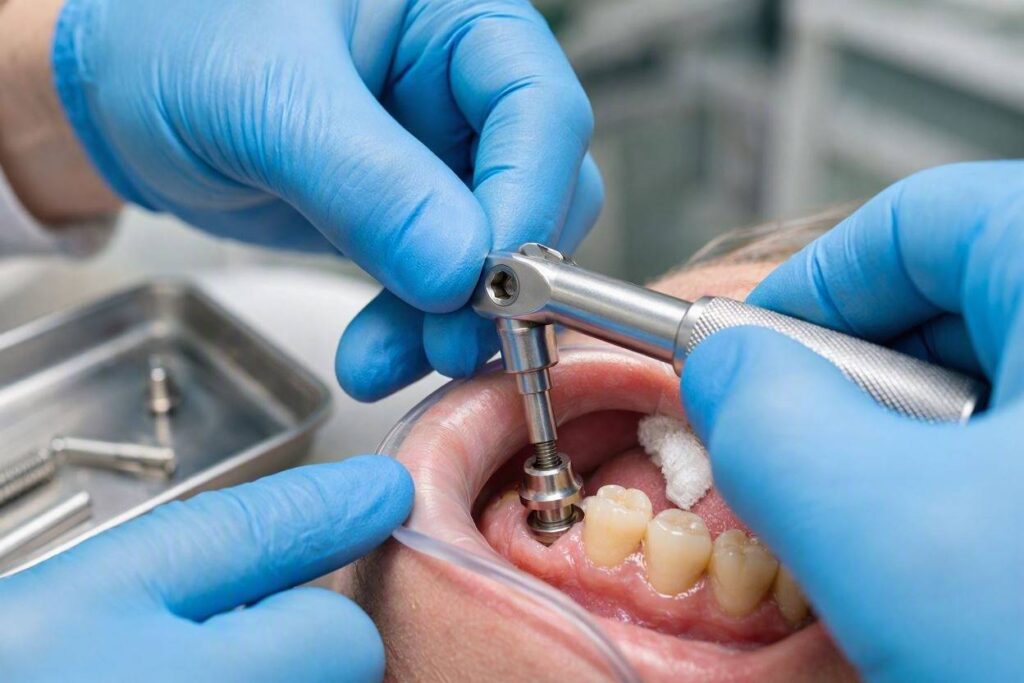
Professional Screw Tightening Procedure
Here is what happens when you visit your dentist for a loose implant screw.
Step 1: Examination
The dentist examines the implant and takes X-rays to assess the situation.
What the Dentist Checks:
- Which component is loose
- The condition of the screw
- The integrity of the implant
- Signs of infection or bone loss
Step 2: Accessing the Screw
The dentist gains access to the screw.
For Screw-Retained Crowns:
- A small opening in the crown is located
- The filling material covering the screw is removed
- The screw is exposed
For Cement-Retained Crowns:
- The crown may need to be removed
- This may damage the crown, requiring replacement
- The abutment screw is then accessed
Step 3: Removing the Screw
The dentist removes the loose screw for inspection.
What the Dentist Looks For:
- Damage to the screw threads
- Wear or corrosion
- Debris in the screw channel
Step 4: Cleaning and Inspection
The components are cleaned and inspected.
The Dentist Checks:
- The implant post for damage
- The abutment for fit
- The crown for wear
- The screw channel for debris
Step 5: Re-tightening or Replacement
The screw is either re-tightened or replaced.
Re-tightening:
- The screw is placed back and tightened to the correct torque
- A torque wrench ensures proper tightness
Replacement:
- If the screw is damaged, a new one is used
- The new screw is tightened to specification
Step 6: Sealing the Access Hole
The access hole is sealed with filling material to protect the screw.
Step 7: Bite Check
The dentist checks your bite to ensure proper alignment.
The Cost of Tightening a Dental Implant Screw
The cost varies based on the complexity of the problem.
Average Costs
| Service | Average Cost |
|---|---|
| Examination and X-Ray | $50 – $200 |
| Simple Screw Re-tightening | $50 – $200 |
| Screw Replacement | $100 – $400 |
| Crown Replacement (if damaged) | $1,000 – $3,000 |
| Abutment Replacement | $300 – $800 |
Insurance Coverage
- Dental insurance may cover the examination and X-ray
- Screw tightening may be covered under basic services
- Crown replacement falls under major services
- Check your specific policy
Preventing Loose Implant Screws
Taking preventive measures reduces the risk of screw loosening.
1. Address Bruxism
If you grind your teeth, talk to your dentist about a night guard.
Cost of Night Guard: $300 – $800
2. Regular Dental Checkups
Professional examinations detect loose screws before they cause problems.
Frequency: Every 6 months
3. Avoid Hard Foods
Chewing ice, hard candy, or other hard objects places excessive force on implants.
4. Maintain Good Oral Hygiene
Healthy gums support the implant and reduce the risk of complications.
5. Report Problems Early
If you notice any movement or discomfort, contact your dentist immediately.
When to Seek Emergency Care
Some situations require urgent attention.
Emergency Signs
- The entire implant post is loose or moving
- Severe pain
- Swelling or pus
- The implant falls out
- Bleeding that does not stop
Important Note: A loose implant post indicates failure of osseointegration and requires immediate professional intervention.
Loose Screw vs. Failed Implant
Understanding the difference helps you respond appropriately.
Loose Screw
- The crown or abutment feels loose
- The implant post remains stable in the bone
- Usually repairable with simple tightening
- No bone loss
Failed Implant
- The entire implant moves
- Pain and inflammation present
- Bone loss visible on X-ray
- May require removal and replacement
The Importance of Professional Care
Dental implants are precision devices. Proper maintenance requires professional expertise.
Why Professional Care Matters
- Correct torque specifications
- Sterile conditions
- Proper diagnostic tools
- Prevention of further damage
- Identification of underlying issues
Conclusion
While a loose dental implant screw can be concerning, it is usually a repairable problem. You should never attempt to tighten the screw yourself, as this risks damage and infection. Instead, schedule a dental appointment promptly. Your dentist will access the screw, inspect the components, and re-tighten or replace the screw to the correct specification. Preventive measures like addressing bruxism and regular checkups reduce the risk of future loosening.
Frequently Asked Questions (FAQ)
Q: Can I tighten a dental implant screw at home?
A: No, you should never attempt to tighten a dental implant screw yourself. This requires professional tools and sterile conditions.
Q: How much does it cost to tighten a dental implant screw?
A: Simple re-tightening costs $50 to $200. Screw replacement costs $100 to $400.
Q: What causes dental implant screws to loosen?
A: Normal wear, teeth grinding, improper torque, component misfit, and cement failure can cause loosening.
Q: Is a loose implant screw an emergency?
A: A loose crown or abutment screw is not an emergency but should be addressed promptly. A loose implant post is more serious.
Q: How long does screw tightening take?
A: The procedure typically takes 15 to 30 minutes if no complications are present.
Q: Can a loose implant screw cause implant failure?
A: If left untreated, a loose screw can lead to complications, but prompt treatment usually resolves the issue without implant failure.
Additional Resource
For more information on dental implant maintenance, visit the American Academy of Implant Dentistry (AAID) at www.aaid.com. They provide educational resources for patients with dental implants.