Me Before And After My Dental Implants?
The title reflects a deeply personal and common inquiry. Patients want to know what life looks like before and after dental implant treatment. They seek to understand the transformation not just in their mouths but in their daily experiences, confidence, and quality of life. This article provides a realistic, patient-centered exploration of the before-and-after journey of dental implant treatment, covering the physical, functional, emotional, and social dimensions of the experience.
Life Before Dental Implants
Understanding the starting point illuminates the magnitude of the transformation.
The Daily Reality of Missing Teeth
Living with missing teeth affects virtually every aspect of daily life. Eating becomes a conscious negotiation rather than a natural pleasure. Patients with missing anterior teeth may avoid smiling, covering their mouths when they laugh. Those with missing posterior teeth chew on one side, overloading remaining teeth and limiting food choices.
The physical sensations of tooth loss include the strange smoothness of gum where a tooth once was, the slight movement of adjacent teeth shifting into the space, and the gradual change in bite as the opposing tooth begins to drift. Bone resorption proceeds silently, unseen but relentless, altering facial contours over years.
The Functional Limitations
Chewing efficiency diminishes with each lost tooth. Tough meats, crunchy vegetables, and chewy breads become challenges. Some patients adapt their diets unconsciously, choosing softer foods, cutting everything into small pieces, avoiding social eating situations. Nutrition may suffer as food choices narrow.
Speech changes with anterior tooth loss. Certain sounds, particularly those requiring tongue contact with the front teeth, become difficult. The “th” sound, “s” sounds, and “f” sounds may whistle or slur. Patients may subconsciously alter their speech patterns to compensate, speaking less in group settings.
The Emotional and Social Impact
The psychological burden of tooth loss is substantial. Patients report feeling older than their chronological age. They avoid photographs. They hesitate in social and professional situations where their missing teeth might be visible. Some withdraw from relationships or career opportunities. The smile, which should be a tool of connection and expression, becomes a source of anxiety and shame.
The Health Consequences
Beyond the visible and functional effects, missing teeth trigger a cascade of oral health deterioration. Adjacent teeth drift and tip into the empty space. The opposing tooth supra-erupts. The altered occlusion creates abnormal forces on remaining teeth. Plaque accumulates more readily around tilted teeth, increasing decay and periodontal disease risk. Bone resorption in the edentulous area accelerates, compromising the foundation for future treatment.
The Implant Treatment Journey
The transformation from before to after occurs through a defined treatment process.
The Decision Phase
The decision to pursue implants often follows years of living with missing teeth or struggling with failing dentition. Patients reach a tipping point where the functional limitations and emotional burden outweigh the financial cost and treatment commitment.
The decision phase involves research, consultations, and financial planning. Patients learn about the procedure, the timeline, and the investment required. They confront fears about surgery and pain. They make arrangements for time off work and payment. This phase requires courage and commitment.
The Surgical Phase
Implant surgery represents the physical turning point. The procedure itself, performed under local anesthesia, is not painful. The post-operative period brings swelling, discomfort, and dietary restrictions. For many patients, this discomfort is bearable because it carries the promise of restoration. Each day of healing brings them closer to the after.
The osseointegration period tests patience. Months pass with healing abutments in place but no visible teeth. Patients wear temporary prostheses, which may be unstable or aesthetically compromised. This waiting period can be psychologically challenging, but it is biologically necessary.
The Restorative Phase
When the final crown, bridge, or prosthesis is delivered, the transformation becomes tangible. The restoration is placed, adjusted, and secured. For the first time in perhaps years, the patient sees a complete smile. The sensation of a stable, functional tooth where there was none is both strange and wonderful.
The Adaptation Phase
Adapting to the new restoration takes time. The brain must remap the oral environment. Chewing patterns adjust. Speech normalizes. The initial hyper-awareness of the restoration fades as it integrates into the patient’s body image. This adaptation occurs over weeks to months.
Life After Dental Implants
The after picture encompasses more than photographs.
Restored Function
Patients describe the joy of eating without restriction. The simple pleasure of biting into an apple, chewing a steak, or enjoying a crusty bread roll returns. Chewing efficiency approaches that of natural dentition. Nutrition improves as food choices expand. The unconscious negotiation around eating disappears.
Speech Normalization
Speech clarity returns. Patients no longer avoid words containing difficult sounds. They speak confidently in professional settings, social gatherings, and intimate conversations. The self-consciousness about speech evaporates.
Aesthetic Transformation
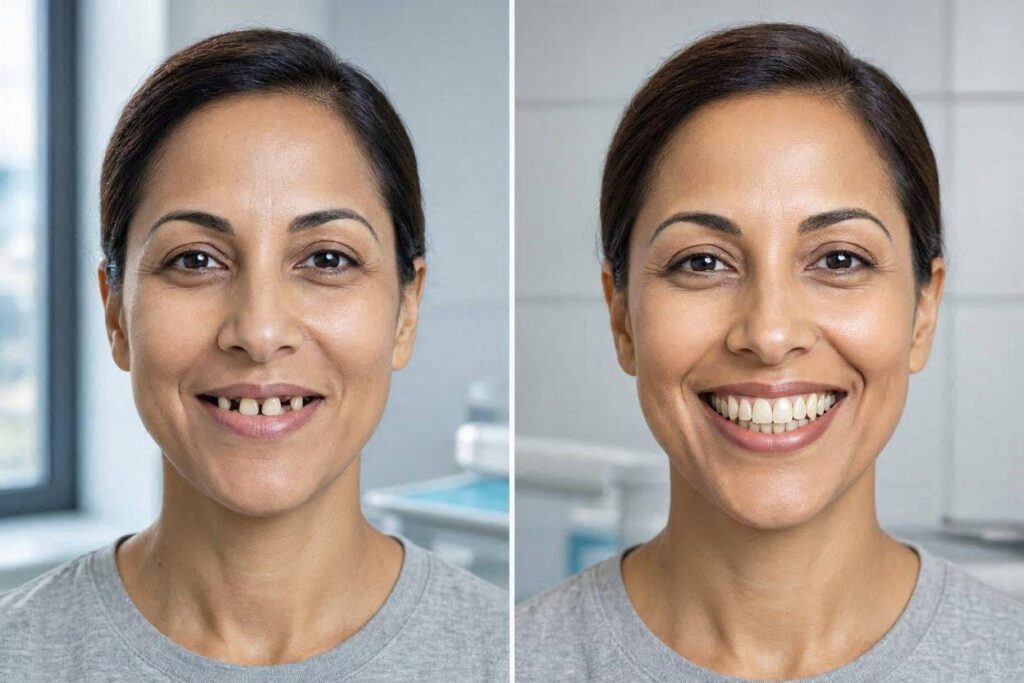
The visible result of implant treatment is a complete, natural-looking smile. The restoration matches adjacent teeth. The gum tissue appears healthy and natural. The face regains support lost to bone resorption. Patients look in the mirror and see themselves as they remember looking before tooth loss.
Psychological and Emotional Changes
The psychological impact of implant treatment often exceeds the functional improvement. Patients report renewed confidence. They smile spontaneously in photographs. They engage more openly in social and professional situations. The background anxiety about their teeth disappears. They feel younger, more attractive, more capable.
These changes ripple through relationships and careers. A patient who smiled freely at a job interview, who spoke confidently in a presentation, who laughed without self-consciousness at a social event experiences opportunities that the version of themselves with missing teeth might have missed.
Bone Preservation and Long-Term Health
In the after phase, the implant continues working. Functional loading preserves bone. The implant remains stable. Regular maintenance visits monitor health. The cascade of dental deterioration triggered by tooth loss is halted.
Real Patient Perspectives
The before-and-after experience is best understood through the words of those who have lived it.
Before treatment, patients often describe a sense of loss. “I felt like I was falling apart.” “I stopped smiling in pictures years ago.” “I couldn’t eat in front of people anymore.” These statements reflect the profound impact of tooth loss on identity and quality of life.
After treatment, the language shifts dramatically. “I got my life back.” “I can eat anything I want.” “I smile all the time now.” “I wish I had done it years ago.” The consistency of these sentiments across patients underscores the transformative nature of implant treatment.
Realistic Expectations
While the before-and-after transformation is often dramatic, realistic expectations are essential.
The Limitations
Implants are not natural teeth. They lack the periodontal ligament’s sensory feedback. The crown may not perfectly match adjacent natural teeth, particularly if those teeth have intrinsic staining or unusual characteristics. Peri-implant tissues require lifelong maintenance. Complications, while uncommon, can occur.
The Maintenance Commitment
The after phase is not maintenance-free. Daily home care, professional maintenance visits, and vigilance for signs of problems are lifelong commitments. The implant’s survival depends on the patient’s ongoing care.
The Time Perspective
The full transformation unfolds over months, not days. Patients must approach treatment with patience and trust in the process. The temporary phases, while challenging, are temporary. The final result justifies the wait.
Conclusion
Before dental implants, patients live with the functional, aesthetic, and psychological burdens of missing teeth. Eating, speaking, smiling, and socializing are compromised. After successful implant treatment, function is restored, aesthetics are renewed, and the psychological weight of tooth loss lifts. The transformation extends beyond the mouth to affect confidence, relationships, and quality of life. While the treatment journey requires time, patience, and investment, patients consistently describe the after as worth the effort, with many expressing only the regret of not pursuing treatment sooner.
Frequently Asked Questions
How soon after implant surgery will I see the final result?
The timeline varies from three to nine months depending on healing and restorative requirements. Immediate provisional restorations provide temporary aesthetics during healing.
Will my implant teeth look exactly like my natural teeth?
Well-executed implant restorations are virtually indistinguishable from natural teeth. The crown is custom-matched to your adjacent teeth in color, shape, and translucency.
Will I be able to eat normally after implants?
Yes. Chewing efficiency approaches that of natural teeth. Most patients return to an unrestricted diet after the final restoration is placed.
Will people notice I have dental implants?
When treatment is performed well, the restoration blends seamlessly with your natural dentition. People notice that you look better, that you smile more, but they rarely identify the specific reason.
Additional Resource
For patient stories and information on the implant treatment experience, visit the American Academy of Implant Dentistry at www.aaid.com. The AAID provides patient education materials and resources for finding qualified providers.