Pediatric Dentistry Office: A Complete Guide to Specialized Care for Children
A pediatric dentistry office is more than a dental practice. It is a specialized environment designed for growing smiles. It is a place where infants, children, and teenagers receive care tailored to their unique needs. It is a place where parents find guidance and reassurance.
Pediatric dentists complete additional training beyond dental school. They study child development, behavior management, and the treatment of special needs patients. This expertise allows them to handle the challenges that come with treating children.
This guide explores the pediatric dentistry office in depth. We will cover the specialty, the services offered, the design of the space, and the team that makes it all work.
What Is a Pediatric Dentistry Office?
A pediatric dentistry office is a dental practice that focuses exclusively on children. From the first tooth to the teenage years, pediatric dentists provide comprehensive care for growing mouths.
The Specialty Defined
Pediatric dentists are sometimes called “pedodontists.” They complete two to three years of additional training after dental school. This residency focuses on:
- Child psychology and behavior management
- Growth and development of the teeth and jaws
- Treatment of special needs patients
- Sedation dentistry for children
- Emergency care for dental injuries
“Treating children is not just about fixing teeth. It is about building trust. A child who has a positive first experience will become an adult who values dental care. That is the goal.” — Dr. Sarah Patel, Pediatric Dentist
The Age Range
Pediatric dentistry offices treat patients from infancy through the teenage years. Some offices continue to see patients until age 18 or until they graduate from high school.
- Infants: First tooth emergence, feeding habits, teething.
- Toddlers: First dental visit, fluoride varnish, cavity prevention.
- School-age children: Sealants, orthodontic evaluations, cavity treatment.
- Teenagers: Wisdom teeth evaluation, orthodontics, cosmetic concerns.
Services Offered in a Pediatric Dentistry Office
A pediatric dentistry office offers a wide range of services. These go beyond routine cleanings.
Preventive Care
Prevention is the foundation of pediatric dentistry.
- Cleanings: Removing plaque and tartar.
- Fluoride treatments: Strengthening enamel.
- Sealants: Coating molars to prevent cavities.
- Oral hygiene education: Teaching children and parents how to brush and floss.
Restorative Care
When cavities occur, pediatric dentists restore teeth.
- Fillings: Tooth-colored composite fillings.
- Crowns: Stainless steel or porcelain crowns for damaged teeth.
- Pulpotomy: Removing infected pulp from baby teeth.
Orthodontic Evaluation
Pediatric dentists monitor jaw growth and tooth alignment. They refer patients to orthodontists when needed.
Habit Counseling
Thumb sucking, pacifier use, and tongue thrusting can affect tooth development. Pediatric dentists offer guidance to break these habits.
Emergency Care
Children are active. Accidents happen. Pediatric dentists handle:
- Knocked-out teeth
- Chipped or broken teeth
- Severe toothaches
- Facial swelling
Special Needs Care
Pediatric dentists receive training in treating children with special needs. These include autism, Down syndrome, cerebral palsy, and other conditions. They adapt their approach to meet each child’s unique needs.
The Design of a Pediatric Dentistry Office
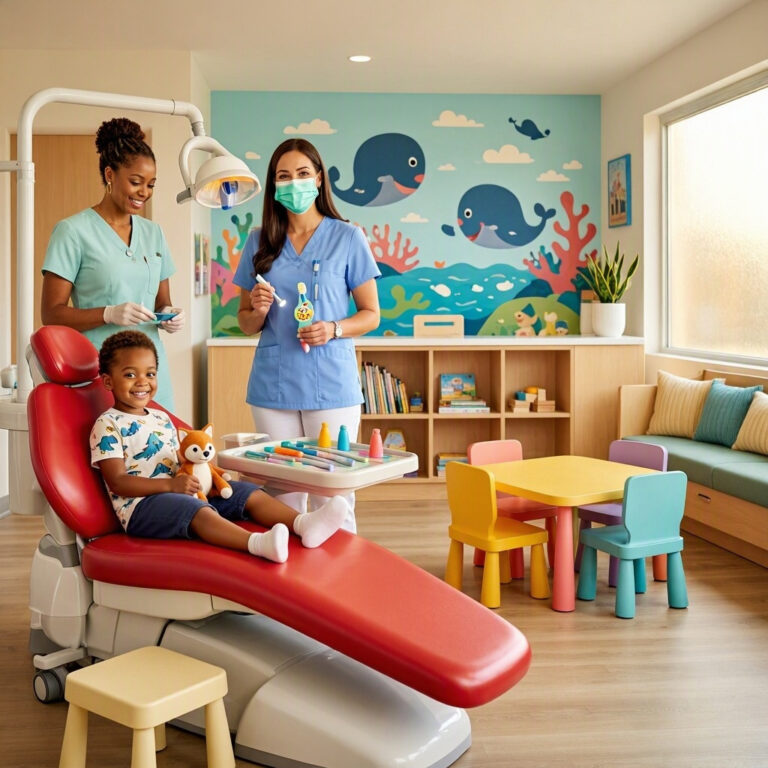
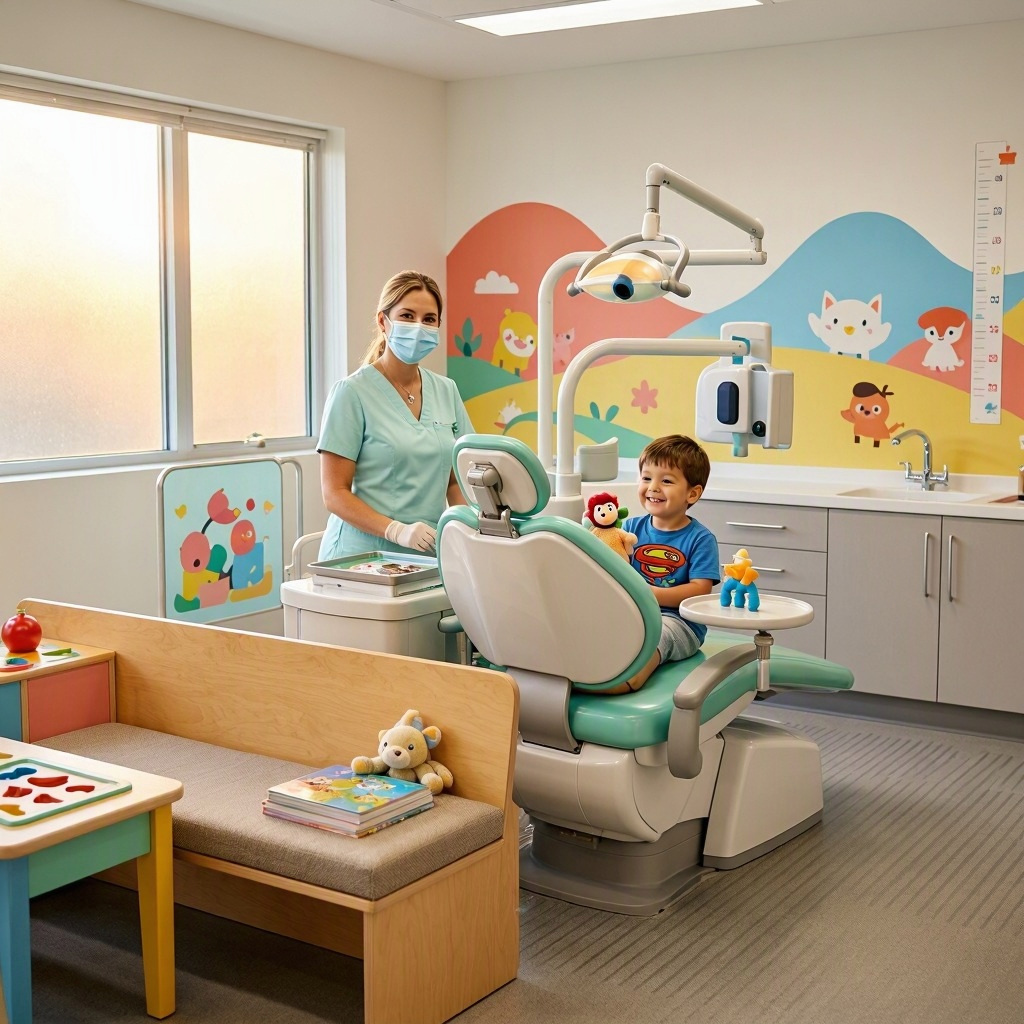
The physical space shapes behavior. A well-designed pediatric dentistry office reduces anxiety and improves cooperation.
The Waiting Room
- Play areas: Separate zones for toddlers and older children.
- Comfortable parent seating: With clear views of the play area.
- Interactive elements: Wall games, books, and puzzles.
- A quiet corner: For children who need calm before their appointment.
The Treatment Rooms
- Ceiling art: Stars, clouds, or cartoon characters above the chair.
- Colorful walls: One accent wall with a mural.
- Child-sized furniture: Smaller chairs and step stools.
- Distraction screens: Mounted on the ceiling or wall.
The Sterilization Area
Keep this separate from patient areas. Use closed cabinets. Ensure the area is not visible to children.
Comparative Table: Pediatric Dentistry Office vs. General Dental Office
| Feature | Pediatric Dentistry Office | General Dental Office |
|---|---|---|
| Patients | Infants, children, teens | Adults and teens |
| Training | 2–3 years additional residency | Standard dental degree |
| Environment | Playful, colorful, child-friendly | Professional, neutral |
| Furniture | Child-sized and adult-sized | Adult-sized |
| Behavior Management | Extensive training | Limited training |
| Special Needs Care | Specialized | May refer out |
| Sedation | Often offered | Sometimes offered |
| Parent Involvement | High (parents present) | Limited |
| Services | Preventive, restorative, orthodontic evaluation | Full range of adult dental care |
The Team in a Pediatric Dentistry Office
Your team is your greatest asset. Every member must love working with children.
The Pediatric Dentist
The pediatric dentist is the leader. They diagnose, treat, and supervise. They must have patience, creativity, and excellent communication skills.
The Dental Hygienist
Hygienists provide cleanings and preventive care. In a pediatric office, they must be gentle and engaging. They teach children how to brush and floss in a way that is fun and memorable.
The Dental Assistant
Assistants support the dentist during procedures. They prepare instruments, comfort patients, and manage the flow of the treatment room.
The Front Desk Coordinator
The front desk is the first point of contact. They schedule appointments, verify insurance, and greet families. They must be warm, organized, and patient.
The Office Manager
The office manager oversees operations, HR, inventory, and marketing. They keep the practice running smoothly.
Training and Behavior Management
Working with children requires special skills. Pediatric dentistry offices invest in training.
Child Psychology Basics
Staff learn to recognize fear and anxiety. They learn how to communicate with children at different developmental stages.
The Tell-Show-Do Technique
This is a cornerstone of pediatric dentistry.
- Tell: Explain what you will do in simple words.
- Show: Demonstrate the instrument or procedure.
- Do: Perform the procedure without surprise.
Positive Reinforcement
Praise goes a long way. “You are doing great!” “I love how still you are sitting.” Stickers and small rewards reinforce good behavior.
Distraction Techniques
- Toys: Offer a toy or stuffed animal.
- Music: Play calming music or the child’s favorite song.
- Videos: Show a cartoon on a ceiling-mounted screen.
- Counting: “Let’s count to ten while I clean this tooth.”
“The best pediatric dentists are part clinician, part entertainer. If you can make a child laugh, you can treat their teeth.” — Dr. Emily Torres, Pediatric Dentist
Important Notes for Readers
Note on First Visit: The American Academy of Pediatric Dentistry recommends a first visit by age one or within six months of the first tooth erupting.
Note on Parent Communication: Always get informed consent before treatment. Document all conversations. Keep parents informed at every step.
Note on Safety: Follow OSHA and CDC guidelines strictly. Sterilize instruments after every patient. Use disposable barriers where possible.
Note on Special Needs: For children with special needs, offer a pre-visit tour to reduce anxiety. Adapt the environment and communication style to meet their needs.
Note on Emergency Preparedness: Have a plan for medical emergencies. Train staff in CPR and first aid. Keep emergency equipment accessible.
Marketing a Pediatric Dentistry Office
You cannot rely on word-of-mouth alone. Modern pediatric practices need a clear marketing strategy.
Local SEO
Most parents search for “pediatric dentist near me.” Optimize your Google Business Profile. Add photos of your office. Respond to reviews. List your hours accurately.
Social Media
Parents use social media. Share photos of your team (with consent), dental tips for kids, and office updates. Keep the tone friendly and informative.
Community Engagement
Pediatric offices thrive on community connections. Sponsor local sports teams. Visit schools for dental health presentations. Host a “candy buy-back” event after Halloween.
Referral Programs
Happy parents are your best marketers. Offer a small thank-you gift for referrals. A $10 coffee card or a free toothbrush kit can bring in new patients.
Conclusion
A pediatric dentistry office is a specialized place. It serves children and their families. It requires a team that loves kids, an environment that reduces fear, and expertise in child development. When you invest in these areas, you create a practice that children remember fondly and parents recommend to friends.
Frequently Asked Questions (FAQ)
Q: What is the difference between a pediatric dentist and a general dentist?
A: Pediatric dentists complete 2–3 years of additional training focused on child development, behavior management, and special needs care.
Q: At what age should a child first see a pediatric dentist?
A: By age one or within six months of the first tooth erupting.
Q: Do pediatric dentists treat adults?
A: No. Pediatric dentists focus exclusively on infants, children, and teenagers.
Q: What services does a pediatric dentistry office offer?
A: Preventive care, restorative care, orthodontic evaluations, habit counseling, emergency care, and special needs care.
Q: How can I calm my child’s fear of the dentist?
A: Choose a pediatric dentist with a child-friendly office. Read books about dental visits. Schedule a pre-visit tour. Stay calm and positive.
Additional Resource:
For more guidance on pediatric dental care, visit the American Academy of Pediatric Dentistry website.