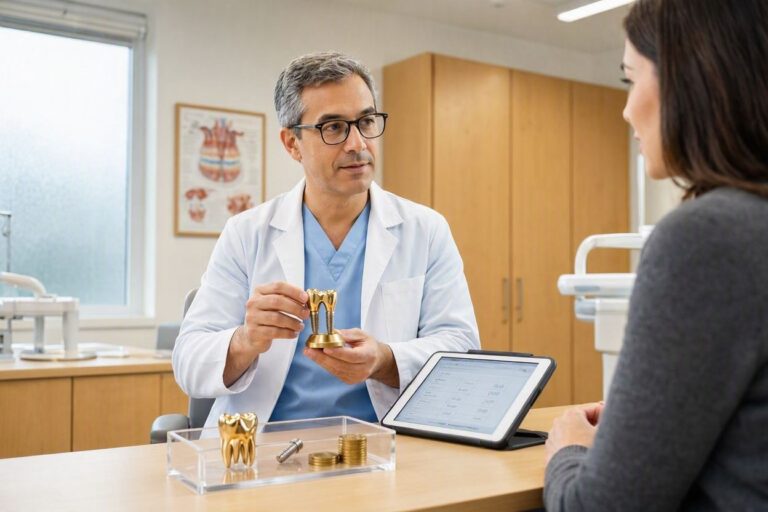
Permanent Dental Implants: What Are They?
You hear the term in advertisements, in dental tourism brochures, and in the enthusiastic testimonials of patients who have transformed their smiles. “Permanent dental implants.” The phrase conjures an image of teeth that are fixed, unshakeable, and everlasting—a one-time solution that ends the era of dental problems forever. The marketing language is powerful, but it blurs the line between clinical reality and aspirational promise. What exactly does “permanent” mean when applied to a medical device placed in the dynamic, ever-changing environment of the human mouth?
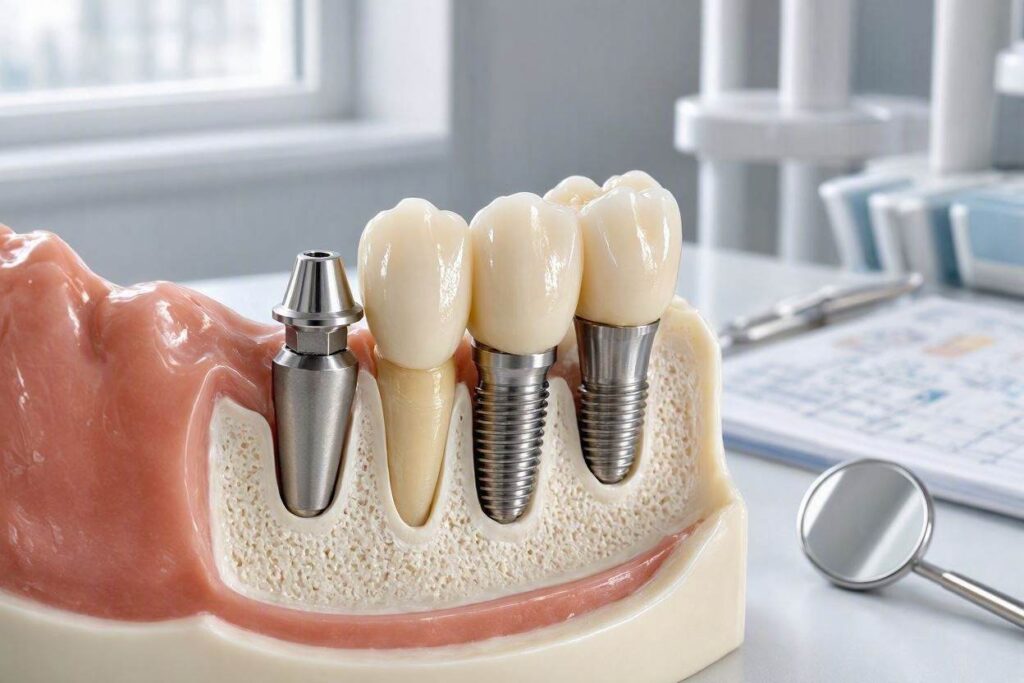
Permanent dental implants are titanium or ceramic posts surgically placed into the jawbone to serve as artificial tooth roots, onto which a fixed prosthesis—a crown, a bridge, or a full-arch restoration—is securely attached and not intended for removal by the patient. The “permanent” designation distinguishes them from removable implant overdentures, which the patient can and must take out for cleaning, and from traditional dentures, which rest on the gums. The permanence refers to the method of retention, not to an unconditional guarantee against failure, wear, or the need for future maintenance. The implant is fixed in the bone; the crown or bridge is fixed to the implant. You do not remove them. Your dentist removes them only when a mechanical or biological complication requires intervention.
This guide dissects the concept of permanent dental implants with clinical precision. We will explore the different types of fixed implant restorations, from single-tooth replacements to full-arch screw-retained bridges. We will explain the materials, the retention mechanisms, and the critical distinction between retrievability and permanence. We will also deliver the honest truth about longevity: permanent does not mean immortal. Every implant restoration has a service life, and understanding this reality is essential for informed consent and realistic expectations.
Defining the Spectrum: Fixed vs. Removable Implant Restorations
The implant itself—the threaded post in the bone—is always “permanent” in the sense that it is intended to osseointegrate and remain in the jaw indefinitely. The distinction between fixed and removable lies in the prosthesis that attaches to the implant. This prosthesis is what the patient experiences as their new teeth.
A fixed implant restoration is one that is screwed or cemented onto the implant abutments and is not designed to be removed by the patient. The patient brushes, flosses, and maintains the restoration exactly like natural teeth. Only a dentist can remove it, and usually only when a specific clinical need arises, such as a fractured crown, a loosened screw, or the need to treat peri-implantitis. Single crowns, implant-supported fixed bridges, and full-arch screw-retained bridges like All-on-4 are fixed restorations. This is what most people mean when they say “permanent dental implants.”
A removable implant restoration, commonly called an overdenture, is a prosthesis that snaps onto the implants for retention but is removed by the patient daily for cleaning. The most familiar example is a lower denture that clips onto two or four implants using locator attachments or a bar. The implants provide stability and retention that a conventional denture cannot achieve, preventing the embarrassing floating and clicking of unanchored dentures. The overdenture is removed at night, cleaned, and re-inserted in the morning. It is implant-retained but patient-removable.
The choice between fixed and removable is clinical, financial, and personal. Fixed restorations generally require more implants, cost more, and provide a more natural psychological experience. Removable overdentures require fewer implants, cost less, and facilitate easier hygiene access. The “permanent” solution is not always the superior solution. A patient with dexterity challenges, a history of poor oral hygiene, or a severely resorbed jaw that cannot accommodate enough implants for a fixed bridge may be better served by a removable overdenture that they can clean effectively outside the mouth.
The Single-Tooth Implant: The Paradigm of Permanence
The single-tooth implant is the purest expression of the permanent implant concept. One implant replaces one missing root. One custom abutment connects the implant to one custom crown. The restoration is either screw-retained or cemented onto the abutment. It occupies the exact space of the missing tooth, does not involve or damage adjacent teeth, and functions as an independent unit.
The patient treats the implant crown exactly like a natural tooth. Brushing, flossing, and regular dental checkups are all that is required. There is no need for special cleaning solutions, soaking overnight, or adhesive pastes. The psychological integration is profound. Many patients report forgetting which tooth is the implant, a testament to the success of the restoration in mimicking the natural dentition.
The permanence of a single-tooth implant is, however, contingent on the health of the surrounding tissues. The implant can still develop peri-implantitis. The crown can still fracture, particularly if it is ceramic and the patient has a heavy bite or bruxism. The screw retaining the abutment can loosen over time and require retightening. The implant is permanent in the sense that it is fixed and intended to last decades, but it is not maintenance-free. The patient must commit to lifelong professional maintenance, including annual examinations, radiographs to monitor bone levels, and professional cleaning with non-abrasive instruments designed for implant surfaces.
Full-Arch Fixed Restorations: All-on-4 and Beyond
The most dramatic transformation in implant dentistry is the conversion of a completely edentulous arch, or one with failing teeth, into a fixed, full-arch bridge supported by a strategic number of implants. The All-on-4 treatment concept, pioneered by Dr. Paulo Malo and now offered worldwide, has become the recognizable brand name for this approach, though many variations exist under different names: Teeth-in-a-Day, Full-Arch Fixed Hybrid, or implant-supported fixed complete denture.
The concept involves placing four or six implants in the jaw, often using the available bone in the anterior region and tilting the posterior implants to avoid the maxillary sinus or the inferior alveolar nerve. A prefabricated or custom-made provisional bridge is attached to the implants on the same day as surgery, providing the patient with a fixed set of teeth immediately. After a healing period of several months, during which the provisional bridge protects the implants and allows osseointegration, a definitive, high-strength bridge is fabricated and delivered.
The definitive full-arch bridge is typically fabricated from a metal framework, usually titanium or cobalt-chromium, with acrylic or porcelain teeth and gum-colored acrylic or composite resin to replace the lost soft tissue contours. Some high-end restorations are milled from a solid block of zirconia, offering superior strength, aesthetics, and stain resistance at a higher cost. The bridge is screwed directly into the implants, not cemented. The screw access holes are sealed with Teflon tape and composite resin, creating a smooth, cleansable surface. The patient cannot remove the bridge. It is cleaned with a toothbrush, a water flosser, and specialized floss that threads under the bridge.
The All-on-4 concept exemplifies the meaning and limits of permanent. The bridge is fixed. It restores near-normal chewing function, speech, and aesthetics. It eliminates the need for denture adhesives and the psychological burden of removable teeth. But it is not a biological tooth. It does not feel like natural teeth, lacking the periodontal ligament’s proprioceptive feedback. Food can become trapped under the bridge, requiring diligent hygiene. The prosthetic teeth can wear, chip, or debond from the framework over a decade or two of use. The bridge itself has a finite service life, typically 10 to 20 years, after which it must be replaced, even if the underlying implants remain healthy. Permanent means fixed, not eternal.
Screw-Retained vs. Cemented: The Retention Debate
The method by which the prosthesis attaches to the implant has significant implications for the permanence and retrievability of the restoration. This debate is central to the planning of any fixed implant restoration.
Screw-retained restorations use a small titanium screw that passes through an access hole in the crown or bridge and threads into the implant or abutment. The access hole is sealed after placement. The primary advantage is retrievability. If the crown fractures, the screw loosens, or the peri-implant tissues require treatment, the dentist can remove the restoration without damaging it, address the issue, and re-tighten or replace the restoration. Screw retention eliminates the risk of residual cement—a known cause of peri-implantitis when cement flows below the gum line and cannot be fully removed. The disadvantage is the screw access hole, which can be an aesthetic concern on anterior teeth and a potential weak point in the restoration’s structure.
Cemented restorations use dental cement to bond the crown or bridge to a custom abutment, exactly like a traditional crown on a natural tooth. The aesthetic result is superior because there is no screw access hole. The occlusion can be designed with greater freedom because the screw access does not dictate the crown morphology. The dark risk is retained cement. If excess cement extrudes below the gum line and is not meticulously removed, it becomes a foreign body nidus for bacterial colonization, triggering peri-implant inflammation and bone loss. Many implant surgeons and restorative dentists have moved decisively toward screw retention for this reason, reserving cemented restorations for specific aesthetic cases where the implant position makes screw access impossible on the visible surface.<div style=”border-left: 4px solid #0077b6; padding: 15px; margin: 25px 0; background-color: #f0f8ff;”> <p style=”font-weight: bold; margin-bottom: 5px;”>✍️ Clinical Terminology Clarification</p> <p style=”margin: 0;”>In implant dentistry, “fixed” and “permanent” are synonyms referring to patient-non-removable prostheses. “Removable” and “overdenture” refer to patient-removable prostheses. The term “semi-fixed” is occasionally used for overdentures but is imprecise and best avoided.</p> </div>
The Materials of Permanent Implant Restorations
The “permanent” prosthesis placed on dental implants is a complex, multi-material structure. Understanding the materials helps you understand the durability, maintenance requirements, and eventual replacement timeline of your restoration.
The implant fixture itself is almost always commercially pure titanium or a titanium-aluminum-vanadium alloy. These materials have the longest and most robust track record for osseointegration. Zirconia implants, as discussed in a previous article, are the ceramic alternative. The abutment is either titanium, zirconia, or a hybrid with a titanium base and a zirconia or metal superstructure.
The definitive prosthesis varies by the number of teeth replaced. A single crown is typically monolithic zirconia, layered zirconia, lithium disilicate, or porcelain-fused-to-metal. Monolithic zirconia is the dominant material for posterior single crowns due to its extreme strength and resistance to fracture under heavy chewing forces. Lithium disilicate offers superior aesthetics for anterior crowns, with translucency that closely mimics natural enamel.
A multi-unit bridge or full-arch restoration involves a substructure or framework and a veneering or overlay material. The framework is the rigid backbone that connects the implants and resists flexure. Titanium frameworks are milled from solid blocks and offer a proven track record. Cobalt-chromium frameworks are less expensive but heavier. The denture teeth and gum-colored acrylic are processed onto the framework. Over time, the acrylic teeth wear down, the acrylic base may discolor or delaminate, and the restoration loses its aesthetic quality and occlusal precision. This is the expected aging of the prosthesis, not a failure of the implants. A full-arch fixed bridge is a long-term but finite restoration.
The All-on-4 Maintenance and Replacement Cycle
The All-on-4 bridge requires a specific maintenance protocol that every prospective patient must understand. You are committing not only to the initial surgical and restorative investment but to a lifetime of professional maintenance.
You will visit your dentist or hygienist at least twice a year, and often quarterly, for implant maintenance. The hygienist will remove the bridge if it is screw-retained, or clean around it meticulously if it is not. The implant surfaces, the abutments, and the intaglio surface of the bridge—the part that contacts the gum—are cleaned of biofilm and calculus using specialized instruments. The screw torques are checked. The soft tissues are examined for inflammation, hyperplasia, or recession. Annual radiographs monitor the bone levels around the implants.
At some point, typically between 10 and 20 years after placement, the prosthesis will require replacement. The teeth will be worn, the acrylic will be degraded, and the fit may no longer be optimal due to slow, subtle changes in the arch form. Replacing the bridge is a significant expense, comparable to the cost of the original prosthesis, though the implants are already in place and do not require re-surgery. This replacement cost should be anticipated and budgeted for from the beginning. A “permanent” fixed bridge is more accurately understood as a long-term, renewable prosthesis supported by permanent implants.
The Limits of Permanence: Complications and Salvage
Every fixed implant restoration is subject to biological and mechanical complications. The honest clinician discusses these not to frighten the patient but to prepare them for the reality that permanent does not mean problem-free.
Biologic complications include peri-implant mucositis, the reversible inflammation of the soft tissue around the implant, and peri-implantitis, the progressive bone loss that threatens the implant’s survival. A patient with a full-arch fixed bridge and poor hygiene can develop peri-implantitis around one or more implants. If the disease progresses to the point where an implant is lost, the entire bridge may be compromised. A five-implant bridge that loses one implant may still be functional; a four-implant bridge that loses one implant usually requires revision surgery to place a new implant and fabricate a new bridge.
Mechanical complications include abutment screw loosening, abutment screw fracture, prosthetic tooth fracture, and framework fracture. Screw loosening is the most common mechanical complication. It manifests as a feeling of movement, a clicking sensation, or a change in the bite. The patient must see the dentist promptly for retightening. Ignoring a loose screw can lead to screw fracture, a far more difficult and costly repair, as the fractured screw fragment must be retrieved from deep within the implant body.
A framework fracture in a full-arch bridge is a catastrophic mechanical failure. The bridge breaks, often at the thinnest section, usually near the distal implant. The patient must have the bridge removed and replaced. Framework fractures are uncommon with modern titanium and zirconia frameworks but can occur in patients with heavy bite forces, bruxism, or poorly designed restorations. A night guard is essential for protecting the prosthetic investment in bruxers.
Conclusion
Permanent dental implants refer to fixed prostheses—crowns, bridges, or full-arch restorations—that are screwed or cemented onto osseointegrated implants and are not removable by the patient, distinguishing them from removable overdentures that snap on and off. The permanence is in the fixed retention, not in an unrealistic promise of eternal service life; all fixed implant restorations require meticulous hygiene, professional maintenance, and eventual prosthetic replacement after a decade or two of function. Understanding this distinction between the permanent implant fixture and the serviceable but finite prosthesis prepares you for a lifetime of successful, realistic implant ownership.
Frequently Asked Questions
Q: Can a permanent implant bridge be removed by the dentist?
A: Yes. Screw-retained bridges are designed to be retrievable. The dentist removes the sealing material, unscrews the retaining screws, and lifts the bridge off. This is a routine procedure for professional cleaning, repair, or implant assessment. Cemented bridges can also be removed but with more difficulty and a higher risk of damage to the restoration.
Q: What is the difference between All-on-4 and traditional implant bridges?
A: The All-on-4 concept is a specific treatment protocol using four implants, with the posterior two tilted to maximize bone contact and avoid anatomical structures, supporting a full-arch fixed bridge that is delivered on the day of surgery. A traditional implant-supported fixed bridge may use more implants, placed in a non-tilted configuration, and often involves a two-stage approach with a healing period before the bridge is attached. The All-on-4 concept is a specific, trademarked technique within the broader category of full-arch fixed implant restorations.
Q: How long do the implants themselves last?
A: Osseointegrated implants in healthy, compliant patients have survival rates exceeding 95% at 10 years and 90% at 20 years. Implants do not decay, but they can fail due to peri-implantitis, overload, or systemic health changes. The implants are the most durable component of the system. The prosthesis on top wears out faster than the implants.
Q: Is a permanent implant bridge better than a snap-on overdenture?
A: “Better” depends on your priorities. A fixed bridge feels more like natural teeth, provides superior chewing efficiency, and eliminates the psychological discomfort of removable teeth. A snap-on overdenture is less expensive, requires fewer implants, is easier to clean thoroughly, and is simpler to repair or replace. The right choice balances your anatomical capacity, financial resources, aesthetic expectations, and willingness to maintain the restoration.
Additional Resource:
For patient education on full-arch implant restorations, visit the American College of Prosthodontists: https://www.gotoapro.org/