Tooth Implant Crown: Your Complete Guide to a Natural, Permanent Smile
If you are missing a tooth, you have probably heard about dental implants. But most people get confused about one specific part: the crown. You might hear your dentist say, “The implant is placed, now we need the crown,” and wonder what the difference is.
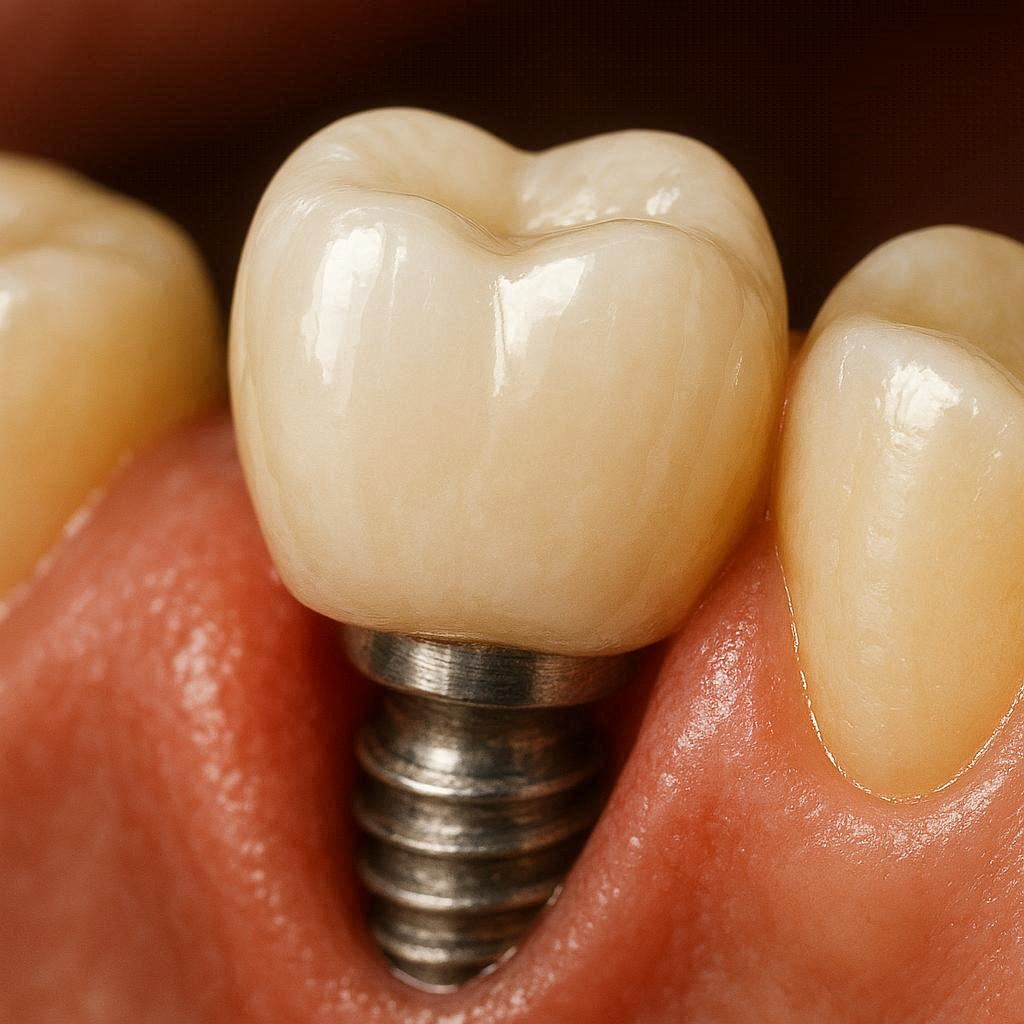
In simple terms, the tooth implant crown is the only part you actually see. It is the artificial tooth that sits on top of the implant. Think of the implant as a new root, hidden inside your jawbone. The crown is the visible, white shell that looks, feels, and chews like a real tooth.
This guide walks you through every detail. No confusing medical terms. Just honest, clear information to help you understand what to expect.
What Exactly is a Tooth Implant Crown?
A tooth implant crown is a prosthetic tooth made from durable materials like ceramic or porcelain. It is designed to match the color, shape, and size of your natural teeth.
Unlike a denture, which rests on your gums, or a bridge, which relies on neighboring teeth, an implant crown attaches directly to a metal post (the implant fixture) inside your jawbone.
The Three Parts of a Dental Implant System
To understand the crown, you need to see the full picture.
| Component | Location | Function |
|---|---|---|
| The Implant Fixture | Inside the jawbone | Acts as the artificial root. Made of titanium or zirconia. |
| The Abutment | Above the gum line | Connects the fixture to the crown. |
| The Implant Crown | Visible in the mouth | Restores chewing and aesthetics. |
Important Note: Many people use the term “dental implant” to mean the entire structure. But technically, the crown is the final piece. You cannot have a functional tooth without it.
Why You Might Need a Crown on an Implant
Dentists recommend a crown on an implant for several reasons. The most obvious is a missing tooth. But the reasons go deeper than just filling a gap.
Restoring Chewing Ability
When you lose a tooth, you lose about 10% of your chewing capacity. Over time, you adapt. But you might stop eating certain foods like apples, nuts, or steak. An implant crown restores nearly 100% of your original biting force.
Preventing Bone Loss
Here is a fact many people ignore. When a tooth is missing, the jawbone begins to melt away. Why? Because it no longer receives stimulation from chewing. A natural tooth root stimulates the bone. An implant fixture does the same. The crown allows that stimulation to transfer down to the bone.
Protecting Neighboring Teeth
With a traditional bridge, the dentist must shave down the two healthy teeth next to the gap. That is permanent damage. An implant crown stands alone. It does not touch or alter your healthy teeth.
Aesthetic and Psychological Benefits
A gap in your smile can affect your confidence. You might hide your mouth when laughing. A well-made implant crown looks so natural that no one will know it is not your real tooth.
Types of Implant Crowns: Material Choices
Not all crowns are the same. The material affects durability, appearance, and cost. Your dentist will help you choose, but here is what you need to know.
Porcelain-Fused-to-Metal (PFM)
This was the gold standard for decades. It has a metal inside and porcelain outside.
- Pros: Very strong. Resists chipping. Less expensive than all-ceramic options.
- Cons: Over time, the porcelain can wear, revealing a dark metal line near the gum. This looks unnatural.
- Best for: Molars where strength is critical and aesthetics are less important.
All-Ceramic or Lithium Disilicate (E-max)
Currently, this is the most popular choice for front teeth.
- Pros: Extremely natural look. No metal. The light passes through it just like a real tooth. Biocompatible.
- Cons: Slightly less strong than zirconia. Can fracture under extreme pressure.
- Best for: Front teeth and premolars.
Zirconia
Zirconia is a white, metal-free ceramic known for its incredible strength.
- Pros: Stronger than steel. Highly resistant to scratching and chipping. Does not cause allergic reactions. Looks very natural.
- Cons: More expensive. Can be too hard for opposing natural teeth (may cause wear on the opposite tooth).
- Best for: Any position, especially molars for heavy grinders.
Comparison Table: Choosing Your Crown Material
| Feature | PFM (Porcelain-Fused-to-Metal) | E-max (Lithium Disilicate) | Zirconia |
|---|---|---|---|
| Aesthetics | Good (but metal line possible) | Excellent (most natural) | Very Good (solid white) |
| Strength | High | Medium-High | Extremely High |
| Cost | $$ | $$$ | $$$$ |
| Metal-Free | No | Yes | Yes |
| Risk to opposing teeth | Low | Low | Moderate (very hard) |
The Step-by-Step Procedure: From Implant to Crown
Getting an implant crown is not a one-day visit. It is a process that takes patience. But the result is worth it.
Phase 1: The Surgical Placement (The Implant Fixture)
Your oral surgeon places the titanium screw into your jawbone. This happens under local anesthesia. You will feel pressure but not pain.
After placement, you enter a healing period called osseointegration. This is when the bone grows around the implant, locking it in place.
- Healing time: 3 to 6 months.
- During this time: You may have a temporary denture or nothing at all.
Phase 2: Abutment Placement
Once the implant is integrated, the dentist uncovers the implant and attaches the abutment. This is a small connector piece.
- Is it painful? Usually done with local anesthesia. Some discomfort after.
- Healing time: 2 to 4 weeks for the gums to heal around the abutment.
Phase 3: Taking Impressions for the Crown
This is where your new tooth is designed. The dentist takes a digital scan or a physical mold of your mouth.
They send this mold to a dental laboratory. A technician designs your crown to match the color, shape, and bite of your natural teeth.
- Waiting period: 2 to 4 weeks.
- Temporary crown: You will receive a plastic temporary crown to wear during this time.
Phase 4: Crown Placement (The Final Visit)
This is the exciting day. The dentist removes the temporary crown. They try in the permanent crown.
- Checking: They check the fit, the color, and your bite. Do you feel any high spots? Speak up now.
- Cementing: Once everything is perfect, they use permanent dental cement to bond the crown to the abutment.
That is it. You walk out with a brand new, functional tooth.
Immediate Implant Crowns: Is Same-Day Possible?
You have probably seen ads for “Teeth in a Day.” Is that real? Partially.
An immediate implant crown is possible only under specific conditions.
- Requirement 1: You must have excellent bone quality and quantity.
- Requirement 2: The implant must achieve very high stability (torque) at the moment of placement.
- Requirement 3: The temporary crown must not touch your bite (no chewing on it for months).
Even with an immediate crown, you will receive a permanent crown later. The immediate one is temporary. It is for aesthetics only, not function.
Important Note: Most patients are not candidates for immediate crowns. Rushing this process often leads to implant failure. Trust your dentist’s judgment.
Cost of a Tooth Implant Crown
Let’s talk about money. This is usually the biggest concern.
The crown itself is only one part of the total bill. Many people forget that the implant surgery and abutment are separate costs.
Average Price Breakdown (USA)
| Procedure | Average Cost (Without Insurance) |
|---|---|
| Implant Fixture (surgery) | 1,500−2,500 |
| Abutment | 300−500 |
| Implant Crown (the tooth) | 1,000−2,000 |
| Total for one tooth | 3,000−3,000−5,000 |
Factors That Change the Price
- Material: Zirconia costs more than PFM.
- Location: Dental care in big cities costs more.
- Laboratory: A master ceramist charges more for a natural look.
- Additional surgeries: Bone grafting or sinus lifts add 500to3,000.
Does Insurance Cover the Crown?
Most dental insurance plans cover a portion of the crown, typically 50%. However, they often have a waiting period (6 to 12 months) for major services. Some plans still exclude implants entirely, calling them “cosmetic.”
A tip: Always ask for a pre-treatment estimate. This document shows exactly what your insurance will pay before you start.
Recovery and Healing: What Feels Normal?
Healing from the implant placement is the hardest part. Healing for the crown is easy.
After the Implant Surgery (First 5 days)
- Normal: Swelling, bruising, minor bleeding, dull ache.
- Care: Soft foods only. No spitting. No drinking through a straw.
- Pain: Over-the-counter ibuprofen usually works.
After the Crown Placement (Day of final cementation)
- Normal: Slight pressure sensation. The tooth might feel “tall” for a day.
- Care: You can eat normally after the anesthesia wears off.
- Warning signs: If you feel sharp pain when biting, call the dentist. The bite might need adjustment.
Long-term healing (The First 3 Months)
Your gums need time to adapt to the new crown. You might notice food getting stuck around the crown. This is normal. Flossing will solve it.
Caring for Your Implant Crown: The Daily Routine
Here is a truth that many people learn the hard way: Implant crowns do not get cavities, but they can fail due to gum disease.
The crown itself is artificial. It will never decay. But the gum tissue and bone around it are alive. If you do not clean properly, you develop peri-implantitis. This is gum disease around the implant. It leads to bone loss and eventually, the implant falls out.
Your New Cleaning Tools
- Soft toothbrush: Same as your natural teeth.
- Interdental brushes: These are tiny brushes that clean under the crown.
- Water flosser: Highly recommended. The stream of water cleans hard-to-reach areas.
- Plastic scalers: Never use metal scrapers on an implant crown. Metal scratches the ceramic surface.
What to Avoid
- Chewing ice: This can fracture porcelain.
- Using teeth as tools: Do not open packages with your implant crown.
- Tobacco: Smoking dramatically increases the risk of implant failure.
- Skipping cleanings: You still need professional cleanings every six months.
Step-by-Step Cleaning Routine
- Brush for two minutes, focusing on the gum line around the crown.
- Use a water flosser on low pressure. Aim the tip at the angle between the crown and gum.
- Pass an interdental brush between the crown and the adjacent tooth.
- Rinse with an alcohol-free mouthwash.
Common Problems and How to Solve Them
Even with perfect care, issues can arise. Most are fixable.
The Crown Feels Loose
This is the most common problem. The cement might have broken down, or the screw inside (in screw-retained crowns) might have loosened.
- Solution: Do not glue it back yourself. See your dentist. They can re-cement or tighten the screw easily.
The Crown Chipped
Porcelain can chip if you bite something very hard.
- Solution: Small chips can be polished. Large chips require a new crown.
- Prevention: Wear a nightguard if you grind your teeth.
Dark Line at the Gum
This happens with old PFM crowns. The metal shows through as gums recede.
- Solution: Replace the PFM crown with an all-ceramic E-max or Zirconia crown.
Food Always Gets Stuck
This indicates a poor fit between the crown and the neighboring tooth.
- Solution: The dentist can adjust the contact point. In severe cases, a new crown is needed.
Screw-Retained vs. Cement-Retained Crowns
Your dentist will choose one of two attachment methods. Each has pros and cons.
Cement-Retained Crowns
The crown looks exactly like a natural tooth. There is no visible hole. The dentist glues it to the abutment.
- Advantage: Better aesthetics. Cheaper to make.
- Disadvantage: Excess cement can get stuck in the gums, causing inflammation.
Screw-Retained Crowns
There is a small hole on the top of the crown. The dentist places a screw through the hole into the abutment. Then they fill the hole with white composite.
- Advantage: No cement. Easier to remove if something breaks.
- Disadvantage: The filling over the screw hole can wear out or fall off.
Which is better? Most dentists prefer screw-retained for single crowns because they are retrievable. If something breaks, you do not destroy the crown to fix it.
Lifespan and Durability: How Long Will It Last?
A good tooth implant crown lasts 10 to 15 years on average. But many last 20 years or more.
Signs You Need a Replacement
- The crown is cracked.
- The color looks gray or yellow compared to natural teeth.
- The gum line is receding, showing an edge.
- The crown feels mobile.
Comparison with Other Restorations
| Restoration Type | Average Lifespan | Main Failure Reason |
|---|---|---|
| Implant Crown | 10-20 years | Chipping or cement failure |
| Traditional Bridge | 5-15 years | Decay of abutment teeth |
| Denture | 5-10 years | Bone resorption (poor fit) |
Quotation from Dr. Sarah Jennings, Prosthodontist:
“The crown is the most vulnerable part of the implant system. Patients assume the implant will last forever, and it will. But the crown is a piece of ceramic exposed to constant wear. Think of it like the tires on a car. Eventually, you will need a new one.”
Alternatives to an Implant Crown
Implant crowns are not for everyone. You might have health conditions or budget limitations. Here are the alternatives.
1. Removable Partial Denture
A plastic or metal plate with a fake tooth attached. It clips onto your other teeth.
- Pros: Cheap (300to1,000). Non-invasive.
- Cons: Uncomfortable. Affects speech. Can break. Does not stop bone loss.
2. Dental Bridge
A three-unit structure. Two crowns on the adjacent teeth with a fake tooth in the middle.
- Pros: Faster (3 weeks). No surgery. Cheaper than an implant (2,000to3,500).
- Cons: Requires filing down healthy teeth. Does not prevent bone loss. Harder to clean.
3. Do Nothing
Leaving the gap empty.
- Pros: Free.
- Cons: Teeth shift. Bone loss. Difficulty chewing. Changes your facial shape over time (sunken look).
Decision Guide: Which is right for you?
| If you value… | Choose… |
|---|---|
| Maximum longevity and bone health | Implant Crown |
| Fastest solution with no surgery | Dental Bridge |
| Lowest upfront cost | Removable Partial Denture |
| No alteration of natural teeth | Implant Crown |
Factors That Might Prevent You from Getting a Crown
Not everyone can get an implant crown immediately. You may need preliminary work.
Insufficient Bone Volume
Your jawbone must be at least 6mm wide and 10mm tall.
- Solution: Bone grafting. The dentist adds artificial or natural bone to the area. Healing takes 4 to 9 months.
Active Gum Disease
You cannot place an implant into infected gums.
- Solution: Periodontal treatment. Deep cleaning, antibiotics, possibly surgery.
Uncontrolled Medical Conditions
- Diabetes: Must be well-controlled (HbA1c under 7%).
- Autoimmune diseases: Lupus, rheumatoid arthritis (increases failure risk).
- Radiation therapy: To the head/neck area in the last 12 months.
Smoking
Smokers have a 15-20% higher failure rate.
- Solution: Quit smoking at least 2 weeks before surgery and during healing.
Frequently Asked Questions (FAQ)
Is the crown placement painful?
No. The gum tissue is completely numb. You might feel pressure or tapping. After the numbing wears off, you may have mild soreness for 24 hours.
Can I whiten my implant crown?
No. Crown materials do not respond to whitening gel. If you want a whiter smile, whiten your natural teeth first, then have the crown made to match the new shade.
What if my gums recede around the crown?
Gum recession exposes the edge of the crown or the metal abutment. This is often fixable with a gum graft or by replacing the crown with a longer one.
Can an implant crown get a cavity?
No. The ceramic material does not decay. However, the tooth next to it can still get a cavity. And the gum around it can get infected.
How urgent is a loose crown?
Fairly urgent. A loose crown allows bacteria and food to seep into the connection. Over time, this destroys the abutment screw. Visit your dentist within one week.
Do I need a nightguard with an implant crown?
If you grind your teeth at night (bruxism), absolutely. Grinding puts extreme force on the crown and can fracture it or loosen the screw.
Can I eat normally on the same day as crown placement?
Yes. But start with soft foods. Your bite might feel slightly off. Avoid sticky candy (caramel) or hard nuts for the first 24 hours until the cement fully sets.
The Psychological Shift: Living with a Crown
People report a strange sensation immediately after getting their final crown. They forget it is there.
One patient said: “For the first month, I kept touching it with my tongue. I was hyperaware of it. Then, one day, I stopped noticing it. It just felt like my tooth.”
This is the goal of modern dentistry. You should not remember you have a fake tooth. It should integrate into your life so completely that you forget the whole experience.
Final Checklist Before Getting Your Crown
Before you schedule the final crown placement, ask your dentist these questions:
- Will you show me the crown before cementing it?
- Is the bite adjusted to my natural occlusion?
- Is the color matching my adjacent teeth under natural light?
- Is this a screw-retained or cement-retained crown?
- What is your warranty on the crown (usually 1 to 5 years)?
- What do I do if the crown falls out on a weekend?
Additional Resources
For more detailed information on dental implant maintenance and scientific studies, visit the American Academy of Implant Dentistry (AAID) patient education section.
Link: https://www.aaid.com/patients/
This resource provides a dentist locator and downloadable guides on long-term implant care.
Conclusion
A tooth implant crown is the final, visible piece that transforms a metal post into a functional, beautiful tooth. The process requires several months and a significant investment, but it offers unmatched stability, bone preservation, and natural appearance compared to bridges or dentures. With proper daily cleaning and regular dental check-ups, your implant crown can serve you reliably for 15 years or more.
Disclaimer: This article is for informational purposes only and does not constitute medical advice. Always consult with a qualified dental professional for diagnosis and treatment of any dental condition.