Types of Teeth Replacements
Losing a tooth can feel awkward. You might worry about your smile, but there is more to it. A missing tooth can affect how you chew, speak, and even how your other teeth shift over time.
The good news? Modern dentistry offers several excellent ways to fill that gap.
In this guide, we will walk through the most common types of teeth replacements available today. We will look at the pros and cons of each option, the costs involved, and what you can realistically expect. No complex jargon, no hard sell—just honest information to help you talk with your dentist.
Why Replacing a Missing Tooth Matters
Before we dive into the solutions, let’s understand the problem. Many people think, “It is just a back tooth. No one sees it.” But leaving a gap empty can lead to:
- Shifting teeth: Nearby teeth can tilt into the empty space.
- Bone loss: Your jawbone needs stimulation from tooth roots to stay strong.
- Difficulty chewing: You might avoid certain foods.
- Changes in your bite: An uneven bite can cause jaw pain or headaches.
Replacing a tooth is not just about looks. It is about long-term oral health.
The Main Categories of Tooth Replacement
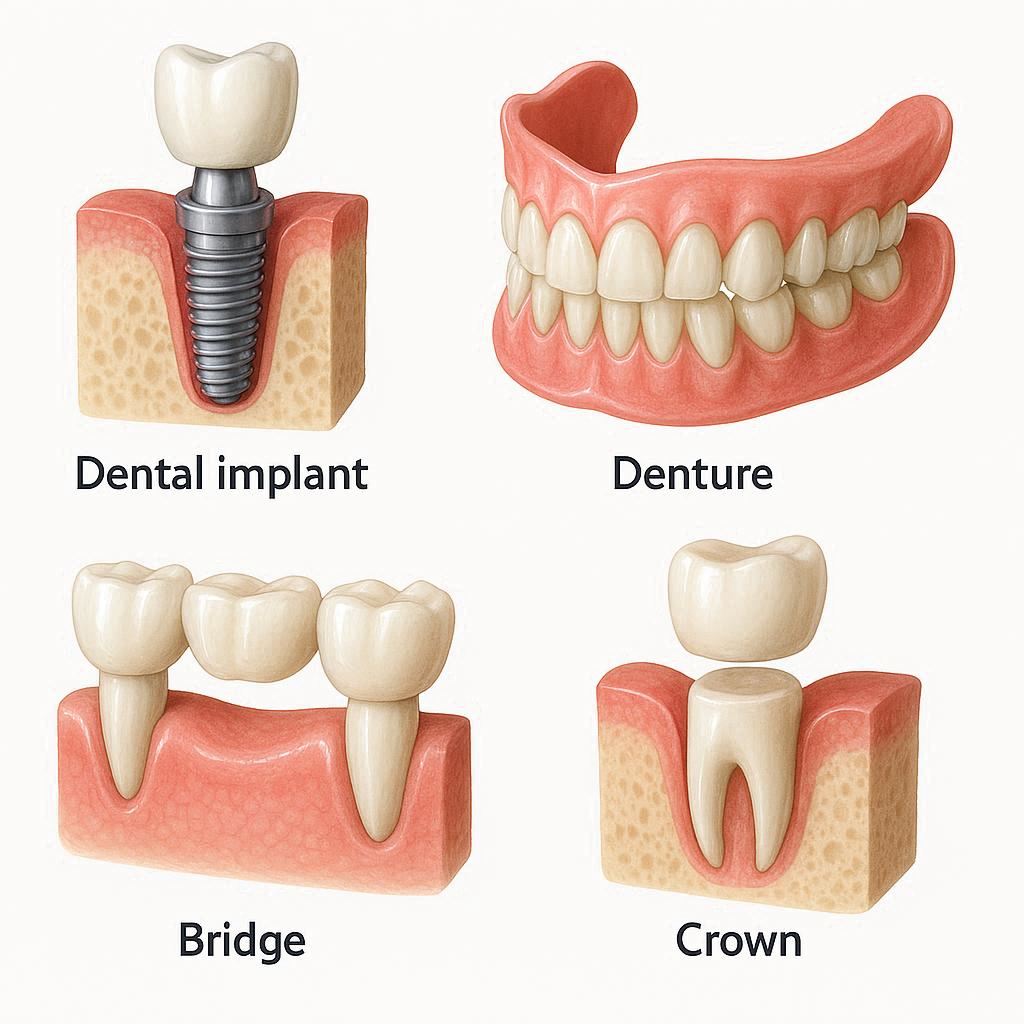
You can divide tooth replacement options into three main families: removable, fixed, and implant-supported. Each category serves different needs and budgets.
| Category | Examples | Best for |
|---|---|---|
| Removable | Partial dentures, complete dentures | Multiple missing teeth or budget-conscious patients |
| Fixed | Dental bridges | One to three missing teeth in a row |
| Implant-supported | Single implant, implant bridge, implant overdenture | Long-term solution, single or multiple missing teeth |
Now, let’s explore each type in detail.
1. Dental Implants: The Gold Standard
A dental implant acts like an artificial tooth root. The dentist places a small titanium post into your jawbone. Over a few months, the bone grows around the post (a process called osseointegration). Once healed, the dentist attaches a custom-made crown on top.
Single Tooth Implant
This is ideal for replacing one missing tooth without affecting neighboring teeth.
Pros:
- Looks and feels like a natural tooth.
- Prevents bone loss in the jaw.
- Lasts 20+ years with good care.
Cons:
- Higher upfront cost.
- Requires surgery and several months of healing.
- You need enough healthy bone for placement.
Implant-Supported Bridge
If you have two or three missing teeth in a row, you do not need one implant per gap. Two implants can support a bridge that covers three or four teeth.
Pros:
- More stable than a traditional bridge.
- No need to file down healthy adjacent teeth.
Cons:
- More expensive than a regular bridge.
- Still requires surgery.
Implant Overdenture
For people missing all teeth in an arch (upper or lower), an overdenture snaps onto 2 to 4 implants. The denture stays secure but remains removable for cleaning.
Pros:
- Stops denture from slipping.
- Improves chewing power.
- Prevents further bone loss.
Cons:
- Higher cost than standard dentures.
- Requires implant surgery.
Important note: Implants are not for everyone. Smokers, people with uncontrolled diabetes, or those who grind their teeth heavily may need additional treatments first. Your dentist will evaluate your bone density and overall health.
2. Dental Bridges: A Reliable Classic
A bridge “bridges” the gap between two healthy teeth. The dentist prepares the teeth on either side of the gap (called abutments) by removing a small amount of enamel. Then, they place a three-piece restoration: two crowns on the abutment teeth and a false tooth (pontic) in between.
Traditional Fixed Bridge
This is the most common type of bridge. It works best when you have natural teeth on both sides of the gap.
Pros:
- Non-surgical solution.
- Completed in 2 to 3 visits.
- Feels natural after adjustment.
Cons:
- Requires filing down healthy teeth.
- Does not prevent bone loss under the pontic.
- Lifespan is about 10 to 15 years.
Cantilever Bridge
Used when you only have a natural tooth on one side of the gap. The bridge anchors to that single tooth.
Pros:
- Good for areas with low chewing pressure (like front teeth).
- Preserves more tooth structure on one side.
Cons:
- Higher risk of damage to the anchor tooth.
- Not recommended for back teeth.
Maryland Bonded Bridge
This bridge uses a metal or porcelain framework bonded to the back of adjacent teeth. It requires minimal alteration of healthy teeth.
Pros:
- Very conservative (little enamel removal).
- Lower cost than traditional bridges.
Cons:
- Less durable for chewing.
- Framework can become visible if gums recede.
- Often used only for front teeth.
3. Removable Partial Dentures
A partial denture is a plastic or metal framework with false teeth attached. It clasps onto your remaining natural teeth.
Pros:
- Most affordable option for multiple gaps.
- No drilling or surgery.
- Easy to repair or adjust.
Cons:
- Can feel bulky or uncomfortable.
- May accelerate bone loss.
- Metal clasps can be visible when smiling.
- Needs daily removal for cleaning.
Partial dentures are a great temporary solution or a permanent choice for patients who cannot have surgery.
4. Complete Dentures
For patients missing all teeth on the upper or lower arch (or both), complete dentures restore the entire arch. They rest directly on the gums.
Pros:
- Replaces all teeth at a lower cost.
- No surgery required.
- Improves facial support and smile aesthetics.
Cons:
- Takes time to adapt to speaking and eating.
- Requires adhesives for stability.
- Needs relining every few years as gums change.
- Does not stop bone loss.
Immediate Dentures vs. Conventional Dentures
- Immediate dentures: Placed right after teeth extraction. You never go without teeth. However, they will need frequent adjustments as your gums heal and shrink.
- Conventional dentures: Made after gums fully heal (around 8 to 12 weeks after extraction). They fit better but leave you toothless during the healing period.
5. Resin-Bonded Bridge (The “Conservative” Option)
We mentioned Maryland bridges earlier. This is essentially the same concept: a false tooth with “wings” that bond to the back of adjacent teeth. It is worth highlighting separately because many people ask for a no-drill option.
Best for: Replacing a single missing front tooth in a low-bite force area.
Lifespan: 5 to 7 years on average.
Realistic warning: The bonding can fail if you bite into hard foods like apples or crusty bread.
How to Choose the Right Option for You
The “best” tooth replacement depends on several factors:
- Number of missing teeth: One, a few, or all?
- Location: Front tooth or molar?
- Budget: Can you pay more upfront for a longer-lasting solution?
- Health status: Do you have enough bone for implants?
- Commitment: Do you want a permanent or reversible solution?
A quick note from a writer who has been there: I once broke a molar and thought a partial denture would save money. After two years of discomfort, I switched to an implant. The upfront cost hurt, but the peace of mind was worth every penny. Talk to three different dentists if you can. Opinions vary.
Comparative Table: At a Glance
| Replacement Type | Average Lifespan | Surgery Required | Affects Adjacent Teeth | Relative Cost |
|---|---|---|---|---|
| Single Implant | 20+ years | Yes | No | $$$$ |
| Traditional Bridge | 10-15 years | No | Yes (filing) | $$$ |
| Partial Denture | 5-8 years | No | Minimal (clasps) | $ |
| Complete Denture | 5-10 years | No | No | $$ |
| Implant Overdenture | 15+ years | Yes | No | $$$$$ |
| Maryland Bridge | 5-7 years | No | Minimal | $$ |
Cost scale: $ = low, $$$$$ = high investment
Caring for Your Tooth Replacement
Whatever you choose, maintenance is key.
- Implants and bridges: Brush and floss normally. Use a water flosser for hard-to-reach areas.
- Dentures: Rinse after meals. Brush daily with a soft denture brush. Soak overnight in water or cleaning solution.
- All options: Keep seeing your dentist every 6 to 12 months for check-ups.
What About “Flippers” or Temporary Veneers?
You might see online ads for cheap, DIY tooth replacements. These are often acrylic flippers or snap-on veneers. They are not long-term solutions. Using them for months can trap food, cause gum disease, or even damage opposing teeth. Save them for emergency, short-term cosmetic use only.
Final Thoughts
Choosing among the types of teeth replacements does not have to be overwhelming. Start by asking yourself what matters most: durability, cost, speed, or avoiding surgery. Then, take that shortlist to a trusted dentist.
Remember, a missing tooth is a common problem with many proven solutions. Whether you pick an affordable partial denture or invest in a dental implant, you are making a positive step for your health.
Conclusion (three-line summary):
Replacing missing teeth is essential for your bite, bone health, and confidence. Options range from budget-friendly dentures to long-lasting implants, each with unique pros and cons. Always consult a dentist to match the right solution to your mouth, lifestyle, and budget.
Frequently Asked Questions (FAQ)
1. What is the cheapest way to replace a missing tooth?
A removable partial denture is usually the cheapest upfront option. However, consider long-term costs: dentures need replacement every 5–8 years, while an implant may cost more now but last decades.
2. Do dental implants hurt?
The procedure is done under local anesthesia. Most patients report less discomfort than a tooth extraction. After surgery, you may have mild swelling for a few days.
3. Can I replace a tooth without surgery?
Yes. Traditional bridges and partial dentures do not require surgery. They are excellent non-invasive options.
4. How long does a bridge last compared to an implant?
A well-made bridge lasts 10 to 15 years. An implant can last 20 years to a lifetime with proper care.
5. What happens if I never replace a missing tooth?
Over time, adjacent teeth tilt into the gap, opposing teeth may over-erupt, and you will lose bone mass in that area. This can complicate future replacements.
6. Are there any natural or home remedies to replace a tooth?
No. Do not try DIY solutions. Only professional dental restorations are safe and effective.
7. Can I get an implant years after losing a tooth?
Usually yes, but you may need a bone graft if the area has lost density. Many patients successfully get implants decades after tooth loss.
Additional Resource
For more detailed, dentist-reviewed information on tooth replacement costs and procedures, visit the American College of Prosthodontists patient education page:
🔗 www.gotoapro.org (Look for the “Patient Resources” section)