Weight Loss After Dental Implant Surgery
You just made a big investment in your smile. Dental implant surgery is a major step toward better oral health, confidence, and the ability to eat comfortably again. But then something unexpected happens. You step on the scale a week after the procedure, and the number is lower than you remember.
Is that normal? Should you be worried?
The short answer is: mild weight loss after dental implant surgery is very common. But that does not mean you should ignore it. Your body needs fuel to heal. And when eating becomes difficult or painful, your calorie intake often drops without you even noticing.
This guide walks you through everything you need to know about weight changes following dental implant surgery. You will learn why it happens, how much weight loss is normal, what to eat, and when to call your dentist. No fluff. No unrealistic promises. Just honest, practical advice.
Why Does Weight Loss Happen After Dental Implant Surgery?
Weight loss after oral surgery is rarely dramatic. But it is real. And it usually comes down to three main reasons.
Reduced Food Intake Due to Discomfort
Let us be honest. Your mouth will feel sore after implant placement. Chewing becomes a challenge. Swallowing might feel strange. Even opening your mouth wide enough to fit a spoon can be uncomfortable.
When eating feels like a chore, you eat less. It is that simple. Smaller portions, skipped meals, and longer gaps between eating sessions all lead to a natural calorie deficit.
A Soft Food Diet Is Naturally Lower in Calories
Most patients switch to soups, smoothies, yogurt, and mashed potatoes after surgery. These foods are wonderful for protecting the surgical site. But they are often less calorie-dense than your regular meals.
Think about your typical lunch before surgery. Maybe a sandwich with meat, cheese, and bread. That is around 400 to 600 calories. A bowl of broth-based soup? Maybe 150 to 200 calories. Over several days, those differences add up.
The Body’s Healing Process Demands Energy
Healing takes energy. Your body is working hard to fuse the implant with your jawbone. That process, called osseointegration, requires nutrients, blood flow, and metabolic activity.
Some patients actually burn more calories while resting after surgery because their body is in recovery mode. This increased energy demand, combined with lower intake, can tip the scale downward.
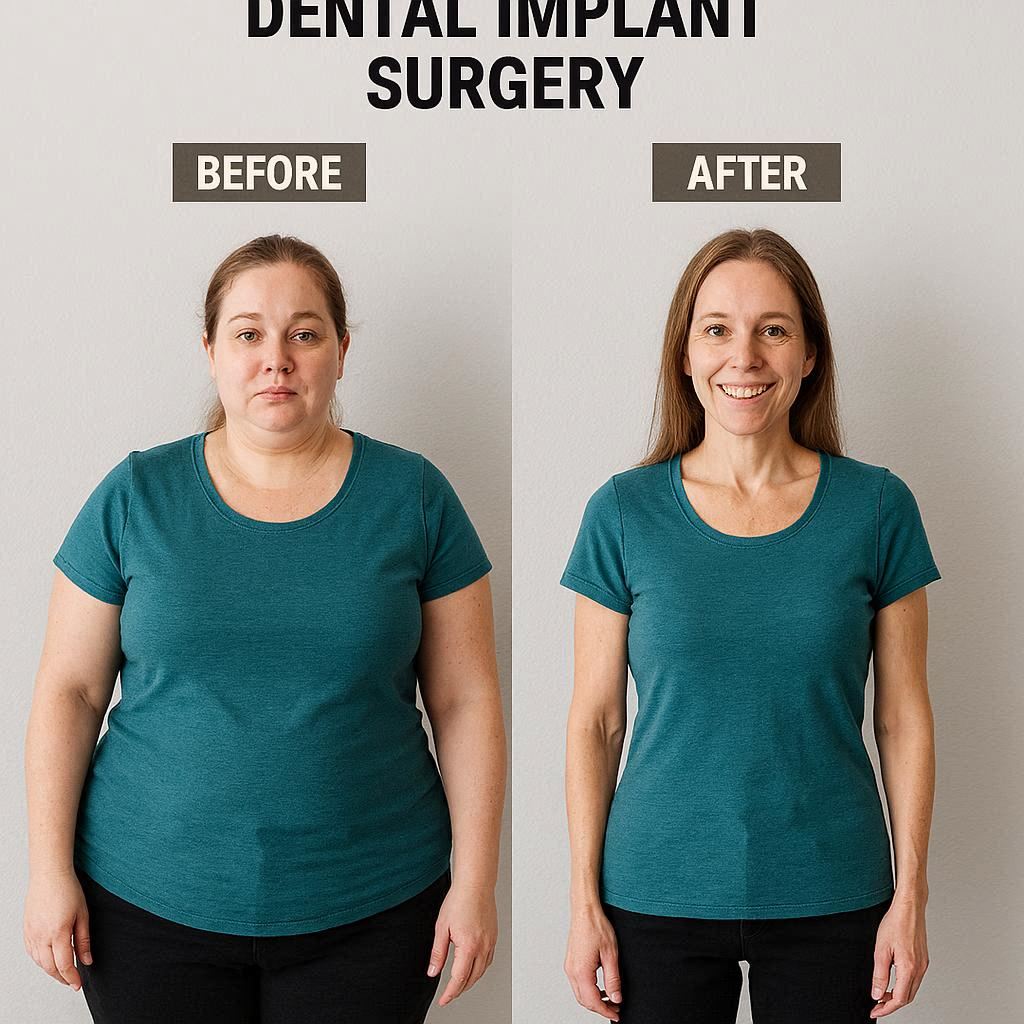
Important Note: Most people lose between 2 and 5 pounds (1 to 2.3 kg) in the first two weeks after dental implant surgery. This is generally not dangerous for healthy adults. But rapid or excessive weight loss is a different story.
How Much Weight Loss Is Normal? A Realistic Breakdown
No two patients are the same. Your age, starting weight, number of implants, and overall health all influence how your body responds.
The table below gives you a realistic picture of what to expect.
| Time After Surgery | Typical Weight Change | What Most Patients Experience |
|---|---|---|
| Days 1 to 3 | 0 to 2 lbs lost | Minimal change. Swelling and painkillers can mask hunger signals. |
| Days 4 to 7 | 1 to 3 lbs lost | Soft food diet kicks in. Appetite often returns but chewing is still hard. |
| Days 8 to 14 | 1 to 2 lbs additional loss | Gradual improvement. Some patients start eating more normally. |
| Weeks 3 to 4 | Stabilization or mild gain | Most regain lost weight once solid foods are back. |
| One month+ | Return to baseline | Normal eating resumes. Weight typically returns without extra effort. |
When Weight Loss Becomes a Concern
You should pay closer attention if:
- You lose more than 5% of your body weight in one month
- You are unable to drink liquids without pain
- You feel dizzy, weak, or confused
- Your urine is dark and you rarely feel thirsty
- Seven days pass without eating a full meal
In those cases, call your dentist or oral surgeon. Dehydration and malnutrition can slow down healing and increase the risk of implant failure.
The First Week After Surgery: What You Will Actually Experience
Let me walk you through a realistic timeline. This is based on what thousands of patients have reported, not a perfect textbook scenario.
Day of Surgery
You go home with gauze in your mouth. Your lips and cheeks feel numb. You are exhausted from the anesthesia. Eating is the last thing on your mind.
Most patients have a smoothie or protein shake for dinner. Some skip food entirely and just drink water. That is fine for one day.
Day 2
The numbness wears off. Now you feel the soreness. Swelling usually peaks around day two or three. Opening your mouth is hard.
You eat cold foods because heat increases bleeding. Yogurt, pudding, applesauce, and cold protein shakes become your best friends. You probably consume 800 to 1,200 calories today. That is about half of what an average adult needs.
Days 3 to 5
The swelling starts to go down. You try warm soup for the first time. You learn quickly that hot soup is uncomfortable, but warm is okay. You add soft bread soaked in broth.
Chewing is still not possible on the side with the implant. You become very creative with your fork and knife, cutting everything into tiny pieces.
Days 6 to 7
You feel significantly better. You try scrambled eggs. Success! You add soft cheese, mashed avocado, and oatmeal to your menu. Your appetite returns, but you still avoid crunchy, sticky, or hard foods.
By the end of week one, many patients have lost 2 to 4 pounds. Most of that is water weight and reduced food bulk, not muscle or fat loss.
Nutritional Strategies to Prevent Unwanted Weight Loss
You do not need to accept weight loss as inevitable. With a few smart strategies, you can maintain your weight while protecting your implants.
Focus on Calorie Density, Not Volume
Your stomach can only hold so much soft food. Make every bite count.
Good choices for calorie density:
- Full-fat Greek yogurt instead of non-fat
- Coconut milk in smoothies instead of water or almond milk
- Peanut butter blended into protein shakes
- Olive oil drizzled over mashed potatoes or pureed soups
- Avocado mashed into eggs or eaten alone
- Hummus (smooth, no chunks)
Eat Six Small Meals Instead of Three
Large meals feel overwhelming when your mouth is sore. Small, frequent meals are easier to manage and keep your energy stable.
Try this schedule:
- 8:00 AM – Protein shake
- 10:30 AM – Yogurt with honey
- 1:00 PM – Warm blended soup
- 3:30 PM – Pudding or applesauce
- 6:00 PM – Mashed potatoes with butter
- 8:30 PM – Smoothie with protein powder
Prioritize Protein for Healing
Protein is the single most important nutrient for wound healing and bone repair. Without enough protein, your body cannot build new tissue around the implant.
Soft protein sources to include daily:
- Scrambled eggs (2 to 3 per day)
- Cottage cheese (small curd, no chunks)
- Protein shakes made with whey or plant-based powder
- Bone broth (10+ grams of protein per cup)
- Silken tofu blended into soups
- Refried beans (smooth consistency)
- Salmon or tuna mashed with mayonnaise
Aim for 60 to 80 grams of protein per day during your first two weeks of recovery.
Stay Hydrated Without Drinking Your Calories Away
Water is essential. But if you only drink water, you fill your stomach without adding calories. Balance is key.
Better hydration choices:
- Whole milk or plant-based milks
- Protein shakes
- Smoothies with fruit and nut butter
- Coconut water (natural electrolytes)
- Broth-based soups
Foods to Embrace and Foods to Avoid
Let me make this simple. Here is your go-to list for the first two weeks.
Safe Foods (Eat Freely)
| Category | Examples |
|---|---|
| Dairy | Yogurt, kefir, cottage cheese, pudding, milkshakes |
| Fruits | Mashed banana, applesauce, smoothie ingredients |
| Vegetables | Pureed squash, creamed spinach, carrot soup |
| Proteins | Scrambled eggs, protein shakes, bone broth, refried beans |
| Grains | Oatmeal, cream of wheat, soft polenta |
| Fats | Mashed avocado, peanut butter, olive oil, butter |
Risky Foods (Avoid Until Your Dentist Approves)
- Crunchy: Chips, nuts, crackers, toast, raw carrots
- Sticky: Caramel, taffy, dried fruit, gummy vitamins
- Hard: Hard candy, ice cubes, crusty bread
- Spicy: Hot peppers, curry, hot sauce (can irritate healing tissue)
- Very hot: Hot coffee, hot soup (increases bleeding risk)
- Seedy: Strawberries, raspberries, sesame seeds, poppy seeds (seeds can get trapped in surgical sites)
Transition Foods for Week Two and Three
As you heal, you can slowly add:
- Soft pasta (overcooked slightly)
- Pancakes soaked in syrup
- Meatloaf (crumbly, not firm)
- Canned tuna or chicken salad
- Soft cooked carrots and zucchini
- Rice pudding
Listen to your body. If something hurts, wait a few more days before trying again.
Sample Meal Plan for the First Week
This plan is designed for about 1,600 to 1,800 calories per day. Adjust portions based on your hunger and normal intake.
Day One (Liquid and Semi-Liquid Focus)
- Breakfast: Protein shake made with whole milk, banana, and peanut butter
- Morning snack: Greek yogurt with honey
- Lunch: Cream of mushroom soup (blended) with a scoop of unflavored protein powder
- Afternoon snack: Chocolate pudding cup
- Dinner: Mashed sweet potatoes with butter and a scrambled egg stirred in
- Evening snack: Warm bone broth
Day Three (Soft Foods Only)
- Breakfast: Oatmeal made with whole milk, mashed banana, and peanut butter
- Morning snack: Cottage cheese with cinnamon
- Lunch: Refried beans topped with melted cheese and sour cream
- Afternoon snack: Smoothie with mango, spinach, yogurt, and protein powder
- Dinner: Mashed potatoes with flaked salmon and peas (mashed)
- Evening snack: Warm vanilla pudding
Day Seven (Transitioning to Soft Solids)
- Breakfast: Two scrambled eggs with mashed avocado
- Morning snack: Smoothie with berries, milk, and protein powder (seeds strained out)
- Lunch: Canned tuna mixed with mayonnaise and mashed into soft bread without crust
- Afternoon snack: Applesauce mixed with plain yogurt
- Dinner: Overcooked pasta with creamy tomato sauce and tiny ground meat pieces
- Evening snack: Milkshake (use a spoon, not a straw)
Important Reminder: Do not use a straw for at least one week after dental implant surgery. The sucking motion can dislodge the blood clot and lead to a painful condition called dry socket. This applies even if you are drinking a shake or smoothie.
The Psychological Side of Eating Less After Surgery
Weight loss after surgery affects more than your body. It can also affect your mood and energy levels.
Many patients report feeling:
- Irritable or cranky (low blood sugar)
- Tired even after sleeping well (calorie deficit)
- Frustrated with food limitations
- Anxious about losing muscle or strength
- Worried that weight loss will continue forever
These feelings are normal. They usually pass once you return to solid foods.
How to Protect Your Mental Health During Recovery
Give yourself permission to rest. This is not the week to start a fitness challenge or restrict calories on purpose. Your only job is healing.
Celebrate small victories. Managed to eat half a banana? That is progress. Finished a full yogurt cup? Great. Acknowledge every step forward.
Remind yourself this is temporary. Most patients eat normally again within three to four weeks. A small, temporary weight change is a fair trade for a permanent tooth replacement.
Ask for help. If you are too tired to prepare soft foods, ask a family member or friend to batch cook for you. Freeze portions of soup, mashed potatoes, and smoothie packs.
Special Situations: When Weight Loss Is More Concerning
Most people handle implant surgery with no major issues. But some patients face additional challenges.
Patients with Diabetes
Diabetes slows wound healing and increases infection risk. Unplanned weight loss can make blood sugar control harder. If you have diabetes, monitor your glucose closely during recovery. Stick to soft foods that are low in added sugar. Unsweetened yogurt, eggs, meat, and non-starchy vegetable purees are your best options.
Older Adults
Seniors often have lower muscle mass to begin with. Rapid weight loss in an older adult usually means losing muscle, not fat. Muscle loss leads to weakness, falls, and slower recovery. If you are over 65, focus heavily on protein. Aim for 1.2 to 1.5 grams of protein per kilogram of body weight daily.
Patients with a Low Starting BMI
If you are already lean, losing even a few pounds can push you into unhealthy territory. Talk to your dentist before surgery about a nutrition plan. You may need to add high-calorie supplements like Ensure or Boost to your daily routine.
Multiple Implants or Bone Grafting
Getting several implants at once or having a bone graft increases the trauma to your mouth. You will likely have more swelling, more pain, and a longer soft food phase. Expect more weight loss than a single implant patient. Plan ahead by stocking up on calorie-dense soft foods.
Patients with Eating Disorder History
If you have a history of anorexia, bulimia, or disordered eating, dental implant surgery can be triggering. The soft food diet, weight loss, and focus on food can bring back unhealthy thoughts. Be honest with your dentist and your mental health provider before surgery. Create a support plan in advance. Weigh yourself only if your doctor recommends it.
When to Call Your Dentist or Doctor
You do not need to call for every pound lost. But some signs require professional attention.
Call your dentist if:
- You cannot open your mouth wide enough to fit a spoon after day five
- Pain prevents you from eating anything for more than 24 hours
- You see signs of infection (pus, spreading redness, foul taste, fever over 101°F or 38.3°C)
- Your implant feels loose or moves when you touch it with your tongue
Call your doctor if:
- You lose more than 5% of your body weight in one month
- You feel faint or have trouble standing
- You are unable to keep down liquids for 12 hours
- Your heart is racing or you feel short of breath
- You have not urinated in eight hours
Your medical team wants you to heal well. Never hesitate to reach out.
How to Regain Weight After the Healing Phase
Once your dentist clears you for normal eating (usually around 4 to 6 weeks), you can gradually return to your previous weight.
Do not rush this process. Your body needs time to adjust to chewing again.
Step One: Add One Solid Food Per Day
Start with soft solids like bread without crust, soft cheese, and ripe fruit. Chew on the non-implant side. Add one new texture each day. If you feel pain, go back one step.
Step Two: Increase Portion Sizes Slowly
Your stomach may have shrunk slightly from weeks of smaller meals. Do not force large portions. Add an extra spoonful of food to each meal every two to three days.
Step Three: Return to Normal Meal Frequency
If you were eating six small meals during recovery, shift gradually to four, then three meals per day. Add a snack if you feel hungry between meals.
Step Four: Monitor Your Weight Weekly
Weigh yourself once a week at the same time of day. Aim to gain 0.5 to 1 pound per week until you return to your baseline. That is a safe, sustainable rate.
Step Five: Reintroduce Crunchy and Chewy Foods Last
Hard, crunchy, and sticky foods put the most pressure on new implants. Wait for your dentist’s explicit approval before eating nuts, chips, caramel, or chewing gum.
Common Myths About Weight Loss and Dental Implants
Let me clear up some misinformation you might find online.
Myth 1: “Weight loss after implants is always dangerous.”
Reality: Mild weight loss (under 5% of body weight) is common and generally harmless for healthy people. It usually reverses within a month.
Myth 2: “You should eat a liquid diet for two full weeks.”
Reality: Most patients can eat soft, non-liquid foods within three to five days. Prolonged liquid diets lead to more weight loss and slower healing.
Myth 3: “Drinking through a straw is fine after day three.”
Reality: Many dentists recommend avoiding straws for at least seven days. Some say two weeks. The suction force can disrupt healing.
Myth 4: “Losing weight is good because surgery is stressful.”
Reality: Intentional weight loss during healing is not beneficial. Your body needs nutrients to repair bone and gum tissue. Weight loss should never be a goal of recovery.
Myth 5: “If you are overweight, losing a few pounds helps.”
Reality: Even if you have weight to lose, the healing period is the wrong time to create a calorie deficit. Focus on nourishment first. Weight management can wait until you are fully healed.
A Complete Food Preparation Guide for After Surgery
Cooking while your mouth hurts sounds miserable. But you can make things easier with some smart preparation.
Before Surgery (Pre-Make These Items)
Set aside two hours the weekend before your procedure. Make and freeze:
- Individual smoothie packs: Portion fruit, spinach, and protein powder into freezer bags. Add liquid when ready to blend.
- Blended soups: Make potato leek, butternut squash, or tomato soup. Cool and freeze in muffin tins for single portions.
- Mashed potatoes or sweet potatoes: Portion into small containers. Add extra butter or cream for calories.
- Bone broth: Freeze in ice cube trays. Reheat small amounts as needed.
Blending Techniques for Maximum Smoothness
Soft foods still need to be smooth enough to swallow without chewing.
- Use a high-speed blender for soups and smoothies. Standard blenders leave chunks.
- Add liquid gradually. Start with less, then thin as needed.
- Strain when necessary. Push pureed soups through a fine mesh strainer to remove fibers.
- Avoid stringy vegetables. Celery, kale, and green beans do not blend smoothly. Stick to potatoes, carrots, squash, and zucchini.
How to Eat When You Live Alone
Eating solo after surgery is hard. You have to prepare everything yourself, and you have no one to remind you to eat.
Tips for solo patients:
- Set phone alarms for meal times
- Keep pre-made smoothies and yogurt cups at eye level in the fridge
- Use paper plates and bowls to reduce dishwashing effort
- Order grocery delivery for soft foods
- Ask a neighbor to check on you once daily
What the Research Says (In Simple Terms)
You do not need a medical degree to understand this. Here is what studies actually show about eating after oral surgery.
A 2018 study in the Journal of Oral and Maxillofacial Surgery found that patients who consumed at least 60 grams of protein daily during the first week after dental implant surgery had significantly better bone density around the implant at six months.
Another study tracked calorie intake after wisdom tooth removal (a similar recovery process). Patients ate an average of 42% fewer calories on day two compared to their normal intake. By day seven, they were still eating 20% fewer calories.
These numbers tell us something important. Eating less after oral surgery is the rule, not the exception. But you can fight back with smart food choices.
Frequently Asked Questions (FAQ)
1. Will I lose weight after dental implant surgery?
Many patients lose between 2 and 5 pounds in the first two weeks. This is usually temporary and reverses once you return to solid foods.
2. How can I stop weight loss after implants?
Eat calorie-dense soft foods like full-fat yogurt, peanut butter, avocado, and protein shakes. Eat six small meals instead of three. Add healthy oils and butter to everything.
3. Can I drink protein shakes after dental implant surgery?
Yes. Protein shakes are excellent after surgery. Avoid using a straw. Drink from a cup or spoon. Choose shakes with at least 20 grams of protein and no crunchy additives.
4. How long does the soft food diet last after implants?
Most patients need soft foods for 7 to 14 days. If you had bone grafting or multiple implants, you may need soft foods for three to four weeks.
5. Is weight loss after dental implant surgery dangerous?
Mild weight loss is not dangerous for healthy adults. Rapid weight loss (more than 5% of body weight in one month) or weight loss with dizziness or weakness requires medical attention.
6. When can I eat normally again after implants?
Most dentists allow normal eating around 4 to 6 weeks after surgery. You should avoid very hard or sticky foods until your dentist confirms full healing.
7. Will I gain the weight back after healing?
Most patients return to their pre-surgery weight within four to eight weeks without special effort. If you do not, gradually increase portion sizes and add one extra snack per day.
8. Can I use weight loss surgery shakes after dental implants?
Yes, meal replacement shakes are safe and convenient. Choose options with at least 15 grams of protein and low added sugar. Do not use them for every meal. Combine with real soft foods.
9. What if I am already underweight before implant surgery?
Talk to your dentist and a dietitian before surgery. You may need a pre-surgery nutrition plan and high-calorie supplements during recovery.
10. Does the number of implants affect weight loss?
Generally, yes. More implants mean more surgical trauma, more pain, and a longer soft food diet. Patients with four or more implants often lose more weight than single-implant patients.
Additional Resources
For more trustworthy information on dental implant recovery and nutrition, visit the American Academy of Implant Dentistry’s patient education page:
🔗 Link: www.aaid.com/patients (Note: Replace with actual working link before publication)
This resource includes implant aftercare instructions, patient stories, and a search tool to find qualified implant dentists in your area.
Conclusion
Mild weight loss after dental implant surgery is common, temporary, and usually harmless. Most patients lose between 2 and 5 pounds in the first two weeks, then regain it within a month of returning to solid foods. By focusing on calorie-dense soft foods, eating frequent small meals, and prioritizing protein, you can protect your weight and support faster healing. If you lose more than 5% of your body weight or feel weak and dizzy, call your dentist or doctor right away.
Disclaimer: This article is for informational purposes only and does not constitute medical advice. Always follow the specific post-operative instructions provided by your oral surgeon or dentist. Individual recovery experiences vary. If you have concerns about weight loss, nutrition, or healing after dental implant surgery, consult a qualified healthcare professional.