What Are Dental Implant Crowns Made Of
If you are considering dental implants, you have probably spent a lot of time thinking about the titanium screw that goes into your jawbone. That part is crucial. But there is another star of the show: the crown. The crown is the only part of the implant that people actually see. It is your new tooth.
So, what are dental implant crowns made of? The answer is not a single material. Modern dentistry offers several excellent options. Each material has a different job, price tag, and appearance.
This guide will walk you through every single material used today. We will look at porcelain, zirconia, metal, and even combinations. By the end, you will know exactly what to ask your dentist. You will also understand which material might be right for your smile, your budget, and your lifestyle.
Understanding the Parts of a Dental Implant
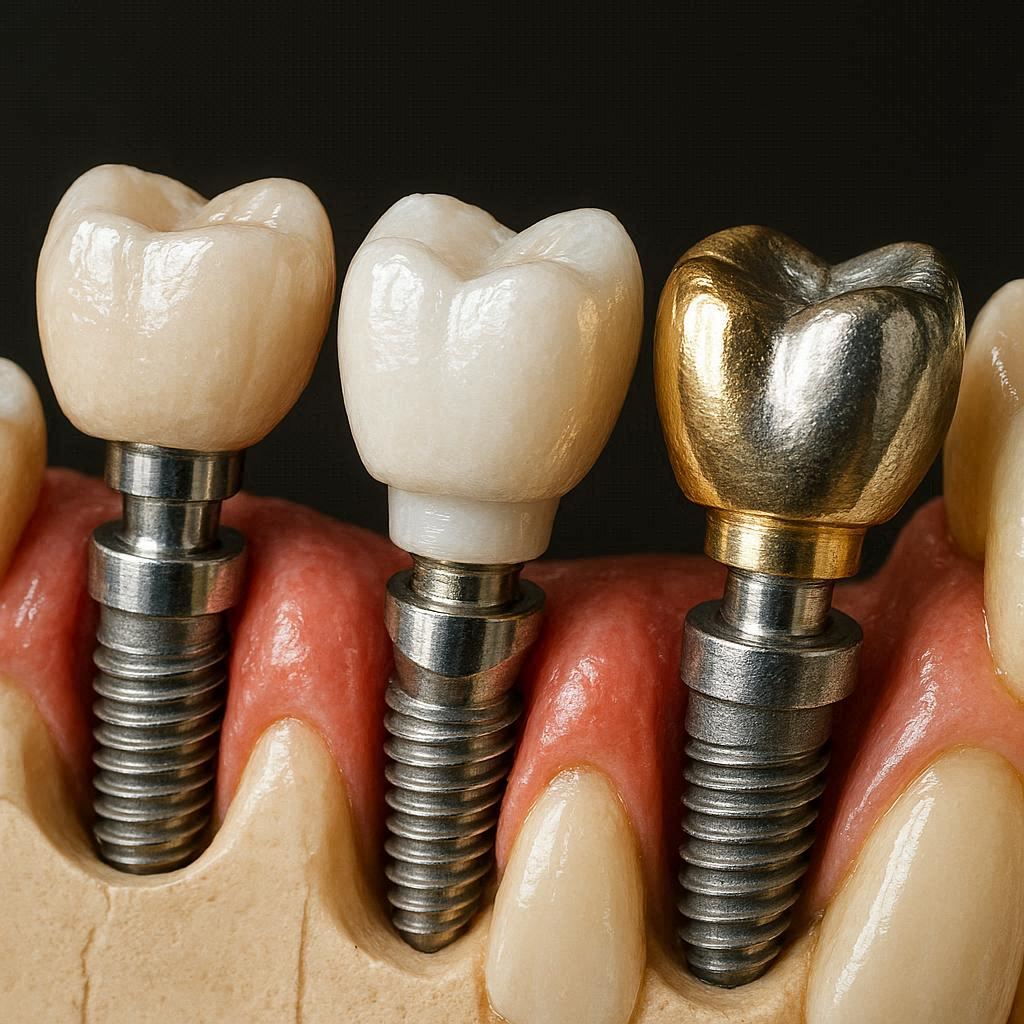
Before we dive into crown materials, it helps to know the full picture. A dental implant is actually three separate parts working together.
The Implant Fixture (The Root)
This is the screw-like post made of titanium or zirconia. Your surgeon places this into your jawbone. It acts like the root of a natural tooth. You never see this part once it is placed.
The Abutment (The Connector)
The abutment is a small metal or zirconia piece that screws into the implant fixture. It sticks up just above your gum line. Think of it as a connector. The crown attaches to the abutment.
The Crown (The Visible Tooth)
This is the white (or sometimes metal) cap that you see in the mirror. The crown is what you chew with and smile with. When patients ask, “what are dental implant crowns made of,” they are asking about this top layer.
Important Note: Not every crown material works with every abutment. Your dentist will always match the two parts carefully to avoid wear and tear.
A Quick Look at the Main Materials
Here is a simple overview of the four main materials used for implant crowns. We will explore each one in detail below.
| Material | Full Name | Best For | Lifespan (Average) |
|---|---|---|---|
| Porcelain-Fused-to-Metal | PFM | Back teeth on a budget | 10-15 years |
| Full Zirconia | Zirconium Dioxide | Strong back molars | 15-20+ years |
| Lithium Disilicate | E-max | Front teeth (beauty) | 10-15 years |
| Gold Alloy | High Noble Metal | Patients who grind teeth | 20-30+ years |
Now, let us open each category completely.
Porcelain-Fused-to-Metal (PFM) Crowns
For decades, PFM crowns were the gold standard. You have probably seen them on older relatives. They have a metal inner shell and a porcelain outer layer.
How PFM Crowns Are Made
The dental lab creates a metal coping. This is a thin thimble-shaped piece made of non-precious metal alloys like nickel-chromium or cobalt-chromium. Then, the technician bakes layers of porcelain powder onto that metal frame. The result looks like a natural tooth with a metal core.
The Advantages of PFM
Strength. The metal core provides excellent resistance to chewing forces. These crowns rarely break in half.
Cost. PFM crowns are among the most affordable options for implant restoration.
Familiarity. Most dentists have made thousands of these. The process is predictable.
The Disadvantages of PFM
The dark line. Over time, your gums may recede slightly. This reveals a dark metal line at the base of the crown. It looks unnatural.
Porcelain chipping. While the metal holds up, the outer porcelain can chip off. This happens especially in patients who grind their teeth.
Metal allergies. Some people are sensitive to nickel or beryllium used in cheaper alloys.
“I had a PFM crown on a back molar for twelve years. It worked fine, but I could always feel the metal taste when I drank hot coffee.” — Real patient feedback from dental forums.
Is PFM Right for You?
Choose PFM if you need a crown on a lower back molar, you are on a strict budget, and you do not mind a slightly less natural look. Avoid PFM if you have thin gums that show a dark line or if you have a known metal allergy.
Full Zirconia Crowns
Zirconia is the rising star in implant dentistry. It is a white, ceramic material that is incredibly tough. Many dentists now call it the best option for posterior (back) teeth.
What Is Zirconia Exactly?
Zirconia is zirconium dioxide. It is a crystalline oxide. You can find it in artificial gemstones and even in some high-end knife blades. For dental use, manufacturers create solid blocks of this material. Then, a computer-guided milling machine carves your crown out of a single block.
Monolithic vs. Layered Zirconia
- Monolithic zirconia: One solid piece. Very strong. No chipping. Best for molars.
- Layered zirconia: A strong zirconia core with weaker porcelain on the outside. Looks nicer but can chip.
Most experts now recommend monolithic zirconia for implant crowns. The layered version tends to fail at the connection point.
The Advantages of Zirconia
Strength. Zirconia is stronger than steel in some measurements. It will not crack under heavy chewing loads.
No metal. This is a fully metal-free crown. Great for patients with metal allergies or sensitivities.
Gentle on opposing teeth. Zirconia is smooth. It will not wear down your natural teeth on the opposite jaw.
Biocompatibility. Gum tissue loves zirconia. It rarely causes inflammation.
The Disadvantages of Zirconia
Hardness. Zirconia is almost too hard. If you grind your teeth severely, it can actually wear down the natural teeth above or below it.
Opacity. Early zirconia crowns looked like white plastic. Modern versions are more translucent, but they still do not match the beauty of glass ceramics.
Difficulty to adjust. Once the crown is made, your dentist cannot easily polish or adjust it in the chair. It requires a lab to make changes.
Who Should Get Zirconia?
Zirconia is fantastic for anyone needing a back molar crown. It is also the top choice for patients with metal allergies. If you are young and active, zirconia will likely outlast other options.
Lithium Disilicate (E-max)
When beauty is your number one goal, you want lithium disilicate. The main brand name is E-max, made by Ivoclar Vivadent. This material is a glass ceramic.
Why Lithium Disilicate Looks So Good
This material lets light pass through it almost like a natural tooth. It has depth, translucency, and life. A skilled ceramist can create layers of color that mimic your adjacent teeth perfectly. For single front teeth, this is the undisputed king of cosmetics.
The Manufacturing Process
The lab makes this crown using a hot-pressed ceramic technique. The ingots of lithium disilicate are pressed into shape at very high temperatures. The result is a dense, strong, and beautiful restoration.
Strength Considerations
Lithium disilicate is strong. It has about 400-500 MPa of flexural strength. For comparison, natural tooth enamel is about 300-400 MPa. So it is stronger than your real tooth.
However, it is not as strong as zirconia (which can reach 1,200 MPa). For a front tooth or a premolar, lithium disilicate is plenty strong. For a heavy chewing molar on a patient who grinds, you might want zirconia instead.
Pros of Lithium Disilicate
- Best aesthetics on the market
- Metal-free
- Can be bonded to the abutment very securely
- Resists chipping better than PFM porcelain
Cons of Lithium Disilicate
- More expensive than PFM
- Can fracture under extreme forces
- Color matching requires a skilled lab technician
Pro Tip: If you are replacing a front tooth, ask your dentist to show you before-and-after photos of lithium disilicate crowns they have placed. The technician’s skill matters as much as the material.
Gold Alloy Crowns
Gold crowns are not as common today, but they are still a valid choice. The “gold” in dental crowns is never pure gold. Pure gold is too soft. Instead, dentists use a high-noble metal alloy.
What Is a High-Noble Alloy?
The American Dental Association defines a high-noble alloy as containing at least 60% precious metals. These include gold, platinum, and palladium. The remaining 40% is usually copper, silver, or zinc.
The Hidden Benefits of Gold
Gold crowns look unusual. They are yellow or silver colored. But they offer two massive clinical advantages:
- They wear like natural teeth. Unlike zirconia, which can wear opposing teeth, gold is soft enough to move against natural enamel without causing damage.
- They seal perfectly. Gold can be burnished (smoothed) to the tooth margin. This creates a bacteria-tight seal that is extremely hard to achieve with ceramics.
Why People Avoid Gold
The main reason is appearance. Most patients do not want a visible gold tooth in the front of their mouth. For back teeth, some people actually like the look. It signals durability.
The second reason is cost. Gold alloy is expensive. It often costs more than even high-end ceramic crowns.
Who Still Chooses Gold?
Gold crowns are ideal for patients who:
- Grind or clench their teeth severely
- Have limited bite space (gold can be made very thin)
- Do not care about metal allergies (gold is hypoallergenic)
- Want a crown that will last 30+ years
Resin and Acrylic Temporary Crowns
You will not keep these forever, but they deserve a mention. After your implant is placed, but before your final crown is ready, you will wear a temporary crown.
What Are Temporaries Made Of?
Most temporary implant crowns are made of acrylic resin or bis-acryl composite. These are plastic-like materials. The dentist can shape them right in their office.
Why Temporary Materials Matter
These soft materials protect the healing abutment. They also allow you to smile normally during the healing phase. However, they are not meant for chewing. Do not bite into an apple with a temporary crown. It will crack.
Warning: Never use a temporary crown as a permanent solution. The material will degrade, stain, and potentially break, damaging the underlying implant screw.
Comparing Durability and Longevity
Let us get realistic about how long these crowns last. No crown lasts forever. But some come very close.
| Material | Average Lifespan | Main Failure Mode | Can It Be Repaired? |
|---|---|---|---|
| PFM | 10-15 years | Porcelain chipping | Sometimes (polishing) |
| Zirconia | 15-20+ years | Fracture (rare) | No (must replace) |
| Lithium Disilicate | 10-15 years | Bulk fracture | No |
| Gold | 20-30+ years | Wear (very slow) | Yes (repolish) |
These numbers assume normal oral hygiene and two checkups per year. If you grind your teeth and refuse to wear a night guard, cut every number in half.
Aesthetics: Which Crown Looks Most Natural?
Beauty is subjective. But we can rank these materials objectively.
Front Teeth (High Aesthetics)
- Lithium Disilicate (E-max) — Clear winner. Light behaves exactly like natural enamel.
- Layered Zirconia — Very good, but slightly opaque.
- Monolithic Zirconia — Acceptable for premolars. Too solid for front teeth.
- PFM — The metal line ruins the look over time.
- Gold — Obviously not for front teeth.
Back Teeth (Low Aesthetics)
For molars, no one sees the crown unless you open very wide. Function matters more than looks here. Zirconia or even PFM work perfectly well.
“My dentist talked me into zirconia for my lower second molar. It cost more, but I chew steak on that side without a single worry. I never think about it breaking.” — Long-term implant patient.
Cost Breakdown by Material
Pricing varies by city, dentist, and lab. But here is a realistic range for the United States (excluding the implant surgery itself).
| Material | Crown Only (Lab Fee + Dentist Markup) | Total Restored Cost (with abutment) |
|---|---|---|
| PFM | $800 – $1,500 | $1,500 – $2,500 |
| Zirconia | $1,200 – $2,000 | $2,000 – $3,500 |
| Lithium Disilicate | $1,500 – $2,500 | $2,500 – $4,000 |
| Gold | $1,500 – $3,000 | $2,500 – $4,500 |
Insurance typically covers 50% of the crown cost if it is medically necessary. But many plans have a yearly maximum of $1,500. Plan accordingly.
Material Safety and Biocompatibility
Patients often ask: “Are these materials safe in my body?”
The short answer is yes. Dental materials are tested extensively before they reach the market.
Metal Concerns
Some patients worry about metal ions leaking into the body. For titanium implants, research over 50 years shows no link to systemic disease. For PFM crowns, the metal is encased in porcelain. The exposed metal on the chewing surface is minimal.
If you have a known nickel allergy, avoid cheaper PFM crowns. Ask for a noble metal alloy instead.
Ceramic Safety
Zirconia and lithium disilicate are inert. They do not react with body fluids. They do not corrode. If you want the most biologically neutral option, choose zirconia.
FDA and CE Marks
All crowns sold in the US must have FDA 510(k) clearance. In Europe, they need a CE mark. These certifications require proof of biocompatibility testing. So you are not the first person to put this material in your mouth.
How Your Dentist Chooses the Material
Your dentist will not pick a material randomly. They evaluate four factors:
1. Location in the Mouth
Front tooth? Lithium disilicate. Back molar? Zirconia or PFM.
2. Your Bite Force
Do you grind? Gold or zirconia. Do you have a light bite? Any material works.
3. Gum Thickness
Thin, translucent gums show metal. Zirconia or E-max hides better.
4. Budget
Some materials cost double. Your dentist will always offer options.
The Manufacturing Process Step by Step
Understanding how a crown is made helps you appreciate why prices vary so much.
Step 1: Digital or Physical Impression
Your dentist scans your mouth with an intraoral camera (like a 3D scanner) or takes a physical putty impression.
Step 2: Design
A technician uses CAD (computer-aided design) software to design your crown on a digital model.
Step 3: Manufacturing
- For zirconia: A milling machine carves the crown from a solid block.
- For PFM: The technician casts a metal frame, then bakes on porcelain layers.
- For lithium disilicate: The technician presses the ceramic ingot into a mold.
Step 4: Firing and Staining
Ceramic crowns go into an oven at 1,600°F to 2,000°F. The technician adds stains to match your neighboring teeth.
Step 5: Delivery
Your dentist tries the crown, checks the fit, and cements it onto your implant abutment.
Common Questions About Implant Crown Materials
Let us address the concerns that appear in dental forums again and again.
Can I Be Allergic to My Crown?
Yes, but it is rare. Allergic reactions to PFM nickel alloys cause gum redness and swelling. Zirconia allergies are almost non-existent. If you have sensitive skin jewelry, choose zirconia or gold.
Do These Crowns Stain Like Natural Teeth?
No. Ceramic crowns do not absorb coffee, tea, or wine stains. The glaze on the surface resists discoloration. However, the cement line between the crown and gum can stain over time. Good hygiene prevents this.
Can a Crown Be Whitened?
Absolutely not. Whitening gels only work on natural tooth structure. If you whiten your real teeth, the crown will stay the same color. Always whiten your teeth before having the final crown made.
What Happens If My Crown Breaks?
Do not panic. The implant itself is still fine. Call your dentist. For a minor chip, they may polish it smooth. For a large fracture, you will need a new crown. This is why keeping your old dental records is important. The lab may still have your original mold.
Caring for Your Implant Crown
The material does not matter if you do not clean it properly. Implant crowns do not get cavities, but the gum around them can get infected. This is called peri-implantitis.
Daily Cleaning Routine
- Brush twice a day with a soft toothbrush.
- Floss once a day using a bridge floss or water flosser.
- Use a plastic scraper (not a metal one) to clean around the abutment.
What to Avoid
- Chewing ice or hard candy
- Using your teeth as tools (opening packages)
- Metal toothpicks that can scratch the glaze
The Future of Implant Crown Materials
Dentistry is always evolving. Here is what is coming in the next five to ten years.
3D-Printed Ceramics
Researchers are perfecting ceramic resins that can be 3D printed, then fired into solid crowns. This will lower costs dramatically.
Smart Materials
Some labs are developing crowns with embedded sensors. The crown would measure your bite force and even detect clenching patterns.
Bioactive Glass
New glass ceramics can release fluoride and calcium to actually heal the surrounding gum tissue. These are in clinical trials now.
Making Your Final Decision
You have a lot of information. Let us simplify it.
Choose PFM if:
- You need a back tooth replaced
- Your budget is tight
- You are not worried about a dark gum line later
Choose Zirconia if:
- You want a metal-free option
- You need maximum strength
- You are replacing a molar
Choose Lithium Disilicate if:
- You are replacing a front tooth
- Appearance is your top priority
- You are willing to pay more for beauty
Choose Gold if:
- You grind your teeth severely
- You want a crown that lasts 30 years
- You do not care about color in the back of your mouth
A Note on Cheap Online Crowns
You will see websites offering dental crowns for $100. These are not medical-grade crowns. They are not made for your specific mouth. Do not buy them. A poorly fitting crown will trap bacteria against your implant, leading to bone loss and implant failure. The surgery to remove a failed implant costs ten times more than a proper crown.
Conclusion
So, what are dental implant crowns made of? They are made of carefully chosen materials like porcelain-fused-to-metal for budget-friendly strength, zirconia for metal-free durability, lithium disilicate for stunning beauty, and gold for incredible longevity. Each material offers a different balance of cost, appearance, and function. Your perfect crown depends on which tooth is being replaced, how you bite, and what you value most. Talk openly with your dentist, share your budget and concerns, and you will walk away with a crown that serves you well for a decade or more.
Frequently Asked Questions (FAQ)
1. How long does it take to make a dental implant crown?
From impression to delivery, expect two to four weeks. Digital workflows (same-day crowns) can reduce this to a few hours, but that is usually for natural teeth, not implants.
2. Can I eat normally with a zirconia crown?
Yes. After the crown is cemented, you can eat everything except very hard foods like bones or hard candy. Wait 24 hours for the cement to fully set.
3. Do implant crowns feel different from real teeth?
Slightly. You will not feel the same “spring” as a natural tooth because there is no ligament. But most patients adapt within two weeks.
4. What is the cheapest crown material for an implant?
Porcelain-fused-to-metal (PFM) is typically the lowest cost option. Some dental schools offer reduced fees if you let students treat you under supervision.
5. Can an implant crown be reused if the implant fails?
No. If the implant screw fails or breaks, the crown will not fit on a new implant of a different brand. You will need a new crown.
6. Is there a warranty on implant crowns?
Many dentists offer a one to three-year warranty on the crown material. The implant itself may have a lifetime warranty from the manufacturer, but this varies.
Disclaimer: This article is for informational purposes only. It does not constitute medical advice. Always consult with a licensed dentist or prosthodontist for personal recommendations regarding your specific oral health condition.