What Are Instant Dental Implants?
You have lived with a failing tooth, or a gap where a tooth used to be, for too long. The thought of a dental implant appeals to you—a permanent, fixed, beautiful replacement root and crown. But the traditional timeline fills you with dread. Extraction, then months of healing with a temporary denture or a hole in your smile, then another surgery to uncover the implant, then more healing, and finally, a crown. The process can stretch over six to twelve months. Then you hear the phrase “instant dental implants,” or “same-day teeth,” or “teeth in a day.” The promise is seductive: walk into a dental office with failing teeth, and walk out a few hours later with a full set of fixed, functional, beautiful teeth. The question you need answered is not just “what are they?” but “are they real, safe, and what is the true cost?”
This article is a clinical and financial deep dive into the world of immediate-load dental implants. We will separate the marketing promise from the biological reality. We will explain the strict patient selection criteria, the surgical protocol, the risks, and the fee structure. This is your guide to understanding whether this life-changing procedure is a viable, predictable option for you.
The Biological Difference: Osseointegration vs. Primary Stability
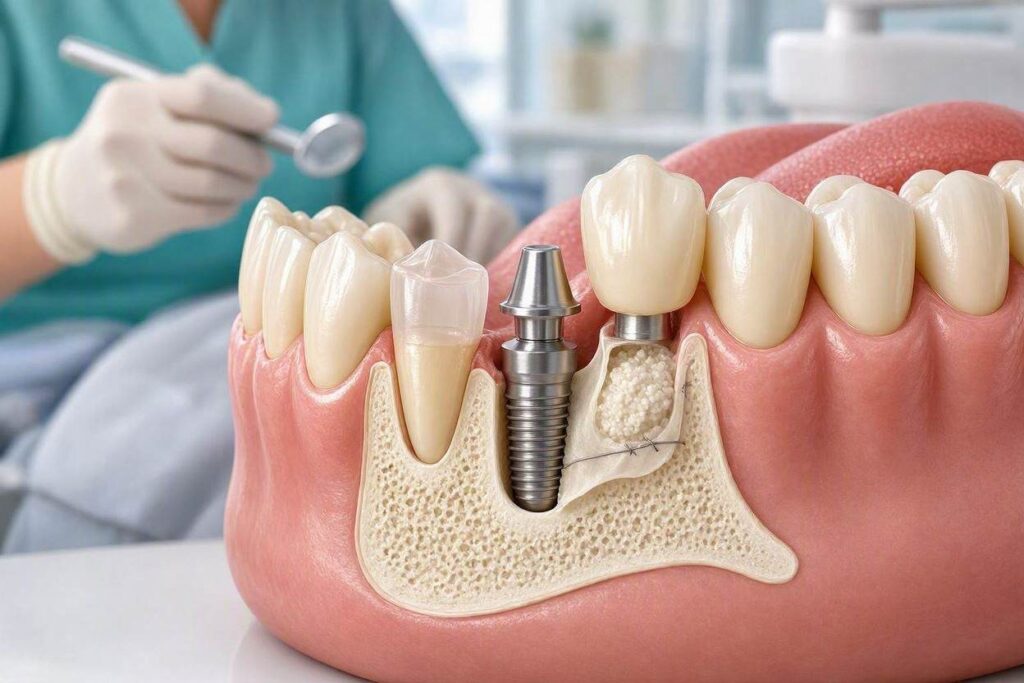
To understand an instant implant, you must first understand the fundamental biological process of all implant dentistry: osseointegration. This is the direct, structural, and functional connection between living bone and the surface of a load-bearing titanium implant. It is the process by which your jawbone cells grow onto the microscopically roughened surface of the implant, locking it into place as if it were a natural tooth root. In a traditional, delayed-loading protocol, the implant is placed into the bone, the gum is stitched over it, and it is left completely undisturbed for three to six months to allow this osseointegration to occur without the destabilizing force of chewing. Only after bone fusion is confirmed is the crown attached.
An instant implant protocol defies this traditional logic. The implant is placed, and on the same day, a temporary tooth or a full-arch bridge is screwed onto the implant. The patient chews on it immediately, though on a soft-food diet. For this to work without catastrophic failure, the implant must achieve something called primary stability.
Primary stability is not biological. It is mechanical. It is the immediate, physical interlocking of the implant threads with the dense cortical bone, much like a screw biting into hardwood. The surgeon achieves this by using a specific surgical technique. The implant site is prepared with precision drilling that slightly undersizes the bone relative to the implant. The implant is then torqued into place with an insertion torque of at least 35 Newton centimeters, often higher. This high insertion torque is the clinical sign that the implant is physically stable enough to resist the micro-movements that would lead to a fibrous, non-bony encapsulation, which is the definition of implant failure.
The immediate loading protocol is a race between mechanical stability and biological healing. The initial, high-torque mechanical grip holds the implant steady while the body’s bone cells begin the slower process of osseointegration. Over the next few months, the mechanical stability may slightly decrease as the bone remodels around the implant, while the biological stability increases. The temporary tooth must be crafted with a precise occlusion that minimizes any lateral, wiggling forces during this vulnerable transition. This is not a procedure for every patient or every tooth.
The Candidacy Gauntlet: Who Qualifies for Instant Implants
The instant implant protocol is highly selective. A responsible implant surgeon will reject far more patients than they accept for this approach. The selection criteria are rigid and non-negotiable.
- Sufficient Bone Volume and Density: This is the absolute gatekeeper. The implant site must have enough dense, healthy bone to achieve the necessary insertion torque. A patient with a history of tooth loss and significant bone resorption, or a patient with osteoporosis, will likely not qualify. The bone must be capable of gripping the implant mechanically on the day of surgery.
- An Atraumatic Extraction: The failing tooth must be removed with extreme care to preserve the bony socket walls. A surgical extraction that shatters the buccal plate of bone or leaves a large, gaping socket defect destroys the primary stability needed for immediate loading. The tooth must come out gently.
- Absence of Active Infection: An active, purulent abscess at the tooth root is a contraindication. The infection must be cleared, and the site must be debrided and allowed to begin healing before an implant can be predictably placed and loaded. Placing an implant into a pool of active bacteria is a recipe for early failure.
- Stable Systemic Health: Uncontrolled diabetes, heavy smoking, and immunocompromised states impair both wound healing and osseointegration. Patients with these conditions are typically directed toward a delayed, more predictable healing protocol.
- A Favorable Occlusion: The patient’s bite must be stable. A heavy clencher or bruxer who exerts destructive lateral forces on their teeth will likely overload a freshly placed implant and cause it to fail. Nighttime grinding is a significant risk factor for immediate-load implant failure.
The Full-Arch “All-on-4” Same-Day Protocol
The most common and predictably successful application of instant dental implants is not for a single tooth, but for a full arch of teeth. The “All-on-4” or “All-on-6” treatment concept is the flagship of same-day dentistry. A patient who has a full arch of failing, periodontally hopeless teeth, or who is already in a full denture, receives four to six strategically placed and angled implants.
The genius of the All-on-4 protocol lies in the posterior implants. By tilting the back implants at a 30- to 45-degree angle, the surgeon avoids the sinus cavity in the upper jaw and the inferior alveolar nerve in the lower jaw. This angled placement allows for a longer implant to be placed in the available bone, often engaging the dense cortical bone of the sinus or nasal floor. The result is a rigid, cross-arch splinted support. The four implants are connected by a rigid titanium or acrylic bar, and a full-arch temporary bridge is screwed onto them. The splinting distributes the chewing forces across all the implants, protecting each individual one from damaging micromovement.
The patient arrives in the morning with a failing, often unsightly, and painful dentition. They undergo the extractions, implant placement, and delivery of a fixed, provisional acrylic bridge all in a single, extended surgical appointment. They leave with a full set of teeth. They can smile that evening. They can eat a soft meal. The psychological transformation is profound and immediate. The biological race has begun.
The Distinction is Critical: The teeth the patient leaves with on the day of surgery are not the final, permanent teeth. They are a high-quality, fixed temporary bridge, milled from durable acrylic. This temporary serves for four to six months while the implants osseointegrate and the gums heal and mature. A second appointment is then required to take a master impression and fabricate the final, long-term zirconia or porcelain bridge. The “instant” is the immediate function and aesthetics. The “permanent” restoration is a separate, later phase.
The Single-Tooth Immediate Implant: A Higher Risk Profile
A single-tooth immediate implant in the aesthetic zone, the front of the mouth, is a far more demanding and risky procedure than a full-arch case. The implant is not splinted to adjacent implants for support. It stands alone, resisting the forces of the tongue, the lips, and the opposing teeth.
The primary risk is aesthetic failure, not biological failure of the implant. When a front tooth is extracted, the thin, fragile facial plate of bone that used to hold the root inevitably resorbs, or shrinks, within the first few months. Even with an immediate implant placement and a temporary crown, this bone shrinkage can cause the gum tissue to recede, revealing the dark grey of the implant abutment or creating an unaesthetic, uneven gum line. A patient who went through the procedure hoping for a perfect smile may end up with a functional implant that is visually compromised.
For a single front tooth, many specialists prefer a staged approach. The failing tooth is extracted, a bone graft is placed to preserve the socket walls, and a small, removable temporary tooth (an Essix retainer with a denture tooth, or a bonded “Maryland” bridge) is provided for social purposes. The implant is placed after the bone graft has matured, usually three to four months later. This does not offer the instant gratification of a same-day temporary crown on the implant, but it significantly reduces the risk of a catastrophic aesthetic gum recession that is almost impossible to fix beautifully. The “instant” in a single front tooth case is often a necessary compromise on long-term aesthetics for the sake of immediate function.
The Fee Structure: What You Pay for Instant Gratification
An instant dental implant procedure is a fee for a specific, protocol-driven service. It is not a separate, more expensive type of implant post. It is a surgical and restorative philosophy. The fee for an immediate-load implant, whether a single tooth or a full arch, includes the same components as a traditional implant: the surgery, the implant, the abutment, and the temporary restoration. The cost is often comparable to a traditional implant, but the total treatment package may be slightly higher due to the additional technical demands.
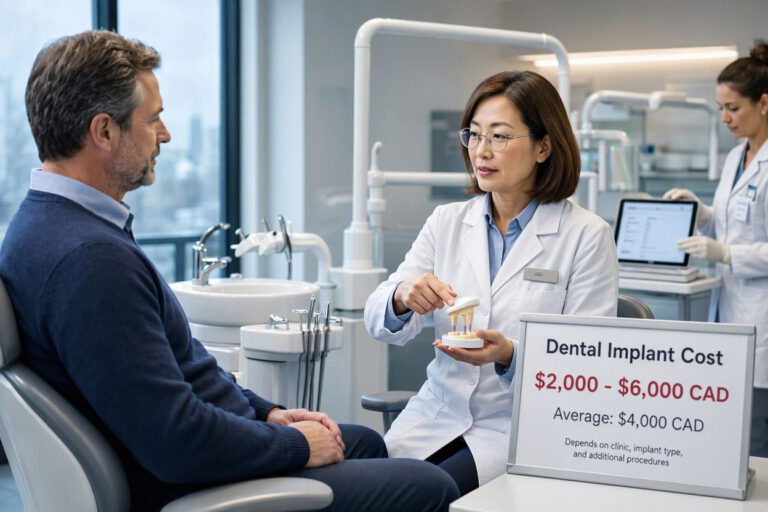
For a full-arch All-on-4 same-day case, the fee is a comprehensive package. It includes the pre-operative CBCT scan and surgical planning, the extractions, the implant placement, the multi-unit abutments, the immediate acrylic temporary bridge, and all post-operative visits during the healing phase. This package typically ranges from $20,000 to $30,000 per arch. The separate second phase, the final zirconia bridge delivered months later, adds another $5,000 to $10,000 to the total investment. The total cost for a full-mouth, same-day teeth to final zirconia restoration can range from $50,000 to $70,000.
This fee is a direct reflection of the high skill, precise technology, and complex laboratory support required to execute the protocol successfully in a single day. It is not a discount procedure. It is a premium, life-altering service delivered on an accelerated timeline.
Conclusion
Instant dental implants are a genuine, scientifically validated protocol that provides immediate function and a transformed smile in a single day. The procedure relies on achieving high primary mechanical stability in a carefully selected patient with sufficient bone quality. The most predictable application is the full-arch All-on-4 concept, where implants are splinted for mutual support. A single-tooth immediate implant, particularly in the front of the mouth, carries a higher aesthetic risk and demands a meticulous surgeon willing to say no to a candidate who is not ideal. The promise of leaving with teeth on the same day is real, but it must be viewed through the lens of strict biological requirements.
Frequently Asked Questions
Can any tooth be replaced with an instant implant?
No. The tooth must be extracted atraumatically, there must be no active infection, and the bone at the site must be dense and voluminous enough to achieve high primary stability. A back molar with multiple roots and a large, infected socket is rarely an ideal candidate. A single-rooted premolar with a clean extraction socket is a better candidate.
What happens if an instant implant fails?
Failure of an immediately loaded implant typically occurs within the first few weeks, signaled by increasing mobility and discomfort. If the implant fails, it is removed. The site is grafted with bone and allowed to heal completely, usually for three to four months. A new implant can then be placed using a traditional delayed protocol. The psychological and financial cost of a failure is significant and must be a part of the pre-operative risk discussion with your surgeon.
Are instant dental implants more painful?
The surgery itself is no more painful than a traditional implant surgery, performed under local anesthesia or sedation. However, the post-operative swelling and discomfort from a full-arch same-day surgery, involving multiple extractions and implant placements, is more substantial than a single implant. Your surgeon will prescribe a protocol of anti-inflammatory medication and pain relief to manage the first few days.
Additional Resource:
For a patient-focused explanation of the All-on-4 treatment concept and the immediate function protocol, visit the official Nobel Biocare patient education site: https://www.nobelbiocare.com/en-us/patient/teeth-in-a-day