What Food Stains Clear Braces?
Clear braces, whether they are ceramic brackets with clear or tooth-colored ligatures or clear aligner trays, represent a significant investment in an aesthetic orthodontic journey. The promise is a discreet, nearly invisible treatment. However, the materials used in these appliances are not impervious to the pigments in our daily diet. Certain foods and beverages can rapidly transform a transparent appliance into a dingy, yellowed, and conspicuously noticeable device. Understanding the chemistry of these stains and the specific dietary culprits is essential for preserving the clarity of your clear braces throughout your treatment.
The Chemistry of Staining on Orthodontic Appliances
The staining process on clear braces is not the same as enamel demineralization, which causes white spot lesions on the tooth surface. Braces staining is an extrinsic chemical process. The materials used in clear orthodontics, particularly the silicone and polyurethane in aligners and the composite resin used to bond ceramic brackets, are hydrophobic polymers with a microscopic surface texture. These surfaces are susceptible to the adsorption of chromogens, which are intensely pigmented molecules found in many foods and drinks.
The second staining mechanism involves tannins, a class of polyphenolic biomolecules found in plants. Tannins act as a mordant, meaning they chemically bind to proteins and polymers, creating a sticky film on the appliance surface. This tannin-rich film then traps and concentrates the chromogens, dramatically accelerating the staining process. Foods and beverages that are high in both chromogens and tannins are the perfect storm for clear brace discoloration. Acidic pH also plays a role by softening and etching the surface of the polymer, increasing its porosity and its affinity for pigment absorption.
The Primary Culprits: Chromogen-Rich Beverages
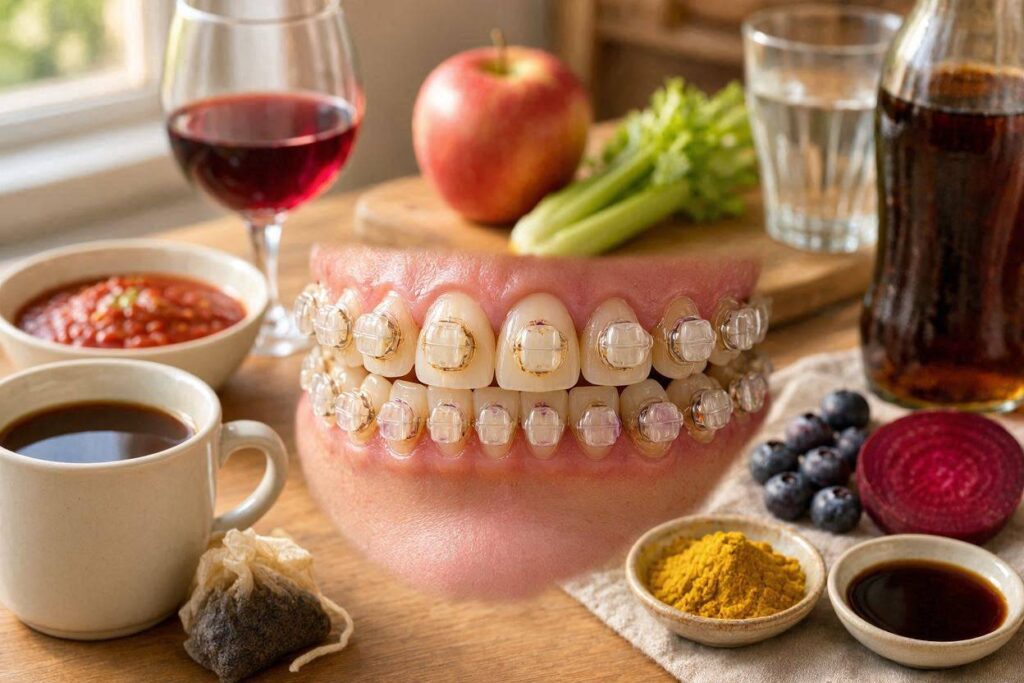
Coffee is the most notorious and pervasive staining agent for clear braces. It is intensely rich in dark brown chromogens and is typically consumed hot, which increases the thermal motion of the pigment molecules and drives them deeper into the microscopic pores of the appliance material. The acidity of coffee further roughens the surface, creating more binding sites for the stain.
Black tea is deceptively more staining than coffee per cup. It has an exceptionally high tannin concentration. Where coffee paints the appliance with its own dark brown pigments, tea creates a sticky tannin layer that then picks up color from other sources, often leaving a dull, yellowish-brown film. Red wine hits the trifecta. It contains concentrated chromogens that give it its deep ruby color. It is loaded with tannins from the grape skins and seeds. It is highly acidic. A single glass of red wine can visibly stain a set of clear aligners, and the same pigments aggressively discolor the clear ligatures holding a wire into a ceramic bracket.
Deeply Pigmented Foods and Spices
Curry, a staple of many global cuisines, is an orthodontic staining disaster. The brilliant yellow-orange pigment, curcumin, found in turmeric, has an extraordinary affinity for plastic and composite materials. It is a fat-soluble chromogen that penetrates the polymer matrix rapidly. A single meal containing curry can turn clear aligner trays a shocking, fluorescent yellow that does not wash out. Similarly, saffron and paprika deliver intense, penetrating yellow and red pigments.
Dark berries, including blueberries, blackberries, raspberries, and pomegranates, are packed with anthocyanins, potent antioxidant pigments that produce deep blues, purples, and reds. These pigments readily stain the elastomeric ligatures and the aligner material. Beetroot, with its intense betalain pigment, produces a vivid magenta-red stain. Soy sauce, with its dark brown, caramelized color and sticky consistency, coats the appliance in a film that is both a direct stain and a tannin-like trap for other pigments.
Balsamic Vinegar and Tomato-Based Sauces
Balsamic vinegar, with its dense, dark brown color, its high acidity, and its sticky adhesion, is a triple threat. A simple salad drizzled with balsamic reduction can leave a dark haze on clear brackets. Rich, slow-cooked tomato and marinara sauces, with their concentrated, oil-soluble red lycopene pigments and their inherent acidity, are a frequent cause of a gradual, progressive orange-red staining, especially of the clear elastic ties that are replaced at each adjustment visit.
Preventive Strategies During Meals
The most effective strategy for preventing food stains on clear braces is to remove the appliance before eating or drinking anything other than plain water. This is the fundamental advantage of removable clear aligners. The aligners are stored in a clean, dry case while you eat. This eliminates any direct contact between the appliance material and the staining food.
For fixed ceramic braces, removal is not an option. The patient must adopt defensive eating habits. Drink deeply staining beverages through a straw, directing the flow of the liquid past the front teeth and brackets to the back of the mouth. Rinse the mouth vigorously with plain water immediately after consuming any chromogen-rich food or drink. Swish the water across all surfaces of the teeth and braces for at least 30 seconds to dislodge pigment molecules before they can settle and bind. Do not sip a single coffee for an hour; the prolonged, constant bath of staining liquid is far more damaging than a quickly consumed single cup.
Immediate Cleaning and Long-Term Maintenance
The moment a clear aligner is removed from the mouth, it should be cleaned. Do not let the salivary film and any dietary pigments dry on the appliance. A dried-on pellicle bakes the stain into the material. Rinse the aligner immediately under cool, never hot, running water. Brush the aligner gently with a soft, separate toothbrush and a small amount of clear, fragrance-free liquid soap. Soap is a surfactant that emulsifies and lifts the oily chromogens off the hydrophobic plastic surface.
Use the cleaning crystals or tablets specifically formulated for clear aligners, such as Invisalign cleaning crystals. These products contain sodium sulfate and other gentle oxidizing agents that penetrate the biofilm and lift surface stains without abrading the material. Never use toothpaste on clear aligners or clear brackets. Toothpaste contains abrasive silica particles that will micro-scratch the smooth, polished surface of the appliance, turning it into a matte, opaque, light-scattering surface that is far more retentive for future stains. Wholesale clouding of a once-clear aligner is often the result of abrasive toothpaste scrubbing, not dietary staining alone.
Conclusion
The foods that most aggressively stain clear braces are those rich in chromogens, tannins, and acidity, with coffee, black tea, red wine, curry and turmeric, dark berries, and balsamic vinegar leading the list of known offenders. The staining mechanism is a chemical adsorption of pigments onto the polymer surface, accelerated by tannin-rich films and an acidic pH. Prevention relies on the removal of aligners for all consumption, the use of a straw for fixed braces, immediate and vigorous water rinsing, and a cleaning regimen that uses gentle surfactants and non-abrasive, specifically formulated cleaning agents, strictly avoiding any toothpaste that will microscopically roughen and cloud the appliance.
Frequently Asked Questions
Q: Can I drink iced coffee with clear aligners in?
A: No. Iced coffee is still a chromogen-rich, acidic liquid. If the cold, pigmented liquid sits inside the aligner tray, it will bathe your teeth and the appliance in a staining solution for an extended period, maximizing both the stain on the aligner and the risk of cavities on your teeth.
Q: If I eat a staining food, how quickly will my braces discolor?
A: The most potent chromogens, like turmeric in curry, can cause visible discoloration within a single meal. Other milder stains, like those from tomato sauce, accumulate over repeated exposures and become noticeable gradually. The staining is often immediate, even if the full intensity builds over hours.
Q: Will whitening my teeth also whiten my stained clear aligners?
A: Absolutely not. Tooth whitening gel is a peroxide-based chemistry designed to oxidize stains within the enamel’s organic matrix. It will not remove extrinsic chromogens from the polymer surface of an aligner or a bracket. It is also damaging to the appliance material.
Additional Resource
For manufacturer-recommended care protocols and scientifically validated cleaning product information for removable clear aligners, always start with the official patient care portal.
- Invisalign Care and Cleaning Guidelines: invisalign.com/how-to-clean-invisalign