Where On The NHS Can I Receive Dental Implants?
The National Health Service (NHS) in the United Kingdom provides comprehensive healthcare, including dental services. However, when it comes to dental implants, the situation is more complex. NHS dental implant treatment is limited and only available under specific circumstances. Understanding where and how to access NHS dental implants helps you navigate the system effectively.
This guide explains the NHS dental implant criteria, where treatment is provided, how to access services, and what alternatives exist if you do not qualify.
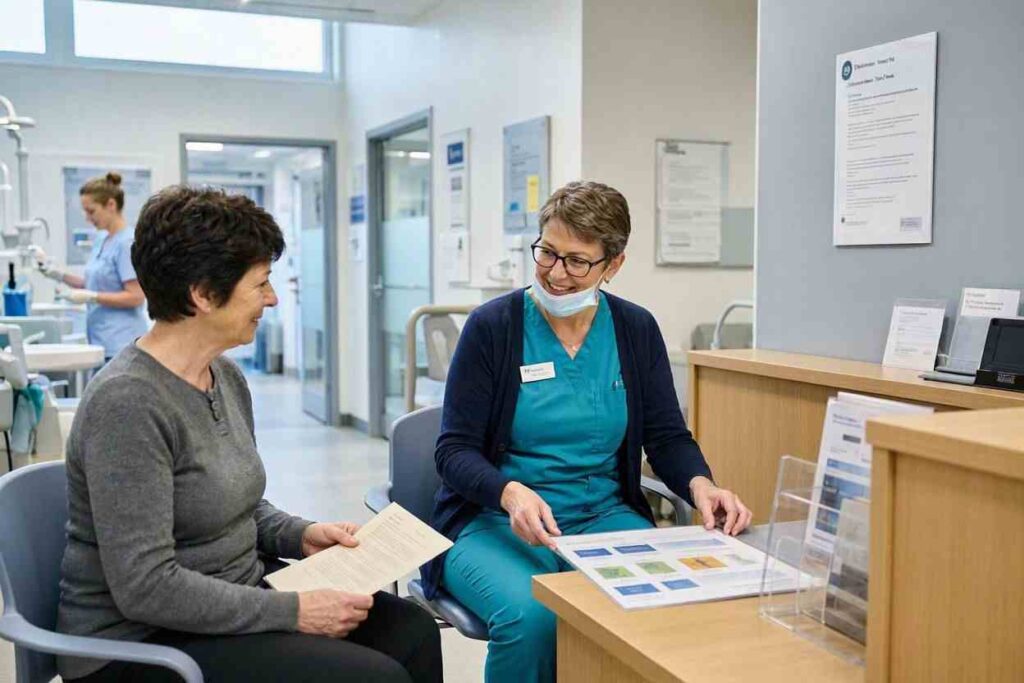
Understanding NHS Dental Services
Before exploring implant availability, it helps to understand how NHS dental care operates.
The Structure of NHS Dentistry
NHS dental services are provided through:
- General Dental Practices: Most NHS dental care occurs here
- Community Dental Services: For patients with special needs
- Hospital Dental Services: For complex cases and surgery
NHS Dental Charges
NHS dental treatment is not free for most adults. Charges are set in bands:
- Band 1: Examination and diagnosis – £25.80
- Band 2: Fillings, extractions, root canals – £70.70
- Band 3: Crowns, bridges, dentures – £306.80
Important Note: Dental implants are not included in the standard NHS banding system. They require separate funding approval.
Who Gets Free NHS Dental Care?
Some groups are exempt from NHS dental charges:
- Children under 18
- Full-time students under 19
- Pregnant women and new mothers
- People receiving certain benefits
- People with specific medical conditions
NHS Dental Implant Criteria
The NHS provides dental implants only when there is a clear clinical need.
When the NHS Provides Implants
NHS dental implants are available when:
- Congenital Absence: You were born without certain teeth
- Trauma: Tooth loss due to accident or injury
- Cancer Treatment: Tooth loss resulting from surgery or radiation
- Severe Developmental Conditions: Conditions affecting tooth development
- Inability to Wear Dentures: Some patients cannot tolerate conventional dentures
When the NHS Does Not Provide Implants
NHS implants are not available for:
- Purely cosmetic reasons
- Routine tooth replacement
- Patients who can successfully use dentures or bridges
- Cases where alternative treatments are clinically acceptable
The Assessment Process
To determine eligibility, you undergo a thorough assessment.
What the Assessment Involves:
- Clinical examination
- Medical history review
- X-rays and imaging
- Assessment of oral health
- Evaluation of alternative treatments
Where NHS Dental Implants Are Provided
NHS implant treatment is typically provided in hospital settings.
Hospital Dental Departments
Most NHS dental implants are placed in hospital dental departments.
What Hospitals Offer:
- Specialist oral surgeons
- Advanced imaging technology
- Multi-disciplinary teams
- Complex case management
How to Access:
- Referral from your general dentist
- Referral from a medical practitioner
- Referral from a community dental service
Teaching Hospitals
Dental teaching hospitals provide implant treatment as part of training programs.
Examples:
- Guy’s Hospital, London
- Manchester University Dental Hospital
- Birmingham Dental Hospital
- Leeds Dental Institute
Advantages:
- Treatment by supervised specialists in training
- Access to the latest techniques
- Often lower costs
Community Dental Services
For patients with special needs, community dental services may provide implant treatment.
Who Community Services Serve:
- Patients with disabilities
- Patients with complex medical conditions
- Patients with severe anxiety
- Patients unable to access general dental care
How to Access NHS Dental Implants
The process requires several steps.
Step 1: Visit Your General Dentist
Your journey begins with your regular NHS dentist.
What Happens:
- Examination of your oral health
- Discussion of your concerns
- Assessment of whether implants may be appropriate
- Referral if criteria are met
Step 2: Referral to Hospital
If your dentist believes you may qualify, they refer you to a hospital dental department.
What to Expect:
- Waiting time for the referral to be processed
- Appointment with a specialist
- Further assessment and imaging
Step 3: Specialist Assessment
The hospital specialist evaluates your case.
What the Specialist Checks:
- Bone density and volume
- Overall oral health
- Suitability for implant treatment
- Whether alternatives are more appropriate
Step 4: Approval Process
If the specialist recommends implants, funding approval is required.
Who Approves:
- The local Clinical Commissioning Group (CCG)
- The hospital’s funding panel
- Assessment against established criteria
Step 5: Treatment Planning
Once approved, a treatment plan is developed.
What the Plan Includes:
- Number of implants needed
- Surgical approach
- Timeline for treatment
- Follow-up care
Waiting Times for NHS Implants
NHS implant treatment involves significant waiting periods.
Typical Waiting Times
- Initial Referral: 2 to 6 months
- Specialist Assessment: 2 to 6 months
- Funding Approval: 1 to 3 months
- Treatment Start: 1 to 6 months after approval
- Total Wait: 6 months to 2 years
Factors Affecting Waiting Times
- Your geographic location
- The complexity of your case
- Hospital capacity
- Funding availability
Alternatives If You Do Not Qualify
If you do not meet NHS criteria, alternatives exist.
Private Dental Implants
Most dental implants in the UK are provided privately.
Costs:
- Single implant: £2,000 to £3,500
- Multiple implants: £5,000 to £15,000
- Full arch: £10,000 to £30,000
NHS Alternatives
The NHS may provide alternative treatments:
- Dental Bridges: Band 3 charge of £306.80
- Dentures: Band 3 charge of £306.80
- These alternatives are more affordable but less permanent
Dental Schools
Dental schools offer reduced-cost implants performed by supervised students.
Costs:
- Typically 40% to 60% lower than private practice
- Longer treatment times
- High-quality care
Dental Tourism
Some patients travel abroad for affordable implants.
Popular Destinations:
- Hungary
- Poland
- Turkey
- Thailand
Potential Savings: 50% to 70% compared to UK private prices
The Cost of NHS Dental Implants
If approved, NHS implants are not free for most adults.
What You Pay
NHS implant treatment is charged at Band 3 rate (£306.80) unless you are exempt.
What This Includes:
- The implant surgery
- The abutment
- The crown
- Follow-up care
Important Note: Some NHS trusts may charge additional fees for implant treatment. Clarify costs before proceeding.
NHS Implant Success Rates
NHS implant treatment maintains high standards.
Success Rates
NHS implant success rates are comparable to private treatment:
- Overall Success: 95% to 98%
- Lower Jaw: Higher success rates
- Upper Jaw: Slightly lower success rates
Quality Standards
NHS implant treatment follows strict guidelines:
- Use of approved implant systems
- Treatment by qualified specialists
- Regular follow-up and maintenance
The Future of NHS Dental Implants
The availability of NHS implants may change over time.
Current Trends
- Increasing demand for implants
- Limited NHS resources
- Stricter eligibility criteria
- Emphasis on prevention
What This Means
The NHS is likely to continue limiting implant treatment to cases of clear clinical need. Most patients seeking implants will need to consider private options.
Conclusion
NHS dental implants are available only when there is a clear clinical need, such as congenital absence, trauma, or cancer treatment. Treatment is provided in hospital dental departments and requires referral from your general dentist. Waiting times can be extensive, ranging from 6 months to 2 years. If approved, you pay the Band 3 charge of £306.80 unless exempt. Most patients seeking implants will need to explore private options or alternatives.
Frequently Asked Questions (FAQ)
Q: Can I get dental implants on the NHS?
A: Yes, but only if you meet specific clinical criteria such as congenital absence, trauma, or cancer-related tooth loss.
Q: How much do NHS dental implants cost?
A: NHS implant treatment is charged at the Band 3 rate of £306.80 unless you are exempt from charges.
Q: How long is the waiting list for NHS implants?
A: Waiting times typically range from 6 months to 2 years depending on your location and case complexity.
Q: Can I get implants on the NHS for cosmetic reasons?
A: No, the NHS does not provide implants for purely cosmetic reasons.
Q: What are the alternatives if I do not qualify for NHS implants?
A: Alternatives include private implants, dental bridges, dentures, and dental schools.
Q: How do I get referred for NHS implant treatment?
A: Visit your general NHS dentist, who can assess your case and refer you to a hospital dental department if appropriate.
Additional Resource
For more information on NHS dental services, visit the NHS website at www.nhs.uk. They provide comprehensive information on dental treatment and charges.