Can Ear Hurt From Upper Dental Implants?
Pain after dental implant surgery is expected, but some patients report discomfort in unexpected places—including the ear. If you have recently received upper dental implants and are experiencing ear pain, you may wonder whether the two are connected.
The answer is yes, ear pain can be related to upper dental implants. The intricate network of nerves, muscles, and bones in the head and neck region means that dental procedures can cause referred pain in the ear. This guide explains why ear pain occurs after upper dental implants, how long it typically lasts, and when you should seek professional help.
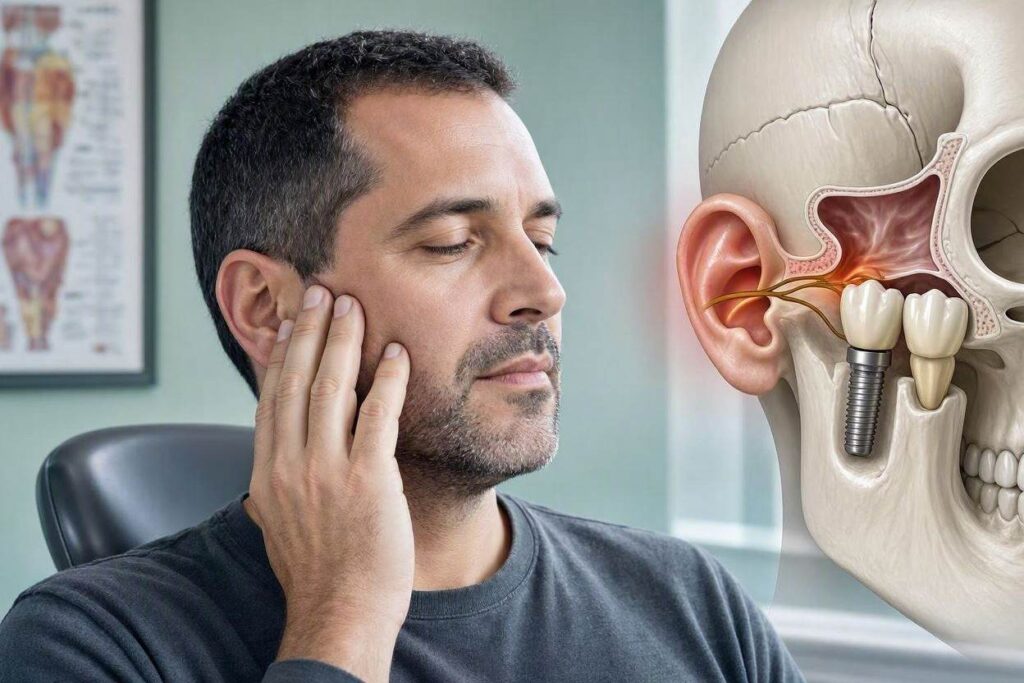
Understanding the Connection Between Teeth and Ears
To understand why upper dental implants can cause ear pain, it helps to know the anatomy involved.
The Trigeminal Nerve
The trigeminal nerve is the largest cranial nerve and provides sensation to the face, teeth, gums, and parts of the ear.
How It Works:
- The trigeminal nerve has three branches
- The maxillary branch serves the upper teeth and jaw
- The mandibular branch serves the lower teeth and jaw
- Pain signals can travel along these nerves and be felt in other areas
The Temporomandibular Joint (TMJ)
The TMJ connects the jaw to the skull and is located very close to the ear.
Why This Matters:
- Dental procedures can strain the TMJ
- TMJ strain can cause ear pain
- The proximity means pain is easily referred
Muscle Connections
The muscles used for chewing are connected to the jaw and skull.
How Muscles Contribute:
- Prolonged mouth opening during surgery strains muscles
- Muscle tension can radiate to the ear
- Spasms in chewing muscles cause ear discomfort
Why Upper Dental Implants Cause Ear Pain
Several specific reasons explain why upper dental implants may cause ear pain.
1. Referred Pain
Referred pain occurs when pain originates in one area but is felt in another.
How It Works:
- The nerves serving the upper teeth and ear share pathways
- Pain signals from the implant site travel along these shared pathways
- The brain interprets the signals as coming from the ear
2. Surgical Trauma
The implant surgery itself causes trauma to surrounding tissues.
What Happens:
- Incisions in the gum tissue
- Drilling into the bone
- Inflammation and swelling
- This trauma can trigger pain that radiates to the ear
3. Sinus Involvement
Upper dental implants, especially in the molar region, are close to the sinus cavities.
How Sinuses Are Involved:
- The roots of upper molars often extend near the sinus floor
- Implant placement can affect the sinus
- Sinus pressure or inflammation can cause ear pain
4. TMJ Strain
The surgery requires keeping your mouth open for an extended period.
What Happens:
- The jaw muscles become fatigued
- The TMJ may become strained
- This strain can cause pain that radiates to the ear
5. Nerve Irritation
The surgical procedure may irritate nearby nerves.
How Nerves Are Affected:
- Drilling near nerve pathways
- Swelling that compresses nerves
- This irritation can cause pain in areas served by the affected nerves
6. Infection
In some cases, infection after implant surgery can cause ear pain.
Signs of Infection:
- Persistent or worsening pain
- Swelling that does not improve
- Fever
- Pus or discharge
- Pain that radiates to the ear
How Long Does Ear Pain Last After Implant Surgery?
The duration of ear pain depends on the cause and severity.
Normal Post-Operative Pain
Mild to moderate ear discomfort is common in the first few days after surgery.
Typical Timeline:
- Days 1-3: Peak discomfort, including ear pain
- Days 4-7: Gradual improvement
- Weeks 2-4: Most pain resolves
- Months 2-3: Residual discomfort should subside
When Pain Indicates a Problem
Ear pain that persists beyond a few weeks or worsens over time may indicate a complication.
Warning Signs:
- Pain that increases after initial improvement
- Pain accompanied by fever or swelling
- Pain that does not respond to medication
- Pain lasting more than 4 weeks
Managing Ear Pain After Upper Dental Implants
Here are strategies to manage ear discomfort during recovery.
1. Pain Medication
Over-the-counter or prescription pain relievers can help.
Options:
- Ibuprofen (Advil, Motrin)
- Acetaminophen (Tylenol)
- Prescription pain medication (if prescribed)
Important Note: Follow your dentist’s instructions regarding medication.
2. Cold Compresses
Applying cold to the jaw area reduces swelling and numbs pain.
How to Use:
- Apply cold pack to the cheek near the implant site
- Use for 15 to 20 minutes at a time
- Repeat every few hours during the first 48 hours
3. Warm Compresses
After the first 48 hours, warm compresses can relax muscles and improve blood flow.
How to Use:
- Apply warm, moist cloth to the jaw
- Use for 15 to 20 minutes at a time
- Repeat as needed
4. Rest
Give your body time to heal.
Recommendations:
- Avoid strenuous activity
- Keep your head elevated
- Get adequate sleep
5. Soft Diet
Eating soft foods reduces strain on the jaw.
Recommended Foods:
- Yogurt
- Soup
- Mashed potatoes
- Smoothies
- Scrambled eggs
6. Gentle Jaw Exercises
After the initial healing period, gentle exercises can reduce stiffness.
How to Exercise:
- Slowly open and close your mouth
- Move your jaw side to side
- Do not force movement
When to Contact Your Dentist
Certain situations require professional evaluation.
Seek Immediate Care If:
- Ear pain is severe or worsening
- You have a fever
- There is significant swelling
- You experience hearing loss
- There is drainage from the ear
- You have difficulty swallowing or breathing
Schedule a Follow-Up If:
- Ear pain persists beyond 4 weeks
- Pain interferes with daily activities
- You notice signs of infection
- The implant feels loose
Other Causes of Ear Pain After Implants
Ear pain may not always be directly related to the implant.
Pre-Existing Conditions
Some patients have underlying ear conditions that coincidentally flare up after surgery.
Possible Conditions:
- Ear infections
- TMJ disorders
- Sinusitis
- Dental abscesses in other teeth
Unrelated Causes
Ear pain may be caused by factors unrelated to the implant.
Examples:
- Changes in air pressure
- Allergies
- Cold or flu
- Jaw clenching
Preventing Ear Pain After Implant Surgery
While some discomfort is normal, you can take steps to minimize ear pain.
Before Surgery
- Discuss any TMJ issues with your dentist
- Ask about the expected duration of the procedure
- Arrange for adequate recovery time
During Surgery
- Request breaks if the procedure is lengthy
- Ask about jaw support devices
After Surgery
- Follow post-operative instructions carefully
- Use pain medication as directed
- Apply cold compresses promptly
- Avoid activities that strain the jaw
The Difference Between Normal Pain and Complications
Understanding the difference helps you respond appropriately.
Normal Post-Operative Pain
- Mild to moderate intensity
- Improves over time
- Responds to medication
- Resolves within a few weeks
Pain Indicating Complications
- Severe or worsening intensity
- Does not improve with time
- Does not respond to medication
- Accompanied by other symptoms
Conclusion
Ear pain after upper dental implants is a common experience caused by the shared nerve pathways, muscle connections, and anatomical proximity of the teeth, jaw, and ear. In most cases, the discomfort is temporary and resolves within a few weeks. Managing pain with medication, cold compresses, rest, and a soft diet helps during recovery. If ear pain persists beyond four weeks, worsens, or is accompanied by other symptoms, contact your dentist promptly.
Frequently Asked Questions (FAQ)
Q: Is it normal to have ear pain after upper dental implants?
A: Yes, mild to moderate ear pain is common in the days following implant surgery due to shared nerve pathways and muscle strain.
Q: How long does ear pain last after implant surgery?
A: Ear pain typically resolves within 1 to 4 weeks. If it persists longer or worsens, contact your dentist.
Q: Can upper dental implants cause permanent ear problems?
A: Permanent ear problems from dental implants are extremely rare. Persistent pain usually indicates a treatable complication.
Q: What can I do to relieve ear pain after implant surgery?
A: Use pain medication, apply cold compresses, rest, eat soft foods, and perform gentle jaw exercises.
Q: When should I worry about ear pain after implants?
A: Seek professional care if pain is severe, worsening, accompanied by fever or swelling, or lasts more than 4 weeks.
Q: Can TMJ problems cause ear pain after implants?
A: Yes, strain on the TMJ during surgery can cause pain that radiates to the ear. This usually resolves with rest and gentle exercises.
Additional Resource
For more information on dental implant recovery and complications, visit the American Association of Oral and Maxillofacial Surgeons (AAOMS) at www.aaoms.org. They provide patient education resources.