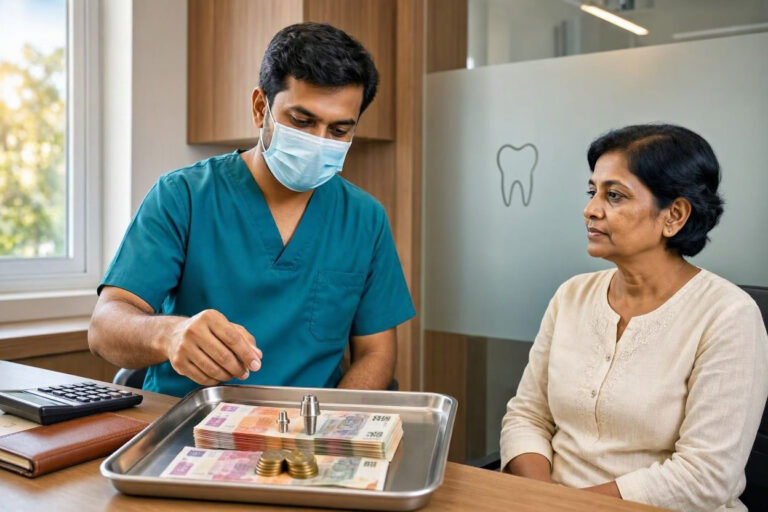
Why Are Implant Dentures So Expensive?
Implant-supported dentures, also known as overdentures or hybrid prostheses, represent a transformative solution for patients who have lost all or most of their teeth. They combine the stability and bone preservation of dental implants with the tooth-replacing function of a denture. However, the price—ranging from $7,000 for a simple two-implant overdenture to $35,000 or more per arch for a fixed full-arch zirconia bridge—often shocks patients. This guide provides a comprehensive, itemized explanation of why implant dentures are so expensive. We will deconstruct every cost component, from the surgical phase to the laboratory fabrication, and explain the clinical expertise, technology, and materials that justify the investment.
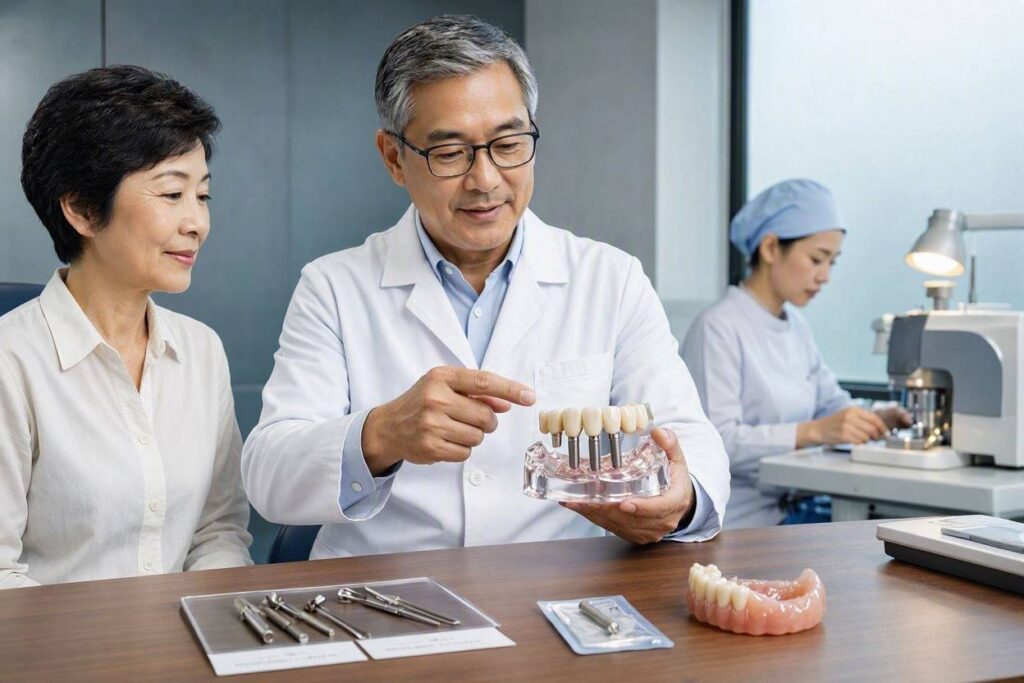
The Implant Denture Is a Complex, Multi-Phase Treatment
An implant denture is not a single product or a single procedure. It is a comprehensive treatment plan that unfolds over months and involves multiple specialists, advanced technology, and a custom-manufactured medical device. The total fee is the sum of several distinct phases, each with its own significant cost.
Phase 1: Diagnosis and Treatment Planning
Before any surgery is performed, a thorough diagnostic workup is completed. This is the intellectual and technical foundation of the case.
- Comprehensive Clinical Examination: The prosthodontist or implant dentist evaluates the existing dentition (if any), the soft tissues, the occlusion, and the facial aesthetics.
- Cone Beam Computed Tomography (CBCT) Scan: A three-dimensional X-ray of the jaws is mandatory. The CBCT reveals the bone volume, bone density, the position of the inferior alveolar nerve, the maxillary sinuses, and any pathology. The cost of a CBCT scan to the patient or practice is $200 to $600.
- Digital Intraoral Scans or Physical Impressions: Scans of the existing dentition or the edentulous ridges and any existing dentures are taken.
- Virtual Treatment Planning: The CBCT and intraoral scan data are merged using specialized implant planning software. The prosthodontist and surgeon plan the exact three-dimensional position of each implant based on the final prosthetic design. A surgical guide is designed and fabricated, either in-office with a 3D printer or by an external laboratory. The cost for the planning service and the surgical guide alone can be $500 to $1,500.
- Diagnostic Wax-Up and Mock-Up: For complex full-arch cases, a diagnostic wax-up of the proposed final teeth is created on stone models. A mock-up can be tried in the patient’s mouth. This labor-intensive process guides the entire case.
This diagnostic phase represents hours of professional time. It is the blueprint. Errors in planning are catastrophic. The cost reflects the expertise required to execute it correctly.
Phase 2: The Surgical Phase
The surgical phase involves the implant placement and any necessary adjunctive procedures.
- Extractions: Failing teeth must be removed. Each extraction carries a fee, and surgical extractions of broken-down teeth or root tips are more expensive.
- Alveoloplasty: The jawbone ridge often requires recontouring (smoothing) to create a flat, even platform for the implants and the denture. This is a surgical procedure with its own fee.
- Implant Placement: The implant body itself is a precision-engineered medical device. The cost of the implant hardware to the dentist is $250 to $600 per implant. The surgical fee for placing each implant covers the surgeon’s time, skill, the surgical kit, and the sterile environment. The fee per implant for the surgical placement alone is $1,000 to $2,500.
- Bone Grafting and Sinus Lifts: Many patients requiring full-arch implant rehabilitation have significant bone resorption. Bone grafting or sinus lift procedures are necessary to create adequate bone volume. These are separate surgical procedures with their own substantial fees. A bilateral sinus lift can add $4,000 to $7,000 to the total cost.
- Anesthesia and Sedation: Full-arch implant surgery is typically performed under IV sedation or general anesthesia. The sedation fee is separate from the surgical fee and covers the medications, the monitoring equipment, and the trained personnel. IV sedation administered by an oral surgeon or an anesthesiologist adds $500 to $1,500 or more.
- Immediate Provisional Prosthesis: In the “Teeth in a Day” protocol, an immediate fixed provisional denture is fabricated and attached to the implants on the day of surgery. This provisional prosthesis is a significant cost. The laboratory fee for a high-quality, aesthetic provisional full-arch bridge can be $1,500 to $3,000. The chair time to convert a denture into a provisional bridge or to deliver a pre-fabricated provisional is substantial.
Phase 3: The Restorative and Laboratory Phase
After the implants have osseointegrated (healed) for three to six months, the final restoration is fabricated. This phase is dominated by the dental laboratory fee.
- Final Impressions: A precise impression of the implant positions and the healed soft tissues is taken using specialized impression copings and materials. Digital scanning is increasingly used.
- Abutment Selection or Fabrication: The abutments—the connectors that attach the denture to the implants—are selected or custom-milled. Custom abutments add to the cost but provide a superior fit and emergence profile.
- Jaw Relation Records: The prosthodontist records the correct bite relationship (vertical dimension and centric relation) using record bases and wax rims. This is a critical step in ensuring the denture functions and looks correct.
- Try-In Appointment: A wax or milled try-in of the final teeth is inserted. The patient and dentist evaluate the aesthetics, phonetics, and occlusion. Adjustments are made.
- Laboratory Fabrication of the Final Prosthesis: This is the single largest cost component. The dental laboratory bill for a final fixed full-arch bridge varies dramatically based on the material.
- Acrylic Hybrid with Titanium Framework: The denture teeth are set in a pink acrylic base, supported by a milled titanium bar that screws into the implants. This is the standard, most cost-effective final restoration for a full-arch case. The laboratory fee is approximately $2,500 to $5,000.
- Monolithic Zirconia Full-Arch Bridge: The entire bridge is milled from a solid block of zirconia, with porcelain fused to the visible teeth and pink porcelain for the gums. This is the most durable and aesthetic option. The laboratory fee is approximately $5,000 to $10,000 or more.
- Delivery and Adjustment: The final prosthesis is delivered, the occlusion is adjusted, and the patient is given home care instructions. Multiple adjustment appointments may be needed.
Phase 4: Long-Term Maintenance
The initial fee covers the treatment through delivery of the final prosthesis. The long-term maintenance of an implant denture is a separate, ongoing cost. The prosthesis must be professionally removed, cleaned, and inspected every 6 to 12 months. The prosthetic screws may need replacement. The denture teeth will wear and may need replacement over time. The implants require the same professional maintenance as single implants.
The Cost of Expertise and Technology
Behind each of these phases is a team of highly trained professionals.
- The Surgical Specialist: An oral and maxillofacial surgeon or a periodontist has completed four to six years of post-doctoral hospital-based surgical residency. Their fee reflects this extensive training.
- The Restorative Dentist or Prosthodontist: A prosthodontist has completed three years of specialty training in complex restorative dentistry. They are the architect and the project manager of the implant denture case.
- The Master Dental Ceramist: The dental laboratory technician who fabricates the final prosthesis is a highly skilled artisan. The natural appearance of the final teeth and gums depends entirely on their ability to layer porcelain, characterize the gingival tissue, and create a lifelike restoration. Their laboratory fee is the largest single line item in the restorative phase.
- The Surgical and Restorative Team: The dental assistants, the surgical staff, and the treatment coordinator all contribute their expertise. The overhead of a modern, well-equipped dental practice—including CBCT machines, intraoral scanners, 3D printers, surgical motors, and a fully stocked inventory of implant components—is substantial.
The Value Proposition: A Long-Term Investment
Implant dentures are expensive, but they offer a value proposition that conventional dentures cannot match. They preserve bone, prevent the progressive facial collapse of edentulism, provide stable chewing function, eliminate the need for denture adhesives, and restore the ability to eat a normal, nutritious diet. A well-maintained implant-supported prosthesis can last for decades, with periodic replacement of the denture teeth or the overdenture itself.
When the total cost is amortized over 20 to 30 years of improved function, nutrition, comfort, and quality of life, the annual cost is comparable to or less than the cumulative cost of repeated conventional denture relines, remakes, and the associated oral health complications. The high upfront cost purchases a permanent solution to a chronic, progressive condition.
Conclusion
Implant dentures are expensive because they are not a single product but a comprehensive, multi-phase treatment involving advanced three-dimensional diagnostic planning, precision implant surgery often with sedation and bone grafting, and the custom fabrication of a high-technology prosthesis by a master dental laboratory ceramist. The total fee of $7,000 to $35,000 or more per arch reflects the surgical hardware, the laboratory materials (acrylic, titanium, or monolithic zirconia), and, most significantly, the expertise of the surgical and restorative team. This investment provides a long-term, bone-preserving, function-restoring solution that conventional removable dentures cannot achieve.
Frequently Asked Questions
Why is a full-arch fixed bridge so much more expensive than a snap-on overdenture?
A fixed full-arch bridge (All-on-4) requires more implants (typically 4 to 6 per arch), a significantly more expensive laboratory fabrication process (a titanium framework and individual denture teeth or a milled zirconia bridge), and more chair time for the restorative phase. A snap-on overdenture uses fewer implants (2 to 4) and a standard denture with locator attachments, which is less costly to fabricate. The fixed bridge provides superior function and aesthetics and does not have the palatal coverage of a denture, but it comes at a higher price.
Does dental insurance cover implant dentures?
Dental insurance typically provides limited coverage. The plan may cover the extractions and a portion of the implant surgical fees at the 50% major service level, but the annual maximum of $1,500 to $2,000 is quickly exhausted. The prosthetic denture or bridge is also subject to the annual maximum. The patient is responsible for the vast majority of the fee. Some medical insurance may cover the hospital or surgical facility fees if the procedure is performed in a hospital setting for medical reasons.
Can I finance an implant denture?
Yes. The majority of patients finance implant dentures through third-party lenders like CareCredit, LendingClub, or through in-house payment plans offered by the practice. The promotional 0% interest plans allow patients to pay over 12 to 18 months without interest if the balance is paid in full. Extended-term fixed-rate loans spread the cost over 36 to 60 months.
Is the cost of an implant denture worth it?
For a patient who is edentulous or facing complete tooth loss, implant dentures are a life-changing investment. They restore the ability to eat a full, nutritious diet without pain or embarrassment. They preserve the jawbone and facial support, preventing the premature aging of conventional dentures. They eliminate the daily frustration of loose, ill-fitting dentures. Patients who have made the investment overwhelmingly report a dramatic improvement in quality of life, self-esteem, and overall health. The value, measured over decades, justifies the upfront cost.
Additional Resource
The American College of Prosthodontists provides a patient education section at gotoapro.org. Prosthodontists are the specialists who plan and deliver implant-supported dentures and full-arch fixed bridges. The site explains the different types of implant prostheses, the treatment process, and helps patients understand the value and longevity of these restorations.