Zirconia Dental Implants Cost
When you are missing a tooth, the decisions can feel overwhelming. You want something that looks natural, feels safe, and lasts a long time. For many people, the fear of metal in their mouth is very real. That is why zirconia dental implants have become so popular.
But here is the first question almost everyone asks: What is the real Zirconia Dental Implants Cost?
You have probably seen numbers online that seem too low to be true. Or you have read about hidden fees. This guide is here to clear up the confusion. We will look at every single factor that changes the price. No confusing dental jargon. No fake promises. Just honest, helpful information to help you make the best choice for your health and your wallet.
What Exactly Are Zirconia Dental Implants?
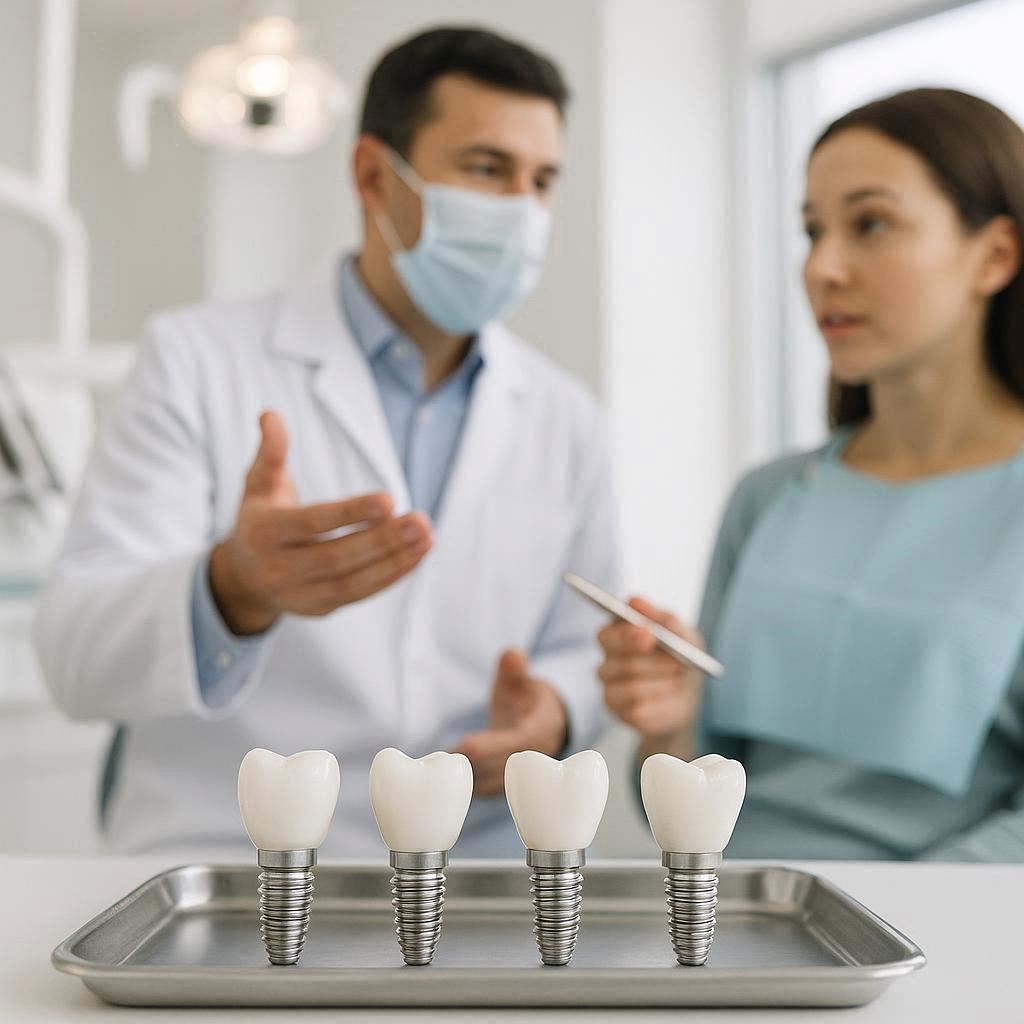
Before talking about money, it helps to understand what you are paying for. A traditional dental implant is usually made of titanium. That is a metal. A zirconia implant is made from zirconium dioxide. This is a white, ceramic material.
Think of it like this. If titanium is like steel, zirconia is like a very strong, high-tech porcelain. It is metal-free. That is the main reason people choose it.
Why Choose Zirconia Over Titanium?
People switch to zirconia for a few important reasons. First, if you have allergies to metal, zirconia is a perfect solution. Second, some people want to avoid metal in their body for personal or health reasons. Third, zirconia is white. It blends with your natural teeth. There is no grey metal line showing through your gum.
Important Note for Readers: Zirconia implants are not “new.” They have been used successfully for over two decades. However, they require a skilled dentist. Not every dentist offers them.
How Long Do They Last?
A well-placed zirconia implant, with good care, can last a lifetime. The crown on top might need replacement after 10 to 15 years due to normal wear. But the implant itself is incredibly durable. This is important because the cost per year goes down the longer it lasts.
The Real Zirconia Dental Implants Cost Breakdown
Now, let us get to the numbers. This is the part where many articles are not honest. They quote a single price that does not include everything you actually need.
The total cost is not one number. It is a package of several services.
The Average Range for a Single Tooth
For one zirconia dental implant, including the implant post, the abutment, and the final crown, you should expect to pay between $3,000 and $6,000.
Why such a wide range? Because every mouth is different. A simple case in a city with lower costs is on the lower end. A complex case with bone grafting in a major city is on the higher end.
Here is a simple table to show you what affects that range.
| Factor | Lower Cost ($3,000 – $4,000) | Higher Cost ($4,500 – $6,000+) |
|---|---|---|
| Dentist Skill Level | General dentist with basic training | Prosthodontist or implant specialist |
| Location | Rural area or low-cost city | Major metropolitan area (NYC, LA, London) |
| Bone Quality | No bone grafting needed | Sinus lift or bone graft required |
| Implant Brand | Newer or lesser-known brand | Top brands (Strauss, Z-Systems, Ceraroot) |
| Temporary Tooth | No temporary crown | Custom temporary crown included |
Multiple Teeth and Full Arches
What if you need more than one tooth? The cost per tooth usually goes down a little. A dentist has to do some steps only once, even for multiple implants.
- Two to three teeth: Total cost between $6,000 and $12,000.
- Full upper or lower arch (all teeth): This is a major procedure. A full zirconia implant bridge can cost between $15,000 and $30,000 per arch.
Do not be shocked by the high end. Replacing all your teeth with metal-free implants is a complex, time-consuming job. It requires advanced training and high-quality materials.
What Is Included in That Price? (The Hidden Costs Explained)
This is where many people get a surprise. A low quote often misses essential parts of the treatment. You always need to ask for a “treatment plan” that breaks down every single step.
Here are the main components that make up the final bill.
1. The Consultation and Imaging (Often Separate)
Before any work, the dentist needs to see your bones and nerves. A simple x-ray is cheap. But for implants, you need a 3D scan called a CBCT. This can cost $250 to $500 on its own. Some clinics include it in the total package. Always ask.
2. Extractions (If the Tooth Is Still There)
If you have a damaged tooth where the implant will go, it must be removed. A simple extraction is $75 to $200. A surgical extraction (tooth is broken or stuck) is $200 to $500.
3. Bone Grafting (Very Common)
Your jawbone needs to be thick and tall enough to hold the implant safely. Many people have lost bone due to missing teeth or gum disease. A bone graft adds material to build up the bone.
- Simple graft: $500 – $1,000
- Sinus lift (for upper back teeth): $1,500 – $3,000
Do not skip this. If a dentist offers a very low price and says you do not need a graft when others say you do, be careful. Placing an implant in weak bone is a recipe for failure.
4. The Implant Placement Surgery
This is the actual procedure to put the zirconia post into your bone. The fee covers the surgeon’s time, the sterile room, anesthesia, and the implant part itself. This is usually $1,500 to $3,000 of the total cost.
5. The Abutment and Crown
The abutment is the connector piece. The crown is the visible white tooth. For zirconia systems, both are often made of the same material. The lab fee for a high-quality zirconia crown is $500 to $1,500.
6. Sedation or Anesthesia
Most people get local numbing (like for a filling). That is usually included. But if you are very nervous, you might want laughing gas ($200-$400) or IV sedation ($500-$1,000). This is an extra cost.
A Helpful List: Questions to Ask Your Dentist About Cost
Take this list to your consultation. Write down the answers.
- Does the quoted price include the CBCT scan?
- Are extractions included, or are they separate?
- Does this price include a bone graft if I need one?
- Is the final crown made of high-quality zirconia or a cheaper material?
- What happens if the implant fails? Is there a warranty?
- Is the temporary tooth included during healing?
- Do you offer any payment plans or financing?
Zirconia vs. Titanium: A Realistic Cost Comparison
You have to compare apples to apples. A cheap titanium implant from a discount clinic is not the same as a premium zirconia implant from a specialist. But here is the general truth.
| Feature | Zirconia Implant | Titanium Implant |
|---|---|---|
| Average Cost (Single Tooth) | $3,000 – $6,000 | $1,500 – $4,000 |
| Material | Metal-free, white ceramic | Metal (titanium alloy) |
| Aesthetics | Excellent. No grey gum line. | Good, but metal can show through thin gums. |
| Corrosion Risk | Zero. Does not corrode. | Very low, but possible in rare cases. |
| Allergy Risk | None. Biocompatible. | Minimal, but real for metal-sensitive people. |
| Strength | Extremely strong (but slightly less flexible than titanium). | Very strong and flexible. |
| One-Stage Surgery | Often possible (implant and abutment together). | Usually two-stage surgery. |
| Integration Time | 4-6 months typically. | 3-6 months typically. |
A titanium implant is often cheaper upfront. But if you value metal-free materials and perfect aesthetics, zirconia is worth the extra money. The difference is usually $1,000 to $2,000 more per tooth for zirconia.
Does Insurance Cover Zirconia Dental Implants Cost?
This is a common source of confusion. Dental insurance companies see implants as a “major” procedure. Most basic plans do not cover them at all. Some premium plans cover a percentage.
Here is the important part for zirconia specifically.
Insurance usually does not care what the implant is made of. They care about the procedure code. If they cover a titanium implant, they will cover a zirconia implant at the same rate. However, they will only pay up to their yearly maximum. That maximum is often $1,000 to $1,500 per year.
So, if your zirconia implant costs $5,000, your insurance might pay 50% of the surgery fee up to $1,000. You still pay $4,000 out of pocket.
Key advice: Call your insurance and ask two questions:
- “Do we have implant coverage?”
- “What is my annual maximum?”
Do not assume a procedure is “covered.” Always get pre-authorization in writing.
Financing and Payment Options: Making It Affordable
Very few people have $5,000 in a dental savings account. That is normal. The good news is that you have real options to manage the Zirconia Dental Implants Cost.
Dental Savings Plans (Not Insurance)
A dental savings plan is a membership. You pay a yearly fee ($100-$200). Then you get a discount (usually 20-40%) on几乎所有 services, including implants from participating dentists. This can save you $1,000 or more.
Health Savings Account (HSA) or Flexible Spending Account (FSA)
If you have an HSA or FSA through your job, you can use that money for implants. This is tax-free money. It does not lower the price, but it lowers your overall tax bill.
In-House Payment Plans
Many good implant dentists offer a monthly payment plan directly through their office. They might ask for 50% down and then 6 or 12 monthly payments. No credit check. No interest. Just ask.
Third-Party Medical Financing
Companies like CareCredit, Alphaeon, and LendingClub offer special credit cards for healthcare. They often have 0% interest for 6 to 18 months if you pay on time. Be careful. If you miss a payment, the interest rate jumps very high (over 25%).
What to Avoid
Be very careful with “all-in-one” discount dental clinics. If the price seems too good to be true (e.g., $1,500 for a full zirconia implant), it is. They often use low-quality parts, rush the surgery, or add hidden fees later. Cheap work today means expensive repairs tomorrow.
Why Cheaper Is Not Better for Zirconia Implants
Let us be honest. Saving money feels good. But dental implants are surgery. The material in your jaw is for life.
A low-quality zirconia implant can crack. It can fail to integrate with your bone. It can break under pressure. Fixing a failed implant is much harder and more expensive than the first surgery. You could lose more bone. You might need a bigger graft.
Think of it like buying a car. You can buy a very cheap car. But it might break down on the highway. A reliable car costs more, but it gets you where you need to go safely for years.
The same is true for zirconia implants. Pay for the skill of the dentist and the quality of the material. Your mouth is not a place to cut corners.
Long-Term Value: Is It Worth the Investment?
This is the most important question of all. Let us do simple math.
A $5,000 zirconia implant that lasts 30 years costs you about $167 per year. That is $13.90 per month. Less than a streaming service and a coffee each week.
A $2,500 titanium implant that needs replacement after 10 years (due to gum recession showing metal or an allergy) costs you $250 per year. More expensive over time.
Plus, zirconia offers benefits money cannot easily buy:
- Peace of mind (no metal in your body).
- Better gum health (plaque is less likely to stick to zirconia).
- Aesthetics (no one will ever know it is an implant).
For many people, the slightly higher upfront cost is a smart long-term investment.
Step-by-Step: What to Expect During the Process
Understanding the timeline helps you understand the cost. You are not paying for one appointment. You are paying for a process over several months.
Step 1: Consultation and Planning ($250 – $500)
You get the CBCT scan. The dentist plans the perfect position for the implant.
Step 2: Preparatory Work (Varies)
Extractions or bone grafting, if needed. You heal for 3-6 months.
Step 3: Implant Placement Surgery (Most of the cost)
The dentist places the zirconia post into your bone. You go home with a temporary tooth.
Step 4: Osseointegration (Healing time)
Your bone grows tightly around the zirconia. This takes 4 to 6 months. No extra cost during this time.
Step 5: Final Crown Placement (Lab fee + final payment)
The dentist attaches your custom, permanent zirconia crown. You are done.
Geographic Price Differences in the US and UK
Where you live changes the price significantly.
- USA (NYC, San Francisco, Los Angeles): $4,500 – $7,000 per implant
- USA (Midwest, Texas, Florida): $3,000 – $5,000 per implant
- UK (London): £3,500 – £5,500 per implant
- UK (North England, Scotland): £2,500 – £4,000 per implant
- Medical Tourism (Mexico, Costa Rica, Turkey): $1,200 – $2,500 per implant (plus travel costs)
A strong warning on medical tourism: Getting an implant in another country is cheaper upfront. But if it fails, no local dentist wants to fix someone else’s work. You could end up paying to remove it and start over. Travel also means no follow-up care.
Common Myths About Zirconia Implant Costs (Busted)
Myth 1: Zirconia implants are not as strong as titanium.
False. Zirconia is incredibly strong, with a fracture resistance close to titanium. It does not bend, but that is rarely an issue for single teeth.
Myth 2: All zirconia implants are the same.
False. There are two main types: one-piece (implant and abutment together) and two-piece (separate parts). Two-piece is more expensive but more flexible for the dentist.
Myth 3: Insurance never covers zirconia.
Not true. They cover the procedure code, not the material. If they cover implants, they cover both types.
Myth 4: You can get a zirconia implant in one day.
Rarely true. “Teeth in a day” is almost always titanium. Zirconia usually requires a healing period for best results.
A Complete Example for a Reader Named Sarah
Let us make this real. Meet Sarah. She is missing tooth #19 (a lower molar). She wants a metal-free solution.
Here is her real treatment plan from a quality clinic in Denver, Colorado.
| Service | Cost |
|---|---|
| Initial consult and CBCT scan | $400 |
| Extraction of broken tooth | $250 |
| Simple bone graft | $600 |
| Zirconia implant placement (one-piece system) | $2,500 |
| Healing abutment and temporary crown | $300 |
| Final zirconia crown (custom milled) | $1,200 |
| Total for Sarah | $5,250 |
Sarah’s insurance paid $1,000. She used her HSA for $2,000. She paid the remaining $2,250 over 10 months with a 0% in-house plan. She now has a beautiful, metal-free tooth.
What Does the Research Say About Success Rates?
You want the truth, not marketing. Research shows that zirconia implants have a success rate of 92-98% after five years. Titanium is around 95-98%. They are essentially equal.
The difference is not in success. It is in patient preference. People who choose zirconia report higher satisfaction because they love the metal-free, natural look.
One 2023 review in the Journal of Dental Materials found that zirconia implants cause less inflammation in the gum tissue over time compared to titanium. This is good news for long-term health.
Additional Costs to Plan For (Honest and Realistic)
Let us be fully transparent. Sometimes things do not go perfectly. Plan for these possibilities.
- Failed integration (implant does not fuse): 2-5% chance. Removal costs $500-$1,000. Replacement is at partial cost.
- Crown breakage (rare with zirconia): Replacement crown $600-$1,500.
- Peri-implantitis (infection around implant): Treatment $300-$1,000.
- Annual maintenance check: $100-$200 per year.
Choosing an experienced dentist reduces these risks significantly.
How to Find a Qualified Zirconia Implant Dentist
Price is important. But the dentist’s skill is more important. Here is how to find a good one.
- Look for advanced training. Search for “treatment of dental implants” or “implant surgery” in their bio. Many weekend courses are not enough.
- Ask how many zirconia implants they place per month. A good answer is 5 or more.
- Look for “metal-free” or “biological dentistry” practices. They specialize in zirconia.
- Read reviews specifically about implants. Look for words like “pain-free,” “explained everything,” “beautiful result.”
- Get two or three consultations. Compare the treatment plans, not just the prices.
Frequently Asked Questions (FAQ)
1. Are zirconia dental implants more expensive than titanium?
Yes, generally. Expect to pay $1,000 to $2,000 more per implant for zirconia due to the material costs and the specialized skill required.
2. Can my body reject a zirconia implant?
True rejection (allergic reaction) is extremely rare because zirconia is bioinert. However, the bone can fail to integrate (fuse) with the implant. This happens at a similar rate to titanium (2-5%).
3. Does dental insurance cover any part of zirconia implants?
Some plans cover a portion of the surgical placement, but rarely the full cost. Always check your specific policy for “implant coverage” and your annual maximum.
4. How long does the entire process take?
Typically 6 to 9 months from extraction to final crown. This includes 4-6 months of healing time for the bone to integrate with the zirconia.
5. Is the final crown also made of zirconia?
Yes, for a truly metal-free result. The implant post and the crown are both made from high-strength zirconia ceramic.
6. Can I get zirconia implants for all my teeth?
Yes. Full arch zirconia bridges (sometimes called metal-free hybrid dentures) are available. They cost between $15,000 and $30,000 per arch.
7. What happens if a zirconia implant breaks?
Breakage is very rare with modern zirconia. If it happens, the implant must be surgically removed. This is complex because zirconia is so hard to drill through.
Final Conclusion
Zirconia dental implants cost between $3,000 and $6,000 per tooth, with full arches ranging up to $30,000. While this is a higher upfront investment than titanium, the metal-free biocompatibility, superior aesthetics, and long-term durability offer excellent value for the right patient. Always prioritize an experienced dentist and a comprehensive treatment plan over the lowest advertised price.
Disclaimer: This article is for informational purposes only and does not constitute medical or financial advice. Dental costs vary significantly by location, provider, and individual patient needs. Always consult with a licensed dental professional for a personal treatment plan and accurate cost estimate. The author and publisher are not responsible for any decisions made based on this content.