British Columbia Dental Implants: A Complete Patient’s Guide
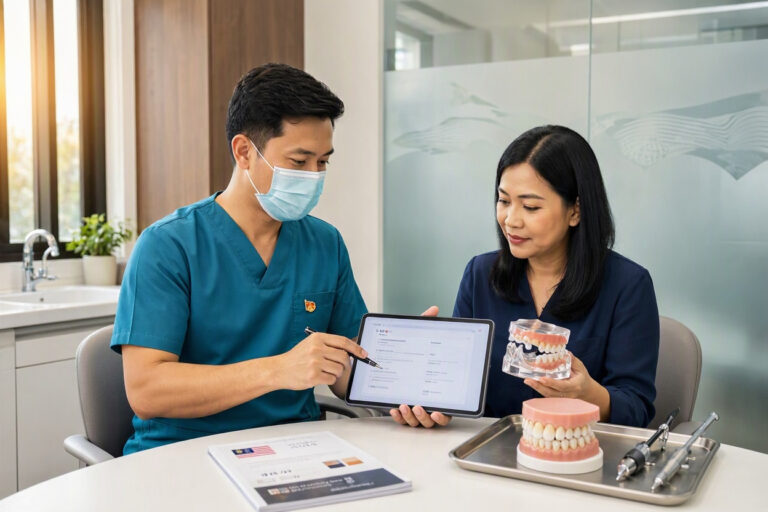
Losing a tooth can feel unsettling. It might affect how you eat, smile, or even speak. If you are searching for a permanent solution in this province, you have likely come across the term British Columbia dental implants.
Unlike dentures or bridges, implants offer a fixed, natural-feeling foundation. They are designed to fuse with your jawbone, providing stability that other options simply cannot match.
But let us be honest—getting a dental implant is a big decision. It involves time, money, and trust in a professional. This guide is here to walk you through every single step. You will learn about costs, risks, benefits, and how to find quality care from Vancouver Island to the Kootenays.
What Exactly Are Dental Implants?
A dental implant is not just the false tooth you see. It is a complete system.
Imagine a man-made tooth root, usually made from medical-grade titanium. A surgeon places this screw-like post into your jawbone. Over a few months, your bone grows around it. This process is called osseointegration. Once the implant is secure, your dentist attaches an abutment (a connector piece). Finally, a custom crown goes on top.
The Three Main Parts of an Implant
| Component | Function | Material |
|---|---|---|
| Implant Fixture (Post) | Replaces the tooth root; fuses with jawbone. | Titanium or Zirconia |
| Abutment | Connects the post to the crown. | Titanium, Gold, or Zirconia |
| Prosthetic Crown | The visible, functional tooth. | Porcelain fused to metal, Full Ceramic, or Zirconia |
Single vs. Multiple Implants
You do not need one implant per missing tooth. If you are missing three teeth in a row, your dentist may place two implants and use a bridge between them. For a full arch (all teeth on top or bottom), some clinics offer fixed implant-supported dentures or All-on-4 systems. These use four to six implants per jaw to hold a full set of teeth.
Important note for readers: An implant is not always the right choice for everyone. Heavy smokers, people with uncontrolled diabetes, or those who grind their teeth severely may need additional treatments first. Always complete a full consultation.
Why Choose British Columbia for Your Implant Procedure?
British Columbia is unique. The province has a high standard for dental care, but costs and availability vary wildly depending on where you live.
Advantages of Getting Implants in BC
- Strict regulatory standards. The College of Dental Surgeons of British Columbia (CDSBC) oversees all licensed dentists. You have recourse if something goes wrong.
- Access to advanced technology. Most urban clinics in Vancouver, Victoria, Kelowna, and Surrey use 3D cone beam CT scans and digital impression systems.
- No out-of-country travel risks. You avoid the complications of “dental tourism” (infections from unsterile tools, no follow-up care).
Disadvantages to Consider
- High cost compared to other provinces or countries. BC is among the more expensive regions in Canada for implants.
- Long wait times for specialists. Oral surgeons and periodontists in busy cities may book three to six months ahead.
- Rural access issues. If you live in northern BC or small interior towns, you may drive 3+ hours to find an experienced implantologist.
How Much Do British Columbia Dental Implants Cost? (Realistic Figures)
Let us talk numbers. Avoid any website that promises a full implant for “$1,500” in BC. That is unrealistic. That price might cover only the crown or the surgical guide, not the entire procedure.
Here is a honest, current breakdown for a single tooth implant in BC (2025–2026 estimates).
| Procedure Component | Low Estimate (CAD) | High Estimate (CAD) |
|---|---|---|
| Consultation + 3D CT Scan | $250 | $600 |
| Implant Fixture (surgical placement) | $1,800 | $3,000 |
| Abutment | $400 | $800 |
| Custom Crown | $1,200 | $2,200 |
| Total for One Implant | $3,650 | $6,600 |
Additional Potential Costs
- Bone graft (if your jaw is too thin): 500–2,500 per site.
- Sinus lift (upper back molars): 1,500–3,000.
- Extraction of damaged tooth: 200–500.
- Temporary partial denture during healing: 300–800.
Full arch (All-on-4) : Prices range from 15,000to15,000to35,000 per arch (top or bottom). High-end options using zirconia can exceed $45,000.
“Patients often ask me why implants cost more upfront than dentures. The answer is simple: you are paying for surgery, custom engineering, and materials that can last 30 years. Dentures need replacement every 5-7 years.” — Dr. Sarah Lin, Vancouver prosthodontist.
Types of Dental Implants Available in BC
Not all implants are the same. Your specialist will choose a system based on your bone density, budget, and aesthetic needs.
1. Endosteal Implants (Most Common)
These go directly into the jawbone. They look like small screws or cylinders. Endosteal implants are the standard for over 95% of cases in BC. They work well for most healthy adults.
2. Zygomatic Implants
If you have severe bone loss in the upper jaw and cannot have a bone graft, a specialist may use zygomatic implants. These anchor into your cheekbone (zygoma) instead of the jaw. This procedure is rare and complex. Only a handful of oral surgeons in BC offer it. Expect costs above $8,000 per implant.
3. Mini Dental Implants (MDIs)
These are thinner than traditional implants. They are often used to stabilize lower dentures. MDIs are less invasive and cheaper (1,500–2,500 each). However, they are not as durable for single-tooth replacement in high-chewing areas.
4. Same-Day Implants (Immediate Loading)
Some clinics advertise “teeth in a day.” This is possible if you have excellent bone quality. The surgeon places the implant and attaches a temporary crown during the same appointment. However, the final crown still requires healing. Do not expect permanent teeth in one visit. Same-day is an option, not a guarantee.
How to Choose a Dental Implant Provider in British Columbia
You have choices. General dentists, periodontists, oral surgeons, and prosthodontists all place implants. But their training levels differ.
Comparing Provider Types
| Specialist | Years of Extra Training | Best For |
|---|---|---|
| General Dentist | Weekend courses to 1 year | Single, straightforward implants in healthy bone. |
| Periodontist | 3 years (gum & bone specialist) | Cases with gum disease or thin bone. |
| Oral Surgeon | 4-6 years (hospital-based) | Complex extractions, bone grafts, sinus lifts, full arch. |
| Prosthodontist | 3 years (restoration specialist) | Multiple implants, full mouth reconstruction, aesthetics. |
Key Questions to Ask Before You Commit
- “How many implant placements have you done in the last 12 months?” (Look for 50+ per year)
- “Do you use a 3D CBCT scanner for planning?” (Yes is mandatory for safety)
- “What happens if my implant fails?” (Reputable clinics offer a warranty, often 1–5 years)
- “Can you provide patient references or before/after photos?” (Be wary of no portfolio)
The Step-by-Step Procedure: From Consultation to Crown
Understanding the timeline helps reduce anxiety. For a standard single implant, expect 4 to 9 months from start to finish.
Phase 1: Consultation and Planning (1–2 visits)
Your dentist examines your mouth, takes X-rays or a CT scan, and reviews your medical history. They will tell you if you need a bone graft or sinus lift. You receive a written treatment plan with all costs.
Phase 2: Tooth Extraction (if needed) + Bone Graft
If the damaged tooth is still present, the surgeon removes it. Then they may pack bone graft material into the socket. You heal for 3 to 6 months.
Phase 3: Implant Placement Surgery
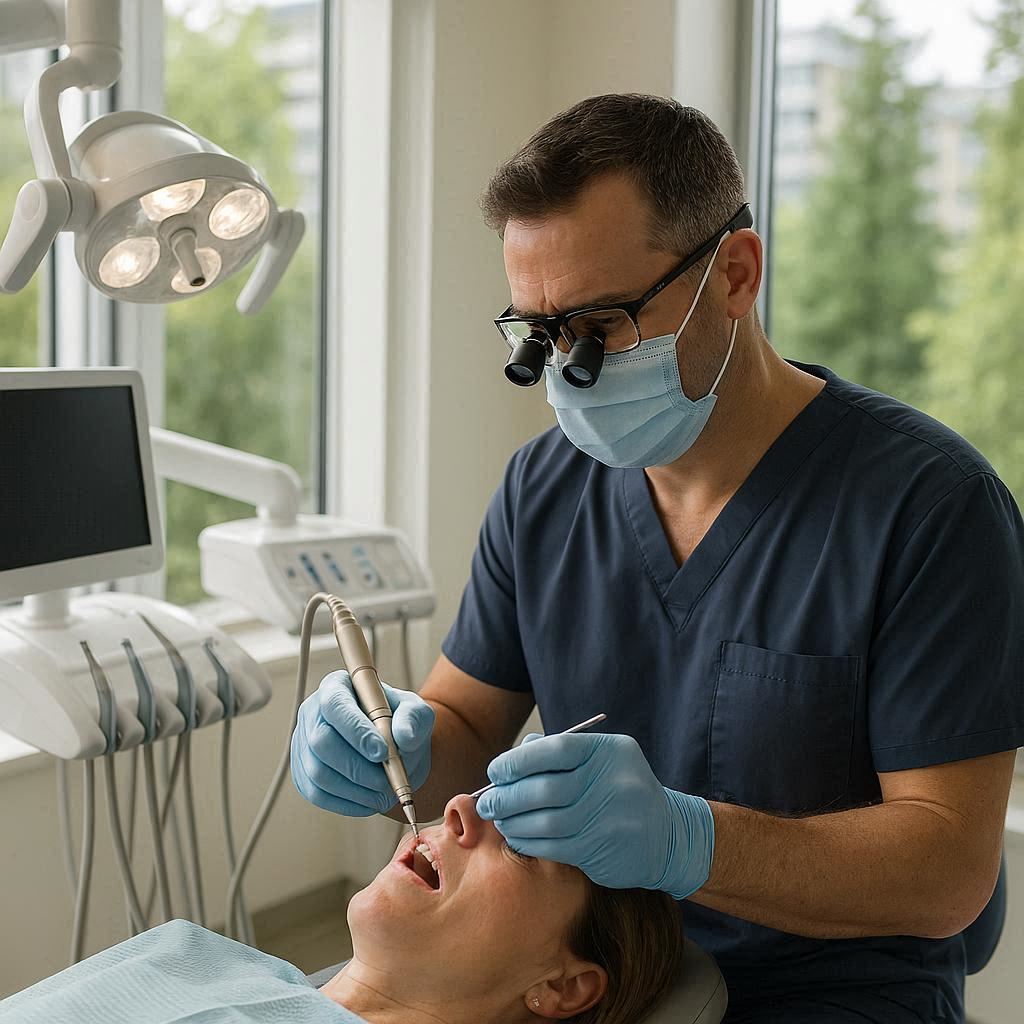
This is done under local anesthesia (freezing). Some patients choose oral sedation or laughing gas for anxiety. The surgeon makes a small cut in your gum, drills a precise hole, and screws in the implant. Then they stitch the gum closed over or around the implant.
What you feel: Pressure, but not sharp pain. The surgery takes 30–90 minutes per implant.
Phase 4: Osseointegration Healing (3–6 months)
This is the critical waiting period. Your jawbone grows onto the implant surface. During this time, you eat soft foods and avoid chewing near the implant. You wear a temporary partial denture or nothing at all.
Phase 5: Abutment Placement (minor surgery)
Once the implant is solid, your dentist uncovers it. They attach a small metal or zirconia abutment. This step is quick (15 minutes) and requires only freezing.
Phase 6: Crown Fabrication (2–4 weeks)
Your dentist takes impressions or a digital scan of your mouth. A dental lab custom-makes your crown to match the shape and color of your natural teeth.
Phase 7: Crown Delivery
Your dentist screws or cements the finished crown onto the abutment. You walk out with a complete, functioning tooth.
Healing and Recovery: What Is Normal?
Let us separate myths from reality.
First 24–48 Hours After Surgery
- Normal: Pink-tinged saliva, mild swelling, bruising on the cheek, slight discomfort.
- What to do: Use ice packs (20 minutes on, 20 off). Take over-the-counter ibuprofen or prescribed medication. Sleep with your head elevated.
- Avoid: Spitting, drinking through a straw, hot liquids, and rinsing hard.
First Two Weeks
- Stitches may dissolve or be removed.
- Stick to a soft diet (yogurt, scrambled eggs, smoothies without seeds).
- Do not smoke. Smoking is the number one cause of early implant failure.
Long-Term Healing (3–6 months)
You will not feel the implant fusing. That happens silently inside your bone. Some patients forget they have an implant. Others notice a mild sensation of pressure when biting—that is normal.
Risks and Realistic Failure Rates
No surgery is 100% guaranteed. But dental implants have a very high success rate: 95% to 98% over 10 years in healthy non-smokers.
Common Reasons for Early Failure (within 1 year)
- Infection (peri-implantitis) – Similar to gum disease, but around the implant.
- Failed osseointegration – The bone rejects the implant, often due to smoking, uncontrolled diabetes, or radiation therapy.
- Overloading – Putting a crown on too early before the bone is ready.
- Nerve damage – Rare, but can cause temporary or permanent numbness in the lip or chin.
Signs of a Failing Implant
- The implant feels loose or moves.
- Persistent pain when chewing (after healing is complete).
- Red, swollen, or bleeding gums around the implant.
- The gum line recedes, exposing metal threads.
What to do: Contact your specialist immediately. Early intervention can sometimes save the implant.
Insurance and Financing Options in BC
Most extended health plans cover a portion of implant-related costs—but rarely the full amount.
Typical Insurance Coverage
| Item | Typical Coverage |
|---|---|
| Consultation & X-rays | 50% – 100% |
| Tooth extraction | 60% – 90% |
| Implant fixture | 0% – 50% (many plans exclude this) |
| Abutment and crown | 30% – 60% (often labeled as “major restorative”) |
| Bone graft | Usually $0 – low coverage |
Pacific Blue Cross, Sun Life, Canada Life, etc.
Check your policy wording. Look for “implant-supported prosthesis.” If implants are excluded, ask your employer if you can upgrade your plan at renewal.
Financing Companies Popular in BC
- PayBright (now part of Affirm) – Monthly payments with interest rates from 0% to 29%.
- Healthcare牙科 Financing – Some clinics work with DentalCard or iFinance Canada.
- Clinic payment plans – A few clinics offer no-interest in-house plans for 3–12 months. Always ask.
Does MSP (Medical Services Plan) Cover Implants?
Generally, no. MSP does not cover dental implants for adults. The only exceptions are implants required after jaw surgery for cancer, cysts, or traumatic facial injury. Even then, MSP may cover the hospital portion only, not the crown.
Life After Implants: Maintenance and Longevity
An implant cannot get a cavity. But it can still fail from gum disease. Think of it like a natural tooth: it needs daily cleaning and regular check-ups.
Daily Home Care Routine
- Brush twice a day – Use a soft or extra-soft toothbrush. An electric brush is ideal.
- Floss daily – Use unwaxed floss, super floss, or interdental brushes to clean around the abutment.
- Water flosser (optional but helpful) – Low-pressure water picks remove debris from hard-to-reach spots.
Professional Maintenance
- Visit your hygienist every 6 months.
- Your hygienist will use plastic or graphite instruments (never metal scalers) to avoid scratching the implant surface.
- Your dentist will take a yearly X-ray to check the bone level around the implant.
How Long Do Implants Last?
- With excellent care: 20+ years to a lifetime.
- With average care: 10–15 years before needing a new crown (the implant itself may still be fine).
- With poor oral hygiene: 3–5 years before peri-implantitis sets in.
British Columbia Dental Implants by Region: Where to Go?
Availability differs dramatically across the province.
Lower Mainland & Greater Vancouver
- Highest concentration of specialists. You will find oral surgeons, periodontists, and implant centers in Vancouver, Burnaby, Richmond, Surrey, and Coquitlam.
- Competitive pricing for premium care (4,500–6,500 per implant).
- Same-day and sedation options widely available.
Vancouver Island (Victoria to Nanaimo)
- Good access in Victoria. Several board-certified periodontists practice there.
- Nanaimo and Courtenay have fewer implantologists. Wait times can be longer.
- Travel note: Some Island residents go to Vancouver for complex cases (bone grafts, zygomatic implants).
Interior & Okanagan (Kelowna, Kamloops, Penticton)
- Kelowna is the interior hub for implants. You will find capable general dentists and a handful of specialists.
- Kamloops has a few experienced providers.
- Costs can be 10–15% lower than Vancouver, but you have fewer options for second opinions.
Northern BC (Prince George, Terrace, Fort St. John)
- Limited implant services. Most routine implants are done by general dentists with extra training.
- Complex cases (full arch, sinus lifts) often require travel to Vancouver or Edmonton.
- Tip: Ask about telehealth consultations for initial planning to save a trip south.
Pros and Cons Compared to Other Tooth Replacement Options
| Feature | Dental Implant | Removable Partial Denture | Traditional Bridge |
|---|---|---|---|
| Looks & feels natural | Excellent | Fair (clips visible) | Good |
| Requires shaving healthy teeth | No | No | Yes (adjacent teeth) |
| Bone preservation | Prevents bone loss | Accelerates bone loss | No effect |
| Upfront cost | High (3,650–6,600) | Low (600–1,500) | Medium (2,500–4,000) |
| Long-term cost | Low (minimal maintenance) | High (frequent replacements) | Medium (bridges last 7–12 years) |
| Eating restrictions | None | Avoid sticky/hard foods | Mild restrictions |
| Comfort | Like natural teeth | Can move or rub gums | Stable but food can get trapped |
How to Avoid Dental Implant Scams and Low-Quality Work
British Columbia has reputable dentists. But bad actors exist everywhere. Protect yourself.
Red Flags to Watch For
- “Implant on sale – $999!” This is impossible in BC unless it is a loss leader for something else.
- Pressure to pay full amount before a treatment plan is complete.
- No CT scan used. Placing implants with 2D X-rays is dangerous (you cannot see nerve canals or sinus cavities properly).
- Vague answers about who is placing the implant. Some clinics let dental students or unlicensed assistants perform parts of the surgery. This is illegal in BC.
How to Verify a Provider’s Credentials
- Go to the College of Dental Surgeons of British Columbia website.
- Search the dentist’s name.
- Look for “Board Certification” – if they claim to be a specialist (oral surgeon, periodontist), the College registry will confirm it.
Patient Story: A Realistic Example
Margaret, age 64, retired teacher from Abbotsford.
“I lost my lower left first molar to a crack. My general dentist referred me to a periodontist. Total cost after insurance (Sun Life, 50% coverage on crown only) was around $4,200 out of pocket. The surgery was uncomfortable but not terrible. The worst part was waiting 5 months with a gap. Now, one year later, I honestly forget which tooth is the implant. It feels that normal.”
Frequently Asked Questions (FAQ)
1. Are dental implants painful?
Most patients say the procedure is less painful than a tooth extraction. The injection numbs everything. Afterward, you manage soreness with ibuprofen for 2–3 days.
2. How long do I have to wait between implant placement and crown?
Usually 3–6 months for the lower jaw, 4–7 months for the upper jaw (less blood supply). Immediate loading is possible only in ideal bone conditions.
3. Can I get dental implants if I have gum disease?
Not immediately. You must treat the gum disease first (scaling, root planing, possibly gum surgery). Once your gums are healthy and stable for 3–6 months, you can proceed.
4. Do dental implants in British Columbia fail often?
No. The 10-year success rate is 95%+ in healthy non-smokers. Most failures happen in the first year due to infection or failed bone fusion.
5. Will my insurance pay for British Columbia dental implants?
Partially. Most plans cover the crown and abutment as “major restorative” (50-70%). The implant fixture itself is often not covered. Always pre-determine your benefits.
6. Can seniors get implants?
Yes, age is not a barrier. Many people in their 70s and 80s get implants. The key is having enough bone density and no uncontrolled medical conditions.
7. What is the difference between an implant and a mini implant?
A mini implant is narrower and weaker. It is best for stabilizing dentures, not replacing a single molar. Traditional implants are stronger and longer-lasting.
8. Can I have an MRI if I have a dental implant?
Yes. Titanium is not magnetic. However, if your implant has an internal metal abutment, it may cause minor image distortion in the head/neck area. Tell the MRI technician beforehand.
9. How do I clean under an implant bridge?
Use a floss threader, super floss with a stiff end, or a water flosser. Your hygienist may also recommend a small interdental brush.
10. Is zirconia (metal-free) as good as titanium?
For single implants, yes. Zirconia is biocompatible and white, but it is more brittle than titanium. Most specialists still prefer titanium for its 50+ year track record.
Additional Resource: Where to Learn More
For official, unbiased information about dental implants in British Columbia, visit the College of Dental Surgeons of British Columbia’s patient resource page:
🔗 Oral Health – Finding a Dentist in BC
(Search: CDSBC Find a Dentist)
This government-regulated site allows you to verify a dentist’s license, view any disciplinary history, and understand your rights as a patient.
Conclusion:
British Columbia dental implants offer a permanent, bone-preserving solution for missing teeth, but they require realistic budgeting and a careful choice of provider. Success depends on your overall health, oral hygiene routine, and the skill of your implant team. Start with a consultation from a licensed specialist, verify their credentials, and ask for a written treatment plan before committing.
Disclaimer: This article is for informational purposes only and does not constitute medical advice. Dental implant outcomes vary by individual. Always consult a licensed dentist or specialist in British Columbia for a personal examination and treatment recommendation. The author and publisher are not responsible for any actions taken based on this content.