Bright Dental Implants: The Complete Guide to a Radiant, Restored Smile
When you think about upgrading your smile, the word “bright” usually means clean, white, and healthy. But for millions of people dealing with missing teeth, a bright smile is about more than just color. It is about structure, confidence, and the ability to laugh without hesitation.
You have probably heard the term bright dental implants floating around online. Maybe you saw it on a clinic’s website or heard a friend mention it after their own tooth replacement journey.
Here is the honest truth: There is no single “Bright” brand of implants. Instead, the phrase refers to a philosophy of treatment. It means getting dental implants that look vibrant, feel natural, and restore the full brightness of your original smile.
This guide will walk you through everything you need to know. No hype. No false promises. Just clear, realistic information to help you decide if this tooth replacement option is right for you.
What Are Bright Dental Implants? (And What They Are Not)
Let us clear up a common misunderstanding right away.
Bright dental implants are not a special type of implant made from a secret material. They are standard, high-quality titanium or zirconia implants placed with a focus on aesthetic excellence. The word “bright” describes the final result, not the product itself.
Think of it this way. You can buy a basic white shirt, or you can buy a tailored white shirt made from premium fabric. Both are white shirts. But one looks noticeably brighter, cleaner, and more flattering. The same logic applies here.
The Core Components
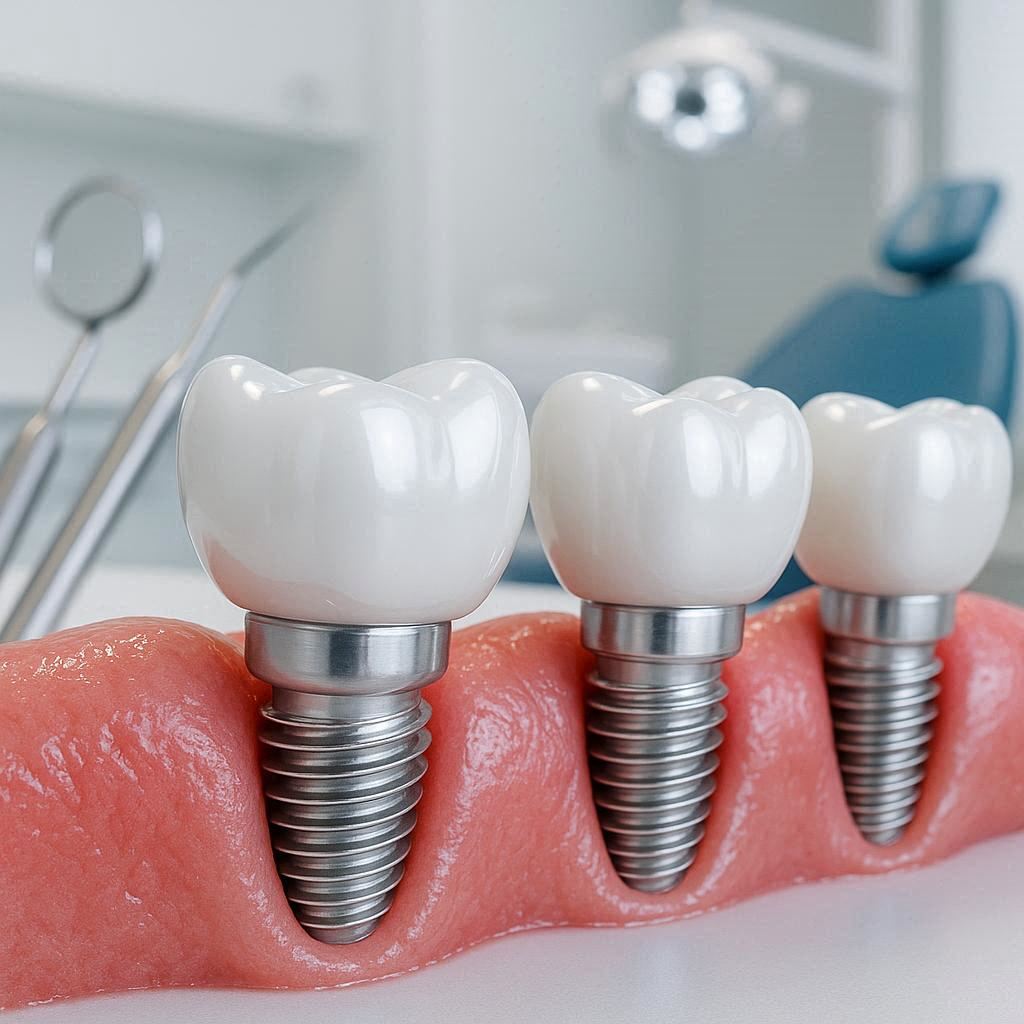
A bright dental implant system typically includes three parts:
- The Implant Post: A screw-like device made from medical-grade titanium or ceramic zirconia. This post is surgically placed into your jawbone. It acts as an artificial tooth root.
- The Abutment: A small connector piece that attaches to the top of the implant post. It sits just above the gum line.
- The Dental Crown: The visible part of the tooth. This is custom-made from porcelain or ceramic to match the color, shape, and translucency of your natural teeth.
What makes an implant “bright” is the quality of the crown and the precision of the placement. A bright result looks like the tooth came from nature, not a factory.
Who Is This For?
You might be a good candidate if you:
- Are missing one or more teeth.
- Have a healthy jawbone (or are willing to get a bone graft).
- Do not smoke heavily, as smoking slows healing.
- Want a permanent solution instead of dentures or bridges.
Important Note: Dental implants require surgery. Not everyone is a candidate. A thorough exam with a dentist or oral surgeon is the only way to know for sure.
Why Choose Implants Over Other Options?
Before we dive deeper, let us look at how bright dental implants compare to traditional tooth replacement methods. This table gives you a clear, side-by-side view.
| Feature | Bright Dental Implants | Traditional Dentures | Dental Bridge |
|---|---|---|---|
| Longevity | 20+ years to a lifetime | 5–8 years | 10–15 years |
| Bone Health | Preserves jawbone | Accelerates bone loss | Does not prevent bone loss |
| Appearance | Natural, bright, seamless | Often artificial-looking | Can look natural but requires altering healthy teeth |
| Stability | Permanent. Never slips. | Moves. Can click or fall out. | Fixed, but relies on adjacent teeth. |
| Cleaning | Brush and floss normally | Requires soaking and special cleaners | Flossing underneath is tricky |
| Cost (Initial) | Higher | Lower | Medium |
As you can see, bright dental implants demand a higher upfront investment. But over a lifetime, they often become the more economical choice because they rarely need replacement.
The Step-by-Step Journey to a Bright Smile
Let me walk you through what actually happens when you decide to get bright dental implants. Knowing the steps ahead of time reduces fear and uncertainty.
Step 1: The Consultation and Imaging
Your journey starts with a conversation. A dentist will examine your mouth, take X-rays or a 3D CT scan, and review your medical history. They need to check:
- The density of your jawbone.
- The health of your gums.
- Any underlying conditions like diabetes or heart disease.
If your jawbone is too thin or soft, do not worry. That is common. You will likely need a bone graft. This adds a few months to the timeline but makes the implant possible.
Step 2: Treatment Planning
Using digital software, your dental team plans the exact position, angle, and depth of each implant. This planning phase is critical for achieving that “bright,” natural look. They also design your temporary or permanent crown at this stage.
Step 3: The Surgical Placement
On surgery day, you will receive local anesthesia. Some clinics offer sedation if you feel anxious.
The surgeon makes a small incision in your gum, drills a precise hole into the jawbone, and inserts the implant post. Then they close the gum tissue over the top of the implant. The entire process for a single tooth takes about 60 to 90 minutes.
What does it feel like? Most people report pressure but not sharp pain. The discomfort after surgery is similar to having a tooth pulled.
Step 4: Osseointegration (The Waiting Game)
This is the most important step. Over the next three to six months, your jawbone grows tightly around the implant post. This process is called osseointegration. It turns the artificial root into a permanent part of your body.
You will wear a temporary tooth replacement during this time. Be patient. Rushing this step can cause the implant to fail.
Step 5: Abutment Placement
Once the implant is fully fused to the bone, you return for a minor procedure. The surgeon re-opens the gum to attach the abutment. Sometimes this is done in the same visit as the crown placement.
Healing from this step takes about two weeks.
Step 6: The Bright Crown Placement
Finally, your custom-made crown is cemented or screwed onto the abutment. Your dentist will check the bite, the color match, and the fit. They may make small adjustments so the crown blends perfectly with your neighboring teeth.
And that is it. You walk out with a bright, functional, beautiful tooth.
The Real Cost of Bright Dental Implants
Let us talk money. This is often the first question people ask, and the answer varies widely.
Average Price Breakdown (USA, 2025-2026)
| Service | Estimated Cost |
|---|---|
| Single implant (post + abutment + crown) | 3,000–6,000 |
| Implant-supported bridge (3–4 teeth) | 6,000–15,000 |
| Full arch (All-on-4 or All-on-6) | 15,000–30,000 per arch |
| Bone graft (if needed) | 500–3,000 |
| Sinus lift (for upper back teeth) | 1,500–3,000 |
Why do prices vary so much?
Several factors influence the final bill:
- Your location: Clinics in major cities charge more.
- The dentist’s experience: A prosthodontist or oral surgeon costs more than a general dentist.
- The crown material: High-translucency zirconia crowns look brighter but cost more.
- Insurance: Most dental insurance does not cover implants fully. However, some plans cover the crown portion or the bone graft.
A friendly piece of advice: Do not shop for the cheapest implant. Failed implants cost more to fix than a successful implant costs to place. Look for value, experience, and transparent pricing.
Materials Matter: Titanium vs. Zirconia
One of the biggest decisions you will make is the material of the implant post itself. Both options can deliver a bright smile, but they have different strengths.
Titanium Implants
Titanium has been used for over 50 years. It is the gold standard.
Pros:
- Extremely high success rate (over 95%).
- Proven osseointegration.
- More affordable than zirconia.
- Versatile for any position in the mouth.
Cons:
- The metal can sometimes show through thin gums.
- A small percentage of people have metal sensitivities.
Zirconia Implants
Zirconia is a white, ceramic material. It is newer but growing in popularity.
Pros:
- Metal-free and hypoallergenic.
- White color looks brighter and more natural, especially for people with thin gums.
- Resists plaque buildup.
Cons:
- Higher cost.
- Less long-term data compared to titanium.
- Not ideal for very small or very narrow jawbones.
Which one is brighter? For most people, the crown determines the brightness, not the post. But if you have receding gums, a zirconia implant prevents a dark metal line from showing through. That is a real aesthetic advantage.
How to Keep Your Bright Dental Implants Looking Their Best
You have invested time, money, and energy into your new smile. Maintenance is surprisingly simple, but you need to be consistent.
Daily Home Care
- Brush twice a day: Use a soft-bristled toothbrush and non-abrasive toothpaste. Avoid baking soda or whitening pastes, which can scratch the crown.
- Floss daily: Use regular floss or special implant floss with a stiff end to thread under the crown.
- Water flosser: This is a great tool to clean around the abutment and below the gum line.
Professional Maintenance
- Regular checkups: See your dentist every six months. They will check the implant’s stability and the health of surrounding gums.
- X-rays once a year: Your dentist will take periodic X-rays to check the bone level around the implant.
- Professional cleaning: Your hygienist will use special plastic or carbon-tipped instruments to clean the implant without scratching it.
What to Avoid
- Smoking: It reduces blood flow to the gums and increases failure risk dramatically.
- Chewing ice or hard candy: You can crack the crown just like a natural tooth.
- Using your teeth as tools: Do not open packages or bite nails.
A realistic expectation: The crown on your implant will not whiten. Natural teeth get darker over time and respond to whitening treatments. Implant crowns do not. If you want to whiten your other teeth, do that before your final crown is made.
Potential Risks and Complications (Honest Talk)
No medical procedure is 100% risk-free. Being informed means knowing what can go wrong.
Common but Manageable
- Swelling and bruising: Normal for the first week.
- Minor bleeding: Expected after surgery.
- Temporary numbness: Rare, but the lower lip or chin can feel tingly for a few weeks.
Less Common but Serious
- Implant failure (peri-implantitis): This is an infection around the implant that destroys bone. It is the leading cause of late implant loss. Good oral hygiene prevents it.
- Nerve damage: If the implant is placed too close to the inferior alveolar nerve in the lower jaw, it can cause permanent numbness. A skilled surgeon using 3D imaging avoids this.
- Sinus problems: Upper implants can protrude into the sinus cavity. A sinus lift procedure before placement prevents this.
Success Rates by Location
- Lower front teeth: Over 98% success.
- Upper front teeth: 95–97% success.
- Lower back molars: 93–95% success.
- Upper back molars: 90–93% success (lower blood supply and bone density).
Bright Dental Implants for Full Arch Restoration
What if you are missing all your upper or lower teeth? Individual implants for every tooth would be expensive and excessive. That is where full arch solutions come in.
All-on-4 and All-on-6
These techniques use just four or six implants to support a full bridge of 12 to 14 teeth. The posterior implants are angled to maximize contact with available bone.
Benefits:
- Often avoids bone grafting.
- Lower cost than individual implants.
- Same-day teeth possible in some cases.
- The final result looks bright, full, and youthful.
Trade-offs:
- Harder to clean under the bridge.
- Repairs require sending the whole bridge to a lab.
- Not everyone is a candidate for same-day loading.
Frequently Asked Questions (FAQ)
1. Are bright dental implants painful?
No more than a tooth extraction. You will feel pressure during surgery, but not sharp pain. Over-the-counter pain relievers usually manage post-op discomfort.
2. How long do bright dental implants last?
With proper care, 20 years to a lifetime. The crown may need replacement after 10 to 15 years due to wear, but the implant post itself can last forever.
3. Can I get bright dental implants if I have gum disease?
Not until the gum disease is treated and stabilized. Active gum disease increases infection risk and implant failure.
4. Will my insurance cover any of the cost?
Some plans cover the crown or the abutment. Very few cover the implant post. Check your specific policy or ask your dentist’s insurance coordinator.
5. How white should my implant crown be?
Your dentist will match the crown to your other teeth. If you plan to whiten your natural teeth, do that first. Otherwise, you will have one bright crown surrounded by darker teeth.
6. Can implants fail years later?
Yes, but it is uncommon (about 2–5% over 10+ years). The main cause is peri-implantitis from poor oral hygiene or smoking.
7. Are bright dental implants noticeable?
No. A well-made implant crown is virtually indistinguishable from a natural tooth. Even up close, most people cannot tell the difference.
Additional Resources
For a deeper dive into clinical studies and long-term success rates, visit the American Academy of Implant Dentistry (AAID) patient education section.
👉 Link: https://www.aaid.com/patient-resources/
This resource includes a “Find a Dentist” tool, downloadable guides, and real patient stories.
Final Thoughts: Is a Bright Dental Implant Right for You?
You have learned that bright dental implants are not a magic product. They are the result of careful planning, quality materials, and skilled placement. The reward is a smile that looks radiant, feels secure, and functions like nature intended.
Missing teeth affect more than your appearance. They change how you eat, speak, and smile at strangers. An implant restores those small, everyday joys.
Conclusion
Bright dental implants offer a permanent, natural-looking solution for missing teeth. They preserve jawbone health and restore confidence without the slipping or clicking of dentures. While the upfront cost is higher, the long-term value and quality of life make them a worthwhile investment for most candidates.
Disclaimer: This article is for informational purposes only and does not constitute medical or dental advice. Always consult with a licensed dentist or oral surgeon to evaluate your specific health condition and treatment options. Individual results vary. The author and publisher are not liable for any decisions made based on this content.