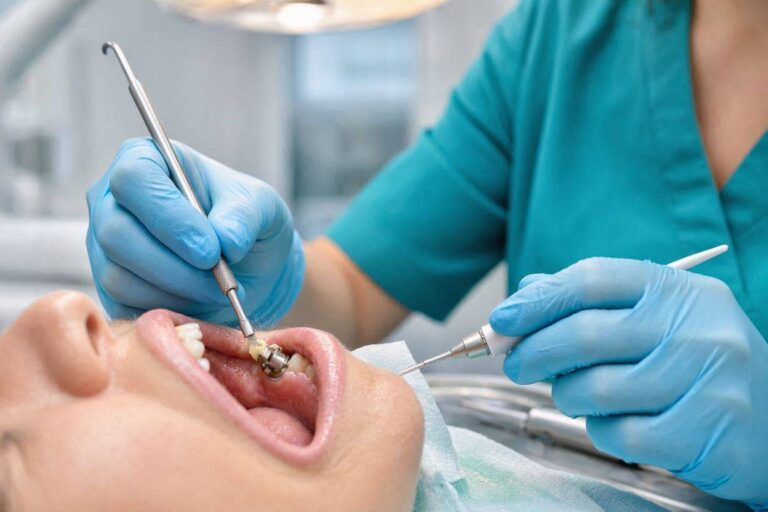
Does Getting A Dental Implant Hurt?
The most universal human response to the idea of having a metal post surgically placed into the jawbone is a visceral one: “Is it going to hurt?” This question is not a sign of weakness; it is a rational, self-protective inquiry. The fear of pain is the single largest barrier that prevents people from pursuing dental implants and accepting a lifetime of compromised chewing and an incomplete smile. The truth about dental implant pain, grounded in clinical reality and millions of patient experiences, is both reassuring and nuanced. The surgical procedure itself, when performed with modern local anesthetic, is typically a painless experience of pressure and vibration, not sharp pain. The post-operative recovery is a manageable period of mild to moderate soreness, well-controlled with over-the-counter medications. This guide will walk you through the entire pain profile of a dental implant, from the moment you sit in the chair to the day you forget the implant was ever a surgery and not just a natural part of your body.

The Surgical Procedure Itself: What You Actually Feel
The most feared moment is the surgery itself, but this is, ironically, the most painless part of the entire implant journey. Dental implant surgery is performed under profound local anesthesia. The dentist or surgeon will first apply a topical numbing gel to the gum tissue at the injection site. This gel makes the initial needle prick feel like a minor pinch or, in many cases, nothing at all. Once the local anesthetic, typically lidocaine or articaine, is administered, the entire surgical field becomes deeply and completely numb. The nerves that transmit pain signals are chemically blocked.
What you will feel is a sensation of firm pressure and vibration, but not pain. The surgeon is working on hard tissue, the bone, which does not have pain receptors in the same way soft tissue does. You will feel a gentle pushing sensation as the precision drills prepare the osteotomy, the channel in the bone for the implant. You may feel a soft tapping sensation as the implant is threaded into its final position. You will hear the sounds of the surgical handpiece, a low humming and a gentle whirring. This is the most important concept to internalize: pressure is not pain. The jawbone has no sharp nerve endings to signal a cutting sensation. The brain can misinterpret pressure as threatening, but if you consciously separate the two sensations—”I feel pressure, but I do not feel pain”—the experience becomes entirely manageable. For the anxious patient, various levels of sedation are available, from a calming oral pill to intravenous conscious sedation, which creates a dream-like state where you are responsive but deeply relaxed and will remember little of the procedure. A single, straightforward implant surgery typically takes less than an hour, often as little as 30 minutes from the first incision to the last suture.
“I tell every patient before we start, ‘You will feel me push, you will feel vibration, you will hear noise. You should feel absolutely nothing sharp. If you do, raise your left hand, and I will stop and give you more anesthetic immediately.’ This gives them control. Fear comes from a lack of control. When a patient knows they have the power to stop the procedure if they are uncomfortable, their anxiety drops dramatically.” — An Implant Surgeon with Over 25 Years of Experience
The Anesthesia Protocol: Ensuring a Painless Procedure
A skilled implant surgeon does not just inject and start cutting. They use a methodical anesthesia protocol. The first step is always the topical gel, left in place for a full two minutes to anesthetize the surface tissue. The injection itself is then delivered slowly, with a very fine needle, and the anesthetic solution is deposited at a controlled rate. A rapid injection causes tissue distention and burning, which is a primary cause of injection pain. A slow, gentle injection eliminates this.
The surgeon will then wait the full duration required for the anesthetic to take profound effect, often 5 to 10 minutes. A simple test, such as touching the gum with a sharp explorer and asking if you feel anything sharp, confirms the numbness. For a lower molar implant, a different anesthetic technique, a nerve block, is used to anesthetize the entire inferior alveolar nerve, numbing half of the lower lip and chin. This sensation of a “fat lip” is a sign that the block is working perfectly. The surgeon may also use a long-acting local anesthetic, such as bupivacaine, at the end of the procedure to provide pain relief for the first 6 to 8 hours after the numbness wears off, bridging the patient comfortably into the post-operative period.
The Post-Operative Pain Profile: The First 72 Hours
The surgery is over. The anesthesia wears off, typically 2 to 4 hours after the procedure. This is the moment patients fear, but it is also a manageable, predictable, and short-lived phase of recovery. The discomfort you will feel is not a sharp, stabbing pain. It is a dull, bruising soreness at the surgical site, similar to the feeling after a hard workout or a minor sports injury. It is the body’s inflammatory response to the controlled surgical trauma, and this inflammation is actually a necessary part of the healing cascade.
The peak of post-operative discomfort is typically between 6 and 18 hours after the surgery. This is when the swelling and the inflammatory response are at their maximum. Most patients manage this peak effectively with a scheduled regimen of over-the-counter anti-inflammatory medication. Ibuprofen (Advil, Motrin) is the gold standard, as it directly counteracts the inflammatory prostaglandins causing the pain. A common, effective protocol is 600 to 800 mg of ibuprofen taken with food, alternated with 500 to 1000 mg of acetaminophen (Tylenol) every 3 to 4 hours, so that the medications overlap without exceeding the daily maximum of either drug. This alternating combination is as effective as many prescription opioid pain relievers for dental surgery pain, without the side effects of nausea, constipation, and sedation.
By day two, the sharp edge of the discomfort has dulled considerably. By day three, most patients are off all pain medication and describe the sensation as a mild tenderness to the touch, like a healing bruise. A single, straightforward implant without a large bone graft typically causes very minimal discomfort. The more extensive the surgery—for example, if a large sinus lift and extensive grafting were performed alongside the implant placement—the more significant and prolonged the post-operative soreness will be. But the single implant placed into healthy bone is, by the consensus of millions of patients, a far easier recovery than they anticipated.
Managing Swelling and Bruising: The Visible Signs of Healing
Swelling is a normal, expected consequence of surgery, not a complication. The body sends fluid and immune cells to the area to begin the repair process. The swelling peaks at 48 to 72 hours post-operatively and then begins to resolve. For a single anterior implant, the swelling may be minor and barely noticeable. For a larger procedure or a posterior implant, there may be visible cheek swelling.
The most effective management tool is ice therapy, applied strictly in the first 24 hours. An ice pack, or a bag of frozen peas wrapped in a thin cloth, should be applied to the cheek over the surgical site for 20 minutes on, 20 minutes off. This intermittent cooling constricts blood vessels, reducing the initial fluid accumulation. After the first 24 hours, ice is no longer beneficial. At that point, gentle heat can be applied to promote circulation and help resolve the bruising that may have developed. Some patients will notice a faint yellow or purple bruise on the cheek or under the jaw a few days after surgery. This is simply blood that has tracked through the tissue planes and is being broken down by the body. It is harmless and resolves on its own within a week.
Important Note: If the pain does not follow the typical trajectory and instead gets progressively worse after day three, or if it becomes a throbbing, deep, unrelenting pain that is not relieved by medication, you must contact your surgeon immediately. This is not normal post-operative soreness. It could be a sign of a developing infection or a condition called a dry socket (if the implant was placed in an extraction site with a lost blood clot). An early diagnosis and intervention can save an implant.
The Painless Healing Phase: Osseointegration
After the first week, the surgical site enters a quiet, painless healing phase that lasts three to six months. This is the period of osseointegration, where the bone cells grow directly onto the microscopic surface of the titanium implant. There is no pain associated with this process. The gum tissue heals over the implant, and the patient cannot feel the implant at all. It is a silent, internal process. For a patient who has received a temporary removable tooth, the only sensation is the normal feeling of the denture against the healed gum. The implant itself is a dormant, invisible anchor, waiting to be uncovered and restored. This lack of sensation is a testament to the biocompatibility of titanium. The body does not recognize it as a foreign invader; it accepts it as a part of the skeleton.
The Uncovering and Restorative Phase: Minor Discomfort
After the healing period, a minor second procedure is sometimes required to uncover the top of the implant and attach a healing abutment, a small metal cap that shapes the gum tissue for the final crown. This is a brief procedure, often requiring only a small amount of local anesthetic. The post-operative discomfort is minimal, akin to a mild gum irritation. The final placement of the crown itself is a completely painless, non-surgical appointment. The crown is screwed or cemented onto the abutment, and the implant journey is complete. There is no recovery period for the crown delivery.
The table below summarizes the pain profile at each stage.
| Stage of Treatment | Expected Sensation | Duration | Management |
|---|---|---|---|
| Local Anesthetic Injection | Minor pinch from the needle; brief stinging | Seconds | Topical numbing gel; slow injection technique |
| Implant Surgery | Deep pressure, vibration, pushing; no sharp pain | 30-90 minutes | Profound local anesthesia; sedation for anxiety |
| First 6-18 Hours Post-Op | Dull, aching soreness; peak of discomfort | Peaks at 12 hours, then declines | Alternating ibuprofen and acetaminophen; ice packs |
| Days 2-3 Post-Op | Mild tenderness to touch; minor swelling | Resolving | Over-the-counter pain relief usually sufficient |
| Uncovering (Second Stage) | Mild gum soreness | 24-48 hours | Minimal pain relief needed; salt water rinses |
| Crown Placement | No pain | None | No anesthetic or pain relief needed |
The Power of Patient Psychology and The Dental Phobic
Pain perception is not a purely physical phenomenon. It is deeply intertwined with psychology, past trauma, and the patient’s sense of control. A patient who had a traumatic, painful dental extraction as a child carries that memory into the implant consultation. The amygdala, the brain’s fear center, is on high alert. For these patients, the fear of pain is a clinical condition in itself that must be treated with as much care as the missing tooth.
This is where sedation dentistry plays a transformative role. Oral conscious sedation, using a prescribed benzodiazepine like triazolam, can create a state of profound relaxation and amnesia. The patient takes the pill an hour before the procedure, arrives in a deeply calm state, and has little to no memory of the surgical experience. Intravenous sedation, administered by a trained oral surgeon, provides an even deeper level of twilight sedation, where the patient is on the edge of consciousness but can be roused and is breathing on their own. These sedation modalities are safe, effective, and allow the severe dental phobic to receive the implant care they need without psychological trauma. The most important thing a patient can do is to be honest about their fear. A compassionate implant surgeon will not judge; they will adapt the pain and anxiety management protocol accordingly.
Conclusion
Getting a dental implant does not hurt during the surgical procedure because profound local anesthesia blocks all pain, leaving only a sensation of harmless pressure and vibration. The post-operative recovery involves a predictable, dull ache that peaks in the first 12 hours and is effectively managed with over-the-counter anti-inflammatory medication like ibuprofen, with most patients ceasing all pain relievers by day three. The long healing phase of osseointegration and the final placement of the crown are pain-free, making the overall experience far less traumatic than the fear of the unknown suggests, and sedation options exist to make the procedure accessible even for patients with severe dental anxiety.
Frequently Asked Questions (FAQ)
Q: Is a dental implant more painful than a tooth extraction?
A: For most patients, a dental implant is less painful than a surgical extraction. An extraction involves tearing the periodontal ligament and removing an organ from the body. An implant is a controlled, precise placement into a drilled channel. The post-operative discomfort is often described as milder.
Q: Can I go to work the day after implant surgery?
A: For a single, straightforward implant without major grafting, most patients can return to work the next day. The discomfort is typically mild. If your job involves heavy physical labor, or if you had a complex surgery, your surgeon may recommend a day or two of rest.
Q: What if over-the-counter pain relievers are not enough?
A: This is rare for a single implant, but if it happens, contact your surgeon. They may prescribe a stronger pain reliever or want to evaluate you to ensure there is not a post-operative complication. Never exceed the maximum daily dose of over-the-counter medications.
Q: Will I be able to eat after implant surgery?
A: You will be on a soft, cool diet for the first few days. Think yogurt, smoothies, mashed potatoes, and soup. You must avoid chewing on the surgical site for the entire healing period to allow the implant to osseointegrate without micromovement.
Additional Resource:
For more information on sedation options for dental procedures, the American Dental Association provides patient education resources: ADA Sedation and General Anesthesia.