How Many Stitches After Dental Implant?
The number of stitches placed after dental implant surgery varies based on the surgical approach, the number of implants placed, the need for additional procedures, and the surgeon’s technique. Patients often focus on stitch count as a measure of surgical extent, but the number tells only part of the story. This article explains the factors determining stitch count, what types of sutures are used, what to expect during the suture period, and how to care for the surgical site while stitches are in place.
Factors Determining Stitch Count
No standard stitch count exists for implant surgery. Each case is individualized.
Surgical Flap Design
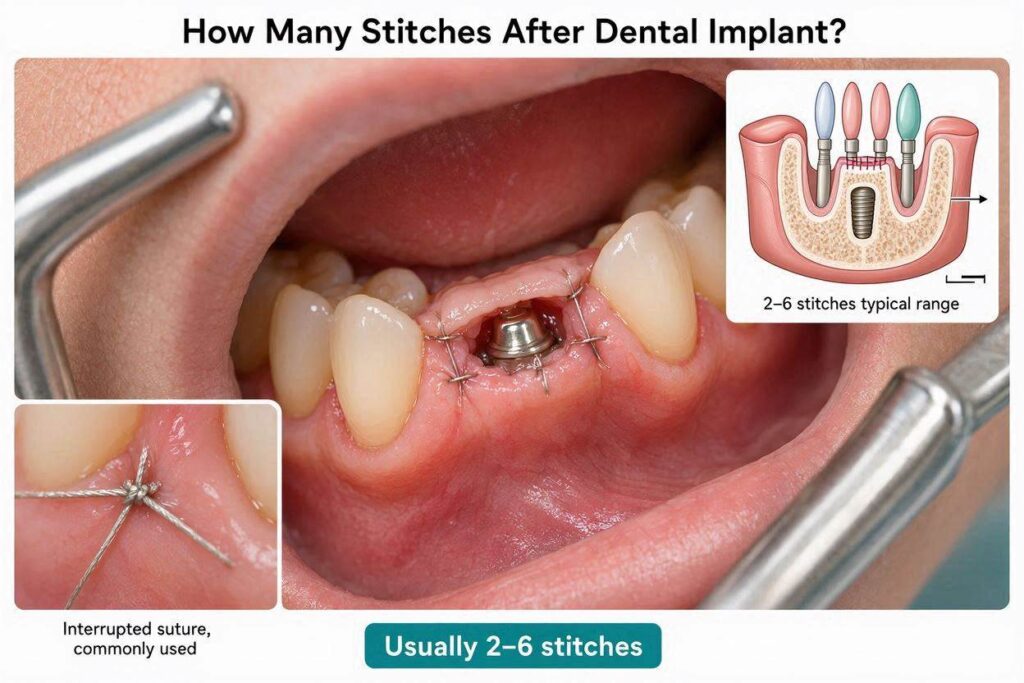
When the surgeon reflects a flap to expose the bone, the incision design influences stitch count. A simple crestal incision over a single implant site with minimal flap reflection may require only two to four sutures. A larger flap, such as one extending to include adjacent teeth or reflecting both the buccal and lingual tissue, requires more sutures to reposition and secure the tissue.
Flapless implant surgery, in which the implant is placed through a small opening in the gum without flap elevation, may require only one or two sutures, or occasionally none at all if a healing abutment fills the opening and the tissue is stable.
Number of Implants Placed
Each implant site requires its own incision or surgical access. Multiple implants in different locations mean multiple surgical sites, each requiring closure. A patient receiving four implants for an All-on-4 procedure will have more sutures than a patient receiving a single implant.
Adjunctive Procedures
Bone grafting, sinus lifts, and connective tissue grafts add to the surgical complexity and stitch count. A guided bone regeneration procedure requires a membrane to be secured over the graft, necessitating additional sutures to stabilize the membrane and achieve tension-free primary closure over the augmented site.
A sinus lift adds incisions and closure requirements beyond the implant site itself. Soft tissue grafting, used to augment keratinized tissue around an implant, involves a donor site, often the palate, requiring its own sutures.
Surgeon Preference and Technique
Surgeons vary in their suturing technique. Some prefer interrupted sutures, each individually placed and tied. Others use a continuous suture technique, where one long suture closes the entire incision. Interrupted sutures result in a higher stitch count for the same incision length but provide the advantage that if one suture loosens, the others remain secure.
Tissue Quality
Patients with thin, friable tissue may require more sutures spaced more closely to achieve adequate closure without tearing through the tissue. Patients with thick, resilient tissue may need fewer sutures spaced farther apart.
Typical Stitch Counts by Procedure
While individual cases vary, the following ranges provide a general sense of what to expect.
| Procedure | Typical Suture Count |
|---|---|
| Single implant, simple flap | 2 – 5 sutures |
| Single implant, flapless | 0 – 2 sutures |
| Single implant with minor grafting | 3 – 6 sutures |
| Two to three implants | 5 – 12 sutures |
| Sinus lift (lateral window) | 6 – 12 sutures |
| Full-arch implant surgery (four to six implants) | 10 – 20+ sutures |
| Connective tissue graft | 4 – 8 sutures (recipient site), 3 – 6 sutures (donor site) |
These numbers are approximate. A patient should not interpret a higher or lower suture count as a measure of surgical quality. The goal is appropriate tissue closure, not a specific number of sutures.
Types of Sutures Used in Implant Surgery
The type of suture material affects the patient’s experience during the healing period.
Resorbable Sutures
Resorbable or dissolvable sutures are commonly used in implant surgery. They are made of materials that the body breaks down over time through hydrolysis or enzymatic degradation. Common resorbable suture materials include polyglycolic acid, polylactic acid, polydioxanone, and chromic gut.
Resorbable sutures eliminate the need for a suture removal appointment. They begin losing tensile strength after seven to fourteen days, coinciding with the initial healing phase. Complete dissolution takes several weeks. Patients may notice suture fragments in the mouth as they dissolve.
Non-Resorbable Sutures
Non-resorbable sutures, made of materials like silk, nylon, or expanded polytetrafluoroethylene, maintain their strength until removed. They are used when prolonged wound support is desired or when the suture material’s handling characteristics are preferred. Silk sutures are easy to tie and comfortable for the patient but can wick bacteria if oral hygiene is poor. Non-resorbable sutures require a removal appointment, typically at seven to fourteen days post-surgery.
Suture Size
Dental sutures are fine, typically ranging from 4-0 to 6-0 in size. Smaller numbers indicate thicker sutures. Implant surgeons select size based on the tissue, tension, and precision required.
The Experience of Having Stitches
Patients experience sutures in specific ways during the healing period.
The Sensation of Sutures
Sutures feel like small threads or bumps in the mouth. The tongue will find them and explore them. They may feel irritating, particularly where the knot or suture tail contacts the cheek, lip, or tongue. This sensation is normal and diminishes as the patient habituates and as sutures begin to dissolve or soften.
Suture Loosening
As healing progresses and tissue swelling resolves, sutures may feel looser. Resorbable sutures lose tensile strength and may seem to stretch or loosen days before they dissolve. A suture that becomes noticeably loose and irritating can sometimes be trimmed by the surgeon, but patients should not cut or pull sutures themselves.
Premature Suture Loss
A suture may come out before the intended removal date or before it has dissolved. If the wound edges remain together and there is no bleeding, a single lost suture is generally not concerning. If multiple sutures are lost and the wound opens, or if bleeding occurs, the patient should contact the surgeon.
Caring for Surgical Sites with Sutures
Proper care during the sutured period promotes healing and prevents complications.
Oral Hygiene
The surgeon provides specific instructions for oral hygiene around sutures. Typically, patients avoid brushing the surgical site directly for the first several days. Gentle rinsing with warm salt water or prescribed chlorhexidine mouthwash helps control bacteria. After the initial period, gentle brushing with a soft toothbrush can resume, avoiding direct trauma to the suture line.
Diet Considerations
A soft diet prevents mechanical disruption of sutures. Foods that can catch on sutures, such as stringy meats, fibrous vegetables, or sticky foods, should be avoided. Hot foods and beverages may increase swelling and should be consumed with caution.
Activities to Avoid
Patients should avoid pulling at sutures with the tongue or fingers. Vigorous rinsing or spitting can dislodge sutures. Strenuous exercise increases blood pressure and can promote bleeding at suture sites. Smoking significantly impairs healing at suture lines and should be avoided entirely.
Suture Removal
For non-resorbable sutures, a removal appointment occurs at seven to fourteen days post-surgery.
The Removal Procedure
Suture removal is quick and minimally uncomfortable. The surgeon or assistant uses fine scissors or a scalpel blade to cut the suture, then gently pulls it out with forceps. Patients may feel a slight tugging or tickling sensation but generally not pain. No anesthesia is required.
After Removal
Once sutures are removed, the wound should be closed and stable. There may be small red marks where sutures were placed, which fade over days to weeks. Normal oral hygiene can resume as directed by the surgeon. The healing process continues beneath the surface even after sutures are gone.
Signs of Problems Related to Sutures
Certain symptoms warrant contacting the surgeon.
Signs of infection at the suture line include increasing pain rather than decreasing after day three, purulent discharge, foul odor or taste, and swelling that increases after the expected peak at 48 to 72 hours. Wound dehiscence, or opening of the wound edges, requires evaluation. Persistent bleeding from the suture line after the first 24 hours is abnormal.
Conclusion
The number of stitches after dental implant surgery varies from zero to over twenty, depending on the number of implants, flap design, adjunctive procedures, and surgeon technique. A single straightforward implant may require only a few sutures. Complex full-arch cases with grafting involve significantly more. Sutures may be resorbable, dissolving over one to three weeks, or non-resorbable, requiring removal at seven to fourteen days. Proper care during the sutured period, including gentle hygiene and dietary precautions, promotes uneventful healing. The suture count is a detail of the surgical approach, not a measure of quality or difficulty.
Frequently Asked Questions
Can I feel the stitches in my mouth?
Yes, sutures are palpable with the tongue and may feel slightly irritating. This sensation diminishes as you habituate and as the sutures dissolve or soften.
What should I do if a stitch comes out early?
If the wound edges remain together and there is no bleeding, a single lost suture is generally not concerning. Contact your surgeon if multiple sutures are lost or if the wound opens.
Do dissolvable stitches hurt when they dissolve?
No. The dissolution process is painless. You may notice suture fragments in your mouth, but they do not cause discomfort.
How long until I can brush normally after suture removal?
Once sutures are removed and the surgeon confirms adequate healing, normal brushing can resume. Continue to be gentle around the healing site for an additional week.
Additional Resource
For information on post-operative care after oral surgery, visit the American Association of Oral and Maxillofacial Surgeons at www.aaoms.org. The AAOMS provides patient education on surgical recovery and wound care.