Should Dental Implant Screw Be Visible?
Patients sometimes notice a metallic appearance or a dark area visible at the gum line or through the gum tissue around their dental implant. Concerns about whether the implant screw should be visible arise from this observation. The short answer is that the implant fixture and abutment screw should not be visible in a properly executed and healed implant restoration. However, several scenarios can lead to visibility of implant components, some normal and temporary, others indicating problems requiring attention. This article explains when implant screw visibility is expected, when it signals an issue, and what can be done to address it.
What Should Be Visible in a Healed Implant Restoration
Understanding normal implant aesthetics clarifies what constitutes a problem.
The Ideal Appearance
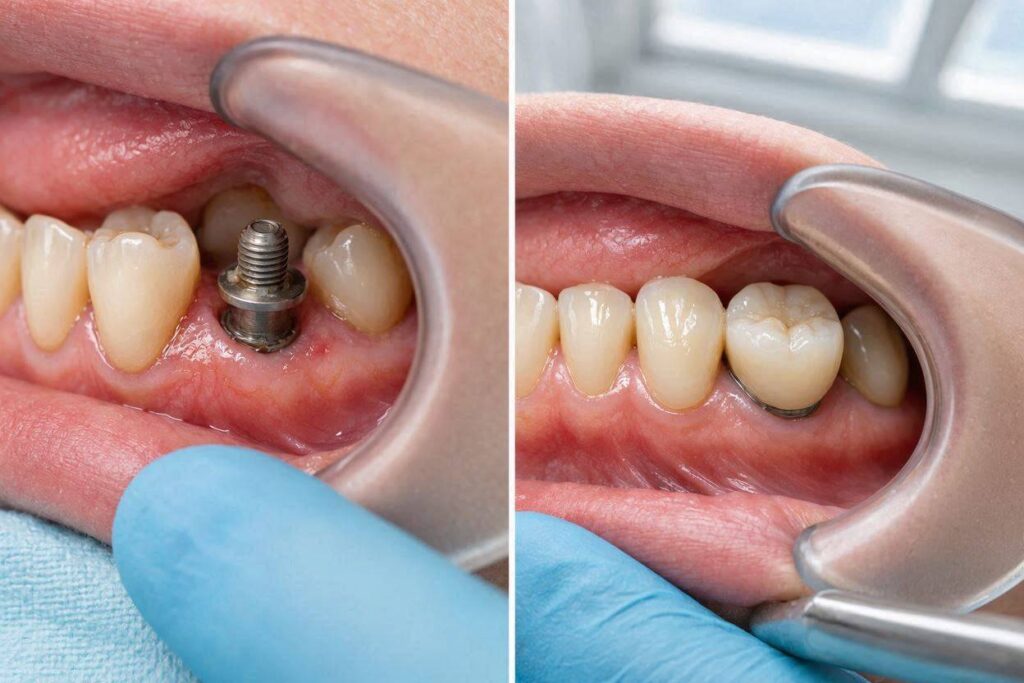
In a perfectly executed implant restoration, only the crown is visible above the gum. The crown emerges from the gum tissue naturally, just as a natural tooth does. The gum hugs the crown margin, creating a seal that protects the underlying structures. The abutment and implant fixture are entirely below the gum line, invisible to the observer.
The crown material, whether all-ceramic or porcelain-fused-to-metal, is tooth-colored at the visible portion. The transition from crown to gum is seamless. There is no visible metal and no dark shadow at the gum line.
The Role of the Biologic Width
Natural teeth have a biologic width, a dimension of tissue attachment above the bone that includes the connective tissue attachment and the junctional epithelium. Implants have an analogous soft tissue attachment to the abutment surface. This attachment requires a certain vertical dimension. When adequate tissue height exists, the soft tissue covers the abutment to the crown margin, hiding all metal components.
Scenarios Where Implant Components May Be Visible
Several situations, some normal and some problematic, can lead to visible implant components.
Healing Phase: Healing Abutments
During the healing phase, a healing abutment protrudes through the gum. This metal cylinder is intentionally visible. It is a temporary component that shapes the gum tissue for the final restoration. The healing abutment is replaced by the final abutment and crown at the restorative appointment. Its visibility during healing is normal and expected.
Temporary Restorations
Temporary crowns or provisional restorations may have visible metal components or may not perfectly match the gum contours. These are interim restorations. The final crown will be fabricated to address these aesthetic concerns.
Thin Gum Tissue
Some patients have naturally thin gingival biotype. The gum tissue is translucent, and underlying structures may show through. A titanium abutment beneath thin tissue can create a grayish or bluish hue visible through the gum. This is not a complication but an aesthetic concern. Solutions include using a zirconia abutment, which is tooth-colored and does not show through thin tissue, or performing a soft tissue graft to thicken the gum.
Gum Recession
Over time, the gum tissue around an implant can recede, exposing the abutment or even the implant fixture. This recession results from several possible causes: inadequate bone and tissue volume at the time of implant placement, excessively thin tissue, over-contoured restorations that compromise blood supply, traumatic brushing, or peri-implant disease.
Exposed abutment surfaces, particularly titanium, appear as a dark gray or metallic band at the gum line. This is aesthetically undesirable and may represent a biological problem if recession exposes the implant fixture itself.
Implant Malposition
An implant placed too far toward the cheek or lip side of the ridge may have inadequate bone and tissue coverage on the facial aspect. Over time, the tissue thins, and the implant or abutment becomes visible. Correction of severely malpositioned implants is challenging and may require implant removal and replacement.
Screw Access Hole Visibility
In screw-retained restorations, the access hole on the occlusal or lingual surface is filled with composite. This filling should match the crown color. If the filling material discolors or wears, the access hole may become visible as a small round area on the biting surface. This is a cosmetic issue within the mouth, not at the gum line. It is easily repaired by replacing the composite filling.
Distinguishing Normal from Problematic Visibility
Understanding which visible components require action and which are benign helps patients make informed decisions.
Normal Temporary Visibility
The healing abutment during the osseointegration phase and the temporary restoration are meant to be visible. They are placeholders. The final restoration will address aesthetics.
Concerning Visibility
Visible implant fixture threads, meaning the implant itself is visible above the gum or through severely thinned tissue, is a significant problem. It indicates severe bone or tissue loss. The implant may be compromised. Exposed abutment surfaces with a metallic appearance at the gum line, when the final restoration was previously well-concealed, suggest recession that should be evaluated.
Cosmetic Visibility
Slight darkness showing through thin tissue over a well-integrated implant with a titanium abutment is a cosmetic issue rather than a health concern. It does not threaten the implant’s survival. It may be addressed aesthetically if the patient desires.
Addressing Visible Implant Components
Solutions exist for many situations where implant components are visible.
Zirconia Abutments
For patients with thin tissue or aesthetic concerns, a zirconia abutment replaces the titanium abutment. Zirconia is tooth-colored and does not create a dark shadow through the gum. It is a stronger material than earlier ceramics and is suitable for most implant restorations. Switching to a zirconia abutment requires removing the crown, removing the existing abutment, and fabricating a new abutment and possibly a new crown.
Soft Tissue Grafting
If thin tissue causes abutment visibility, a connective tissue graft can thicken the gum. Tissue is harvested from the palate and placed over the implant site to increase tissue thickness. Thicker tissue conceals underlying metal and provides a more natural appearance. This procedure adds time and cost but improves the aesthetic outcome.
Pink Porcelain
In cases of gum recession where surgical correction is not feasible or desired, the crown can be remade with pink porcelain at the cervical portion. The pink porcelain mimics gum tissue color, masking the exposed abutment. This is a restorative camouflage, not a biological solution. It addresses aesthetics without altering the tissue contours.
Implant Removal and Replacement
In severe cases of malposition or extensive bone loss with exposed implant threads, the implant may require removal. After site healing and reconstruction, a new implant is placed in a more favorable position with better tissue support. This is a significant undertaking but may be the only definitive solution for severely compromised implants.
Prevention Through Proper Planning
The best management of implant visibility is prevention through thorough treatment planning.
Three-Dimensional Implant Positioning
Implant placement guided by cone beam CT imaging and surgical guides positions the implant in the ideal three-dimensional location. The implant should be placed so that sufficient bone and tissue volume exists on all aspects, particularly the facial. Adequate distance from adjacent tooth roots prevents papilla loss.
Tissue Assessment and Augmentation
Patients with thin tissue may benefit from soft tissue grafting at the time of implant placement or during the healing phase. Building tissue volume proactively prevents later recession and visibility. Patients with deficient bone may require bone grafting to create adequate support for both hard and soft tissue.
Prosthetically Driven Planning
The restorative dentist and surgeon should collaborate from the beginning. The desired crown position determines the implant position, not vice versa. Starting with the end in mind ensures the implant supports the planned restoration optimally within the available tissue.
Conclusion
Dental implant screws and abutments should not be visible in a properly executed, fully healed implant restoration. Visibility of the healing abutment during the osseointegration phase is normal and temporary. Visibility of abutment metal through thin tissue, exposure of the abutment due to gum recession, or visibility of the implant fixture itself are concerns ranging from cosmetic to serious, depending on the cause and extent. Solutions include zirconia abutments, soft tissue grafting, restorative camouflage, and in severe cases, implant replacement. Prevention through proper three-dimensional implant positioning and tissue assessment is the best approach to achieving invisible, natural-looking implant restorations.
Frequently Asked Questions
Is it normal to see the healing abutment after implant surgery?
Yes. The healing abutment is intentionally visible. It shapes the gum tissue and is replaced with the final abutment and crown at the restorative appointment.
What does it mean if I see a gray color at the gum line of my implant crown?
A gray color usually indicates a titanium abutment showing through thin gum tissue. It is a cosmetic concern rather than a health emergency. Zirconia abutments or soft tissue grafting can address this.
Can gum grow back over an exposed implant?
Gum tissue does not regenerate on its own to cover exposed implant surfaces. Surgical grafting may be possible in some cases. Exposed implant threads indicate severe bone loss and require evaluation for implant health.
Should the screw access hole be visible on my implant crown?
The access hole filling should blend with the crown. If the filling has discolored or worn, it becomes visible. This is easily repaired by replacing the composite filling.
Additional Resource
For information on implant aesthetics and soft tissue management, visit the American Academy of Periodontology at www.perio.org. The AAP provides resources on periodontal plastic surgery and implant aesthetics.