Can You Save An Infected Dental Implant?
An infected dental implant is a serious concern that requires prompt attention. The infection, known as peri-implantitis, affects the tissues surrounding the implant and can lead to bone loss and implant failure if left untreated. The question many patients ask is whether an infected implant can be saved.
The answer is often yes, but success depends on early detection, proper treatment, and commitment to ongoing care. This guide explores the causes of implant infection, the treatment options available, and the factors that determine whether an infected implant can be preserved.
Understanding Peri-Implantitis
Before discussing treatment, it helps to understand what peri-implantitis is and how it develops.
What Is Peri-Implantitis?
Peri-implantitis is an inflammatory condition that affects the soft and hard tissues surrounding a dental implant. It is similar to periodontal disease around natural teeth but can progress more rapidly.
The Two Stages of Implant Infection
Peri-Implant Mucositis:
This is the early stage of infection, affecting only the soft gum tissue around the implant. It is reversible with proper treatment.
Peri-Implantitis:
This is the advanced stage, involving both soft tissue inflammation and bone loss around the implant. It requires more aggressive treatment.
Causes of Implant Infection
Several factors contribute to the development of peri-implantitis:
- Poor oral hygiene
- Bacterial plaque accumulation
- Smoking or tobacco use
- History of periodontal disease
- Diabetes or other systemic conditions
- Excess cement from crown placement
- Improper implant positioning
- Overloading of the implant
Signs of an Infected Dental Implant
Recognizing the signs helps you seek treatment early.
Common Symptoms
- Redness or swelling of the gums around the implant
- Bleeding when brushing or flossing
- Pus or discharge from around the implant
- Pain or tenderness
- Bad breath or unpleasant taste
- Receding gums exposing the implant
- Mobility of the implant
- Deep pockets around the implant
Important Note: Early-stage infection may be asymptomatic. Regular dental checkups are essential for detecting peri-implantitis before it becomes severe.
Can an Infected Implant Be Saved?
In many cases, yes. The key is early intervention.
When the Implant Can Be Saved
The implant can often be saved when:
- The infection is detected early
- Bone loss is minimal
- The implant remains stable
- The patient is committed to treatment
- Underlying risk factors are addressed
When the Implant Cannot Be Saved
The implant may need removal when:
- Bone loss is extensive
- The implant has become mobile
- The infection does not respond to treatment
- The implant has fractured
- Surrounding structures are affected
Treatment Options for Infected Implants
Several treatment approaches exist, ranging from non-surgical to surgical.
Non-Surgical Treatment
Non-surgical treatment is appropriate for early-stage infection.
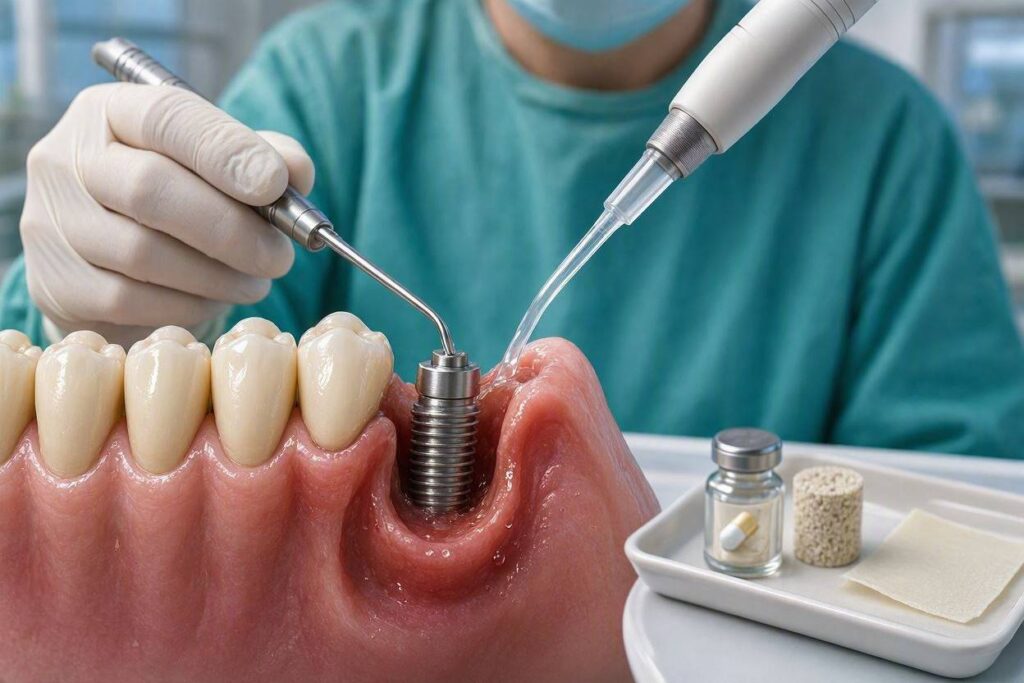
Mechanical Debridement:
The infected tissues are cleaned using specialized instruments.
- Removal of plaque and calculus
- Cleaning of the implant surface
- Irrigation with antimicrobial solutions
Antibiotic Therapy:
Antibiotics may be prescribed to control infection.
- Oral antibiotics
- Local antibiotic delivery
- Antimicrobial mouth rinses
Laser Therapy:
Lasers can remove infected tissue and decontaminate the implant surface.
Surgical Treatment
Surgical treatment is necessary for advanced infection.
Flap Surgery:
The gum is opened to access the infected area.
- Removal of infected tissue
- Cleaning of the implant surface
- Decontamination of the area
- Closure of the gum
Bone Grafting:
If bone loss has occurred, grafting may be performed.
- Placement of bone graft material
- Membrane to protect the graft
- Healing period for bone regeneration
Implantoplasty:
The implant surface is smoothed to reduce bacterial accumulation.
- Removal of contaminated implant threads
- Smoothing of the surface
- Reduction of bacterial adhesion
Regenerative Procedures
In some cases, regenerative procedures can restore lost tissue.
Guided Bone Regeneration:
- Bone graft material placed around the implant
- Barrier membrane protects the graft
- New bone grows to support the implant
Guided Tissue Regeneration:
- Soft tissue grafts restore gum coverage
- Improves aesthetics and protection
The Treatment Process
Understanding the process helps you know what to expect.
Step 1: Diagnosis
Your dentist evaluates the implant and surrounding tissues.
Diagnostic Tools:
- Clinical examination
- Probing to measure pocket depths
- X-rays to assess bone loss
- Possibly CT scan for detailed imaging
Step 2: Treatment Planning
A personalized treatment plan is developed.
Factors Considered:
- Severity of infection
- Extent of bone loss
- Stability of the implant
- Patient’s overall health
- Patient’s commitment to care
Step 3: Active Treatment
The chosen treatment is performed.
Step 4: Maintenance
Ongoing maintenance is essential to prevent recurrence.
Costs of Treating an Infected Implant
Treatment costs vary based on severity and approach.
Average Costs
| Treatment | Average Cost |
|---|---|
| Non-Surgical Debridement | $200 – $500 |
| Antibiotic Therapy | $50 – $200 |
| Laser Therapy | $300 – $800 |
| Flap Surgery | $500 – $1,500 |
| Bone Grafting | $500 – $1,500 |
| Implant Removal (if needed) | $200 – $800 |
| Total | $200 – $3,000+ |
Insurance Coverage
- Dental insurance may cover a portion of treatment
- Coverage depends on the specific procedure
- Annual maximums may limit benefits
- Check your policy for details
Factors That Affect Treatment Success
Several factors influence whether an infected implant can be saved.
Early Detection
The earlier the infection is detected, the better the prognosis.
Patient Compliance
Patients must maintain excellent oral hygiene and attend follow-up appointments.
Smoking Cessation
Smoking significantly reduces treatment success. Quitting is essential.
Control of Systemic Conditions
Managing diabetes and other conditions improves healing.
Provider Experience
An experienced dentist can effectively treat peri-implantitis.
Preventing Implant Infection
Prevention is always better than treatment.
1. Maintain Excellent Oral Hygiene
- Brush twice daily with a soft-bristled brush
- Floss daily around the implant
- Use an antimicrobial mouthwash
- Consider a water flosser
2. Attend Regular Checkups
- Professional examinations every 3 to 6 months
- Professional cleaning around the implant
- X-rays to monitor bone health
3. Quit Smoking
Smoking is a major risk factor for peri-implantitis.
4. Manage Medical Conditions
Control diabetes and other systemic conditions.
5. Use the Right Tools
- Soft-bristled toothbrushes
- Implant-specific floss
- Interdental brushes
When Removal Is Necessary
In some cases, the implant cannot be saved.
Signs the Implant Must Be Removed
- Extensive bone loss (more than 50% around the implant)
- Implant mobility
- Infection that does not respond to treatment
- Implant fracture
- Nerve involvement
What Happens After Removal
After removal, the site is cleaned and allowed to heal.
Next Steps:
- Healing period of 2 to 6 months
- Bone grafting if needed
- Consideration of implant replacement
- Alternative tooth replacement options
The Emotional Impact
Dealing with an infected implant can be stressful.
Understanding the Situation
Peri-implantitis is a known complication. You are not alone in facing this issue.
Seeking Support
Talk to your dentist about your concerns. A supportive provider can guide you through treatment.
Focusing on Solutions
With proper treatment, many infected implants can be saved. Focus on the path forward.
Conclusion
An infected dental implant can often be saved if detected early and treated appropriately. Treatment options range from non-surgical debridement for mild cases to surgical intervention with bone grafting for advanced infection. Costs range from $200 to $3,000 or more. Success depends on early detection, patient compliance, and addressing underlying risk factors. Prevention through excellent oral hygiene and regular checkups is the best strategy.
Frequently Asked Questions (FAQ)
Q: What causes dental implant infection?
A: Poor oral hygiene, bacterial plaque accumulation, smoking, diabetes, and excess cement from crown placement can cause infection.
Q: How do I know if my dental implant is infected?
A: Signs include redness, swelling, bleeding, pus, pain, bad breath, and gum recession around the implant.
Q: Can antibiotics alone cure an infected implant?
A: Antibiotics alone are usually insufficient. Mechanical debridement and sometimes surgery are necessary to remove infected tissue.
Q: How long does treatment for an infected implant take?
A: Treatment time varies. Non-surgical treatment may take one to two visits, while surgical treatment with bone grafting requires several months of healing.
Q: Is treatment for an infected implant painful?
A: Treatment is performed under local anesthesia. Post-operative discomfort is manageable with medication.
Q: Can an infected implant be replaced after removal?
A: Yes, after the site has healed and any underlying issues are addressed, a new implant can often be placed.
Additional Resource
For more information on peri-implantitis and implant care, visit the American Academy of Periodontology (AAP) at www.perio.org. They provide educational resources for patients.