Can A Failed Dental Implant Be Replaced?
Dental implants boast impressive success rates of 95% to 98%, but failures do occur. When an implant fails, patients often wonder whether replacement is possible. The good news is that in most cases, a failed dental implant can be replaced. However, the process requires careful evaluation, proper timing, and sometimes additional procedures to ensure success.
This guide explores why dental implants fail, the signs of failure, and the steps involved in replacing a failed implant. You will learn what to expect, the costs involved, and how to maximize the chances of success the second time around.
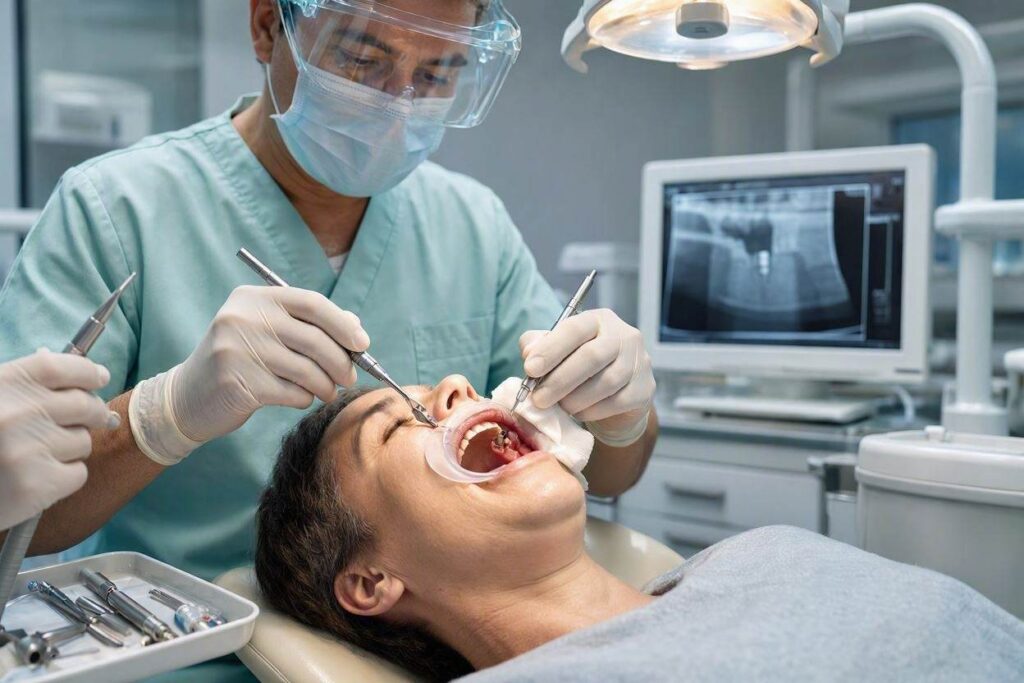
Understanding Dental Implant Failure
Before discussing replacement, it helps to understand why implants fail.
Early Implant Failure
Early failure occurs shortly after placement, before the implant fully integrates with the bone.
Causes of Early Failure:
- Poor surgical technique
- Infection at the surgical site
- Insufficient bone density
- Overheating of the bone during drilling
- Implant movement during healing
- Smoking or tobacco use
- Uncontrolled medical conditions
- Allergic reaction to implant materials
Late Implant Failure
Late failure occurs after the implant has successfully integrated and been in function for months or years.
Causes of Late Failure:
- Peri-implantitis (infection around the implant)
- Excessive bite forces
- Bruxism (teeth grinding)
- Trauma or injury
- Bone loss around the implant
- Overloading of the implant
- Systemic health changes
Types of Implant Failure
Biological Failure:
The implant fails to integrate with the bone, or the bone deteriorates around the implant.
Mechanical Failure:
The implant components break, fracture, or become loose.
Aesthetic Failure:
The implant functions but does not look natural or meet the patient’s expectations.
Signs of a Failed Dental Implant
Recognizing the signs of failure helps you seek treatment promptly.
Common Symptoms
- Persistent pain or discomfort
- Swelling or inflammation around the implant
- Mobility or movement of the implant
- Bleeding or pus around the implant
- Receding gums exposing the implant
- Difficulty chewing
- A change in bite alignment
- A loose crown or abutment
Important Note: Some implant failures are asymptomatic in the early stages. Regular dental checkups are essential for detecting problems before they become severe.
Can a Failed Implant Be Replaced?
In most cases, yes. A failed dental implant can be removed and replaced with a new one.
When Replacement Is Possible
Replacement is typically possible when:
- There is sufficient bone remaining after removal
- The infection has been treated
- The underlying cause of failure has been addressed
- The patient is committed to proper care
When Replacement Is Challenging
Replacement may be more difficult when:
- Significant bone loss has occurred
- The infection has spread to surrounding structures
- The patient has uncontrolled medical conditions
- The failure was caused by factors that cannot be corrected
The Replacement Process
Replacing a failed implant involves several steps.
Step 1: Evaluation
Your dentist examines the failed implant and assesses the situation.
What the Dentist Checks:
- The condition of the implant
- The health of surrounding bone
- Signs of infection
- The cause of failure
- Overall oral health
Step 2: Removal of the Failed Implant
The failed implant is surgically removed.
The Removal Procedure:
- Anesthesia is administered
- An incision is made in the gum
- The implant is carefully removed
- The socket is cleaned and debrided
- The area is closed
Important Note: Removing a failed implant is often less invasive than the original placement because the implant has not fully integrated with the bone.
Step 3: Treatment of Infection
If infection is present, it must be treated before replacement.
Treatment May Include:
- Antibiotics
- Debridement of infected tissue
- Removal of infected bone
- Waiting period for healing
Step 4: Healing Period
The site needs time to heal before a new implant is placed.
Timeline:
- 2 to 4 months for soft tissue healing
- 3 to 6 months for bone regeneration
Step 5: Bone Grafting (If Needed)
If bone loss has occurred, grafting may be necessary.
Bone Grafting Costs: $300 to $1,200 per site
Healing Time: 3 to 6 months for graft integration
Step 6: New Implant Placement
Once the site has healed, a new implant is placed.
Considerations:
- The new implant may be wider or longer than the original
- A different implant system may be used
- The surgical approach may be modified
Step 7: Restoration
After the new implant integrates, the crown is attached.
The Cost of Replacing a Failed Implant
Replacing a failed implant involves additional costs.
Average Costs
| Procedure | Average Cost |
|---|---|
| Failed Implant Removal | $200 – $800 |
| Infection Treatment | $100 – $500 |
| Bone Grafting | $300 – $1,200 |
| New Implant Post | $1,000 – $3,000 |
| Abutment | $300 – $500 |
| New Crown | $1,000 – $3,000 |
| Total | $2,900 – $9,000 |
Insurance Coverage
- Insurance may cover a portion of the replacement
- Coverage depends on the reason for failure
- Annual maximums may limit benefits
- Check your specific policy
Warranty Coverage
Some dental practices offer warranties on implant work.
What to Ask:
- Does the warranty cover implant failure?
- What is the warranty period?
- What conditions apply?
- Does the warranty cover the full cost of replacement?
Factors That Affect Replacement Success
The success of a replacement implant depends on several factors.
Addressing the Underlying Cause
If the cause of the original failure is not addressed, the replacement is likely to fail too.
Common Issues to Address:
- Smoking cessation
- Treatment of bruxism
- Management of medical conditions
- Improved oral hygiene
- Bone grafting for insufficient bone
Waiting for Proper Healing
Rushing the replacement increases the risk of failure. Allow adequate time for healing.
Choosing an Experienced Provider
An experienced implant dentist can identify and address risk factors, improving the chances of success.
Preventing Future Implant Failure
Taking preventive measures protects your replacement implant.
1. Maintain Excellent Oral Hygiene
- Brush twice daily
- Floss daily
- Use an antimicrobial mouthwash
- Consider a water flosser
2. Attend Regular Checkups
- Professional examinations every 6 months
- X-rays to monitor bone health
- Early detection of problems
3. Address Bruxism
If you grind your teeth, use a night guard.
4. Quit Smoking
Smoking significantly increases the risk of implant failure.
5. Manage Medical Conditions
Control diabetes and other systemic conditions that affect healing.
6. Avoid Excessive Forces
Do not chew ice, hard candy, or other hard objects.
Alternatives to Implant Replacement
If replacement is not possible or desirable, alternatives exist.
Dental Bridge
A bridge replaces a missing tooth by attaching to adjacent teeth.
Cost: $2,000 to $5,000
Removable Partial Denture
A removable appliance replaces one or more missing teeth.
Cost: $500 to $2,500
No Replacement
In some cases, no replacement is necessary if the tooth is not visible and does not affect function.
Emotional Considerations
Implant failure can be discouraging, but it is important to maintain perspective.
Understanding That Failure Is Not Your Fault
Implant failure often results from factors beyond your control. Do not blame yourself.
Seeking Support
Talk to your dentist about your concerns. A supportive provider can help you navigate the replacement process.
Focusing on the Positive
Replacement implants have high success rates when underlying issues are addressed. Focus on the path forward.
Conclusion
A failed dental implant can usually be replaced. The process involves removing the failed implant, treating any infection, allowing the site to heal, and placing a new implant. Costs range from $2,900 to $9,000 depending on the complexity. Addressing the underlying cause of failure, waiting for proper healing, and choosing an experienced provider maximize the chances of success.
Frequently Asked Questions (FAQ)
Q: How common is dental implant failure?
A: Dental implants have a success rate of 95% to 98%, meaning failure occurs in 2% to 5% of cases.
Q: How long do I have to wait before replacing a failed implant?
A: You typically need to wait 2 to 6 months for healing before a new implant can be placed.
Q: Does insurance cover implant replacement?
A: Coverage varies. Some plans cover a portion of replacement costs, while others exclude re-treatment.
Q: Will the replacement implant be stronger than the original?
A: The replacement implant may be wider or longer to engage more bone, potentially improving stability.
Q: What happens if I do not replace a failed implant?
A: Bone loss will continue in the area, and adjacent teeth may shift. Replacement is recommended to preserve oral health.
Q: Can a failed implant be replaced on the same day?
A: In some cases, immediate replacement is possible. However, most dentists recommend a healing period before placing a new implant.
Additional Resource
For more information on dental implant failure and replacement, visit the American Academy of Implant Dentistry (AAID) at www.aaid.com. They provide educational resources for patients.